
Warm Up Muscle Shoals Without the Chimney.
Real ambiance and honest zone heat for Shoals-area homes—no gas line, no chimney, no combustion byproducts. Find the right unit and connect with a trusted local dealer.
Every Project Starts From One of These Five Situations
Mild Winters, Modern Comfort.
Muscle Shoals sits along the Tennessee River in northwest Alabama's Shoals region, in climate zone 3A—mixed-humid, with average winter lows around 29°F and just 3,311 heating degree days a year. Compare that to a true cold-climate market like Fargo, ND, which logs nearly three times as many heating degree days, and it's clear why Colbert County homes don't need a furnace-replacement-grade heat source in the living room. Winters here are short and mild, with plenty of 50- and 60-degree days even in January.
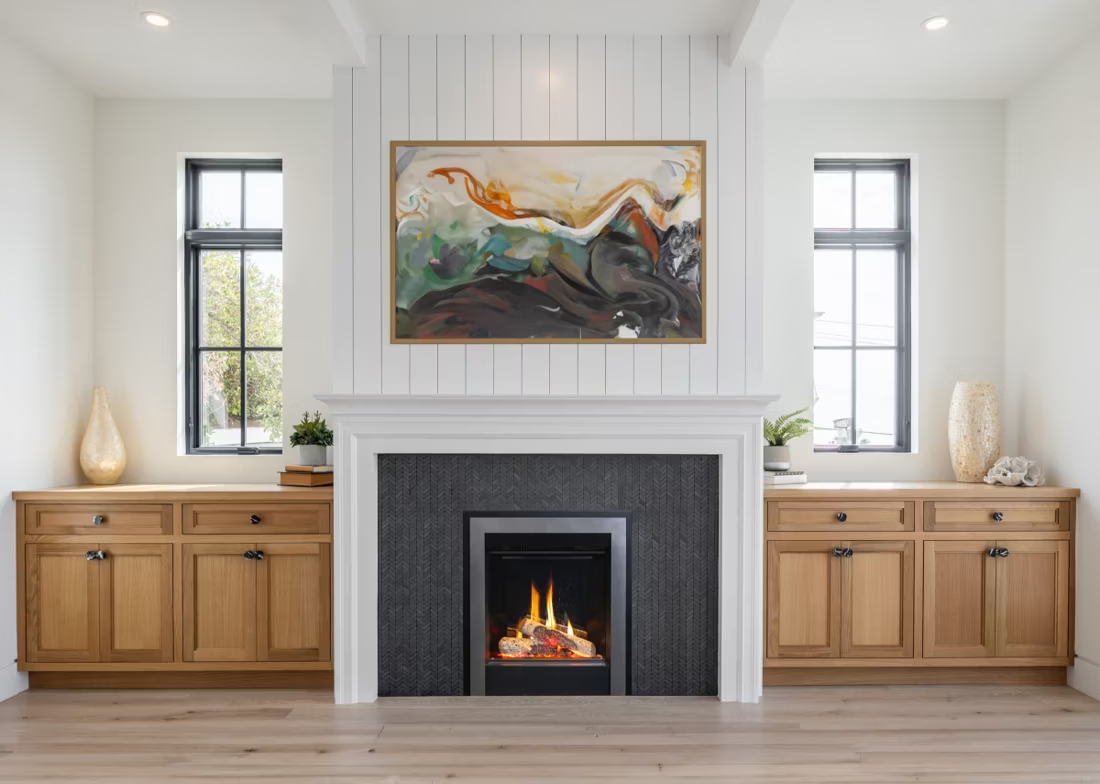
That's exactly the climate where electric fireplaces do their best work—as supplemental zone heat and honest ambiance rather than a primary heat source. Because there's no flue, no gas line, and no combustion byproducts to vent, an electric unit can go almost anywhere: built into a bookshelf wall in a den, retrofitted into an old wood-burning firebox left over from the area's oak- and pine-framed homes, or added as a freestanding stove in a sunroom. With the City of Muscle Shoals running its own municipal electric system at $0.1196 per kWh—below the regional average—running one on a cold snap costs pennies compared to leaning on a heat pump's aux heat strips.
Three steps. No salesperson until you're ready.
Tell us about your project
Your zip code, your situation, and the fuel you're leaning toward—or let the answers point you to one.
See what's actually available
The brands dealers within 100 miles genuinely carry—real options, never a catalog mirage.
Get your dealer & Project Guide
A trusted local dealer, plus the free Project Guide & Parts List that names every component of the job.
Frequently Asked Questions
How much does it cost to install an electric fireplace in Muscle Shoals?
Plug-in electric fireplace inserts that slide into an existing firebox typically run $300 to $1,200 installed, since there's no venting or gas line work involved—most of the cost is the unit itself plus a licensed electrician confirming the circuit if it's a higher-draw model. Built-in wall units or full mantel packages that require framing and a dedicated 20-amp circuit run higher, usually $1,500 to $4,000 depending on the cabinetry work. Because Muscle Shoals' building code doesn't require the fire-rated clearances or masonry chimney inspections that wood or gas installs do, electric is consistently the least expensive fireplace option to add to a Colbert County home.
Do I really need supplemental heat if Muscle Shoals winters are mild?
Most Shoals-area homes don't need a fireplace to survive winter—with average lows around 29°F and only about 3,300 heating degree days a year, a heat pump handles the season fine. But that's exactly why electric fireplaces are popular here: they're not solving a heating crisis, they're adding a warm focal point to a den or living room and knocking the chill off during the handful of nights each winter when temperatures dip into the 20s. Compare that to a place like Fargo, ND, where a fireplace is backup heat during a blizzard—in Muscle Shoals it's usually about ambiance first, comfort second.
Can I convert my old wood-burning fireplace to electric?
Yes, and it's one of the most common projects local dealers see in the Shoals area. Many homes here were built decades ago with masonry wood-burning fireplaces framed in local oak, pine, or hickory, and a lot of homeowners now want the look of a fire without the ash, creosote, or the hassle of sourcing firewood. An electric insert slides into the existing firebox opening, plugs into a standard or dedicated outlet, and delivers flame effect and heat without touching the chimney. It's typically a same-day project, versus a multi-day install for a wood or gas conversion.
Do I need a permit for an electric fireplace in Muscle Shoals?
In most cases, no. A plug-in electric insert or freestanding electric stove that uses an existing outlet doesn't require a permit through the City of Muscle Shoals Building Department. If you're adding a built-in wall unit that requires new wiring or a dedicated circuit, an electrical permit is typically required, and your electrician or installer should pull it. Because electric units don't involve combustion, they're also exempt from the clearance-to-combustibles and chimney inspection requirements that apply to wood and gas installs.
How much does it cost to run an electric fireplace here?
With the City of Muscle Shoals billing residential electric at $0.1196 per kWh—among the lower rates in the Tennessee Valley—a typical 1,500-watt electric fireplace running on low heat costs roughly 18 cents an hour, or under $15 for 80 hours of use. Most owners run theirs a few hours a night during the cooler months rather than around the clock, which keeps the added cost on a winter power bill modest, especially compared to running aux heat strips on a heat pump during a cold snap.
What happens to my electric fireplace during a power outage?
It won't run—electric fireplaces have no battery backup and go dark the moment the power drops, which matters in a region that sees its share of spring tornadoes and severe thunderstorm outages. If backup heat during an outage is a priority, a gas fireplace with a standing pilot or an IPI ignition system with battery backup is a better fit for that specific need. Most Muscle Shoals homeowners treat their electric fireplace as a comfort and ambiance feature rather than emergency heat, and keep a separate plan for storm season outages.
What's the difference between an electric fireplace, insert, and stove?
An electric insert is built to slide into an existing masonry firebox opening, using the fireplace you already have. An electric fireplace (or wall-mount/built-in unit) is designed for new construction or a remodel, often centered in a media wall or custom cabinetry. An electric stove is a freestanding cabinet-style unit that can sit anywhere near an outlet, with no existing fireplace required. For the many older Shoals homes with an existing wood-burning firebox, an insert is usually the simplest upgrade; for a new build or an addition without a chimney, a built-in unit or stove gives you more placement freedom.
Electric vs. gas—which is right for my Muscle Shoals home?
Gas fireplaces are common here too and deliver real, substantial heat output—enough to serve as genuine supplemental heat on a cold January night, plus the option of battery-backup ignition that keeps working through a power outage. Electric fireplaces trade that heat output for simplicity: no gas line, no venting, no annual gas appliance service, and a far lower installed cost. For a homeowner who wants ambiance and light supplemental warmth in a den or bedroom, electric is usually the easier and cheaper answer. For a primary living space where real heat output and outage resilience matter more, gas is worth the extra investment.
Are electric fireplaces a good fit for a humid climate like Muscle Shoals?
Yes. Climate zone 3A means the Shoals area deals with real summer humidity, and unlike a wood-burning masonry chimney—which can draw humid outside air into the house and needs a damper managed carefully—an electric unit has no flue and no chimney to worry about with moisture intrusion. That makes electric a straightforward, low-maintenance option in a mixed-humid climate where wood-burning masonry fireplaces sometimes develop musty odors or mildew issues in the off season.
Does an electric fireplace need a vent or chimney?
No—that's its superpower. An electric fireplace needs a wall and an outlet, period. No vent pipe, no gas line, no clearances to design around, which is why it works in bedrooms, offices, apartments, and walls where venting a gas or wood unit would be impractical or impossible. Installation is typically the simplest and least expensive of any fireplace type.
Can I put a TV above my fireplace?
Yes—with an asterisk. Fireplaces are hot and TVs don't like heat. Either put a mantel between them to deflect rising warmth, or choose a fireplace with heat-management technology that creates a cool zone on the wall above—the wall stays around 125 degrees, barely warm, while the room still gets full heat. If you like clean lines and don't want a mantel, heat management is the answer.
Can I install a fireplace myself?
If you're putting a fire in your house on purpose, it's best to work with an expert. Unless you're genuinely experienced in framing, gas line, vent pipe, and the national code on clearances to combustibles, have a professional do it—and ideally the same company that sells you the fireplace, so warranty, service, and liability all live under one roof.
How much should I budget for a fireplace?
For an average home—covering the fireplace, the vent pipe, and basic installation—a budget between $3,900 and $5,500 gives you a lot of options across wood, gas, and pellet. By the time you add finish work, gas line, and electrical, the average complete installation lands between $5,000 and $12,000 all-in. In a remodel or new build, a good rule is to put about 2.5% of the total project cost toward the fireplace.
Nearby Dealers
Hearth shops serving Muscle Shoals and the surrounding area. Every listing shows whether it is a WhyFire partner, a dealer we have verified as authorized for the brands we recommend, or a local business carrying hearth products. No manufacturer pays for placement. How we verify dealers →
Thompson Gas
Vaughan Gas
Phoenix Sales
Electric Service in Muscle Shoals
An electric fireplace's heater draws about 1,500 watts—pennies per hour at local rates.
City Of Muscle Shoals
Find your electric fireplace in Muscle Shoals.
Tell us a bit about your home and we'll match you with the right electric fireplace, insert, or stove—plus a free Project Guide & Parts List and a trusted local dealer to install it.
Find Your Fireplace →