
Add fireplace ambiance to your Mobile County home—no chimney required.
With such a light winter heating load and winter lows averaging 42°F, Mobile County rarely needs a serious heat source—but a lot of homes still want the glow of a fire. Find the right electric unit and get matched with a trusted local dealer.
Every Project Starts From One of These Five Situations
Mild Gulf Coast winters call for ambiance, not survival heat.
Mobile County sits in climate zone 2A along Mobile Bay and the Gulf Coast, where the heating season is short and shallow. The county sees only about a fifth of the winter heating load that a place like Duluth, Minnesota, does in an average year, and the average winter low here is a mild 42°F. Real cold—the kind that demands a stove running around the clock—is a once-or-twice-a-winter event, not a way of life. That changes what people actually want out of a fireplace.
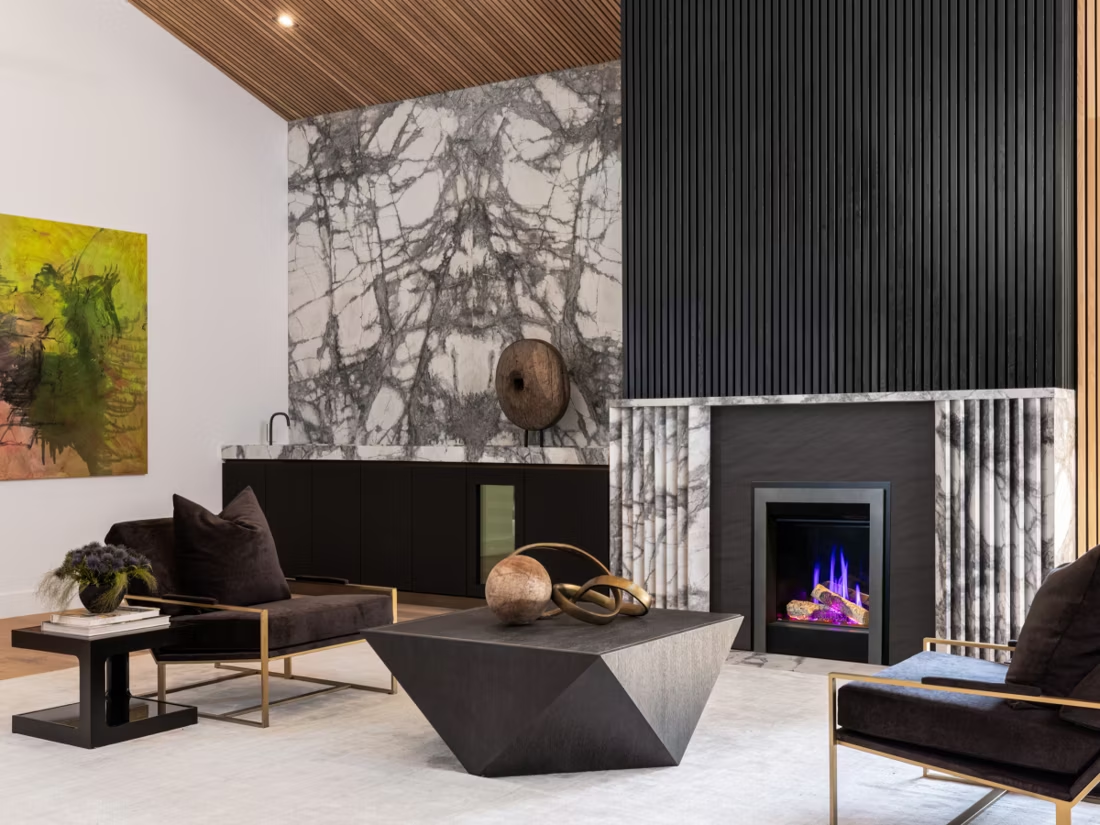
Wood and pellet heat are effectively non-factors here—most Mobile County homes were never built with a wood-burning chimney, and the region's humidity makes stacked firewood and stored pellets a losing battle against mold and swelling. Electric is what fills the gap. It drops into a built-in mantel, converts an old unused masonry fireplace in a Midtown or Spring Hill bungalow, or gets mounted flush on a wall in a Saraland or Semmes living room—no venting, no gas line, no chimney inspection, and service through Alabama Power like any other appliance in the house. For most Mobile County homeowners, that's the whole appeal: real flame-effect ambiance, a little supplemental warmth on the occasional 30-degree morning, and none of the maintenance that comes with burning fuel.
Three steps. No salesperson until you're ready.
Tell us about your project
Your zip code, your situation, and the fuel you're leaning toward—or let the answers point you to one.
See what's actually available
The brands dealers within 100 miles genuinely carry—real options, never a catalog mirage.
Get your dealer & Project Guide
A trusted local dealer, plus the free Project Guide & Parts List that names every component of the job.
Frequently Asked Questions
How much does an electric fireplace installation cost in Mobile County?
A plug-in electric fireplace insert or freestanding unit typically runs $300 to $1,200 installed, since it just needs a standard 120V outlet and can often be handled in an afternoon. Built-in wall units or mantel packages that require framing, a recessed opening, or a dedicated 240V circuit run higher—often $1,200 to $2,500 once a licensed electrician is involved. Converting an existing masonry fireplace with an electric insert (common in older Mobile, Midtown, and Spring Hill homes) usually lands in the middle of that range. Local dealers will give you a firm number after seeing the space.
Will an electric fireplace actually provide heat, or is it just for looks?
Most electric fireplaces include a built-in fan heater rated around 1,500 watts, putting out roughly 4,600–5,000 BTU—enough to noticeably warm a single room. Given Mobile County's mild climate (average winter low of 42°F and only a light winter heating load overall), that's plenty for the handful of genuinely cold mornings each winter. It's not designed to replace central HVAC and won't heat a whole house, but as supplemental heat for a living room or bedroom during a January cold front, it does real work—not just a flame effect on the glass.
Do I need a permit to install an electric fireplace in Mobile County?
A simple plug-in unit on an existing outlet typically doesn't require a permit. Where it changes is if the installation involves a new dedicated circuit, a wall recess, or built-in framing—that electrical work generally needs a permit and should be pulled by a licensed electrician, whether you're inside the city of Mobile or in unincorporated county areas. Most hearth dealers who sell built-in electric units either employ a licensed electrician or coordinate with one, so you're not left tracking down the paperwork yourself.
Will my electric fireplace work during a power outage?
No—and this matters more in Mobile County than in most places, given hurricane season runs June through November and outages can stretch for days after a major storm. An electric fireplace is entirely dependent on grid power (or a generator), so it won't provide backup heat when the lines are down. If backup heating during outages is a real priority for your household, a gas fireplace with intermittent pilot ignition and battery backup is a better fit for that specific need—many Mobile County homeowners actually end up with an electric unit in one room for everyday ambiance and a gas unit elsewhere for storm resilience.
What's the difference between an electric fireplace, insert, and mantel package?
A freestanding electric fireplace is a self-contained unit you place against a wall and plug in—the simplest option and the easiest to move if you relocate. An electric insert is built to slide into an existing masonry fireplace opening, which is popular in Mobile County's older housing stock (a lot of downtown Mobile, Midtown, and Spring Hill homes have fireplaces that see little or no wood use in this climate). A mantel package combines an electric firebox with a surrounding mantel and hearth for a built-in look in new construction or a remodel. For homeowners with an existing fireplace opening they want to bring back to life, the insert route is usually the most cost-effective.
What should I look for in an electric fireplace for Gulf Coast humidity?
Mobile County's year-round humidity is hard on electronics, so look for units with sealed circuit boards and corrosion-resistant components rather than budget models built for drier climates. Brands like Dimplex and Napoleon build electric fireboxes with this kind of durability in mind, and local dealers who work the Gulf Coast market generally know which lines hold up. If the unit will sit near a bathroom, sunroom, or any space with regular moisture exposure, mention that during your consultation—it changes which model makes sense.
Electric vs. gas fireplace—which is right for my Mobile County home?
Gas is a standard, well-supported option in Mobile County through Mobile Gas service in much of the metro area, and it delivers stronger, more consistent heat output plus (with the right ignition system) the ability to run during a power outage—a real consideration during hurricane season. Electric wins on install simplicity and cost: no gas line, no venting, and a fraction of the installation cost and time. For a primary living space where you want dependable heat and storm resilience, gas often makes more sense. For a bedroom, den, or a historic fireplace opening you just want to bring back to life without construction, electric is usually the better fit.
Can I put an electric insert into my old wood-burning fireplace?
Yes, and it's one of the more common projects local dealers see in Mobile County's older neighborhoods—plenty of homes in downtown Mobile, Midtown, and the Spring Hill area have a masonry fireplace that hasn't burned real wood in years, simply because the climate rarely calls for it. An electric insert drops into that same opening, requires no chimney work or venting modifications, and gives you flame-effect ambiance and light supplemental heat without the soot, creosote, or chimney maintenance a wood-burning setup demands.
Why don't more homes in Mobile County have wood stoves?
It comes down to climate and construction. With a 42°F average winter low and a winter heating load only a fraction of what colder regions see, Mobile County simply doesn't have the sustained cold that makes a wood stove worth the investment—compare that to a place like Bismarck, North Dakota, which sees more than five times the winter heating load in a typical year. Most local homes also weren't built with wood-burning chimneys, and the Gulf Coast's humidity makes storing firewood a genuine hassle. A small number of rural households in the county still keep a wood stove for backup heat or ambiance, but for the vast majority of Mobile County homeowners, electric is the far more practical way to get a fireplace.
Do electric fireplaces actually produce heat?
Yes—most put out around 4,800–5,000 BTUs from a standard outlet, which comfortably warms a bedroom, office, or den as a comfort-zone heater. What they won't do is carry a whole house the way wood, gas, or pellet can. Think of electric as ambiance-first with honest supplemental heat: flames on with no heat in July, flames plus warmth in January.
Can I put a TV above my fireplace?
Yes—with an asterisk. Fireplaces are hot and TVs don't like heat. Either put a mantel between them to deflect rising warmth, or choose a fireplace with heat-management technology that creates a cool zone on the wall above—the wall stays around 125 degrees, barely warm, while the room still gets full heat. If you like clean lines and don't want a mantel, heat management is the answer.
Does a fireplace add value to my home?
On average, a fireplace adds back to the home about the same amount you spent installing it. Add the monthly savings from heating the rooms you actually use instead of the whole house—often hundreds of dollars a year—and the value case is strong before you even count what a fire does for how your family uses the room.
Can I install a fireplace myself?
If you're putting a fire in your house on purpose, it's best to work with an expert. Unless you're genuinely experienced in framing, gas line, vent pipe, and the national code on clearances to combustibles, have a professional do it—and ideally the same company that sells you the fireplace, so warranty, service, and liability all live under one roof.
Stove and Fireplace Dealers in Mobile County
Listings include WhyFire partner dealers, dealers we have verified as authorized for the brands we recommend, and established local businesses that carry hearth products. Every listing shows which one it is. The ones marked Preferred run on WhyFire's software, so they can show you real pricing and book your appointment right here. No manufacturer pays for placement. How we verify dealers →
Blossman Gas - Mobile
Sullivan Insullation Company
Street'S Exquisite Plants
Andrews Ace Hardware
Coastal Insulation
Find your electric fireplace in Mobile County.
Tell us a bit about your home and we'll put together a free Project Guide & Parts List for your electric fireplace project—the right unit, the exact parts, and a trusted local Mobile County dealer to install it.
Find Your Fireplace →