
Comfortable heat for Lipscomb's short, mild winters.
With winter lows averaging 34°F and only a short, mild heating season each year, Lipscomb doesn't need a furnace running around the clock—but a gas fireplace still earns its keep on the cold snaps and during the ice storms that occasionally knock out power across Jefferson County. I'll match you with a trusted local dealer who can tell you what's actually installable in your home.
Every Project Starts From One of These Five Situations
Zone heat that matches a Birmingham-area winter.
Lipscomb sits at 546 feet in Jefferson County's Climate Zone 3A, where winters are short and mild by national standards—nothing like the six-month heating seasons in places like Duluth or Fargo. An average winter low of 34°F and a modest, short heating season mean most homes here lean on central HVAC or heat pumps for day-to-day comfort. A gas fireplace's role in a town like this is less about survival heat and more about zone comfort: taking the chill off a living room on a 30-degree morning without running the whole system, and giving you a heat source that still works when an ice storm rolls through the Birmingham metro and takes the power grid down with it.
Natural gas service through the Birmingham area is typically provided by Spire Alabama (formerly Alagasco), which reaches much of Jefferson County, though some outlying pockets around Lipscomb rely on propane instead—your installer can confirm which applies to your address. Wood and pellet stoves see little demand here given the mild, short heating season and the total absence of local air quality restrictions that might otherwise push homeowners toward a wood-burning backup; gas and electric are the two fuels that actually make sense for most Lipscomb homes, and gas wins out for households that want real, instant flame-based heat rather than a resistance-coil unit.
Three steps. No salesperson until you're ready.
Tell us about your project
Your zip code, your situation, and the fuel you're leaning toward—or let the answers point you to one.
See what's actually available
The brands dealers within 100 miles genuinely carry—real options, never a catalog mirage.
Get your dealer & Project Guide
A trusted local dealer, plus the free Project Guide & Parts List that names every component of the job.
Frequently Asked Questions
How much does a gas fireplace installation cost in Lipscomb?
Most gas fireplace installations in the Lipscomb area run roughly $3,500 to $9,000. A direct-vent insert dropped into an existing masonry fireplace—common in the older homes built during Lipscomb's steel-town era—sits toward the lower end, especially if a gas line is already nearby. A new built-in fireplace for a remodel or addition, requiring fresh gas line work and venting through an exterior wall, runs toward the upper end. If your address falls outside Spire Alabama's natural gas footprint, factor in propane tank setup as an added cost.
Can I convert my existing wood fireplace to gas?
Yes, and it's a common upgrade in Lipscomb's older housing stock, much of which was built with a masonry fireplace originally meant for oak or pine cordwood. A gas insert typically slides into that existing firebox with a stainless liner run up the current chimney, so you're not tearing into walls. Given how mild the heating season is here, most homeowners making this switch are after convenience and ambiance rather than a serious heat upgrade—and they're glad to be done with splitting and hauling wood for a fireplace that only sees real use a few months a year.
Do I need natural gas service, or should I plan on propane?
It depends on your street. Spire Alabama serves a large share of Jefferson County, including much of the Birmingham metro area around Lipscomb, but coverage isn't universal—some homes on the edges of town run on propane for their water heater and range already. If you're already on natural gas for other appliances, adding a fireplace is a simple tap-in. If not, a propane tank is the standard fallback, and most gas fireplace models can be configured for either fuel by your installer.
Will my gas fireplace still work if the power goes out?
Most will, and that matters more in Lipscomb than you might expect—ice storms roll through the Birmingham metro every few winters and can leave neighborhoods without power for a day or more. Units with IPI (intermittent pilot ignition) run their electronics off AA battery backup that kicks in automatically. Valor fireplaces skip the battery question entirely—their pilot's thermocouple generates its own electricity to run the valve. If outage resilience matters to you, ask your local dealer which ignition system is on the model you're considering.
What's the difference between a gas fireplace, insert, and stove?
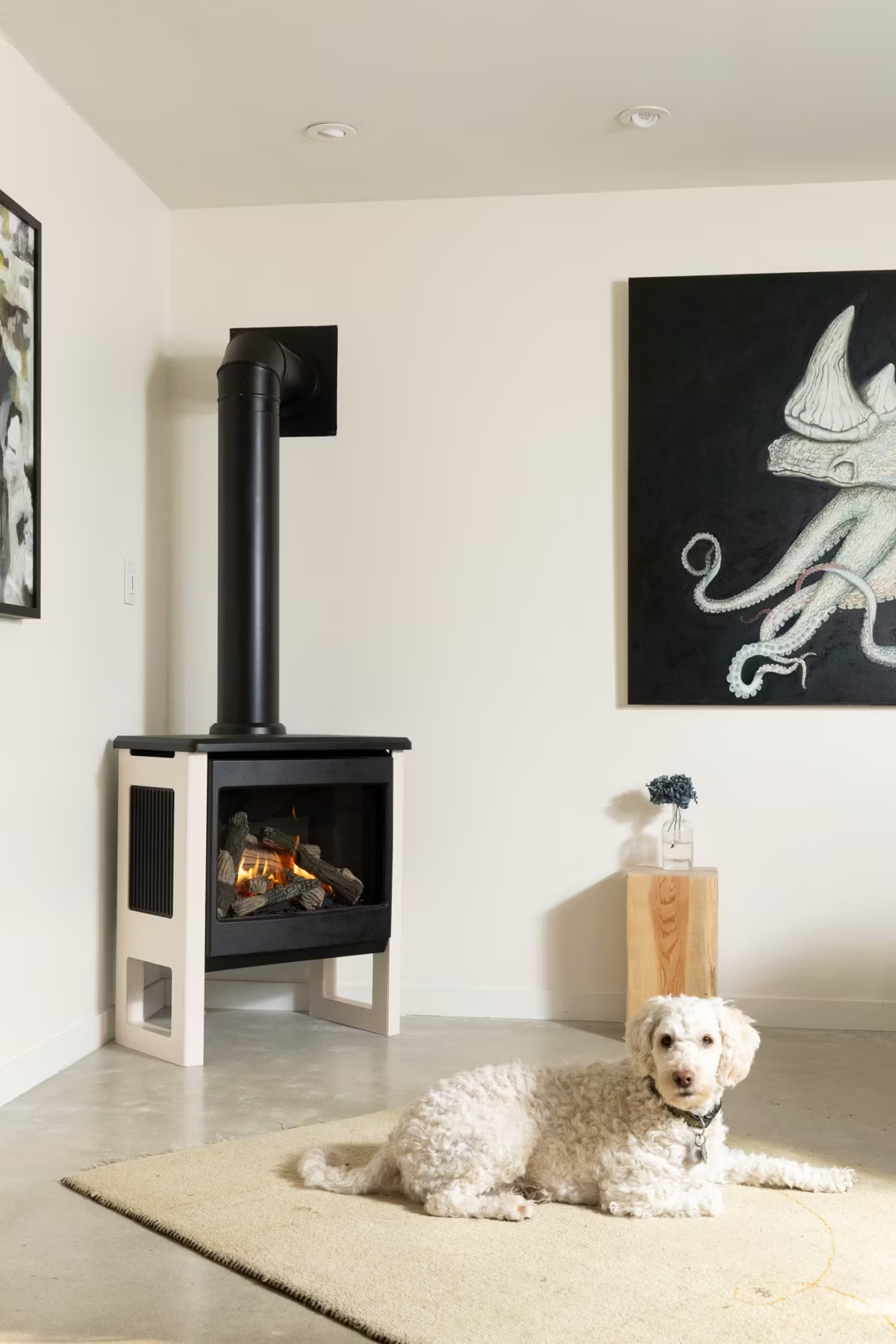
A gas fireplace is a built-in unit framed into a wall—the standard choice for new construction or a remodel. A gas insert fits inside an existing masonry firebox, which is the more common route for Lipscomb's older homes that already have a working chimney chase. A gas stove is freestanding on its own hearth pad, similar in footprint to a wood stove but running off a gas line or propane tank instead of split oak or pine. For most Lipscomb homeowners with an existing fireplace opening, an insert is the simpler and cheaper path.
Do I need a permit to install a gas fireplace in Lipscomb?
Yes. You'll need a building permit, typically coordinated through Jefferson County's permitting office given Lipscomb's size, plus a separate gas line permit since that work has to be done by a licensed gas fitter. Established hearth dealers in the Birmingham metro handle this routinely—pulling the permits, scheduling the gas line inspection, and closing everything out—so you're not stuck coordinating two trades and a county office on your own.
Should I get a vented or vent-free gas fireplace?
Vented, or direct-vent, units pull combustion air from outside and exhaust it back outside through sealed venting—they're code-compliant everywhere in Alabama and the safer long-term choice for continuous use. Vent-free units are legal here too and burn directly into the room, subject to minimum room-size rules. Lipscomb has no air quality restrictions working against either option, so the choice mostly comes down to whether you want the flexibility of vent-free installation in a room without existing venting, or the higher heat output and moisture control of a direct-vent unit—a local dealer can walk through both for your specific room.
How often does a gas fireplace need to be serviced?
Plan on an annual check, ideally in late summer before the first cool snap hits. A technician inspects the burner, pilot assembly, and gas connections, and cleans the glass—usually a $125 to $200 visit in the Birmingham metro. Given how lightly a gas fireplace gets used through Lipscomb's short winters, it's tempting to skip a year, but a stuck valve or dirty igniter is far more likely to show up on the one cold, dark night after an ice storm than during a routine fall inspection.
Gas vs. electric—which fireplace makes more sense in Lipscomb?
Both are reasonable options given how mild the heating season is here, and the decision often comes down to install cost versus operating cost. Electric fireplaces are cheaper upfront—often a few hundred to just over a thousand dollars installed, with no venting or gas line required—but Alabama Power's residential rate of about 16.8 cents per kWh makes them pricier to run for extended heat. Gas fireplaces cost more to install but deliver real, higher-output heat at a lower operating cost per BTU, and they keep working during a power outage, which electric units simply can't do. For a supplemental heat source that also functions as a backup during Birmingham-area ice storms, gas is the more resilient pick.
Why is my open fireplace making my house colder?
Open fireplaces suck—literally. As the fire burns, it consumes air your furnace already paid to heat and pulls it out through the chimney, so the house is actually colder after the fire goes out than before you lit it. An insert fixes this: it seals the chimney, puts fixed glass across the front, and turns that hole in your house into a real heat source.
Is my gas fireplace wasting gas?
If it was installed more than 15 years ago, probably. Older gas fireplaces keep a standing pilot light burning all the time, and that little flame can cost a couple hundred dollars a year. Newer models use pilot-on-demand ignition—the pilot lights only when you use the fireplace and goes out when you turn it off.
Does a fireplace add value to my home?
On average, a fireplace adds back to the home about the same amount you spent installing it. Add the monthly savings from heating the rooms you actually use instead of the whole house—often hundreds of dollars a year—and the value case is strong before you even count what a fire does for how your family uses the room.
Can a fireplace actually lower my heating bill?
Yes—by creating a comfort zone. A furnace heats every square foot of the house just to warm the one room you're in; a gas fireplace on low burns roughly a sixth of the gas a typical furnace does. Set the furnace around 55–60 degrees as a baseline, then heat the rooms your family actually uses. Families who heat this way commonly save $20–$60 a month.
Nearby Dealers
Hearth shops serving Lipscomb and the surrounding area. Every listing shows whether it is a WhyFire partner, a dealer we have verified as authorized for the brands we recommend, or a local business carrying hearth products. No manufacturer pays for placement. How we verify dealers →
Southern Fireplaces
Colonial Fireplace Company
Allgas, Inc. - Gardendale
Get your free Project Guide & Parts List for a gas fireplace in Lipscomb.
Tell me about your home and whether you're on Spire Alabama natural gas or propane, and I'll match you with a trusted local dealer and send a free Project Guide & Parts List with the exact vent kit and parts your project needs.
Find Your Fireplace →