
Clean, instant warmth built for Lincoln's mild Alabama winters.
With winter lows averaging 33°F and just 2,808 heating degree days a year, Lincoln doesn't need a furnace-grade fireplace—it needs a clean, flip-a-switch heat source for the handful of genuinely cold nights each winter. I'll match you with a trusted local dealer who can tell you what actually fits your wall, your wiring, and your utility account.
Every Project Starts From One of These Five Situations
A heat source sized for how mild winter here actually is.
Lincoln sits in climate zone 3A at 509 feet in the Coosa River valley of Talladega County, and the numbers tell a mild story: an average winter low of 33°F and only 2,808 heating degree days a year—roughly a third of what a place like Fargo, ND or Bismarck, ND racks up in a single season. Most Lincoln homes run a heat pump or central HVAC as primary heat, which means a fireplace's job here is different than it is in a heavy-snow state: it's about ambiance, zone heat for a den or bonus room, and covering the occasional January cold snap, not carrying the whole house through a six-month heating season.
Two utilities serve Lincoln households—Alabama Power Co. in and around town, and Coosa Valley Electric Cooperative for many outlying Talladega County addresses—with residential rates running about 16.8 cents and 15.7 cents per kWh respectively. That split matters more for an electric fireplace than for almost any other appliance in the house, since you're paying for every hour of heat by the kilowatt. Oak, pine, and hickory are the wood species most local burners still split for a wood stove or open fireplace, and with no local air quality restrictions on burning, that option stays open—but for homeowners who want a fireplace without a chimney, creosote, or a wood supply, an electric insert or wall unit installs in an afternoon with no venting and no gas line.
Three steps. No salesperson until you're ready.
Tell us about your project
Your zip code, your situation, and the fuel you're leaning toward—or let the answers point you to one.
See what's actually available
The brands dealers within 100 miles genuinely carry—real options, never a catalog mirage.
Get your dealer & Project Guide
A trusted local dealer, plus the free Project Guide & Parts List that names every component of the job.
Frequently Asked Questions
How much does it cost to install an electric fireplace in Lincoln?
Plug-in electric inserts and freestanding units are the cheapest route—often $300 to $1,000 installed, since they run off a standard outlet and need no permit or dedicated circuit. A built-in wall unit or a full mantel package that requires a new 120V or 240V line run by an electrician typically lands between $1,200 and $2,500, depending on wall access and whether you're finishing the surround. Given how mild Lincoln winters run, most homeowners here choose the simpler plug-in or low-voltage insert rather than the higher-end built-in setups more common in colder climates.
Will an electric fireplace actually heat my Lincoln home?
It'll heat a room, not the house—which is exactly what most Lincoln homeowners need. With 2,808 heating degree days a year and winter lows averaging 33°F, the heating season here is short and rarely severe, so a 1,500-watt electric insert covering a den, sunroom, or bonus room is plenty for the handful of nights that dip into the 20s. Whole-house heat here is still the job of your heat pump or central HVAC; the fireplace is there for the room you're actually sitting in and the ambiance you want every evening.
Which utility affects what I pay to run an electric fireplace—Alabama Power or Coosa Valley Electric Coop?
It depends on your address. Alabama Power Co. serves most of Lincoln proper at about 16.8 cents per kWh, while Coosa Valley Electric Cooperative covers a lot of the surrounding rural Talladega County addresses at roughly 15.7 cents per kWh. Run a typical 1,500-watt insert five hours a night for a month and you're looking at around $25 on Alabama Power versus about $24 on Coosa Valley—a modest difference, but worth knowing before you pick a unit's wattage.
Do I need a permit to install an electric fireplace in Lincoln?
A plug-in unit that uses an existing outlet typically doesn't need one. If you're having an electrician run a new dedicated circuit for a built-in or wall-mounted unit, that electrical work generally does need a permit and inspection through your local building department—your installer or electrician will know exactly what Talladega County or the City of Lincoln requires for your specific address and can pull it as part of the job.
What happens to an electric fireplace during a power outage?
It goes dark, which is worth planning around. Talladega County sees occasional ice storms and severe thunderstorms that knock out power for hours or, less often, a couple of days, and an electric fireplace offers zero heat when the grid is down. If backup heat during an outage matters to you, some households pair an electric fireplace for daily convenience and ambiance with a wood stove or a generator-ready setup for genuine emergency backup—oak and hickory both split and burn well if you go that route.
What's the difference between an electric insert, a wall-mount unit, and a mantel package?
An electric insert drops into an existing masonry or wood-burning firebox—a common upgrade in older Lincoln homes built with a traditional fireplace that no longer gets used for wood. A wall-mount unit hangs flush on any wall with a nearby outlet or a new line, no firebox required. A mantel package bundles a built-in unit with a surround and shelf, popular for new construction or a full room remodel. Most retrofit jobs in Lincoln's older housing stock lean toward inserts; new builds and additions more often go with a wall-mount or mantel unit.
How does an electric fireplace compare to gas or wood for a Lincoln home?
Wood, using local oak, pine, or hickory, is still the cheapest fuel and the only one that works with no electricity—a real plus during a Talladega County ice storm outage—but it means a chimney, cleaning, and a wood supply. Gas gives instant, higher-output heat but needs either a natural gas line or a propane tank, plus venting. Electric skips the venting and the fuel supply entirely, installs fastest, and costs the least upfront, which is why it's a common choice here for a den, bonus room, or rental property where simplicity matters more than raw heat output.
How much maintenance does an electric fireplace need?
Very little compared to wood or gas. There's no chimney to sweep, no gas line to inspect, and no combustion byproducts to worry about. Plan on dusting the unit and vacuuming the vents every month or two during the season you're running it, and expect the LED ember bed or heating element to need replacement every several years of regular use—a straightforward DIY swap on most models, or a quick service call if you'd rather not.
What size electric fireplace do I need for a Lincoln room?
Most electric inserts and wall units are rated for 400 to 1,000 square feet on their heating function, which covers a den, living room, or bonus room in the vast majority of Lincoln homes without needing to size for whole-house heat. Since Lincoln's heating load is light—average winter lows only dip to 33°F—homeowners here usually pick a unit based on the look and the wall space rather than pushing for maximum BTU output the way you might in a colder region.
Can I put a TV above my fireplace?
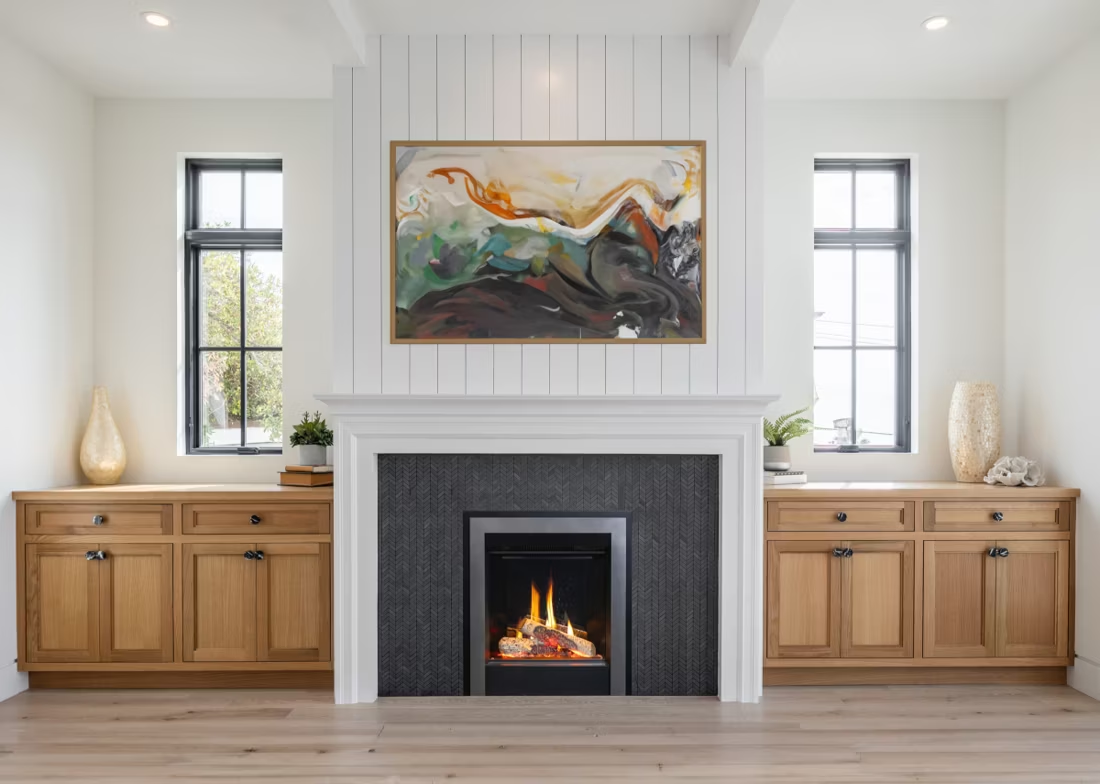
Yes—with an asterisk. Fireplaces are hot and TVs don't like heat. Either put a mantel between them to deflect rising warmth, or choose a fireplace with heat-management technology that creates a cool zone on the wall above—the wall stays around 125 degrees, barely warm, while the room still gets full heat. If you like clean lines and don't want a mantel, heat management is the answer.
Do electric fireplaces actually produce heat?
Yes—most put out around 4,800–5,000 BTUs from a standard outlet, which comfortably warms a bedroom, office, or den as a comfort-zone heater. What they won't do is carry a whole house the way wood, gas, or pellet can. Think of electric as ambiance-first with honest supplemental heat: flames on with no heat in July, flames plus warmth in January.
Does a fireplace add value to my home?
On average, a fireplace adds back to the home about the same amount you spent installing it. Add the monthly savings from heating the rooms you actually use instead of the whole house—often hundreds of dollars a year—and the value case is strong before you even count what a fire does for how your family uses the room.
Can a fireplace actually lower my heating bill?
Yes—by creating a comfort zone. A furnace heats every square foot of the house just to warm the one room you're in; a gas fireplace on low burns roughly a sixth of the gas a typical furnace does. Set the furnace around 55–60 degrees as a baseline, then heat the rooms your family actually uses. Families who heat this way commonly save $20–$60 a month.
Nearby Dealers
Hearth shops serving Lincoln and the surrounding area. Every listing shows whether it is a WhyFire partner, a dealer we have verified as authorized for the brands we recommend, or a local business carrying hearth products. No manufacturer pays for placement. How we verify dealers →
Coosa Valley Propane
Anniston Fireplace Essa
Blossman Gas And Appliance
Anniston Fireplace & Patio
Electric Service in Lincoln
An electric fireplace's heater draws about 1,500 watts—pennies per hour at local rates.
Alabama Power Co
Coosa Valley Electric Coop Inc
Get your free Project Guide & Parts List for an electric fireplace in Lincoln.
Tell me about your room, your wall or wiring situation, and whether you're on Alabama Power or Coosa Valley Electric Coop, and I'll match you with a trusted local dealer and send a free Project Guide & Parts List—sized right for Lincoln's mild winters, with the exact unit and mounting parts specified.
Find Your Fireplace →