
Find the right fireplace for every home in Talladega County.
Wood, gas, pellet, and electric fireplace resources for every city in Talladega County—from Sylacauga to Lincoln to Childersburg. Find the right unit for your home and connect with a trusted local hearth retailer.
Every Project Starts From One of These Five Situations
Mild winters, deep Southern wood heritage in Talladega County, Alabama.
Talladega County sits in a mixed-humid climate zone (3A) with a light winter heating load and winter lows averaging around 31°F. That's a fraction of what a place like Fargo, North Dakota deals with—heating season here is short, arriving in a handful of hard freezes rather than months of sustained cold. That doesn't make hearth appliances less relevant, though. Oak, pine, and hickory grow throughout the county and the edges of Talladega National Forest, and plenty of homeowners still heat with wood they've split themselves or bought from a neighbor. Fireplaces here do double duty—supplemental heat during a January cold snap, and ambiance the rest of the year.
This hub rolls up hearth retailers, service technicians, and fuel suppliers across every community in the county—Talladega and Sylacauga in the population centers, Lincoln near the Superspeedway, and smaller towns like Munford, Alpine, and Childersburg. Pick your fuel below to get into the specifics: local dealers, typical installed costs, and the resources that fit your project, whether you're heating a farmhouse outside Talladega or adding ambiance to a home near Logan Martin Lake.
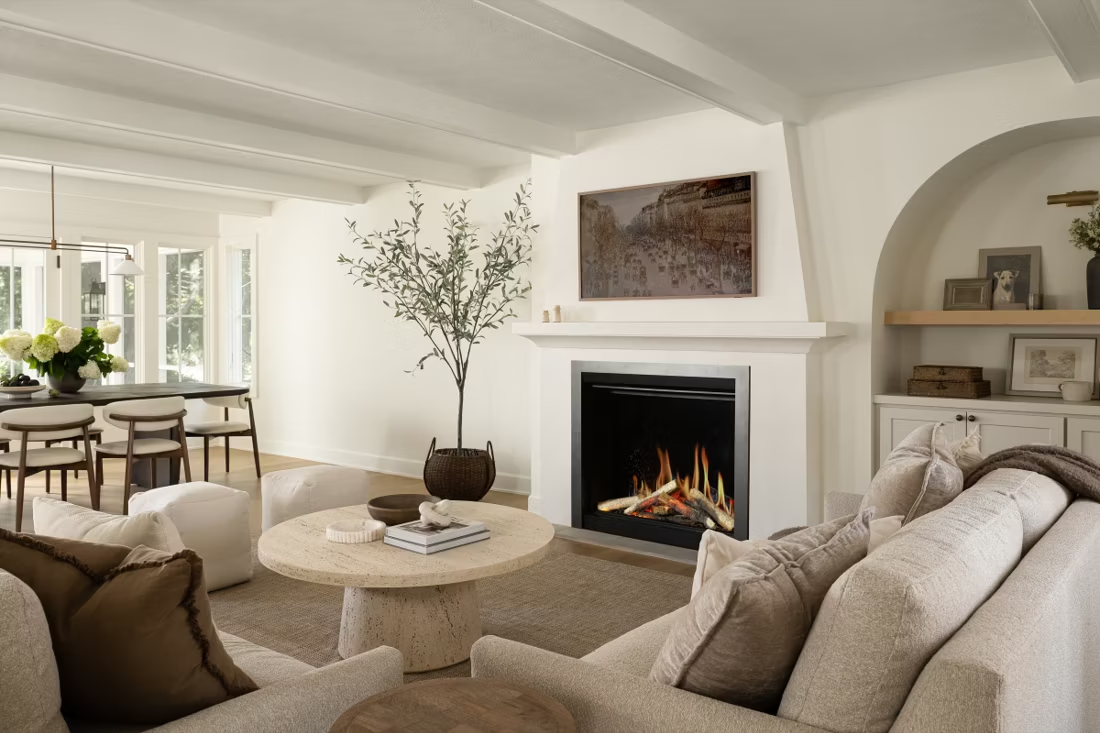
Four fuels. One honest answer for Talladega County.
Three steps. No salesperson until you're ready.
Tell us about your project
Your zip code, your situation, and the fuel you're leaning toward—or let the answers point you to one.
See what's actually available
The brands dealers within 100 miles genuinely carry—real options, never a catalog mirage.
Get your dealer & Project Guide
A trusted local dealer, plus the free Project Guide & Parts List that names every component of the job.
Frequently Asked Questions
Which fuel works best in Talladega County?
It depends on your home and how you plan to use it. Wood remains popular here because oak, pine, and hickory are plentiful and often free or cheap if you or a neighbor has land near Talladega National Forest—a good option if you want a fireplace that works during a power outage and doesn't cost much to feed. Gas is the convenience pick for homes in Talladega and Sylacauga with access to piped natural gas, and propane fills that role in the more rural parts of the county—instant heat with none of the wood-splitting labor. Pellet is a middle ground: regional supply from Lignetics, Hamer Pellet Fuel, and Greenway Renewable Energy keeps pellets reasonably available without a long drive. Electric works well here as a primary heat source in smaller rooms or as a low-maintenance option in a mild climate—with average winter lows around 31°F, an electric insert can genuinely carry a room through most of the season. Alabama Power serves electric accounts throughout the county. Many homes here mix fuels: wood or gas for the main living space, electric for a bedroom or sunroom.
Do I need a permit to install a fireplace in Talladega County?
In most cases, yes. New wood stoves, wood inserts, gas fireplaces, gas inserts, and pellet stoves typically require a building permit through your city's building department if you're in Talladega, Sylacauga, Lincoln, or Childersburg, or through the county building official if you're in an unincorporated part of the county. Gas installations also need a licensed gas fitter to handle the line work and connection, separate from the structural permit. Electric fireplaces usually don't need a permit unless it's a built-in unit requiring new wiring or a dedicated circuit, in which case an electrician pulls that permit. Most local hearth retailers handle the paperwork as part of installation, so you typically aren't filing anything yourself.
Are there air quality restrictions on wood burning in Talladega County?
No—Talladega County doesn't carry a nonattainment designation and there's no history of winter inversion events or wildfire smoke advisories the way you'd see in parts of the West. There are no mandatory burn curtailment days here. That said, seasoned hardwood—oak and hickory that's been split and dried for six months to a year—burns cleaner and more efficiently than green or wet wood, and it's worth the wait regardless of local air quality rules. If you're installing a new wood stove, look for one certified to current EPA emissions standards; it'll burn less wood for the same heat and put out noticeably less visible smoke than an older uncertified unit.
Can one local hearth retailer handle all four fuel types?
Several of the larger showrooms in Talladega and Sylacauga carry three or four fuel types under one roof—wood, gas, pellet, and electric—which is useful if you're still deciding between options and want to see working displays side by side. Smaller dealers in outlying towns tend to specialize, often focusing on wood and gas, or on pellet stoves paired with the regional pellet brands available locally. Find My Fireplace helps you find the local dealer whose actual inventory and installation capability fits your fuel choice, rather than sending you in blind to compare online listings against what's really available to install in your area.
How does service work in the more rural parts of Talladega County?
Most chimney sweeps, gas technicians, and pellet service techs working Talladega County are based out of Talladega or Sylacauga and travel to the outlying towns—Munford, Alpine, Waldo, and the areas around Logan Martin Lake and Lincoln. Expect a modest travel fee for calls further from the county seat. Because winters here are mild and short, it's easy to put off annual chimney sweeping or gas inspection until the first cold snap in November—booking earlier in the fall, before demand spikes, usually gets you a faster appointment and avoids a wait during the season's first hard freeze.
What's the typical cost range for fireplace installation across all fuel types in Talladega County?
Ranges vary by fuel and by how much existing infrastructure you're working with. Wood stove or insert installation: roughly $3,500–$7,500 for a typical retrofit, more if new chimney work is needed. Gas fireplace, insert, or stove: roughly $4,000–$9,000 depending on whether a gas line already runs to the room, with propane conversions sometimes landing on the lower end. Pellet stove or insert: roughly $3,500–$6,000 for most installs. Electric fireplace: $200–$2,500 for the unit itself, plus $300–$1,000 in labor for anything beyond a simple plug-in setup, such as a built-in wall unit. For the specific numbers tied to local retailer pricing, see the county + fuel pages above.
Wood, gas, pellet, or electric—how do I choose?
Match the fuel to your life, not the other way around. Wood: lowest fuel cost and total power-outage independence, but you're hauling and stacking. Gas: press a button, set a thermostat, no maintenance to speak of. Pellet: wood economics with automatic feeding, in exchange for weekly cleaning and a need for electricity. Electric: plugs in anywhere with honest supplemental heat. Nobody regrets the fuel that fits how they actually live.
What are the biggest mistakes people make buying a fireplace?
Five come up constantly: budgeting for the unit but not the full job (vent, gas line, electrical, finish work); drowning in options instead of starting from style and fuel; buying without an in-home preview; handing installation to a handyman instead of a pro; and giving up out of sheer indecision. Every one is avoidable with a clear plan—step one, step two, step three.
I know I want a fireplace—where do I actually start?
Do two things today: snap a photo of the wall or fireplace you want to transform, and take a tape measure to the space—width, height, depth. Those two artifacts answer most of a hearth professional's first questions. Then settle fuel (wood, gas, pellet, or electric) and set a realistic budget: $3,900–$5,500 covers fireplace, vent, and basic install for most homes.
What is an in-home preview and do I need one?
It's a visit where a hearth professional measures your space, confirms the model you picked actually works in your home, and walks the specs—framing, gas line, venting, finish work—before anything is ordered. Some details you just can't know until you see the house. Never make a down payment without one; it's the single most-skipped step that burns buyers.
Stove and Fireplace Dealers in Talladega County
Listings include WhyFire partner dealers, dealers we have verified as authorized for the brands we recommend, and established local businesses that carry hearth products. Every listing shows which one it is. The ones marked Preferred run on WhyFire's software, so they can show you real pricing and book your appointment right here. No manufacturer pays for placement. How we verify dealers →
Coosa Valley Propane
East Central Alabama Gas District
Find your fireplace in Talladega County.
Pick your fuel below and we'll help you find a trusted local dealer and put together a free Project Guide & Parts List—the exact parts, including the vent kit, for your project and the dealer we recommend for your home.
Find Your Fireplace →