
Warmth on demand, no chimney required.
Hoover winters rarely demand a full heating system overhaul. An electric fireplace or insert gives you real ambiance and supplemental warmth, installed in an afternoon with no venting or gas line required.
Every Project Starts From One of These Five Situations
Mild winters make electric the practical choice.
Hoover sits in climate zone 3A at about 493 feet elevation, with an average winter low near 35°F and a mild, short heating season—a fraction of what homes in places like Fargo, ND or Duluth, MN see over a season. That mild profile means most Hoover homes lean on central HVAC for the handful of genuinely cold nights, which leaves the fireplace itself free to do what homeowners here actually want: ambiance, a focal point in the living room, and a bit of extra warmth on the rare 20-degree morning.
That's exactly the niche electric fireplaces fill across Hoover's newer subdivisions—Ross Bridge, Riverchase, Inverness, and the condo and townhome stock along the 35244 corridor. Many of these homes were built without masonry chimneys, and HOA rules in several Hoover neighborhoods restrict exterior venting anyway. An electric insert or wall-mounted unit sidesteps both problems: no chimney, no gas line, no combustion byproducts. It runs on standard household power through Alabama Power, and for homeowners converting an old, rarely-used wood-burning fireplace, an electric insert is often the simplest upgrade available.
Three steps. No salesperson until you're ready.
Tell us about your project
Your zip code, your situation, and the fuel you're leaning toward—or let the answers point you to one.
See what's actually available
The brands dealers within 100 miles genuinely carry—real options, never a catalog mirage.
Get your dealer & Project Guide
A trusted local dealer, plus the free Project Guide & Parts List that names every component of the job.
Frequently Asked Questions
How much does an electric fireplace installation cost in Hoover?
A plug-in electric insert or freestanding unit that uses an existing outlet typically runs $500 to $1,500 installed, including trim kit and mounting. A built-in wall unit or a linear electric fireplace set into new framing—common in Hoover's newer construction and remodels—runs $1,500 to $4,000 once you factor in a dedicated 120V or 240V circuit, drywall or millwork finishing, and a licensed electrician's time. The biggest cost driver isn't the fireplace itself; it's whether your electrical panel already has capacity for a new circuit or needs a subpanel upgrade, which a local dealer can flag during a walkthrough.
Can an electric fireplace actually heat a room, or is it just for looks?
Most residential electric fireplaces put out around 4,600–5,000 BTU (roughly 1,500 watts), enough to comfortably supplement a 300–400 square foot room. In Hoover's climate—a mild, short heating season and winter lows that rarely drop below the mid-30s—that's plenty to take the chill off a den or bonus room without running the central system harder. Electric units aren't sized to replace your HVAC as primary heat, and they don't need to be here; they're best thought of as zone heat for the room you're actually sitting in, with the flame effect running independently of the heater if you just want ambiance in July.
What does it cost to run an electric fireplace with Alabama Power rates?
At Alabama Power's residential rate of about $0.1677 per kWh, a typical 1,500-watt electric fireplace running on its heat setting costs roughly $0.25 per hour to operate. Run it for 4 hours on a cool evening and you're looking at about a dollar. Most electric fireplaces also let you run the flame effect alone, with the heater off, for a fraction of a cent per hour—useful for Hoover's long stretches of mild weather when you want the look without adding any heat to the room at all.
Can I convert my existing wood-burning fireplace to electric?
Yes, and it's one of the more common projects local dealers handle in Hoover's older homes with masonry fireplaces that see little use. An electric insert slides into the existing firebox opening, plugs into a nearby outlet or a new dedicated circuit run behind the surround, and typically costs $600 to $1,800 depending on the model and whether electrical work is needed. Unlike a gas conversion, there's no need to address the chimney flue for venting—many homeowners simply cap the chimney afterward to stop drafts, which also helps with energy efficiency during Hoover's humid summers.
Do I need a permit or an electrician to install an electric fireplace in Hoover?
A plug-in unit that uses an existing standard outlet generally doesn't require a permit. A built-in electric fireplace or insert that needs a new dedicated circuit does require an electrical permit, which the City of Hoover's Building Inspection Department or Jefferson County (for unincorporated areas within Hoover's zip codes) will require to be pulled by a licensed electrician. Most local dealers either employ a licensed electrician or coordinate with one directly, so the permit and inspection get handled as part of the installation rather than left to you.
What's the difference between an electric fireplace, insert, and wall-mounted unit?
An electric insert is built to slide into an existing fireplace opening, using the surround you already have. A built-in electric fireplace is designed to be framed into a wall during new construction or remodeling—common in Hoover's newer builds around Ross Bridge and Trace Crossings where there's no existing masonry opening. A wall-mounted unit hangs directly on drywall like a flat-screen TV, with the cord either plugged into an outlet or hardwired, and needs no framing at all. For renters or homeowners who want the lowest-commitment option, a freestanding electric stove or mantel package that simply plugs in is also worth considering.
What electric fireplace brands are available through local dealers in Hoover?
Local Hoover-area hearth dealers commonly carry Dimplex, Napoleon, Amantii, and Twin-Star/ClassicFlame lines, which cover everything from traditional mantel packages to modern linear wall units. Dimplex and Amantii are generally the stronger choice for built-in linear installs with realistic flame effects, while Napoleon and Twin-Star offer more budget-friendly freestanding and insert options. Availability varies by dealer, so it's worth confirming which lines a given retailer stocks and services locally before you commit to a specific model.
How much maintenance does an electric fireplace need?
Very little compared to wood or gas. There's no chimney to sweep, no gas line to inspect, and no combustion byproducts to vent. Maintenance is mostly dusting the glass front and vents every few weeks and occasionally vacuuming the heater intake to keep airflow clear—Hoover's humidity can encourage dust buildup faster than drier climates. LED flame technology used in most modern units is rated for 20,000+ hours of use, so bulb replacement is rarely an issue for the life of the unit.
Electric vs. gas—which makes more sense for a Hoover home?
Gas fireplaces put out more real heat and work during a power outage, but they require a gas line and venting, which adds cost and complexity, especially in Hoover subdivisions where propane would be the fallback fuel outside natural gas service areas. Electric fireplaces install faster, cost less upfront, and need no venting or gas work at all—the tradeoff is that they're supplemental heat only and go dark in a power outage. For Hoover's mild winters, where the fireplace is doing more ambiance work than serious heating, electric is usually the simpler and more cost-effective choice. Homes that want backup heat during winter storms, or want a stronger primary heat source, tend to lean gas instead.
Can I put a TV above my fireplace?
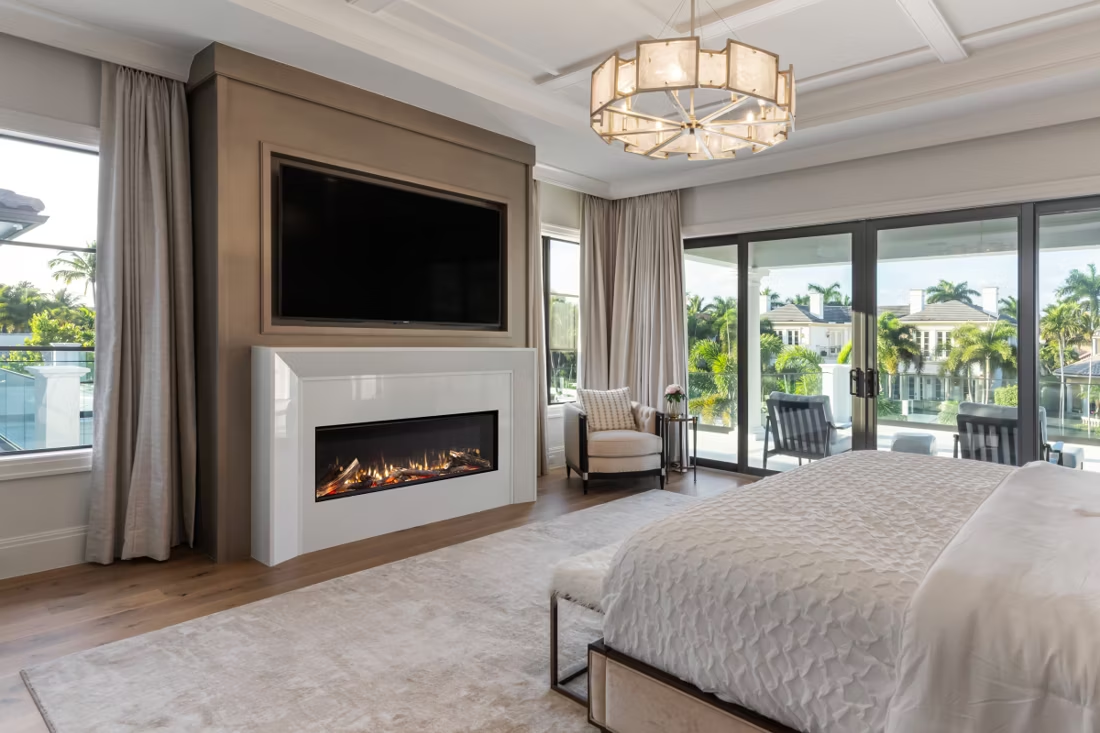
Yes—with an asterisk. Fireplaces are hot and TVs don't like heat. Either put a mantel between them to deflect rising warmth, or choose a fireplace with heat-management technology that creates a cool zone on the wall above—the wall stays around 125 degrees, barely warm, while the room still gets full heat. If you like clean lines and don't want a mantel, heat management is the answer.
Do electric fireplaces actually produce heat?
Yes—most put out around 4,800–5,000 BTUs from a standard outlet, which comfortably warms a bedroom, office, or den as a comfort-zone heater. What they won't do is carry a whole house the way wood, gas, or pellet can. Think of electric as ambiance-first with honest supplemental heat: flames on with no heat in July, flames plus warmth in January.
What is an in-home preview and do I need one?
It's a visit where a hearth professional measures your space, confirms the model you picked actually works in your home, and walks the specs—framing, gas line, venting, finish work—before anything is ordered. Some details you just can't know until you see the house. Never make a down payment without one; it's the single most-skipped step that burns buyers.
Does a fireplace add value to my home?
On average, a fireplace adds back to the home about the same amount you spent installing it. Add the monthly savings from heating the rooms you actually use instead of the whole house—often hundreds of dollars a year—and the value case is strong before you even count what a fire does for how your family uses the room.
Nearby Dealers
Hearth shops serving Hoover and the surrounding area. Every listing shows whether it is a WhyFire partner, a dealer we have verified as authorized for the brands we recommend, or a local business carrying hearth products. No manufacturer pays for placement. How we verify dealers →
Colonial Fireplace Company
Southern Fireplaces
Allgas, Inc. - Gardendale
Electric Service in Hoover
An electric fireplace's heater draws about 1,500 watts—pennies per hour at local rates.
Alabama Power Co
Find your electric fireplace in Hoover.
Tell us a bit about your home and we'll match you with a trusted local dealer and send over a free Project Guide & Parts List—the right electric fireplace or insert for your space, the exact parts needed, and who to call in Hoover to install it.
Find Your Fireplace →