
Effortless warmth for Homewood's mild winters.
Homewood's winters rarely demand serious heat, but a gas fireplace still gives you real flame, instant comfort, and warmth on demand. I'll match you with a trusted local dealer who can tell you exactly what's possible in your home.
Every Project Starts From One of These Five Situations
A fireplace built for ambiance, not survival.
Homewood sits at about 700 feet in the hills just south of downtown Birmingham, tucked between Shades Valley and Red Mountain. With only about 2,500 heating degree days a year and average winter lows around 35°F, this isn't a place where anyone needs a fireplace to survive January. Compare that to a place like Duluth, MN, which racks up over 9,000 heating degree days most winters—Homewood's heating season is short, mild, and mostly about comfort rather than necessity. That's exactly why gas has become the dominant fireplace fuel in neighborhoods like Edgewood, Rosedale, and West Homewood: it delivers real flame and instant warmth on the handful of genuinely cold nights, without the wood supply, ash, and chimney maintenance that made more sense for earlier generations of Alabama homes.
Homewood is fully within the Spire Alabama (formerly Alagasco) service territory, so most homes already have gas service run to the house for water heaters, ranges, or furnaces—extending a line to a fireplace is usually a straightforward add rather than a major infrastructure project. Many of the older brick homes near Homewood Park and along Lakeshore Drive still have the original masonry fireplace and chimney, which makes a gas insert conversion one of the most common projects I see requested here. For homeowners who'd rather skip gas lines and venting altogether, Alabama Power also serves the area at a residential rate around 16.8 cents per kWh, which keeps electric fireplace inserts in the conversation for secondary rooms.
Three steps. No salesperson until you're ready.
Tell us about your project
Your zip code, your situation, and the fuel you're leaning toward—or let the answers point you to one.
See what's actually available
The brands dealers within 100 miles genuinely carry—real options, never a catalog mirage.
Get your dealer & Project Guide
A trusted local dealer, plus the free Project Guide & Parts List that names every component of the job.
Frequently Asked Questions
How much does a gas fireplace installation cost in Homewood?
Most gas fireplace and insert installations in Homewood run somewhere between $3,500 and $9,000, depending on the unit and how much work the venting and gas line require. A gas insert dropped into an existing masonry fireplace—common in the older brick homes around Edgewood and Rosedale—sits toward the lower end if a gas line is already nearby. A new direct-vent fireplace built into a wall for a remodel or addition, with a fresh gas line run from the meter, lands higher. A local dealer will give you a firm number after seeing your specific chimney or wall configuration.
Can I convert my existing wood-burning fireplace to gas?
Yes, and it's one of the more common requests I hear from Homewood homeowners, especially in the older housing stock near Homewood Park and Shades Cahaba. Most of these conversions use a gas insert that slides into the existing masonry firebox, running a stainless liner up the original chimney and a gas line in from the nearest available connection. Because Homewood is fully served by Spire Alabama, running that gas line is usually simple compared to homes further out in unincorporated Jefferson County. The result keeps your existing brick surround and mantel but swaps the wood-and-ash routine for a switch or remote.
Do I need natural gas, or is propane more common here?
Natural gas is the standard in Homewood—Spire Alabama serves essentially the entire city, so if your home already has gas for the water heater or range, a fireplace hookup is a simple extension of existing service. Propane shows up occasionally for detached structures, pool houses, or outdoor living spaces where running a line from the house isn't practical, but it's the exception here rather than the rule. Most fireplace models can be configured for either fuel, so it comes down to what's already at the house.
Will my gas fireplace still work if the power goes out?
Most will, which matters more in Homewood for summer thunderstorms and the occasional ice event than for sustained winter cold. Units with intermittent pilot ignition (IPI) run on a small battery backup that lights the fireplace on demand even with the power out. Valor fireplaces go a step further—their pilot assembly generates its own electricity through the thermocouple, so there's no battery to remember to replace. Either way, ask your local dealer about the ignition system on any unit you're considering, since standing-pilot models and IPI models handle outages differently.
What's the difference between a gas fireplace, insert, and stove?
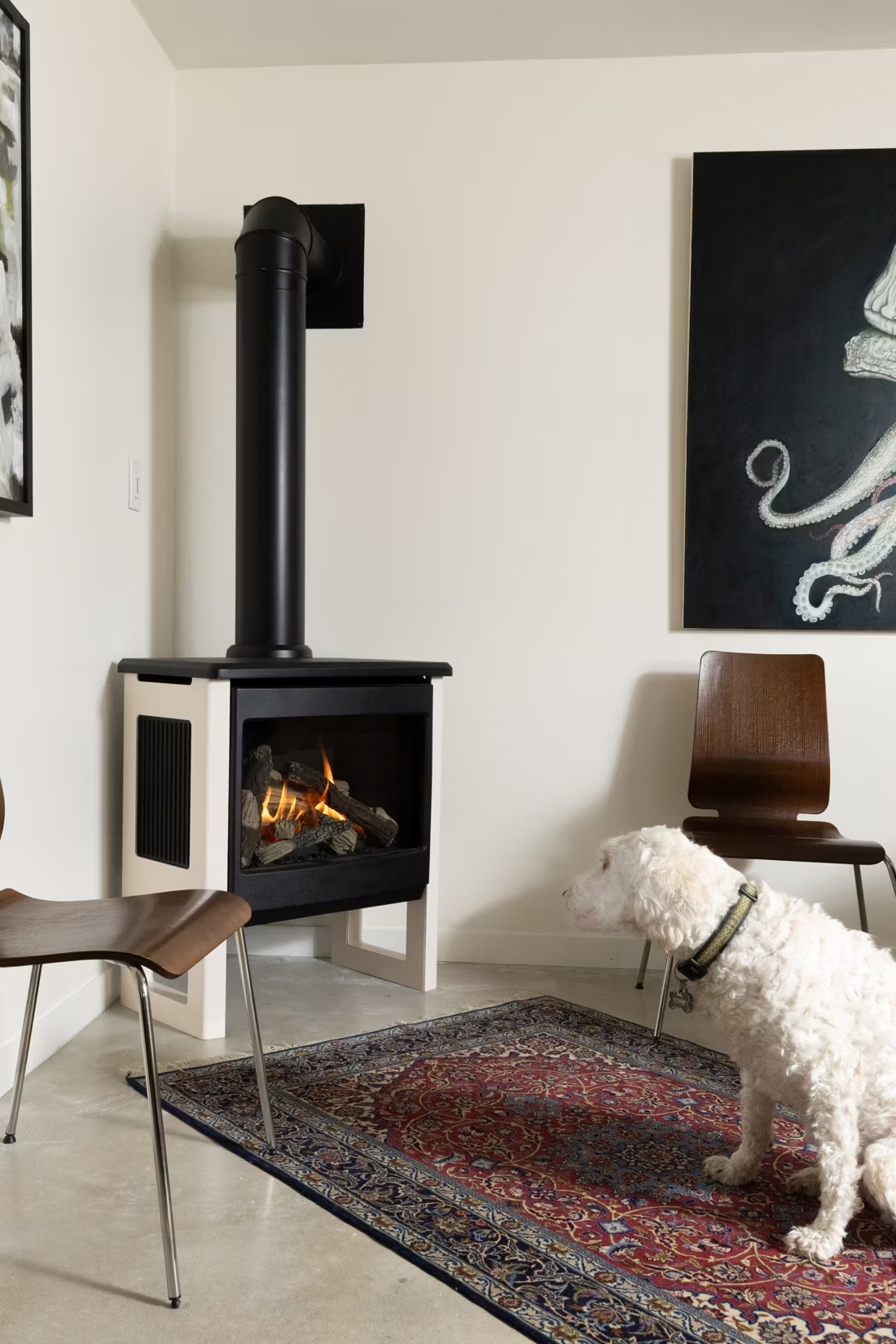
A gas fireplace is a fully built-in unit framed into a wall, typically used in new construction or a remodel where there's no existing masonry opening. A gas insert is sized to slide into an existing masonry fireplace, sealing it up and using the original chimney as the vent path—this is the go-to option for Homewood's many older brick homes. A gas stove is a freestanding cast-iron or steel unit that sits on the floor, similar in shape to a wood stove but running on gas. For a house with an existing fireplace opening, an insert is almost always the simplest and most cost-effective route.
Do I need a permit for a gas fireplace in Homewood?
Yes—the City of Homewood Building Department requires a permit for gas fireplace installations, and the gas line work itself needs to be done by a licensed gas-fitter and inspected separately. Most established hearth dealers in the Birmingham area handle this paperwork as part of the installation, coordinating the gas line, venting, and inspection so you're not left managing multiple trades and permits yourself.
What's the difference between vented and vent-free gas fireplaces?
Vented (direct-vent) gas fireplaces draw combustion air from outside and exhaust it back outside through sealed pipe, which keeps combustion byproducts out of the house entirely. Vent-free units burn gas directly into the room without any exterior venting—they're legal in Alabama with proper room-sizing and an oxygen depletion sensor, but they do release some water vapor and combustion gases into your living space. Given Homewood's mild climate, vent-free is sometimes tempting for a small den or bonus room where running venting is inconvenient, but most local dealers steer homeowners toward direct-vent whenever there's a reasonable path for the vent pipe, simply because it's the cleaner and more universally recommended option.
How often does a gas fireplace need to be serviced?
Plan on an annual inspection, ideally in early fall before the fireplace sees regular use through the mild Homewood winter. A technician checks the burner, pilot assembly, venting, and gas connections, and cleans the glass and interior. It's a quick visit compared to wood chimney sweeping, but skipping it is how pilot and ignition problems go unnoticed until the first cold night in December.
Should I go with gas, electric, or wood in Homewood?
Wood is genuinely uncommon here—with average winter lows around 35°F and a short heating season, most Homewood homeowners don't need the heat output of a wood stove, and the local oak, pine, and hickory that would fuel one is more work than the climate justifies. That leaves the real choice between gas and electric. Gas gives you a live flame, real heat output on the coldest nights, and the ambiance most people actually want from a fireplace. Electric fireplaces, running off Alabama Power at roughly 16.8 cents per kWh, skip the gas line and venting entirely and can go almost anywhere, but they trade the real flame for an LED effect and produce less usable heat. For a primary living space, gas is usually the better fit in Homewood; electric works well as a low-commitment option for a bedroom or basement.
Why is my open fireplace making my house colder?
Open fireplaces suck—literally. As the fire burns, it consumes air your furnace already paid to heat and pulls it out through the chimney, so the house is actually colder after the fire goes out than before you lit it. An insert fixes this: it seals the chimney, puts fixed glass across the front, and turns that hole in your house into a real heat source.
What's the difference between an insert and a zero-clearance fireplace?
An insert is a fireplace that slides into a pre-existing wood-burning fireplace—if you don't have one, there's nothing to insert it into. A zero-clearance fireplace is built into a framed wall, which makes it the answer for remodels and new construction. Simple test: existing masonry fireplace means insert; blank or framed wall means zero-clearance.
Can a fireplace actually lower my heating bill?
Yes—by creating a comfort zone. A furnace heats every square foot of the house just to warm the one room you're in; a gas fireplace on low burns roughly a sixth of the gas a typical furnace does. Set the furnace around 55–60 degrees as a baseline, then heat the rooms your family actually uses. Families who heat this way commonly save $20–$60 a month.
Does a fireplace add value to my home?
On average, a fireplace adds back to the home about the same amount you spent installing it. Add the monthly savings from heating the rooms you actually use instead of the whole house—often hundreds of dollars a year—and the value case is strong before you even count what a fire does for how your family uses the room.
Nearby Dealers
Hearth shops serving Homewood and the surrounding area. Every listing shows whether it is a WhyFire partner, a dealer we have verified as authorized for the brands we recommend, or a local business carrying hearth products. No manufacturer pays for placement. How we verify dealers →
Southern Fireplaces
Colonial Fireplace Company
Allgas, Inc. - Gardendale
Find your gas fireplace in Homewood.
Tell me a bit about your home and I'll put together a free Project Guide & Parts List—the right unit, the vent kit it needs, and a trusted local Homewood-area dealer who can install it.
Find Your Fireplace →