
Instant Heat Without the Hassle in Greensboro, Alabama.
No chimney, no gas line, no venting—just plug in or wire in and go. Find the right electric fireplace or insert for your Hale County home and connect with a trusted local dealer.
Every Project Starts From One of These Five Situations
Simple heat for Hale County's short, mild winters.
Greensboro sits at just 267 feet of elevation in Alabama's Black Belt, in a climate zone (3A) with a mild, short winter heating season and an average winter low around 36°F. For perspective, a genuinely cold-climate town like Duluth, MN has a heating season roughly four times as long—Greensboro sees roughly a quarter of that load. That difference matters when you're choosing a heat source: this is a town where a fireplace needs to add warmth and ambiance on the occasional cold snap, not carry the whole house through a five-month winter.
With a population just over 2,400, many Greensboro homes are older—some in the town's antebellum and historic districts—built without central duct systems designed for heavy heating loads, and plenty of newer homes and mobile homes in outlying Hale County rely on window units or heat pumps for daily comfort. An electric fireplace slots into either kind of home without new venting, gas lines, or masonry work: a plug-in unit runs on a standard outlet, and a built-in or wall-mounted model needs only a dedicated circuit. Electric service in the area splits between Alabama Power Co, which covers much of the city itself, and Black Warrior Electric Member Corp, the rural cooperative serving many outlying parts of the county—worth knowing since it affects what a unit costs to run.
Three steps. No salesperson until you're ready.
Tell us about your project
Your zip code, your situation, and the fuel you're leaning toward—or let the answers point you to one.
See what's actually available
The brands dealers within 100 miles genuinely carry—real options, never a catalog mirage.
Get your dealer & Project Guide
A trusted local dealer, plus the free Project Guide & Parts List that names every component of the job.
Frequently Asked Questions
How much does an electric fireplace cost to install in Greensboro?
Electric is by far the least expensive fireplace option to install here. A freestanding or plug-in electric stove or mantel package that uses a standard 120-volt outlet typically runs $150 to $600 for the unit itself, with no professional installation required beyond setting it in place. A built-in wall unit or insert that needs a dedicated 240-volt circuit run by a licensed electrician usually lands between $1,000 and $3,000 in Hale County, depending on wall framing and how far the unit sits from the home's electrical panel. Compare that to the cost of running new gas line or venting a wood stove, and it's clear why electric is often the fastest, cheapest path to a working fireplace in a town this size.
Will an electric fireplace actually heat a room, or is it just for looks?
Most electric fireplaces produce around 4,600 to 5,000 BTUs (roughly 1,500 watts) of supplemental heat, enough to comfortably warm a 400 to 500 square foot room. Given Greensboro's mild winters—an average low of 36°F and a short, light heating season—that output is often sufficient to handle a living room or bedroom on its own during the coldest weeks, unlike in a place like Fargo, ND, where an electric unit would only ever be a minor supplement to a furnace. Most homeowners here pair one with existing central heat or a window unit rather than relying on it exclusively.
Does it matter which electric utility serves my home?
It affects your running cost. Alabama Power Co, which serves much of the city of Greensboro, bills residential customers around $0.1677 per kWh. Black Warrior Electric Member Corp, the cooperative covering many rural parts of Hale County, runs closer to $0.1324 per kWh. Running a typical 1,500-watt insert for five hours an evening costs roughly $1.26 a night on Alabama Power versus about $0.99 a night on Black Warrior EMC—a modest but real difference if you're running the unit daily through the winter.
Do I need a permit to install an electric fireplace in Greensboro?
A simple plug-in unit that uses an existing outlet needs no permit at all. If you're installing a built-in insert or wall unit that requires a new dedicated circuit, Hale County requires an electrical permit for that wiring work, and most licensed electricians pull it as part of the job. There's no fire-code inspection comparable to what wood stoves or gas fireplaces require, since there's no combustion, chimney, or gas line involved—which is part of why electric installs move faster than the alternatives.
Electric vs. gas—which makes more sense for my home?
Piped natural gas isn't widely available in a town of Greensboro's size, so propane is the standard gas option in Hale County, which means a tank installation or rental and periodic fuel delivery. Electric skips all of that—no tank, no gas line, no delivery schedule, just an outlet or a simple circuit. Gas does offer a larger flame and higher continuous heat output, which some homeowners prefer for a primary living space. But for renters, smaller homes, or anyone who wants to avoid managing a propane account, electric is usually the simpler and cheaper path here.
Why isn't wood a bigger option in Greensboro?
Oak, pine, and hickory are all common in the timberland surrounding Hale County, and some of Greensboro's older homes still have working masonry fireplaces. But with winters this mild—a heating season about a quarter as long as a cold-climate town like Duluth, MN—most households simply don't need the daily wood-splitting, chimney maintenance, and permitting that come with a wood stove. An electric insert set into an existing fireplace opening delivers the same visual warmth and evening glow without the firewood storage or annual chimney sweep, which is why we generally point Greensboro homeowners toward electric or gas rather than wood.
What type of electric fireplace fits my space—insert, mantel, or wall-mounted?
If you already have a masonry fireplace opening—common in some of Greensboro's older homes—an electric insert is the simplest retrofit, sliding into the existing firebox with no construction work. For a room without an existing fireplace, a freestanding mantel package gives you a furniture-style unit that plugs into any outlet and can be moved later. Wall-mounted, flush units work well in newer construction or a media-room build where a low-profile linear look is the goal. A local dealer can walk your space and tell you which fits best.
What happens to my electric fireplace during a power outage?
It goes dark—electric units, unlike wood stoves, provide no heat without power. That's worth planning around in Hale County, where ice storms and spring severe weather occasionally knock out power for hours at a time. If outage backup matters to you, many homeowners pair a daily-use electric fireplace with a portable generator or a propane heater kept on hand for those situations, rather than relying on the electric unit as their only heat source.
How much maintenance does an electric fireplace need?
Very little. There's no chimney to sweep, no annual gas technician visit, and no ash to clean up. Basic upkeep is limited to dusting the vents and occasionally wiping the glass front. The LED lights that create the flame effect typically last 20,000-plus hours of use before needing replacement, which for most households in Greensboro works out to a decade or more of regular evening use. It's the lowest-upkeep fireplace option available, which is part of the appeal for a mild climate like this one.
Can I put a TV above my fireplace?
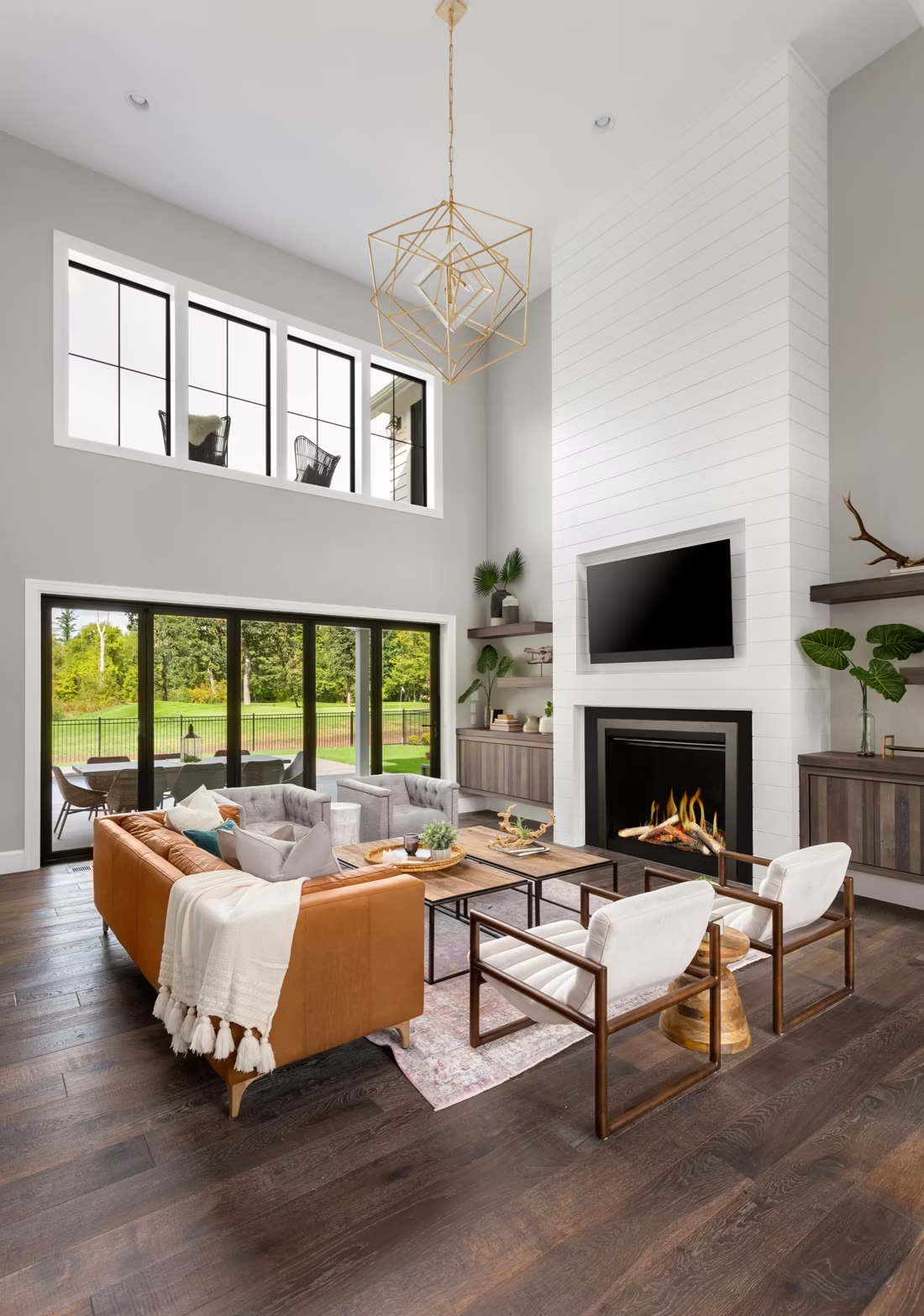
Yes—with an asterisk. Fireplaces are hot and TVs don't like heat. Either put a mantel between them to deflect rising warmth, or choose a fireplace with heat-management technology that creates a cool zone on the wall above—the wall stays around 125 degrees, barely warm, while the room still gets full heat. If you like clean lines and don't want a mantel, heat management is the answer.
Does an electric fireplace need a vent or chimney?
No—that's its superpower. An electric fireplace needs a wall and an outlet, period. No vent pipe, no gas line, no clearances to design around, which is why it works in bedrooms, offices, apartments, and walls where venting a gas or wood unit would be impractical or impossible. Installation is typically the simplest and least expensive of any fireplace type.
How much should I budget for a fireplace?
For an average home—covering the fireplace, the vent pipe, and basic installation—a budget between $3,900 and $5,500 gives you a lot of options across wood, gas, and pellet. By the time you add finish work, gas line, and electrical, the average complete installation lands between $5,000 and $12,000 all-in. In a remodel or new build, a good rule is to put about 2.5% of the total project cost toward the fireplace.
Can I install a fireplace myself?
If you're putting a fire in your house on purpose, it's best to work with an expert. Unless you're genuinely experienced in framing, gas line, vent pipe, and the national code on clearances to combustibles, have a professional do it—and ideally the same company that sells you the fireplace, so warranty, service, and liability all live under one roof.
Nearby Dealers
Hearth shops serving Greensboro and the surrounding area. Every listing shows whether it is a WhyFire partner, a dealer we have verified as authorized for the brands we recommend, or a local business carrying hearth products. No manufacturer pays for placement. How we verify dealers →
South Alabama Gas
Energy Shop
The Fire Place
Electric Service in Greensboro
An electric fireplace's heater draws about 1,500 watts—pennies per hour at local rates.
Alabama Power Co
Black Warrior Elec Member Corp
Find your electric fireplace in Greensboro.
Tell us a bit about your home and we'll match you with a trusted local dealer and send a free Project Guide & Parts List—sized for your room, whether that's a simple plug-in unit or a hardwired mantel or insert.
Find Your Fireplace →