
Instant warmth for Grayson Valley's mild, short winters.
With winter lows averaging 31°F and just under 3,000 heating degree days a year, Grayson Valley homes don't need a wood-burning setup—they need a gas fireplace that flips on for the cold snaps and looks good the rest of the year. Find the right unit and get matched with a trusted local dealer.
Every Project Starts From One of These Five Situations
A climate built for occasional heat, not constant heat.
Grayson Valley sits in unincorporated Jefferson County at just under 1,000 feet elevation, in climate zone 3A—a humid, mild-winter zone where the average low is 31°F and the area logs roughly 2,998 heating degree days a year. Compare that to a place like Duluth, MN, which racks up over 10,000 HDD, and it's clear why wood stoves and pellet stoves never really took hold here. There's no cutting-permit culture, no need to stack cords of oak or hickory for a season of primary heat. What Grayson Valley homes actually want is heat that shows up fast on the handful of genuinely cold nights and disappears the rest of the time.
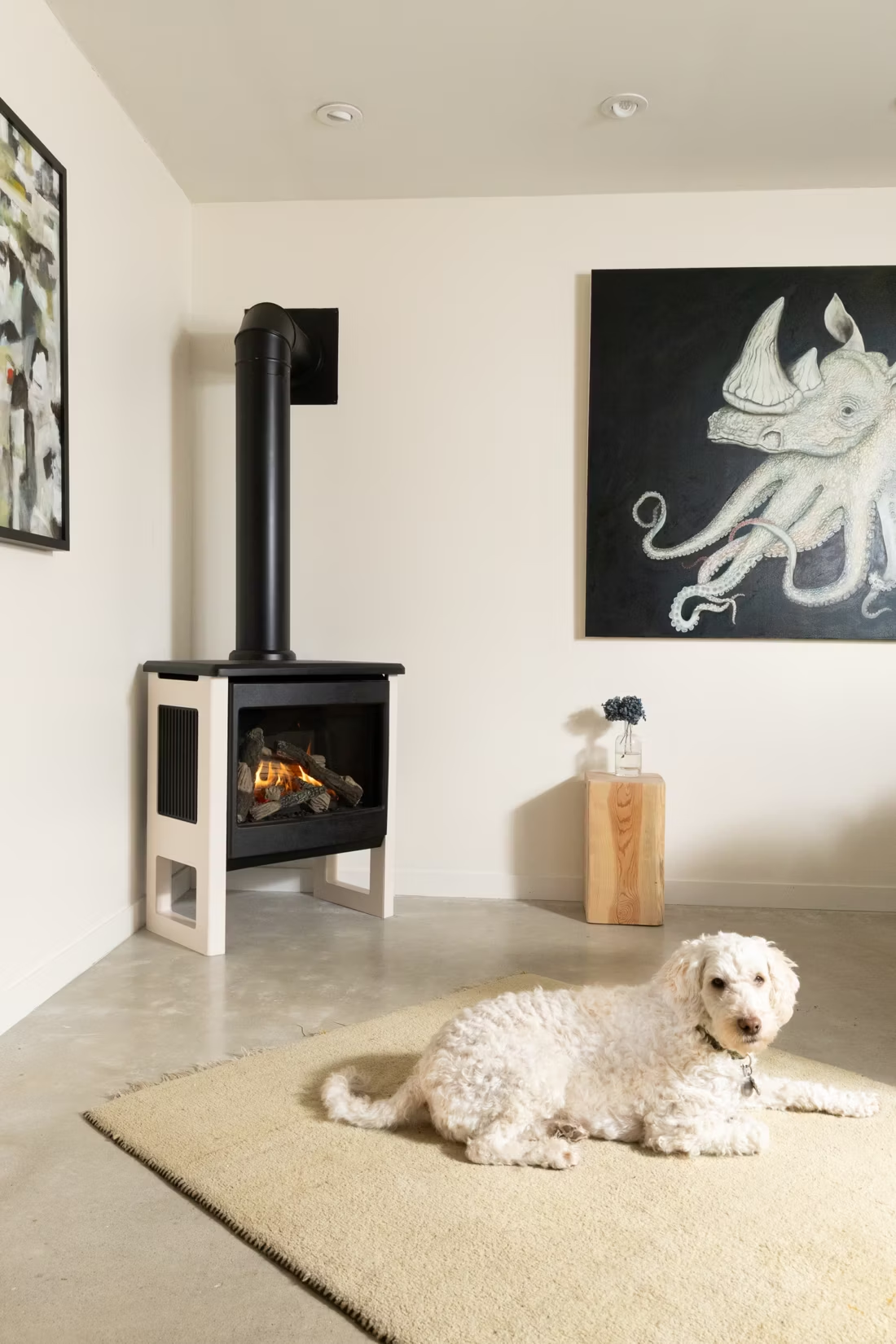
That's where gas fireplaces earn their place. A direct-vent gas insert or built-in unit gives you real, instant heat at the flip of a switch or a wall switch app, without the ash, the smoke, or the standing pilot light running all winter. Alabama Power serves electric heating in the area at roughly 16.77 cents per kWh—noticeably higher than the national average—which is part of why a gas fireplace or gas log set often pencils out better than electric resistance heat for the living room on a cold January evening. Whether your home is served by natural gas or propane, a properly vented gas unit gives Grayson Valley homeowners ambiance most of the year and genuine supplemental warmth when a cold front actually rolls through Jefferson County.
Three steps. No salesperson until you're ready.
Tell us about your project
Your zip code, your situation, and the fuel you're leaning toward—or let the answers point you to one.
See what's actually available
The brands dealers within 100 miles genuinely carry—real options, never a catalog mirage.
Get your dealer & Project Guide
A trusted local dealer, plus the free Project Guide & Parts List that names every component of the job.
Frequently Asked Questions
How much does a gas fireplace installation cost in Grayson Valley?
Most gas fireplace and insert installations in the Birmingham metro area, including Grayson Valley, run between roughly $3,500 and $9,000. A direct-vent gas insert dropped into an existing masonry fireplace with gas already nearby sits toward the lower end. A new built-in gas fireplace for a remodel—with framing, venting, and a fresh gas or propane line run—lands in the middle to upper end. Homes that need a new propane tank set or a longer line run from the meter will run higher. A local dealer will give you a firm number after seeing your fireplace opening and chimney or wall access in person.
Is my home on natural gas or will I need propane?
It depends on where in Jefferson County you're located—parts of the Birmingham metro area are served by natural gas, while many unincorporated pockets like Grayson Valley rely on propane for gas appliances. If you already have a gas range, water heater, or furnace, you likely know which fuel you're on. If not, a local hearth dealer can confirm during a site visit and will either tie into your existing gas line or coordinate a propane tank setup with a local propane supplier. Nearly every gas fireplace and insert on the market can be configured for either fuel—it's a matter of the correct orifice and regulator, not a different product.
Do I need a permit to install a gas fireplace in Grayson Valley?
Because Grayson Valley is unincorporated, permitting runs through the Jefferson County Building Department rather than a city office. A new gas line connection and any framing changes typically require a permit and inspection, and gas line work should be done by a licensed gas-fitter regardless of whether you're on natural gas or propane. Most established hearth dealers in the area handle the permit filing and inspection scheduling as part of the installation, so you're not stuck coordinating separate trades yourself.
Will my gas fireplace still work if the power goes out?
Most will, with the right ignition system. Units with intermittent pilot ignition (IPI) run on a small battery backup—usually AA batteries inside the unit—that kicks in automatically if power drops, so the fireplace still lights on demand. Valor fireplaces take a different approach: their pilot assembly generates its own electricity through the thermocouple, so there's no battery to remember at all. Given how often Jefferson County sees ice storms and severe thunderstorm outages, that's a real consideration worth asking your dealer about when you're comparing models.
Can I convert an existing wood-burning fireplace to gas?
Yes, and it's a common project for the older brick fireplaces found in a lot of Grayson Valley and Center Point-area homes. A gas insert is fitted into the existing masonry opening, typically with a stainless steel liner run up the existing flue, and connected to a new gas or propane line. It preserves the look of the original fireplace while eliminating the ash, smoke, and creosote upkeep that wood-burning fireplaces need—upkeep that's arguably overkill for a climate that only sees hard freezes a handful of nights a year.
What's the difference between vented and vent-free gas fireplaces?
Vented (direct-vent) gas fireplaces draw combustion air from outside and exhaust it back outside through sealed venting—they're the standard recommendation almost everywhere, including Grayson Valley. Vent-free gas units burn directly into the room without external venting; they're legal in Alabama but come with strict room-size and ventilation requirements, and they release some moisture and combustion byproducts into your living space. For a mild-winter home where the fireplace runs more for ambiance and occasional supplemental heat than nonstop heavy use, a direct-vent unit is usually the better long-term choice, though a local dealer can walk you through both options for your specific room.
Gas fireplace or electric fireplace—which makes more sense here?
Electric fireplaces and inserts are simple to install—often just a matter of ventless clearance and a standard outlet—and they work well in Grayson Valley's climate for supplemental warmth in a bedroom or den. But at Alabama Power's residential rate of about $0.1677 per kWh, running an electric unit for real heat output costs more per hour than gas. Gas fireplaces cost more upfront to install because of the venting and line work, but deliver stronger, cheaper heat on the nights you actually need it. If you mainly want flame ambiance with zero installation hassle, electric is fine; if you want a fireplace that can genuinely warm a room during a January cold front, gas is the better investment.
How often does a gas fireplace need to be serviced?
An annual inspection is the standard recommendation for any gas-burning appliance, even one that only runs occasionally through a mild Alabama winter. A technician checks the burner, pilot assembly, gas connections, and venting, and cleans the glass and interior. Local hearth and propane service companies in the Birmingham area typically charge somewhere in the $150–$250 range for this visit. It's a quick appointment, but skipping it for several years is how minor issues like a dirty igniter or a small gas leak go unnoticed.
Why isn't wood heat more common in Grayson Valley?
It's mostly the climate. With winter lows averaging 31°F and under 3,000 heating degree days a year, Jefferson County simply doesn't get the sustained cold that makes wood a practical primary heat source the way it is in states like Minnesota or Montana. Local oak, pine, and hickory are all fine firewood species, but there's no established cutting-permit system or firewood-delivery infrastructure here because the demand isn't there. A handful of homeowners still install wood-burning fireplaces for the occasional fire and ambiance, but for anyone weighing an actual heating decision for Grayson Valley, gas is by far the more practical and more commonly installed option.
What's the difference between an insert and a zero-clearance fireplace?
An insert is a fireplace that slides into a pre-existing wood-burning fireplace—if you don't have one, there's nothing to insert it into. A zero-clearance fireplace is built into a framed wall, which makes it the answer for remodels and new construction. Simple test: existing masonry fireplace means insert; blank or framed wall means zero-clearance.
Is my gas fireplace wasting gas?
If it was installed more than 15 years ago, probably. Older gas fireplaces keep a standing pilot light burning all the time, and that little flame can cost a couple hundred dollars a year. Newer models use pilot-on-demand ignition—the pilot lights only when you use the fireplace and goes out when you turn it off.
Does a fireplace add value to my home?
On average, a fireplace adds back to the home about the same amount you spent installing it. Add the monthly savings from heating the rooms you actually use instead of the whole house—often hundreds of dollars a year—and the value case is strong before you even count what a fire does for how your family uses the room.
Can a fireplace actually lower my heating bill?
Yes—by creating a comfort zone. A furnace heats every square foot of the house just to warm the one room you're in; a gas fireplace on low burns roughly a sixth of the gas a typical furnace does. Set the furnace around 55–60 degrees as a baseline, then heat the rooms your family actually uses. Families who heat this way commonly save $20–$60 a month.
Nearby Dealers
Hearth shops serving Grayson Valley and the surrounding area. Every listing shows whether it is a WhyFire partner, a dealer we have verified as authorized for the brands we recommend, or a local business carrying hearth products. No manufacturer pays for placement. How we verify dealers →
Allgas, Inc. - Gardendale
Southern Fireplaces
Colonial Fireplace Company
Find your gas fireplace in Grayson Valley.
Tell us a bit about your home and we'll send you a free Project Guide & Parts List—the exact parts, vent kit, and a trusted local Grayson Valley-area dealer to install it right.
Find Your Fireplace →