
Comfortable heat, no chimney required.
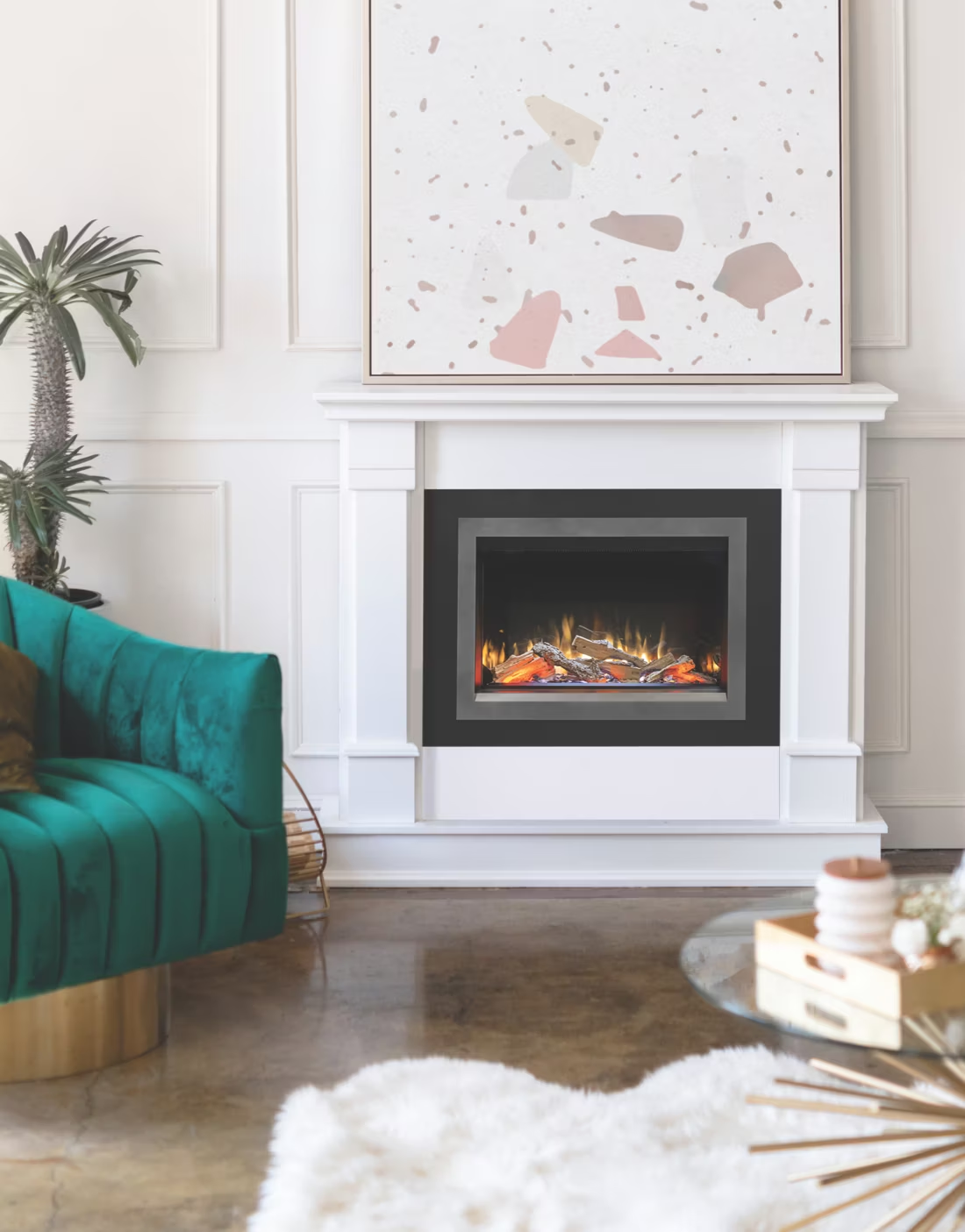
Grant's mild Marshall County winters rarely call for a wood-burning setup—an electric fireplace or insert delivers instant warmth and ambiance without venting, gas lines, or firewood. Get matched with a trusted local dealer.
Every Project Starts From One of These Five Situations
Mild winters, modern convenience.
Grant sits in Marshall County near Lake Guntersville at about 1,186 feet, in climate zone 3A, where the average winter low hovers around 30°F and the area sees a fairly short, mild winter heating season—a fraction of what a place like Duluth, Minnesota sees in a single season. That mild profile is exactly why wood-burning fireplaces and pellet stoves are rare fits here: most homes don't need a high-BTU primary heat source, and central HVAC already covers the handful of genuinely cold nights each winter.
What Grant homes actually want from a fireplace is supplemental warmth and ambiance in a den, bedroom, or bonus room—and that's where electric fireplaces excel. There's no chimney to build, no gas line to run, and no cutting permit to track down. Depending on your address, you're served by either Alabama Power Co (about 16.77¢/kWh) or North Alabama Electric Coop (about 12.83¢/kWh); running a typical 1,500-watt insert a few hours an evening costs roughly $1 to $1.50 a day on either grid, which makes electric heat an easy add rather than a big commitment.
Three steps. No salesperson until you're ready.
Tell us about your project
Your zip code, your situation, and the fuel you're leaning toward—or let the answers point you to one.
See what's actually available
The brands dealers within 100 miles genuinely carry—real options, never a catalog mirage.
Get your dealer & Project Guide
A trusted local dealer, plus the free Project Guide & Parts List that names every component of the job.
Frequently Asked Questions
How much does it cost to install an electric fireplace in Grant?
Plug-in electric fireplace inserts and freestanding units are the most affordable option in Grant—many run $200 to $1,000 for the unit itself, with no professional installation required since they plug into a standard 120V outlet. Built-in electric fireplaces or wall-mounted units that need a dedicated 20-amp circuit typically add $300 to $800 in electrician labor on top of the unit cost. Because there's no venting, gas line, or masonry work involved, even a full built-in electric fireplace project in Grant usually lands well under what a wood or gas installation would cost.
Will running an electric fireplace raise my power bill much?
It depends on which utility serves your address. Alabama Power Co customers pay about 16.77¢ per kWh, while North Alabama Electric Coop customers pay closer to 12.83¢ per kWh. A standard 1,500-watt electric fireplace run on high for 4 hours a day uses about 6 kWh, which works out to roughly $1.00 a day on the co-op rate or about $1.35 a day with Alabama Power—call it $30 to $40 a month for regular evening use. Most owners run the heater setting only when they want the extra warmth and leave it on flame-only (a few watts) the rest of the time, which keeps costs even lower.
Does it matter which electric utility serves my home in Grant?
It matters for your operating cost, not for which fireplace models you can install—any electric fireplace works on either grid since both deliver standard 120V/240V residential service. Alabama Power Co and North Alabama Electric Coop serve different parts of Marshall County, and their residential rates differ by several cents per kWh (16.77¢ versus 12.83¢). If you're deciding between a smaller plug-in unit and a higher-wattage built-in model, knowing your provider's rate is worth checking before you commit to daily use as a heat source.
What's the difference between a built-in electric fireplace, an insert, and a freestanding unit?
A built-in electric fireplace is designed to be framed into a wall like a traditional fireplace, with a finished mantel and surround—it's the closest look to a real hearth. An electric insert is sized to slide into an existing masonry firebox, which is useful if a Grant home has an old wood-burning fireplace that's no longer used and the owner wants a cleaner, no-maintenance alternative. A freestanding or stove-style unit needs no installation at all beyond an outlet, and it can be moved from room to room. For most homes in Grant, the choice comes down to whether there's an existing fireplace opening to fill or a bare wall to build into.
Do I need a permit to install an electric fireplace in Grant?
A plug-in electric fireplace that uses an existing standard outlet doesn't require a permit. If you're adding a dedicated circuit for a built-in unit, or having an electrician run new wiring, that electrical work typically does require a permit through the Marshall County Building Department, and it should be pulled by a licensed electrician as part of the job. There's no cutting permit, no chimney inspection, and no EPA certification requirement to worry about—one of the practical advantages of going electric in a mild climate like Grant's.
Will my electric fireplace still work during a power outage?
No—this is worth being upfront about. Electric fireplaces run entirely on household power, so if the grid goes down, whether through Alabama Power Co or North Alabama Electric Coop, the fireplace goes with it. That's different from a wood stove, which needs no power at all, or many gas fireplaces, which can run on battery backup during an outage. If backup heat during storms is a priority for your Grant home, an electric fireplace should be considered a comfort and ambiance feature rather than emergency heat—pair it with another plan for outages.
Can an electric fireplace actually heat a room, or is it just for looks?
Both, depending on the model. Most electric fireplaces include a built-in fan heater rated around 1,500 watts, which is enough to comfortably heat a single room of 300 to 400 square feet—plenty for a bedroom, den, or bonus room in a Grant home. They won't replace central heat for the whole house, but for supplemental warmth on the handful of nights each winter when the temperature drops toward that 30°F average low, they do real work. Every unit can also run on flame-only mode with the heater off, which is popular for year-round ambiance in a mild climate like this one.
What's the best type of electric fireplace for a home in Grant?
Because Grant's winters are mild—the area sees a fairly short, mild winter heating season, well under half of what colder Midwestern towns like Fargo, North Dakota see—most homeowners here do fine with a mid-size 1,500-watt insert or built-in unit rather than a heavy-duty whole-room heater. Models with a realistic LED flame effect and a thermostat (rather than a simple high/low switch) tend to hold up best for daily use, since you can dial in just enough heat without overshooting a small den or bedroom. A local dealer can match wattage and size to your specific room.
Electric vs. gas vs. wood—which is right for my Grant home?
Wood and pellet heating are genuinely uncommon in Grant—the mild climate zone 3A winters here don't generate the sustained cold that makes cordwood or pellet appliances worth the maintenance, and few local homes are set up for them. Gas is a solid option if your home already has natural gas or propane service, offering instant real-flame heat that also works during power outages. Electric is the simplest path for most Grant homeowners: no venting, no fuel storage, no gas line, and a straightforward install whether you choose a plug-in unit or a built-in with a dedicated circuit. For a mild-winter town like this, electric covers the ambiance-and-supplemental-heat use case most people are actually looking for.
Can I put a TV above my fireplace?
Yes—with an asterisk. Fireplaces are hot and TVs don't like heat. Either put a mantel between them to deflect rising warmth, or choose a fireplace with heat-management technology that creates a cool zone on the wall above—the wall stays around 125 degrees, barely warm, while the room still gets full heat. If you like clean lines and don't want a mantel, heat management is the answer.
Do electric fireplaces actually produce heat?
Yes—most put out around 4,800–5,000 BTUs from a standard outlet, which comfortably warms a bedroom, office, or den as a comfort-zone heater. What they won't do is carry a whole house the way wood, gas, or pellet can. Think of electric as ambiance-first with honest supplemental heat: flames on with no heat in July, flames plus warmth in January.
What is an in-home preview and do I need one?
It's a visit where a hearth professional measures your space, confirms the model you picked actually works in your home, and walks the specs—framing, gas line, venting, finish work—before anything is ordered. Some details you just can't know until you see the house. Never make a down payment without one; it's the single most-skipped step that burns buyers.
Can I install a fireplace myself?
If you're putting a fire in your house on purpose, it's best to work with an expert. Unless you're genuinely experienced in framing, gas line, vent pipe, and the national code on clearances to combustibles, have a professional do it—and ideally the same company that sells you the fireplace, so warranty, service, and liability all live under one roof.
Nearby Dealers
Hearth shops serving Grant and the surrounding area. Every listing shows whether it is a WhyFire partner, a dealer we have verified as authorized for the brands we recommend, or a local business carrying hearth products. No manufacturer pays for placement. How we verify dealers →
Discount Building Supply
Sand Mountain Brick
Alabama Fireplace & Construction Specialties
Allgas, Inc. - Arab
Allgas, Inc. - Boaz
Electric Service in Grant
An electric fireplace's heater draws about 1,500 watts—pennies per hour at local rates.
Alabama Power Co
North Alabama Electric Coop
Find your electric fireplace in Grant.
Tell us a bit about your home and we'll put together a free Project Guide & Parts List—the right electric fireplace or insert for your space, with a trusted local dealer matched to install it.
Find Your Fireplace →