
Warmth and ambiance, without the wood pile.
Etowah County's mild winters along the Coosa River don't call for a cord of oak and a chimney sweep. An electric fireplace gives you real ambiance and zone heat with a plug, not a permit fight—find the right unit and a trusted local dealer to install it.
Every Project Starts From One of These Five Situations
Electric heat that fits Etowah County's mild winters.
Etowah County sits in climate zone 3A with a winter low average around 33°F and a mild, short winter heating season—a fraction of what a place like Duluth, MN or Burlington, VT logs each winter. Gadsden, Attalla, Rainbow City, and Southside see occasional cold snaps off the Coosa River valley and the foothills near Lookout Mountain, but nothing that demands a full wood-burning heating system for most homes. Central heat pumps handle the bulk of the heating load here, which is exactly the setup an electric fireplace is built to complement.
Homes across Etowah County are served by Alabama Power in and around Gadsden, with rural co-ops covering pockets of the county's outer townships. Electric fireplaces run on standard household current, need no chimney, no gas line, and no venting whatsoever—which means a plug-in unit can go into an existing masonry fireplace opening this weekend, and a wired built-in wall unit is usually a single afternoon for a licensed electrician. For a county where wood heat (oak, pine, and hickory are the local staples) is more tradition than necessity, electric offers the visual warmth of a fire with none of the ash, creosote, or fire-tending most Etowah County homeowners don't actually want anymore.
Three steps. No salesperson until you're ready.
Tell us about your project
Your zip code, your situation, and the fuel you're leaning toward—or let the answers point you to one.
See what's actually available
The brands dealers within 100 miles genuinely carry—real options, never a catalog mirage.
Get your dealer & Project Guide
A trusted local dealer, plus the free Project Guide & Parts List that names every component of the job.
Frequently Asked Questions
How much does an electric fireplace installation cost in Etowah County?
Plug-in electric fireplace inserts that slide into an existing masonry firebox typically run $300 to $900 installed, since there's no venting or gas line involved—often just a stove sweep to size the insert correctly. Built-in wall units or mantel-surround electric fireplaces that require new electrical circuits and finish carpentry run higher, generally $1,500 to $3,500 depending on the wall framing and whether a licensed electrician needs to run a dedicated 120V or 240V line. Local dealers serving Gadsden, Attalla, and the rest of Etowah County will size and quote the job during an in-home visit rather than guessing off square footage alone.
Will an electric fireplace actually heat a room in Etowah County?
Most electric fireplaces are rated to comfortably heat 400 to 1,000 square feet, which makes them a strong fit for zone heating a living room, den, or bonus room in Etowah County—supplementing the central heat pump most homes already run rather than replacing it. Given the county's mild winter average in the low 30s and short, modest winter heating season, an electric unit can genuinely carry the room on cool mornings and shoulder-season evenings without the central system kicking on at all. For whole-home heating during Alabama's occasional hard freezes, homeowners still lean on their existing HVAC.
Do I need a permit to install an electric fireplace in Etowah County?
A simple plug-in electric fireplace insert generally doesn't require a permit since it draws from an existing outlet. A built-in electric fireplace that requires a new dedicated circuit does require an electrical permit—through the City of Gadsden building department if you're inside city limits, or the Etowah County building department for unincorporated areas around Southside, Rainbow City, or Attalla. Most local dealers coordinate the electrical permit as part of the installation, so it's rarely something the homeowner has to file directly.
Electric vs. gas fireplace—which is right for my Etowah County home?
Gas fireplaces put out real, sustained heat and can run through a power outage with a battery-backup ignition system, which matters when a spring storm knocks out Alabama Power lines. Electric fireplaces skip the gas line and venting entirely, install in an afternoon, and cost less upfront and to maintain—but they need electricity to run, so they're not a backup heat source in an outage. Given Etowah County's mild heating load, many homeowners choose electric for the convenience and lower install cost, especially in a secondary living space, and save gas for a primary fireplace if they're doing a larger renovation.
Can an electric insert go into my existing wood-burning fireplace?
Yes—converting an existing masonry wood-burning fireplace to an electric insert is one of the most common projects local Etowah County dealers handle. The insert slides into the existing firebox opening, plugs into a nearby outlet (or a new dedicated circuit if the unit calls for more amperage), and eliminates the need for chimney sweeping, ash cleanup, and cutting or hauling oak and hickory firewood. It's a popular option for older Gadsden homes with a masonry fireplace that no longer gets much use.
What's the difference between an electric fireplace, insert, and stove?
An electric fireplace is typically a built-in or wall-mounted unit designed for a framed opening or new construction. An electric insert is sized to slide into an existing masonry firebox, using the existing opening rather than requiring new framing. An electric stove is a freestanding cabinet-style unit that sits on the floor like a traditional wood stove but plugs into a standard outlet—a good fit for a room without any existing fireplace. For most Etowah County homes with an underused masonry fireplace, an insert is the simplest upgrade; new construction or remodels often favor a built-in wall unit instead.
How much does it cost to run an electric fireplace in Etowah County?
Most electric fireplaces draw around 1,500 watts on the heat setting, which at typical Alabama Power residential rates works out to roughly 15 to 20 cents an hour of heated use—a few dollars a month for the kind of evening use most Etowah County homeowners get out of a zone-heat unit in a den or living room. Running the unit on flame-only mode with the heater off costs only a fraction of that, since the LED flame effect uses minimal power.
Electric vs. pellet stove—which makes more sense here?
Pellet stoves burn compressed wood pellets from regional suppliers like Lignetics or Hamer Pellet Fuel and put out real, substantial heat, but they require a hopper to load, ash to empty, and electricity to run the auger and blower—so they're not a true backup during an outage either. Electric fireplaces skip the pellet bags and venting altogether, install faster, and cost less to set up. Given Etowah County's mild winter heating needs, most homeowners here choose electric for supplemental ambiance and reach for pellet only if they want a more substantial heat source for a larger, less-insulated space.
Electric vs. wood-burning fireplace—which is right for my home?
Wood offers the authentic crackle-and-glow experience and heats through a power outage, and Etowah County has no shortage of local oak, pine, and hickory to burn. But wood also means chimney sweeps, ash cleanup, and sourcing or splitting firewood—upkeep most homeowners in a mild-winter county like this one don't want for a fireplace that's used more for atmosphere than survival heat. Electric skips all of that: no chimney, no venting, no permit hassle for a simple plug-in unit, and instant on-off operation. For most Etowah County living rooms, electric wins on convenience; wood still has its place for those who want the real thing or a rural property with backup heat in mind.
Can I put a TV above my fireplace?
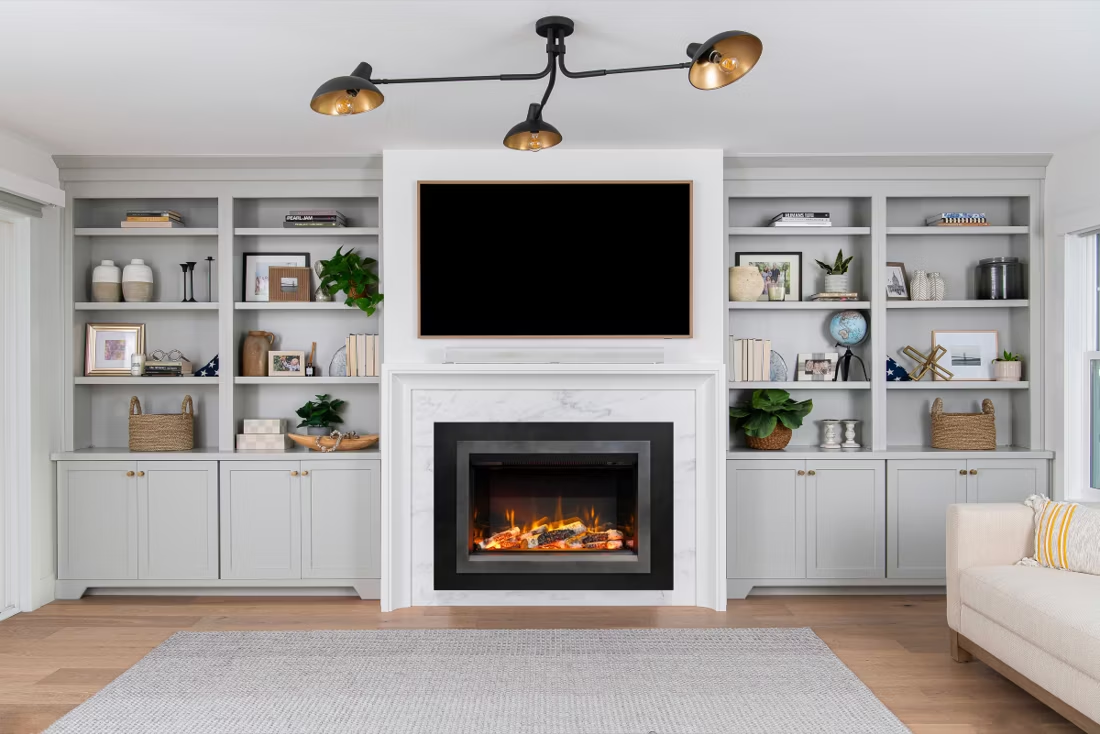
Yes—with an asterisk. Fireplaces are hot and TVs don't like heat. Either put a mantel between them to deflect rising warmth, or choose a fireplace with heat-management technology that creates a cool zone on the wall above—the wall stays around 125 degrees, barely warm, while the room still gets full heat. If you like clean lines and don't want a mantel, heat management is the answer.
What fireplace styles should I know before shopping?
Four cover most of the market: screen-front traditional (mesh front, open feel, fits craftsman homes), traditional door set (the classic look you grew up with), modern linear (wide, low, the statement piece for entertaining), and clean face contemporary (no trim—your tile or stone runs right to the fire's edge). Walk in knowing those four terms and you're ahead of most buyers.
Does a fireplace add value to my home?
On average, a fireplace adds back to the home about the same amount you spent installing it. Add the monthly savings from heating the rooms you actually use instead of the whole house—often hundreds of dollars a year—and the value case is strong before you even count what a fire does for how your family uses the room.
Can a fireplace actually lower my heating bill?
Yes—by creating a comfort zone. A furnace heats every square foot of the house just to warm the one room you're in; a gas fireplace on low burns roughly a sixth of the gas a typical furnace does. Set the furnace around 55–60 degrees as a baseline, then heat the rooms your family actually uses. Families who heat this way commonly save $20–$60 a month.
Stove and Fireplace Dealers in Etowah County
Listings include WhyFire partner dealers, dealers we have verified as authorized for the brands we recommend, and established local businesses that carry hearth products. Every listing shows which one it is. The ones marked Preferred run on WhyFire's software, so they can show you real pricing and book your appointment right here. No manufacturer pays for placement. How we verify dealers →
Nomad Homestead Supply
Southern Fireplaces
Allgas, Inc. - Gadsden
Blossman Gas And Appliance
Sand Mountain Brick
Anniston Fireplace Essa
Anniston Fireplace & Patio
Find your electric fireplace in Etowah County.
Tell us a bit about your home and we'll match you with the right electric fireplace or insert, plus a free Project Guide & Parts List and a trusted local Etowah County dealer to install it.
Find Your Fireplace →