
Warm ambiance for Eagle Point, without the chimney.
Mild Shelby County winters mean you don't need a wood-burning setup to feel the warmth. Find the right electric unit and connect with a trusted local dealer.
Every Project Starts From One of These Five Situations
A mild climate that doesn't need a furnace-grade fire.
Eagle Point sits in the Birmingham metro at just under 700 feet of elevation, in a climate zone (3A) where winter lows average a mild 35°F and the area sees a short, light heating season, only a few winter months of noticeable heating need. Compare that to Fargo, ND or Duluth, MN, where homeowners need a stove that can hold a fire for 20 hours through single-digit nights—nothing here demands that. Wood and pellet appliances are genuinely rare in this part of Shelby County, not because of any local restriction, but because the heating load simply doesn't call for them.
That's exactly the gap electric fireplaces fill well. There's no chimney to maintain, no wood to split and stack in the Alabama humidity, and no combustion byproducts to vent. Alabama Power Co. serves the area at roughly 16.77 cents per kWh, and most electric fireplace units—whether a wall-mounted linear unit, a built-in insert, or a freestanding mantel—sip power compared to running central HVAC. For Eagle Point homes, an electric fireplace is less about heating the whole house and more about giving one room real ambiance and a comfortable supplemental warmth on the occasional cold front.
Three steps. No salesperson until you're ready.
Tell us about your project
Your zip code, your situation, and the fuel you're leaning toward—or let the answers point you to one.
See what's actually available
The brands dealers within 100 miles genuinely carry—real options, never a catalog mirage.
Get your dealer & Project Guide
A trusted local dealer, plus the free Project Guide & Parts List that names every component of the job.
Frequently Asked Questions
How much does an electric fireplace installation cost in Eagle Point?
Plug-in freestanding or wall-mounted electric fireplaces that run off a standard household outlet typically run $200 to $1,500 for the unit itself, with little to no installation cost beyond mounting hardware. Built-in electric fireplaces or inserts set into a wall or existing masonry opening usually cost $1,500 to $4,000 installed, including custom framing, a surround, and any electrical work a licensed electrician needs to do if a dedicated circuit is required. Local dealers in the Birmingham metro can walk you through both routes based on the room and your budget.
How much does it cost to run an electric fireplace in Eagle Point?
Most electric fireplaces draw around 1,500 watts on the heat setting. At Alabama Power's residential rate of about $0.1677 per kWh, running one for five hours an evening costs roughly $1.26 a day, or about $38 a month of regular use. Running the unit on flame-only mode with the heater off costs only a few cents an hour, since the LED flame effect itself uses very little power—a nice option for year-round ambiance without a heating bill bump in July.
Will an electric fireplace actually heat my Eagle Point home?
An electric fireplace will comfortably heat a single room—most models are rated for 400 to 1,000 square feet—but it isn't designed to replace central heat for the whole house. Given Eagle Point's mild winters (a short, light heating season and winter lows averaging 35°F), that's rarely a problem: most homeowners here use electric fireplaces as supplemental heat in a living room or bedroom, letting central HVAC handle the rest of the house on the handful of genuinely cold nights each winter.
Do I need a permit to install an electric fireplace in Eagle Point?
Plug-in units that use an existing outlet typically don't require any permit. Built-in electric fireplaces or inserts that need a new dedicated circuit or any wiring modification generally do require an electrical permit through Shelby County's building department, and the work should be done by a licensed electrician. Most local dealers who sell built-in units either employ a licensed electrician or coordinate with one as part of the installation, so you're not left managing that step yourself.
What's the difference between an electric insert, a built-in, and a freestanding electric fireplace?
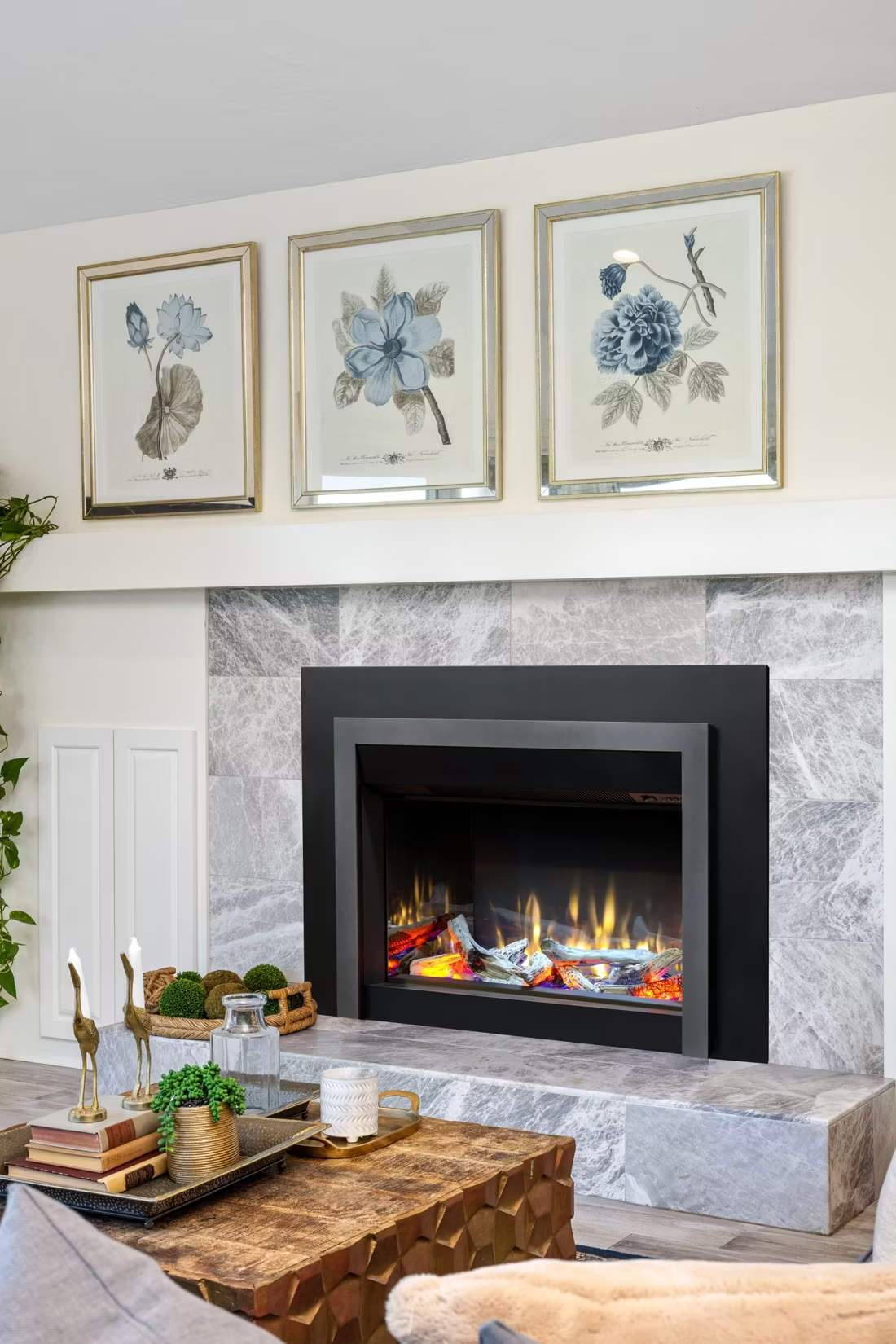
A freestanding electric fireplace (often called a media console or mantel style) is a standalone piece of furniture—plug it in and you're done, no installation required. An electric insert is designed to slot into an existing fireplace opening, which works well in Eagle Point homes that have an old wood-burning firebox they no longer use. A built-in electric fireplace is installed into new framing in a wall, similar to how a gas fireplace would be installed, and usually needs an electrician for the circuit. Which one makes sense depends mostly on whether you're retrofitting an existing opening or building new.
Why don't more homes in Eagle Point use wood or pellet stoves?
It's mostly a climate math problem. With winter lows averaging 35°F and only a short, light heating season, Eagle Point doesn't have the sustained cold that makes a wood or pellet stove worth the investment in wood storage, venting, and maintenance. Humidity is also a factor—seasoned firewood is harder to keep dry here than it is in drier, colder climates. Gas and electric appliances cover the heating and ambiance needs most Eagle Point homeowners actually have, which is why wood and pellet units are genuinely uncommon in this part of Shelby County.
What brands of electric fireplaces should I look at?
Dimplex, Napoleon, and Touchstone are widely available through hearth dealers and produce reliable flame-effect technology with realistic LED displays and quiet operation. Higher-end units add features like adjustable flame color, ember bed effects, and app or voice control. For an Eagle Point living room, a mid-range linear or insert-style unit from one of these brands typically hits the right balance of realistic flame and heat output—a local dealer can show you the difference in person, which matters more than it seems from photos online.
How much maintenance does an electric fireplace need?
Very little. There's no chimney to sweep, no ash to remove, and no annual combustion inspection required. Occasionally dust the unit and wipe down the glass front, and check that the LED flame bulbs (on older models) are functioning—most newer units use long-life LEDs rated for tens of thousands of hours. That low-maintenance profile is one of the bigger reasons electric fireplaces are popular for secondary living spaces, guest rooms, and rental properties around Eagle Point.
Electric vs. gas fireplace—which is right for my Eagle Point home?
Gas fireplaces put out more real heat and can run during a power outage if they have a standing pilot, which matters during the occasional ice storm that knocks out power in this part of Alabama. Electric fireplaces install with far less work—no gas line, no venting, often no permit at all for plug-in units—and cost less upfront. Given Eagle Point's mild heating needs, many homeowners choose electric for a bedroom or den where ambiance matters more than serious heat output, and reserve gas for a main living area where they want backup heat during outages. A local dealer can walk through both options for your specific room.
Do electric fireplaces actually produce heat?
Yes—most put out around 4,800–5,000 BTUs from a standard outlet, which comfortably warms a bedroom, office, or den as a comfort-zone heater. What they won't do is carry a whole house the way wood, gas, or pellet can. Think of electric as ambiance-first with honest supplemental heat: flames on with no heat in July, flames plus warmth in January.
Does an electric fireplace need a vent or chimney?
No—that's its superpower. An electric fireplace needs a wall and an outlet, period. No vent pipe, no gas line, no clearances to design around, which is why it works in bedrooms, offices, apartments, and walls where venting a gas or wood unit would be impractical or impossible. Installation is typically the simplest and least expensive of any fireplace type.
Can a fireplace actually lower my heating bill?
Yes—by creating a comfort zone. A furnace heats every square foot of the house just to warm the one room you're in; a gas fireplace on low burns roughly a sixth of the gas a typical furnace does. Set the furnace around 55–60 degrees as a baseline, then heat the rooms your family actually uses. Families who heat this way commonly save $20–$60 a month.
Can I install a fireplace myself?
If you're putting a fire in your house on purpose, it's best to work with an expert. Unless you're genuinely experienced in framing, gas line, vent pipe, and the national code on clearances to combustibles, have a professional do it—and ideally the same company that sells you the fireplace, so warranty, service, and liability all live under one roof.
Nearby Dealers
Hearth shops serving Eagle Point and the surrounding area. Every listing shows whether it is a WhyFire partner, a dealer we have verified as authorized for the brands we recommend, or a local business carrying hearth products. No manufacturer pays for placement. How we verify dealers →
Colonial Fireplace Company
Southern Fireplaces
Allgas, Inc. - Gardendale
Electric Service in Eagle Point
An electric fireplace's heater draws about 1,500 watts—pennies per hour at local rates.
Alabama Power Co
Find your electric fireplace in Eagle Point.
Tell us a bit about your home and we'll match you with a trusted local dealer and send over a free Project Guide & Parts List—the exact unit, mounting or insert specs, and any electrical work your Eagle Point installation needs.
Find Your Fireplace →