
Comfortable heat for Concord's mild winters.
A gas fireplace gives Jefferson County homes instant, controllable warmth for the handful of genuinely cold nights each year—plus year-round ambiance. Find the right unit and get matched with a trusted local dealer.
Every Project Starts From One of These Five Situations
Instant warmth for a climate that rarely goes below freezing.
Concord sits in Jefferson County at about 573 feet elevation, in climate zone 3A, where the average winter low hovers around 34°F and the area sees a comparatively mild, short heating season each year—a fraction of what a place like Duluth, MN or Burlington, VT sees. That mild profile is exactly why wood and pellet stoves are uncommon here; most Concord homes don't need—or want—the maintenance of a full-time wood-heating setup. Gas, on the other hand, fits the climate well: it delivers real heat on the cold snaps that do roll through, and doubles as an attractive, low-maintenance focal point the rest of the year.
Concord is unincorporated and largely rural, and natural gas mains don't reach every property the way they might in nearby Birmingham. For many homes here, propane is the practical fuel source for a gas fireplace or insert—supplied by a regional propane company with either a buried or above-ground tank. Alabama Power serves the area for electric service, and residential rates run about 16.8 cents per kWh, which is worth factoring in if you're weighing a gas unit against an electric alternative. Either way, a properly sized gas fireplace gives you heat at the flip of a switch, including during winter storms that knock out power to the area.
Three steps. No salesperson until you're ready.
Tell us about your project
Your zip code, your situation, and the fuel you're leaning toward—or let the answers point you to one.
See what's actually available
The brands dealers within 100 miles genuinely carry—real options, never a catalog mirage.
Get your dealer & Project Guide
A trusted local dealer, plus the free Project Guide & Parts List that names every component of the job.
Frequently Asked Questions
How much does a gas fireplace installation cost in Concord?
For a propane-fueled direct-vent fireplace or insert—the most common setup in and around Concord, since natural gas mains don't reach every property—a typical installation runs $3,500 to $8,500. That range covers the unit itself, venting, and a gas line connection. If you don't already have a propane tank on the property, add $500 to $2,500 for tank installation or a lease agreement with a regional propane supplier. A full built-in gas fireplace for new construction or a remodel, with framing and a longer gas run, tends to land toward the higher end, sometimes reaching $10,000. A local dealer will give you a firm number after seeing your home.
Is natural gas available in Concord, or do I need propane?
Most of Concord and the surrounding unincorporated parts of Jefferson County rely on propane rather than piped natural gas—the community's rural layout means gas mains generally haven't been extended out this far. A local hearth dealer can confirm whether your specific street has natural gas access, but plan on propane as the default. The good news is that nearly every gas fireplace, insert, or stove on the market today can be configured for either fuel; your installer simply sets the correct orifice and regulator for propane instead of natural gas.
Do I need a permit to install a gas fireplace in Concord?
Yes. Because Concord is unincorporated, permitting runs through Jefferson County rather than a city building department—both a building permit for the appliance and a separate permit for any new gas line work. The gas line portion has to be pulled by a licensed gas fitter, which is one of the main reasons to work with an established local hearth dealer: they coordinate the propane or gas line, the venting, and the inspection instead of leaving you to manage separate trades.
Will my gas fireplace still work if the power goes out?
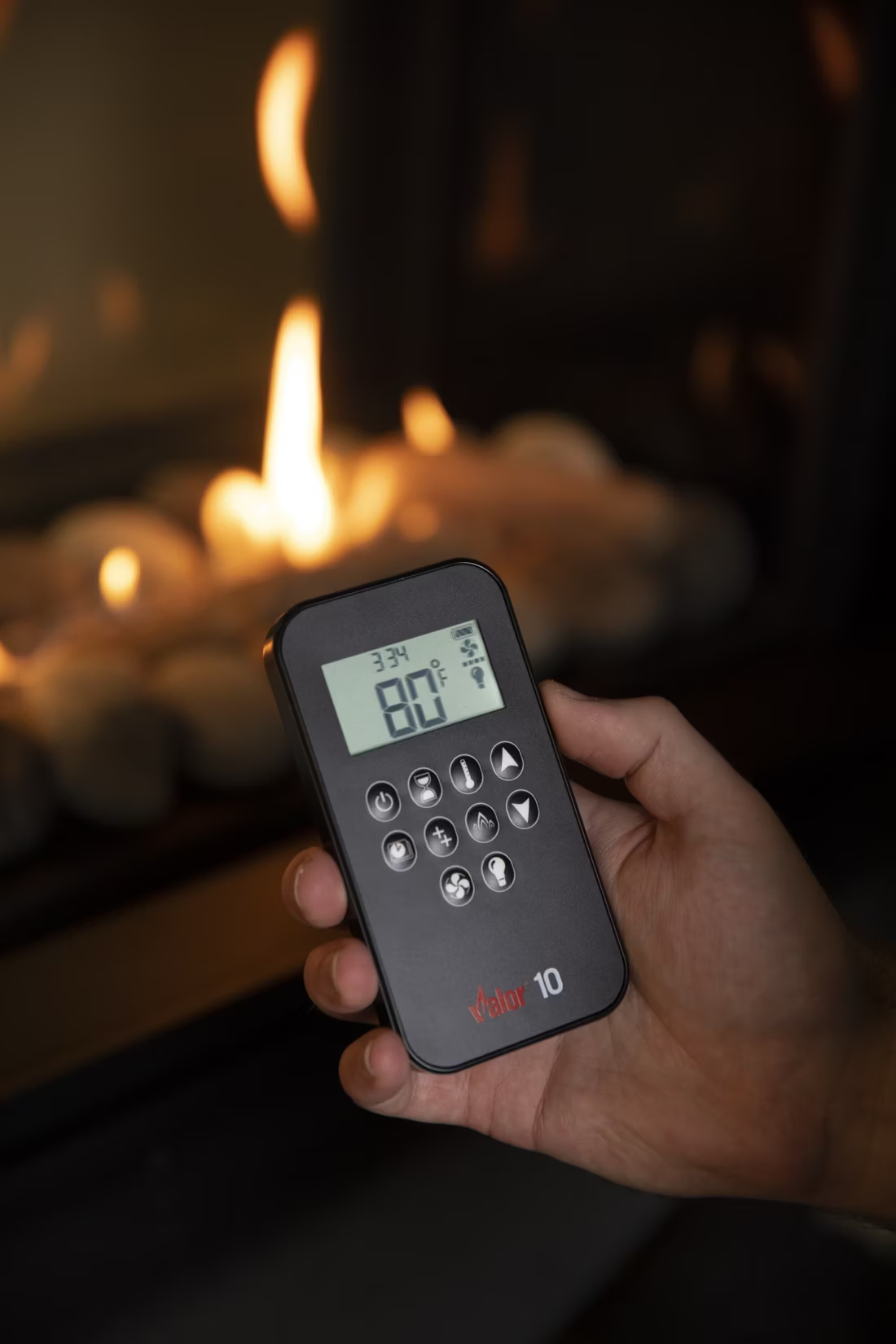
Most modern gas fireplaces will, with the right ignition system. Units with IPI (intermittent pilot ignition) run on a small battery backup that kicks in automatically when utility power drops, so the fireplace still lights on demand. Valor fireplaces go a step further—their pilot assembly generates its own electricity through the thermocouple, so there are no batteries to remember at all. For Concord, where summer storms and the occasional ice event can knock out Alabama Power service for a day or more, that backup capability is worth asking about when you're comparing units.
What's the difference between a gas fireplace, gas insert, and gas stove?
A gas fireplace is a fully built-in unit, framed into a wall—the right choice for new construction or a remodel where there's no existing masonry fireplace. A gas insert slides into an existing wood-burning fireplace opening and uses the existing chimney as a chase for new direct venting, which is common in Concord's older homes that were originally built around a wood-burning hearth. A gas stove is a freestanding cabinet unit, useful when you want supplemental heat in a room without an existing fireplace at all. For most homeowners here converting an old masonry fireplace, an insert is the simplest path.
Can I convert my old wood-burning fireplace to gas?
Yes, and it's one of the more common projects in this part of Jefferson County. Many homes around Concord still have the original wood-burning fireplace they were built with, often sized for local oak, pine, or hickory cordwood. A gas insert can be installed into that same opening, using a stainless liner run through the existing chimney, typically for $3,500 to $7,500 depending on the insert and whether a propane tank or line extension is needed. You keep the look of the original masonry surround while gaining instant, thermostat-controlled heat and no more ash or creosote to manage.
How often does a gas fireplace need to be serviced?
Plan on an annual inspection, ideally in early fall before you start using it regularly. A technician checks the burner, pilot assembly, gas connections, and venting, and cleans the glass and interior. This is a much smaller job than wood-stove chimney sweeping—most local gas service providers charge in the $150 to $250 range for a standard annual visit—but skipping it is still the most common cause of pilot and ignition issues down the road.
Should I get a vented or vent-free gas fireplace?
Vented (direct-vent) units draw combustion air from outside and exhaust it back outside through sealed venting—they're the safer, more universally recommended choice and deliver real, usable heat. Vent-free units burn fuel directly into the room without external venting; Alabama permits them, and with no air quality non-attainment issues in Jefferson County, there's no regulatory barrier to using one. Even so, vent-free units come with room-size minimums and require an oxygen depletion sensor, and most Concord homeowners still end up choosing a direct-vent model for the better heat output and peace of mind. A local dealer can walk you through both if you want to compare.
Gas fireplace or electric fireplace—which makes more sense in Concord?
Electric fireplaces and inserts are cheaper to install—typically $400 to $1,500—and need no venting or gas line at all, which makes them an easy add to a bedroom or den. But Alabama Power's residential rate runs about 16.8 cents per kWh, on the higher side nationally, so an electric unit used for real supplemental heat through the winter can cost more to run than a propane appliance over time. Gas costs more upfront but produces more heat per dollar and keeps working during a power outage if it has battery-backup ignition. For a primary living space where you'll actually lean on the heat, gas tends to be the better long-term value; for occasional ambiance in a secondary room, electric is hard to beat on simplicity.
Why is my open fireplace making my house colder?
Open fireplaces suck—literally. As the fire burns, it consumes air your furnace already paid to heat and pulls it out through the chimney, so the house is actually colder after the fire goes out than before you lit it. An insert fixes this: it seals the chimney, puts fixed glass across the front, and turns that hole in your house into a real heat source.
What does it take to replace an existing fireplace?
Fireplaces are like icebergs—bigger behind the wall than in front of it. Replacement means removing the surrounding tile or stone (the finish material laps onto the fireplace face), pulling the old unit, setting the new one in the same enclosure, and re-finishing the wall. A hearth professional can determine what's behind your wall without demolition during an in-home preview.
Does a fireplace add value to my home?
On average, a fireplace adds back to the home about the same amount you spent installing it. Add the monthly savings from heating the rooms you actually use instead of the whole house—often hundreds of dollars a year—and the value case is strong before you even count what a fire does for how your family uses the room.
How much should I budget for a fireplace?
For an average home—covering the fireplace, the vent pipe, and basic installation—a budget between $3,900 and $5,500 gives you a lot of options across wood, gas, and pellet. By the time you add finish work, gas line, and electrical, the average complete installation lands between $5,000 and $12,000 all-in. In a remodel or new build, a good rule is to put about 2.5% of the total project cost toward the fireplace.
Nearby Dealers
Hearth shops serving Concord and the surrounding area. Every listing shows whether it is a WhyFire partner, a dealer we have verified as authorized for the brands we recommend, or a local business carrying hearth products. No manufacturer pays for placement. How we verify dealers →
Southern Fireplaces
Colonial Fireplace Company
Allgas, Inc. - Gardendale
Find your gas fireplace in Concord.
Tell us a bit about your home and we'll match you with a trusted local dealer and send over a free Project Guide & Parts List—the exact parts, including the vent kit, for your gas fireplace project in Concord.
Find Your Fireplace →