
Instant warmth for Columbiana's short, mild winters.
A clean-burning gas fireplace or insert sized for Shelby County's climate—built for cozy evenings and the occasional ice storm, not sub-zero survival. Get matched with a trusted local dealer.
Every Project Starts From One of These Five Situations
Reliable heat without the hassle of firewood.
Columbiana sits at 577 feet in Shelby County, in climate zone 3A, where the average winter low hovers around 36°F and the whole heating season is fairly short and mild—a fraction of what a place like Duluth, MN or Burlington, VT racks up in a single January. That mild profile means most Columbiana homeowners aren't leaning on a fireplace to survive winter. They're using one for ambiance, for zone heat on the handful of nights that dip into the 20s, and for backup warmth when a Gulf Coast ice storm knocks out power across Shelby County for a day or two.
Because Columbiana is a small town of around 4,500 people, natural gas infrastructure is limited compared to nearby Birmingham, and a good number of homes here run on propane rather than piped gas. Either fuel works fine for a modern direct-vent fireplace or insert—the main difference is whether you're tying into an existing gas line or planning for a propane tank. As the Shelby County seat, Columbiana's building permits run through the Shelby County Building Department, and a good local dealer will handle that paperwork, size the venting correctly, and make sure the install passes inspection the first time—no big-box guesswork.
Three steps. No salesperson until you're ready.
Tell us about your project
Your zip code, your situation, and the fuel you're leaning toward—or let the answers point you to one.
See what's actually available
The brands dealers within 100 miles genuinely carry—real options, never a catalog mirage.
Get your dealer & Project Guide
A trusted local dealer, plus the free Project Guide & Parts List that names every component of the job.
Frequently Asked Questions
How much does a gas fireplace installation cost in Columbiana?
Expect to spend roughly $3,800 to $8,500 in Columbiana, depending on the unit and the scope of work. A direct-vent gas insert dropped into an existing masonry fireplace with a gas line or propane hookup already nearby sits at the lower end. A new built-in gas fireplace for a remodel or an addition—with fresh venting, gas line runs, and finish work—lands in the middle to upper end. If you don't currently have gas service and need a propane tank set and plumbed, add that cost on top. A local dealer can give you a firm number after seeing your space.
Can I convert my existing wood-burning fireplace to gas?
Yes, and it's a common project in Columbiana's older homes, many of which have traditional masonry fireplaces originally built to burn the oak, pine, and hickory common to this part of Shelby County. A gas insert typically slides into that existing firebox, using a stainless liner run through your current chimney for venting. It keeps the look of the original fireplace while giving you push-button heat instead of loading logs. Cost depends mainly on whether the house already has a gas line or propane tank nearby versus needing new fuel supply run to the fireplace.
Should I plan for natural gas or propane in Columbiana?
Propane is the more common answer for a lot of Columbiana homes. Natural gas mains don't reach every part of a town this size, especially outside the older core near downtown and the courthouse square, so many households already run propane for water heaters, ranges, or furnaces. If your home has piped natural gas, adding a fireplace is straightforward. If not, your dealer will spec the fireplace for propane and coordinate with a local propane supplier for a tank—either an existing tank you already have or a new one sized for the added appliance. Alabama Power serves electric needs here, but gas fireplaces run on propane or natural gas, not electricity, for the actual flame.
Will my gas fireplace still work if the power goes out?
Most modern gas fireplaces will, which matters in Shelby County—ice storms roll through central Alabama every few winters and can knock out power for a day or more. Units with IPI (intermittent pilot ignition) run on a small battery backup that kicks in automatically when the power drops, so the fireplace still lights on demand. Valor fireplaces go a step further: their pilot assembly generates its own electricity through the thermocouple, so there's no battery to remember or replace. Ask your local dealer about the ignition system on any model you're considering if outage backup matters to you.
What's the difference between a gas fireplace, insert, and stove?
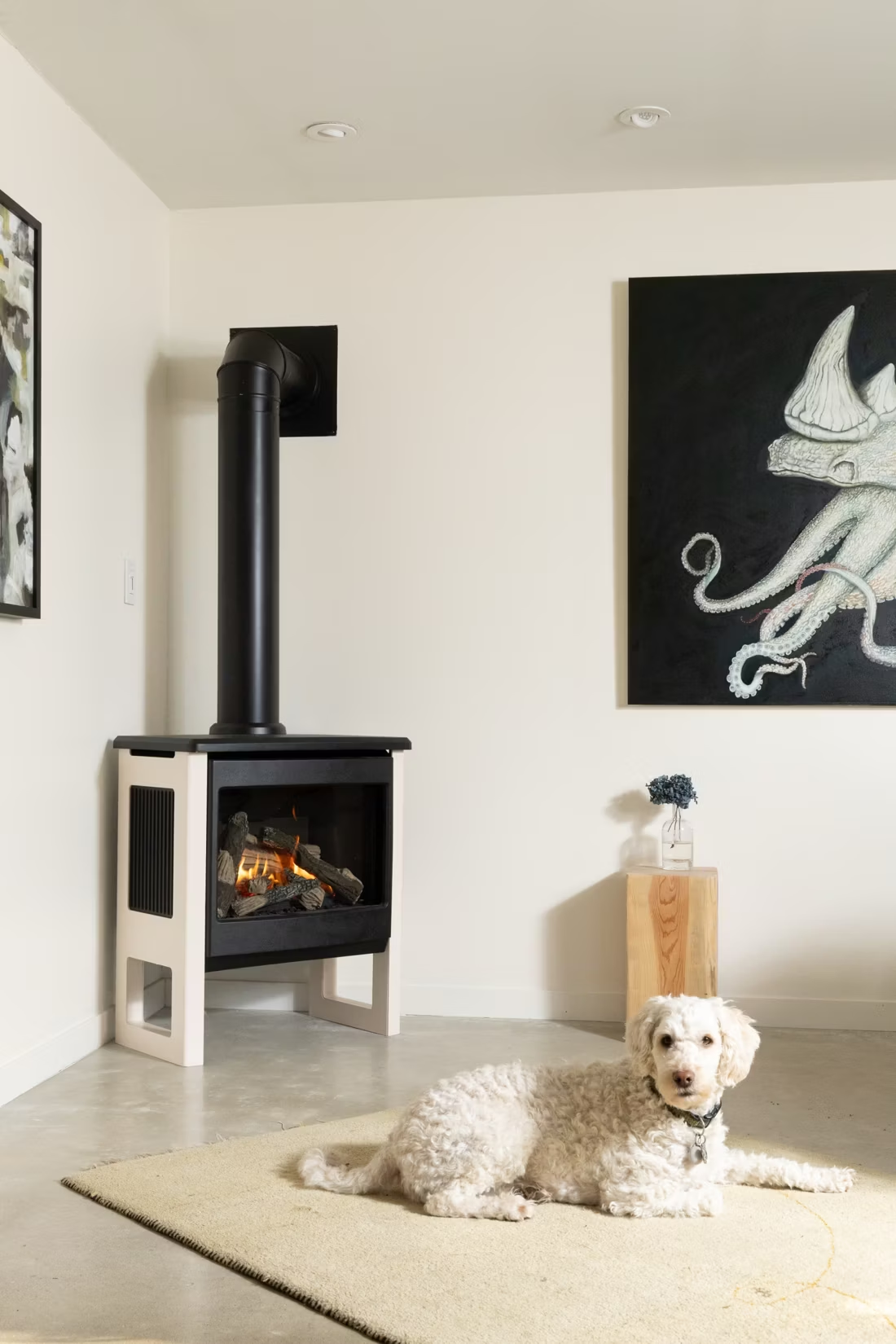
A gas fireplace is a fully built-in unit framed into a wall—the right call for new construction or a remodel without an existing hearth. A gas insert is built to slide into an existing masonry firebox, which fits a lot of the older homes around Columbiana that already have a wood-burning fireplace and chimney. A gas stove is a freestanding cabinet-style unit that sits on the floor and vents out through a wall or existing flue—a good option for a den, sunroom, or garage apartment that doesn't have a fireplace at all. Most Columbiana homeowners upgrading an existing fireplace end up with an insert.
Do I need a permit to install a gas fireplace in Columbiana?
Yes. New gas fireplace installations require a permit through the Shelby County Building Department, and any new gas or propane line work needs to be done by a licensed gas-fitter or plumber. If you're adding a propane tank, there are also setback distances from the house and property lines that your propane supplier will walk you through. A trusted local hearth dealer typically handles the permit and coordinates the gas-fitter and venting inspection together, so you're not stuck managing separate trades yourself.
Are vent-free gas fireplaces allowed in Columbiana?
Alabama allows vent-free (unvented) gas fireplaces, and Columbiana doesn't have the kind of winter air-quality restrictions you'd see in a wildfire-prone or non-attainment area—there are no listed air quality concerns for this area. That said, vent-free units still have to be sized correctly for the room's square footage and equipped with an oxygen depletion sensor, and they release some water vapor and combustion byproducts directly into the living space. For a primary living area, most local dealers still recommend a vented direct-vent unit for cleaner indoor air and more consistent heat output. Vent-free tends to make more sense for a smaller supplemental space like a den or bonus room.
How often does a gas fireplace need to be serviced?
Plan on an annual inspection, ideally before the fireplace sees regular use in the fall. A technician checks the burner, pilot assembly, gas connections, and venting, and cleans the glass and interior components. This runs about $125 to $200 in the Columbiana area. It's a much lighter lift than chimney sweeping for a wood-burning unit, but skipping it is still the most common cause of pilot and ignition problems down the road.
Should I go with gas or wood for my Columbiana home?
Given how mild the climate is here—average winter lows around 36°F and a short heating season—wood-burning fireplaces are fairly uncommon as a primary heat choice in Columbiana, and most new installs skip wood entirely in favor of gas. Where wood shows up at all, it's usually in an older home's original masonry fireplace, burned occasionally for atmosphere with local oak or hickory rather than relied on for heat. Gas gives you instant, no-maintenance warmth for the handful of genuinely cold nights and doubles as backup heat during a winter power outage—which is the more practical fit for how most homes here actually use a fireplace.
What's the difference between an insert and a zero-clearance fireplace?
An insert is a fireplace that slides into a pre-existing wood-burning fireplace—if you don't have one, there's nothing to insert it into. A zero-clearance fireplace is built into a framed wall, which makes it the answer for remodels and new construction. Simple test: existing masonry fireplace means insert; blank or framed wall means zero-clearance.
Can I put a TV above my fireplace?
Yes—with an asterisk. Fireplaces are hot and TVs don't like heat. Either put a mantel between them to deflect rising warmth, or choose a fireplace with heat-management technology that creates a cool zone on the wall above—the wall stays around 125 degrees, barely warm, while the room still gets full heat. If you like clean lines and don't want a mantel, heat management is the answer.
Can I install a fireplace myself?
If you're putting a fire in your house on purpose, it's best to work with an expert. Unless you're genuinely experienced in framing, gas line, vent pipe, and the national code on clearances to combustibles, have a professional do it—and ideally the same company that sells you the fireplace, so warranty, service, and liability all live under one roof.
Can a fireplace actually lower my heating bill?
Yes—by creating a comfort zone. A furnace heats every square foot of the house just to warm the one room you're in; a gas fireplace on low burns roughly a sixth of the gas a typical furnace does. Set the furnace around 55–60 degrees as a baseline, then heat the rooms your family actually uses. Families who heat this way commonly save $20–$60 a month.
Nearby Dealers
Hearth shops serving Columbiana and the surrounding area. Every listing shows whether it is a WhyFire partner, a dealer we have verified as authorized for the brands we recommend, or a local business carrying hearth products. No manufacturer pays for placement. How we verify dealers →
Colonial Fireplace Company
Southern Fireplaces
Find your gas fireplace in Columbiana.
Tell us a bit about your home and we'll put together a free Project Guide & Parts List—the right gas fireplace or insert, the exact venting or propane setup you'll need, and a trusted local dealer to install it.
Find Your Fireplace →