
Instant warmth for Center Point's mild winters—no chimney required.
With average winter lows around 31°F, Center Point doesn't need a primary wood or gas furnace substitute—it needs clean, flip-a-switch zone heat and ambiance. Find the right electric unit and connect with a trusted local dealer.
Every Project Starts From One of These Five Situations
A supplemental heat source built for short winters.
Center Point sits in Jefferson County at 846 feet elevation, in climate zone 3A, with roughly 2,998 heating degree days a year. That's a fraction of what a place like Duluth MN or International Falls MN racks up—most Center Point homes lean on central heat pumps or HVAC for the handful of genuinely cold nights, and only need something extra for the living room on a chilly evening or during a quick cold snap. That's exactly the gap an electric fireplace is built to fill.
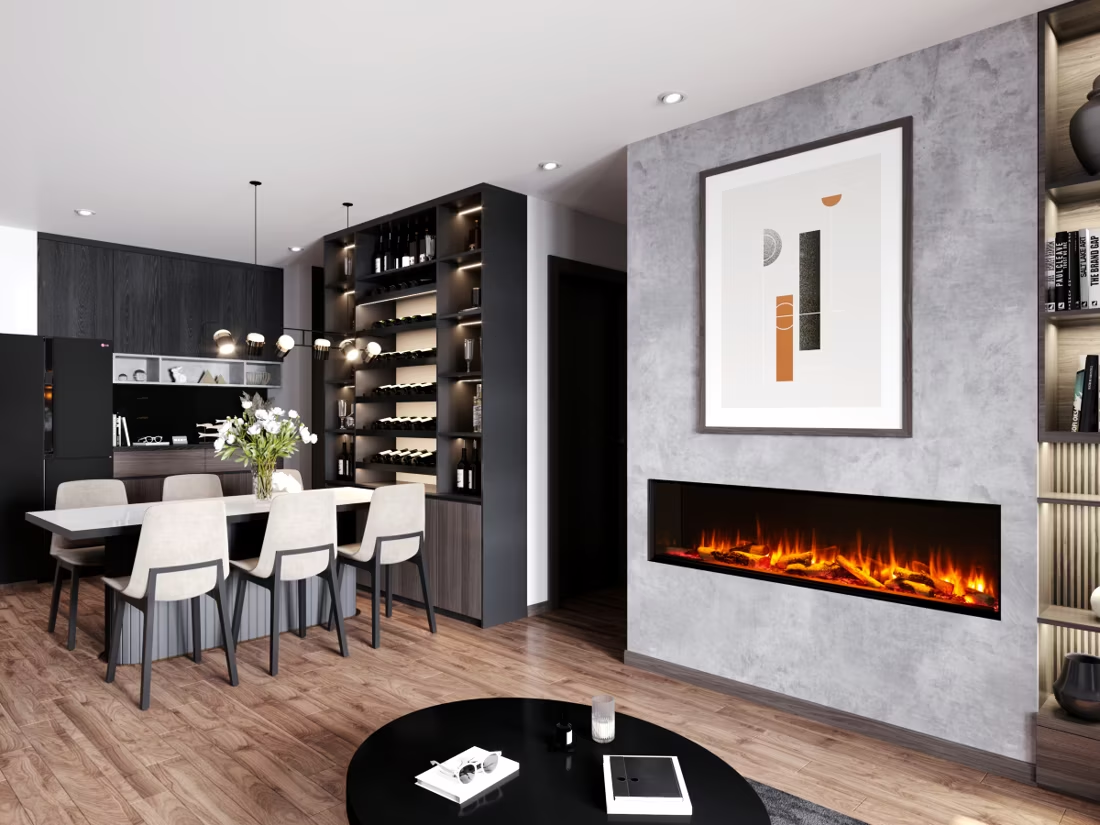
Alabama Power serves electric service throughout Center Point, and at a residential rate of about $0.1677 per kWh, running a 1,500-watt electric fireplace for a few hours in the evening costs pennies compared to heating the whole house. There's no chimney to sweep, no gas line to run, and no wood to store or season—which matters here, since wood and pellet heat aren't really part of the local picture. Center Point's mild climate, humid summers, and suburban Birmingham lot sizes mean almost nobody is cutting or stacking firewood for warmth; electric (and gas, where plumbed) fireplaces are the practical, low-maintenance way to add real heat and a real flame-look to a room.
Three steps. No salesperson until you're ready.
Tell us about your project
Your zip code, your situation, and the fuel you're leaning toward—or let the answers point you to one.
See what's actually available
The brands dealers within 100 miles genuinely carry—real options, never a catalog mirage.
Get your dealer & Project Guide
A trusted local dealer, plus the free Project Guide & Parts List that names every component of the job.
Frequently Asked Questions
How much does it cost to add an electric fireplace in Center Point?
It depends heavily on the unit type. A plug-in electric insert or freestanding stove that runs off a standard 120V outlet typically installs for $300 to $1,200, with no electrician required beyond confirming the outlet can handle the draw. A built-in wall unit or a fireplace insert that needs a dedicated 240V circuit runs higher—often $1,500 to $3,500 once you factor in a licensed electrician, wiring, and any surround or mantel finish work. Compared to a wood or gas install with a chimney or vent line, electric is consistently the lowest-cost path to a working fireplace in a Center Point home.
What type of electric fireplace works best in a Center Point home?
A lot of Center Point's housing stock is single-story ranch construction from the 1960s and 70s, some of it with an existing wood-burning fireplace shell that's rarely used. For those homes, an electric insert that slides into that existing opening is often the cleanest option—no demolition, no venting changes, just a new plug or a short electrical run. For newer builds, additions, or rooms without an existing fireplace, a wall-mounted electric unit or a mantel package gives you more flexibility on placement and doesn't require any masonry at all.
Does an electric fireplace actually heat a room, or is it just for looks?
Most electric fireplaces on the market are rated around 4,600 to 5,000 BTU (roughly 1,500 watts), which is enough to comfortably warm a 300 to 400 square foot room—plenty for a den, bedroom, or living room zone. It won't replace your central HVAC system on Center Point's coldest nights, but given that the area only averages about 2,998 heating degree days a year, most homeowners here are using it as supplemental heat for the room they're actually sitting in, not as a whole-house solution. Many models also let you run the flame effect with the heater off, which is common in a climate this mild for much of the year.
How much does it cost to run an electric fireplace on Alabama Power?
At Alabama Power's residential rate of about $0.1677 per kWh, a typical 1,500-watt electric fireplace costs roughly 25 cents an hour to run on the heat setting. Used for 4 to 5 hours a night through a cool Center Point evening, that works out to around $10 to $13 a month—considerably less than running central heat for the whole house just to warm one room. Running the flame effect alone, without the heater, uses only a fraction of that.
Do I need a permit or an electrician to install an electric fireplace in Center Point?
A plug-in electric fireplace or insert that runs off an existing standard outlet doesn't require a permit—it's treated like any other appliance. If you're installing a built-in unit that needs a new dedicated 240V circuit, that electrical work should be pulled through the local building department (Jefferson County or the City of Center Point's permitting process, depending on the scope) and performed by a licensed electrician. Local dealers who handle built-in electric installs typically coordinate this as part of the job.
Electric vs. gas fireplace—which makes more sense in Center Point?
Gas fireplaces put out more heat and give you that classic real-flame look, but they require a gas line, venting, and a higher installed cost, along with annual servicing. Electric fireplaces skip all of that—no venting, no combustion byproducts, and a much lower install cost—in exchange for a lighter heat output and a flame effect that's clearly a simulation rather than a real fire. For a supplemental heat source in a climate as mild as Center Point's, where the primary job is warming one room and adding ambiance, electric is usually the simpler and cheaper answer. Homeowners who want more serious heat output or a traditional fire experience tend to lean gas instead.
Can I install an electric fireplace if I rent my home in Center Point?
Yes—this is one of the biggest advantages of electric over wood or gas. A freestanding electric fireplace or a plug-in insert requires no permanent modification to the home, no venting, and no gas line, so it's a realistic option for renters and homeowners in HOA communities alike. Wall-mounted units that need new wiring are a bigger commitment and generally make more sense for owners planning to stay put.
Why isn't wood or pellet heat common in Center Point?
Center Point's mild winters—averaging about 31°F lows and under 3,000 heating degree days a year—mean most homes simply don't need a solid-fuel backup heat source the way a colder climate like Bozeman MT or Fargo ND would. There's no nearby national forest cutting-permit office serving local residents, no winter air-quality advisory program, and firewood species like the region's native oak, pine, and hickory tend to get used for recreational fire pits rather than home heating. Between the suburban Birmingham lot sizes and the humid summers that make storing seasoned firewood impractical, electric and gas fireplaces are the far more common local choice for adding heat and ambiance.
What size electric fireplace do I need for my room?
For a room up to about 400 square feet, a standard 1,500-watt electric insert or wall unit rated around 5,000 BTU will handle both the flame effect and meaningful supplemental heat. Larger open-concept living spaces may need a larger unit or two smaller units in different zones, since electric fireplaces heat by convection and work best when the room is reasonably enclosed. A local dealer can walk your space and confirm the right wattage and mounting height for your layout.
Can I put a TV above my fireplace?
Yes—with an asterisk. Fireplaces are hot and TVs don't like heat. Either put a mantel between them to deflect rising warmth, or choose a fireplace with heat-management technology that creates a cool zone on the wall above—the wall stays around 125 degrees, barely warm, while the room still gets full heat. If you like clean lines and don't want a mantel, heat management is the answer.
How much does an electric fireplace cost to run?
With the heater on, a typical unit draws about 1,500 watts—at average electric rates that's roughly 20 cents an hour. Run the flame effect alone and it costs pennies; the flames are LED-driven and use about as much power as a light bulb. There's no pilot light, no fuel delivery, and essentially no maintenance.
Does a fireplace add value to my home?
On average, a fireplace adds back to the home about the same amount you spent installing it. Add the monthly savings from heating the rooms you actually use instead of the whole house—often hundreds of dollars a year—and the value case is strong before you even count what a fire does for how your family uses the room.
Can a fireplace actually lower my heating bill?
Yes—by creating a comfort zone. A furnace heats every square foot of the house just to warm the one room you're in; a gas fireplace on low burns roughly a sixth of the gas a typical furnace does. Set the furnace around 55–60 degrees as a baseline, then heat the rooms your family actually uses. Families who heat this way commonly save $20–$60 a month.
Nearby Dealers
Hearth shops serving Center Point and the surrounding area. Every listing shows whether it is a WhyFire partner, a dealer we have verified as authorized for the brands we recommend, or a local business carrying hearth products. No manufacturer pays for placement. How we verify dealers →
Allgas, Inc. - Gardendale
Southern Fireplaces
Colonial Fireplace Company
Electric Service in Center Point
An electric fireplace's heater draws about 1,500 watts—pennies per hour at local rates.
Alabama Power Co
Find your electric fireplace in Center Point.
Tell us a bit about your home and we'll match you with the right electric fireplace or insert, plus a free Project Guide & Parts List—the exact parts and mounting hardware for your space, and our recommended local dealer in the Center Point area.
Find Your Fireplace →