
Electric heat that fits Calhoun County's mild winters.
No chimney, no gas line, no venting to plan around—just clean, instant warmth for homes from Anniston to Oxford to Jacksonville. Find the right unit and connect with a trusted local dealer.
Every Project Starts From One of These Five Situations
Mild winters make electric an easy fit.
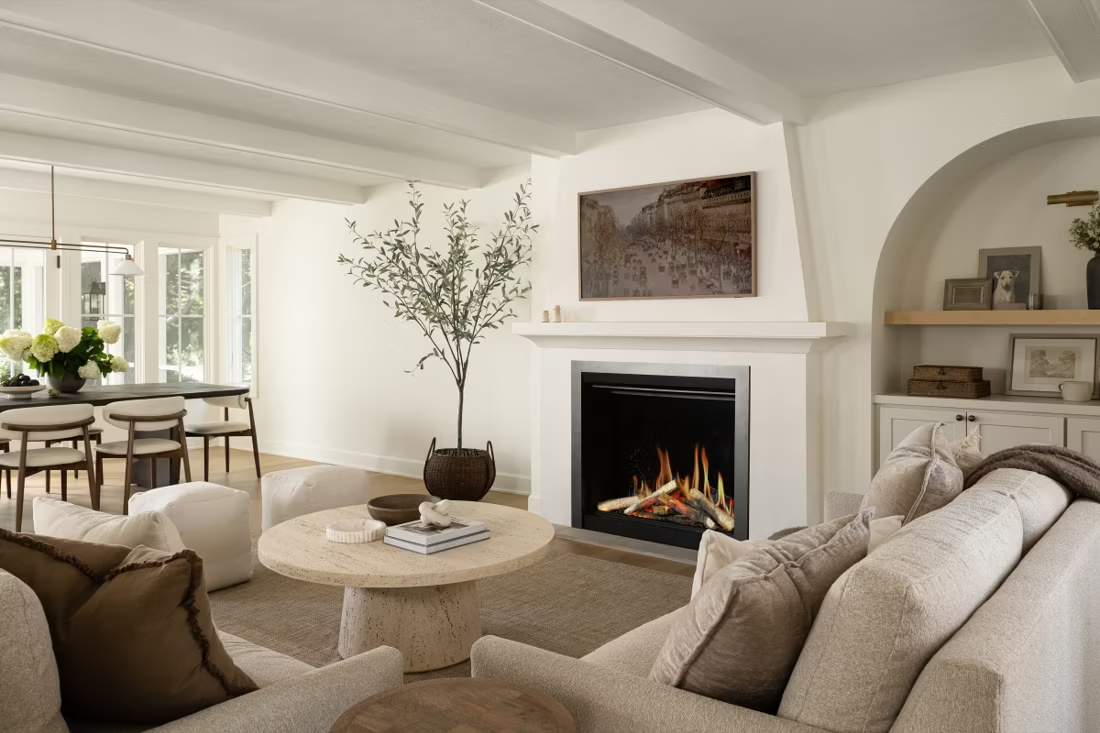
Calhoun County sits in climate zone 3A, with an average winter low around 34°F and a mild, short heating season—a fraction of what a place like Duluth, Minnesota logs in a single season. Homes here rarely need a heat source that can run all night against sub-zero cold. That's exactly the gap an electric fireplace fills well: real, visible flame-effect warmth for the living room in Anniston, a converted den in Jacksonville, or a new-construction great room in one of Oxford's growing subdivisions, without asking it to carry the whole heating load.
Most of Calhoun County gets electric service through Alabama Power, with Coosa Valley Electric Cooperative serving pockets of the more rural parts of the county outside Anniston, Oxford, and Jacksonville. Because an electric fireplace doesn't need a flue, a gas line, or seasoned oak and hickory split and stacked, it's often the simplest option for older homes near the Fort McClellan area without an existing chimney, for renters near Jacksonville State University who can't modify a wall, or for anyone who wants the ambiance of a fire without the upkeep that wood heat requires in this part of Alabama.
Three steps. No salesperson until you're ready.
Tell us about your project
Your zip code, your situation, and the fuel you're leaning toward—or let the answers point you to one.
See what's actually available
The brands dealers within 100 miles genuinely carry—real options, never a catalog mirage.
Get your dealer & Project Guide
A trusted local dealer, plus the free Project Guide & Parts List that names every component of the job.
Frequently Asked Questions
How much does an electric fireplace installation cost in Calhoun County?
Plug-in freestanding or mantel-style electric fireplaces are the cheapest entry point, often $200 to $600 for the unit itself, and they run on a standard household outlet with no installer needed. Built-in wall inserts or linear units set into a custom mantel typically run $1,500 to $4,000 installed, depending on the surround work and whether an electrician needs to run a dedicated circuit. Because there's no chimney, no gas line, and no venting to size, electric installs are generally the least expensive of the fireplace fuel types available in Calhoun County—a local dealer can give you a firm number after seeing the room.
Can an electric fireplace actually heat a room, or is it just for looks in Calhoun County?
A typical electric fireplace runs a 1,500-watt heater rated to warm 400 to 1,000 square feet, which goes a long way in a climate with a mild, short heating season—far less demanding than a colder region like Burlington, Vermont, where a supplemental unit would barely make a dent. In most Calhoun County homes, an electric fireplace works well as zone heat for a den, bonus room, or living area, letting you turn the thermostat down elsewhere on the mild-cold nights that make up most of the local heating season. It's not designed to replace a central HVAC system on its own, but it can meaningfully offset it.
Do I need a permit to install an electric fireplace in Calhoun County?
A plug-in or freestanding unit that uses an existing outlet typically needs no permit at all. A built-in insert or wall unit wired to a new dedicated circuit usually requires a basic electrical permit, pulled through the city if you're inside Anniston, Oxford, or Jacksonville city limits, or through the Calhoun County building department if you're in one of the unincorporated areas. Either way it's a far lighter lift than the venting and gas-line permits a wood or gas installation requires—most electricians or dealers handle the paperwork as part of the job.
What's the difference between an electric insert, a wall-mount, and a mantel package?
An electric insert is built to slide into an existing masonry firebox, which makes it a popular option for older Anniston homes with a fireplace they no longer want to feed wood into. A wall-mount unit hangs flush on the wall much like a TV and works well in newer, open-concept spaces around Oxford. A mantel package is a freestanding electric fireplace with its own surround—no wall modification required, which makes it a good fit for renters near Jacksonville State University or anyone in a home where cutting into drywall isn't an option.
Will my electric fireplace still work if the power goes out?
No—electric fireplaces need power to run, so they won't function during an outage the way a wood stove will. Outages tend to be shorter and less frequent in Calhoun County's climate zone than in areas that see extended winter storms, and both Alabama Power and Coosa Valley Electric Cooperative generally restore service quickly after the region's occasional severe thunderstorms or ice events. Still, if backup heat during an outage is a real concern for your household, it's worth pairing an electric fireplace with a wood or gas option elsewhere in the home rather than relying on electric alone.
How much does it cost to run an electric fireplace in Calhoun County?
A standard 1,500-watt electric fireplace costs roughly 18 to 22 cents an hour to run at typical Alabama Power residential electricity rates, which puts a full evening of use at well under a dollar. Because most Calhoun County homeowners use electric fireplaces as supplemental zone heat rather than primary heat, the actual monthly cost stays modest even with regular winter use—and there's no propane tank, cord of oak, or pellet delivery to plan around.
Can I convert my existing wood-burning fireplace to electric?
Yes—an electric log insert or fireplace insert can slide into an existing masonry firebox, which is a common project in Calhoun County's older homes, particularly in Anniston's historic neighborhoods near the old Fort McClellan grounds. The conversion means no more hauling oak, pine, or hickory, no annual chimney sweep, and no ash cleanup, while keeping the look of the original mantel and surround. It's one of the simpler conversion projects a local dealer handles, since there's no venting to remove or cap off beyond what's already there.
Electric vs. gas vs. wood—which is right for my Calhoun County home?
Wood remains a genuinely practical choice in Calhoun County given the local supply of oak, pine, and hickory and the nearby Talladega National Forest, and it still appeals to homeowners who value a real fire and self-sufficient heat. Gas offers real flame with more heat output for the occasional hard cold snap when lows dip into the 20s. Electric is the easiest and least expensive to install, requires no fuel storage or venting, and suits homeowners who want ambiance and light supplemental warmth without the maintenance—a strong fit given how mild and short the county's heating season generally runs.
What size electric fireplace do I need for my Calhoun County home?
Most homes in Calhoun County do well with a standard 1,500-watt unit, which is rated to supplement heat in spaces from about 400 up to 1,000 square feet—plenty for a den, living room, or bedroom given the county's mild winter lows around 34°F. Larger open-concept great rooms, which are increasingly common in newer Oxford construction, may need a wider linear unit or a second fireplace in an adjoining space to distribute heat evenly. A local dealer can walk your space and recommend sizing based on the room's layout and how you plan to use it.
Does an electric fireplace need a vent or chimney?
No—that's its superpower. An electric fireplace needs a wall and an outlet, period. No vent pipe, no gas line, no clearances to design around, which is why it works in bedrooms, offices, apartments, and walls where venting a gas or wood unit would be impractical or impossible. Installation is typically the simplest and least expensive of any fireplace type.
Can I put a TV above my fireplace?
Yes—with an asterisk. Fireplaces are hot and TVs don't like heat. Either put a mantel between them to deflect rising warmth, or choose a fireplace with heat-management technology that creates a cool zone on the wall above—the wall stays around 125 degrees, barely warm, while the room still gets full heat. If you like clean lines and don't want a mantel, heat management is the answer.
How much should I budget for a fireplace?
For an average home—covering the fireplace, the vent pipe, and basic installation—a budget between $3,900 and $5,500 gives you a lot of options across wood, gas, and pellet. By the time you add finish work, gas line, and electrical, the average complete installation lands between $5,000 and $12,000 all-in. In a remodel or new build, a good rule is to put about 2.5% of the total project cost toward the fireplace.
What is an in-home preview and do I need one?
It's a visit where a hearth professional measures your space, confirms the model you picked actually works in your home, and walks the specs—framing, gas line, venting, finish work—before anything is ordered. Some details you just can't know until you see the house. Never make a down payment without one; it's the single most-skipped step that burns buyers.
Stove and Fireplace Dealers in Calhoun County
Listings include WhyFire partner dealers, dealers we have verified as authorized for the brands we recommend, and established local businesses that carry hearth products. Every listing shows which one it is. The ones marked Preferred run on WhyFire's software, so they can show you real pricing and book your appointment right here. No manufacturer pays for placement. How we verify dealers →
Anniston Fireplace & Patio
Anniston Fireplace Essa
Blossman Gas And Appliance
Robinson Gas Inc.
Southern Fireplaces
Allgas, Inc. - Gadsden
Nomad Homestead Supply
Coosa Valley Propane
Find your electric fireplace in Calhoun County.
Tell us a bit about your home and we'll put together a free Project Guide & Parts List for your electric fireplace project—the right unit, the parts you'll need, and a trusted local dealer serving Calhoun County to install it.
Find Your Fireplace →