
Find your electric fireplace in Blount County.
Simple, no-mess heat and ambiance for Blount County homes—from Oneonta to Cleveland to Blountsville. Find the right unit and connect with a trusted local dealer.
Every Project Starts From One of These Five Situations
Mild winters, minimal fuss.
Blount County sits in climate zone 3A with a mild winter average low of 33 degrees and a short, light heating season—a fraction of what a place like Duluth, Minnesota sees in a single season. Winters here rarely demand a whole-home heating overhaul. For most of Blount County, from Oneonta to Cleveland to the rural stretches around Blountsville and Hayden, the ask is a supplemental warm spot on the occasional cold night, plus the visual charm of a fireplace without the maintenance of a chimney.
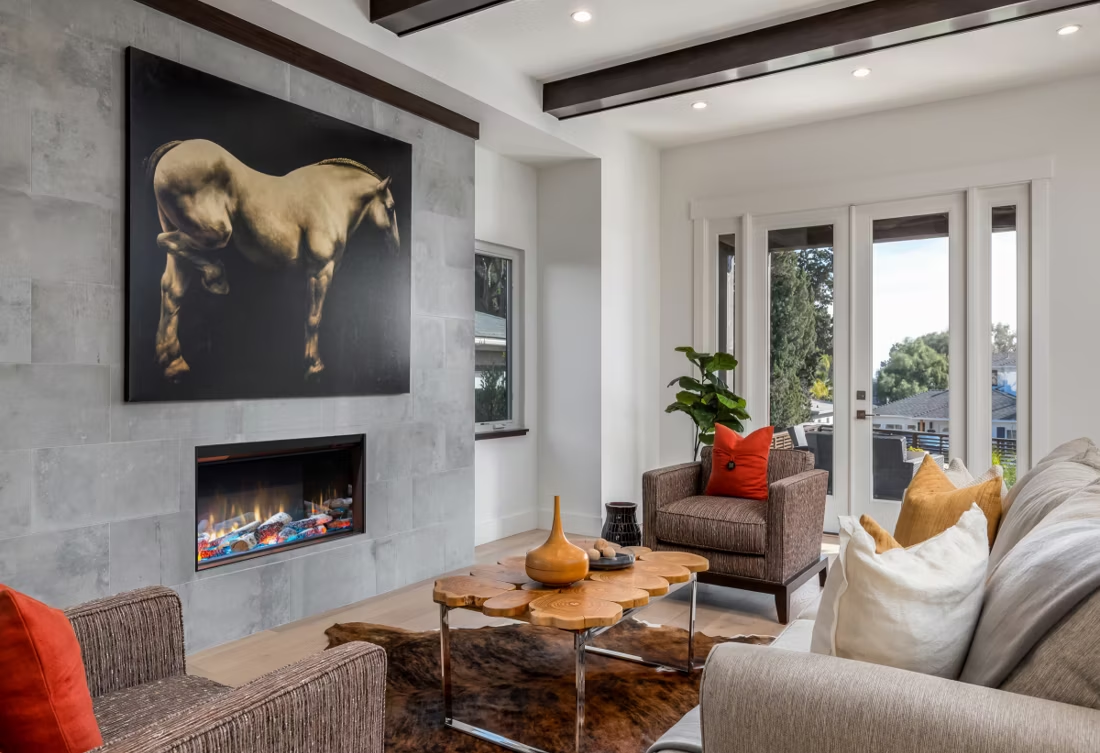
That's exactly where electric fireplaces earn their place. There's no venting to size, no gas line to run, and no ash to haul—an electric insert or freestanding unit plugs into a standard outlet and runs on a simple switch or remote. For a county where oak, pine, and hickory are the traditional firewood species and wood heat still has its place in older farmhouses, electric offers an easier path for a den, bonus room, or a home where retrofitting a chimney isn't practical. It's also often the fastest project on the list—many installs are done in an afternoon with no permit involved.
Three steps. No salesperson until you're ready.
Tell us about your project
Your zip code, your situation, and the fuel you're leaning toward—or let the answers point you to one.
See what's actually available
The brands dealers within 100 miles genuinely carry—real options, never a catalog mirage.
Get your dealer & Project Guide
A trusted local dealer, plus the free Project Guide & Parts List that names every component of the job.
Frequently Asked Questions
How much does an electric fireplace installation cost in Blount County?
Most electric fireplace installations in Blount County run between $400 and $1,200, and that range covers the vast majority of projects—a wall-mounted unit, a freestanding electric stove, or an insert dropped into an existing masonry fireplace opening. Costs land toward the lower end for plug-in units that don't require any electrical work, and toward the higher end when a dedicated circuit or built-in surround/mantel carpentry is added. Because there's no venting or gas line involved, electric is consistently the most affordable fireplace option for Blount County homeowners, whether you're in town in Oneonta or out in a rural part of the county.
Do I need a permit to install an electric fireplace in Blount County?
In most cases, no. A plug-in electric fireplace or insert that uses an existing standard outlet typically doesn't require a permit since there's no gas line, venting, or structural work involved. If your installation calls for a new dedicated electrical circuit—common with larger built-in units—an electrician may need to pull an electrical permit, which is a quick process for local licensed electricians serving Blount County. This is one of the simplest fireplace projects to permit, if a permit is even needed at all, compared to wood or gas installations.
Will an electric fireplace actually heat my room, or is it just for looks?
Modern electric fireplaces do produce real heat—most units include a built-in fan-forced heater rated around 1,500 watts, enough to comfortably warm a single room of 300 to 400 square feet. Given Blount County's mild climate (winter lows averaging 33 degrees and a short, light heating season), that's plenty for supplemental heat in a den, bedroom, or bonus room on the county's coldest nights. What an electric fireplace won't do is replace a central HVAC system for whole-home heating—think of it as zone heat for the room you're actually using, with the flame effect running independently of the heater if you just want ambiance without the warmth.
What's the difference between an electric insert, a wall-mounted unit, and a freestanding electric stove?
An electric insert is built to slide into an existing masonry fireplace opening, which makes it a popular choice for older Blount County homes with a wood-burning fireplace that's no longer in regular use. A wall-mounted electric fireplace hangs directly on a wall like a piece of art or a TV, and works well in newer construction or a remodel where there's no existing hearth. A freestanding electric stove sits on the floor and can go virtually anywhere with an outlet—no fireplace opening or wall-mounting hardware required. For most homeowners converting an old wood fireplace, the insert is the natural fit since it uses the opening you already have.
Can an electric fireplace be a backup heat source during a power outage?
No—and this is worth being clear about. Electric fireplaces run entirely on household power, so they shut down the moment the electricity goes out, unlike a wood stove that keeps working regardless. Blount County doesn't see the kind of severe, prolonged winter outages that hit places like Buffalo, New York, but ice storms do occasionally knock out power locally. If backup heat during an outage matters to you, a wood stove or a gas unit with battery-backup ignition is a better fit; electric should be thought of as convenience and ambiance heat for normal operating conditions, not an emergency plan.
How does an electric fireplace compare to a gas fireplace for a Blount County home?
Gas fireplaces produce more heat output and can serve as genuine supplemental heating for a larger space, but they require venting or careful vent-free configuration, a gas line or propane setup, and a higher installation cost—often $4,500 or more once venting and gas work are factored in. Electric fireplaces cost a fraction of that, install in an afternoon, and need nothing more than an outlet, but they're limited to zone heating one room and won't run without power. For Blount County's mild winters, plenty of homeowners choose electric for a den or bedroom retrofit precisely because the heating demand doesn't justify the bigger gas project. Where a family wants a true daily-use heat source in a main living area, gas tends to be the better long-term fit.
Is wood heat still relevant in Blount County given how mild the winters are?
Yes, though it plays a different role here than in colder climates. With winter lows averaging 33 degrees and a short, light heating season, wood isn't a primary heat necessity for most Blount County homes the way it might be in a place like Bozeman, Montana. Still, plenty of older farmhouses and rural properties throughout the county keep a wood stove running on oak, pine, or hickory—species that are locally abundant—for cost savings, tradition, or backup heat during the occasional ice storm. Electric fireplaces and wood stoves often coexist in the same home: electric for easy daily ambiance in the main living space, wood for the rare hard freeze or power outage.
Do electric fireplaces need any ongoing maintenance?
Very little. There's no chimney to sweep, no ash to remove, and no annual gas line inspection required. Occasional dusting of the unit and a periodic check of the heater fan for dust buildup is typically all that's needed. Some units have replaceable LED light strips or heating elements after years of heavy use, but these are consumer-serviceable in most cases rather than requiring a technician visit. For Blount County homeowners who want fireplace ambiance without an annual service call, this is one of electric's clearest advantages over wood or gas.
What size electric fireplace do I need for my Blount County home?
Sizing depends mostly on the room, not the whole house, since electric units are zone heaters rather than central heat. A 30- to 40-inch insert or wall unit typically suits a standard bedroom or den in a Blount County home, while a 50-inch-plus unit works better as a focal point in an open living or great room. Because winters here are mild, oversizing for heat output isn't usually the concern it would be in a colder climate—most homeowners size for the visual proportions of the wall or fireplace opening first, then confirm the heater wattage covers the square footage. A local dealer can walk through your specific room dimensions during a quick consultation.
Do electric fireplaces actually produce heat?
Yes—most put out around 4,800–5,000 BTUs from a standard outlet, which comfortably warms a bedroom, office, or den as a comfort-zone heater. What they won't do is carry a whole house the way wood, gas, or pellet can. Think of electric as ambiance-first with honest supplemental heat: flames on with no heat in July, flames plus warmth in January.
Does an electric fireplace need a vent or chimney?
No—that's its superpower. An electric fireplace needs a wall and an outlet, period. No vent pipe, no gas line, no clearances to design around, which is why it works in bedrooms, offices, apartments, and walls where venting a gas or wood unit would be impractical or impossible. Installation is typically the simplest and least expensive of any fireplace type.
Can I install a fireplace myself?
If you're putting a fire in your house on purpose, it's best to work with an expert. Unless you're genuinely experienced in framing, gas line, vent pipe, and the national code on clearances to combustibles, have a professional do it—and ideally the same company that sells you the fireplace, so warranty, service, and liability all live under one roof.
Does a fireplace add value to my home?
On average, a fireplace adds back to the home about the same amount you spent installing it. Add the monthly savings from heating the rooms you actually use instead of the whole house—often hundreds of dollars a year—and the value case is strong before you even count what a fire does for how your family uses the room.
Stove and Fireplace Dealers in Blount County
Listings include WhyFire partner dealers, dealers we have verified as authorized for the brands we recommend, and established local businesses that carry hearth products. Every listing shows which one it is. The ones marked Preferred run on WhyFire's software, so they can show you real pricing and book your appointment right here. No manufacturer pays for placement. How we verify dealers →
Allgas, Inc. - Gardendale
Hawkins Heating & Air Conditioning
Find your electric fireplace in Blount County.
Tell us a bit about your home and we'll match you with the right electric fireplace or insert—plus a free Project Guide & Parts List and a trusted local dealer to install it.
Find Your Fireplace →