
Keep Your Family Warm and Safe—No Matter What
From Centreville to Brierfield, West Blocton, and Woodstock—supplemental wood heat for mild Alabama winters, and reliable backup when ice storms take the power down. Find the right stove and connect with a trusted local dealer.
Every Project Starts From One of These Five Situations
Supplemental heat, real savings, and a backup when the power goes out.
Bibb County sits in the transition zone between Alabama's Black Belt prairie and the wooded hills of the Cumberland Plateau, with the Cahaba River winding through stands of oak, pine, and hickory that have supplied local firewood for generations. At an average winter low of 32°F and just 2,886 heating degree days, this is not extreme-cold country—but it's also not a place where wood heat is decorative. Ice storms roll through west-central Alabama most winters, and when power lines near Centreville, Brierfield, West Blocton, or Woodstock come down, a wood stove keeps a house warm without waiting on the utility to restring a line.
With no air quality non-attainment designation and no winter inversion concerns, Bibb County places none of the burn restrictions on wood heat that you'd find in mountain valleys out west—you can run a stove or open a damper on a cold morning without checking a curtailment notice. The county's timberland, including hardwood bottoms along the Cahaba and the pine acreage bordering the Oakmulgee Ranger District of Talladega National Forest, keeps firewood cheap and close for anyone willing to cut and split their own. For most Bibb County homes, that means a wood stove or insert doing supplemental duty—taking the edge off a cool January night while central heat handles the rest of the house, and stepping up to full-time duty whenever ice takes the grid down.
Three steps. No salesperson until you're ready.
Tell us about your project
Your zip code, your situation, and the fuel you're leaning toward—or let the answers point you to one.
See what's actually available
The brands dealers within 100 miles genuinely carry—real options, never a catalog mirage.
Get your dealer & Project Guide
A trusted local dealer, plus the free Project Guide & Parts List that names every component of the job.
Frequently Asked Questions
How much does a wood stove installation cost in Bibb County?
A wood stove or insert installation in Bibb County typically runs $3,500 to $7,500, depending on whether you're adding a freestanding stove with new Class A chimney pipe or converting an existing masonry fireplace with an insert and a stainless liner. Homes in Centreville or along Highway 82 near West Blocton are usually on the lower end since most installers are based nearby; properties farther out toward Woodstock or Six Mile may see a modest travel charge added to the quote. Ask your installer whether the price includes a code-compliant hearth pad—older Bibb County farmhouses often need one added since original hearths were sized for open fireplaces, not EPA-certified stoves.
What size wood stove do I need for my home?
Because Bibb County's winters are mild—an average low of 32°F and under 2,900 heating degree days—most homes here don't need a stove built to run flat-out for months at a time. A small to medium stove rated for 1,000 to 1,800 square feet is usually enough to heat a living area or an entire modest single-story home, with central heat handling the rest of the house or the occasional harder cold snap. Larger, whole-home stoves make more sense for open-floor-plan farmhouses or homes that lean on wood as primary heat rather than backup. A local retailer can size your space properly during an in-home visit—oversizing is the more common mistake in a mild climate like this one, and it leads to smoldering fires and creosote buildup.
Where can I find certified wood stove installers near me?
Look for NFI (National Fireplace Institute) or CSIA (Chimney Safety Institute of America) certification when hiring a wood stove installer—it's the clearest sign of proper training in clearances, venting, and code compliance. Certified installers serving Bibb County are based mostly around Centreville and the Highway 82 corridor, with some willing to travel to Brierfield, West Blocton, Woodstock, or Six Mile for an install. Since most wood stove fires trace back to improper clearances or venting rather than the stove itself, it's worth avoiding a general handyman install even if it costs less upfront.
What's the difference between a wood stove and a wood insert?
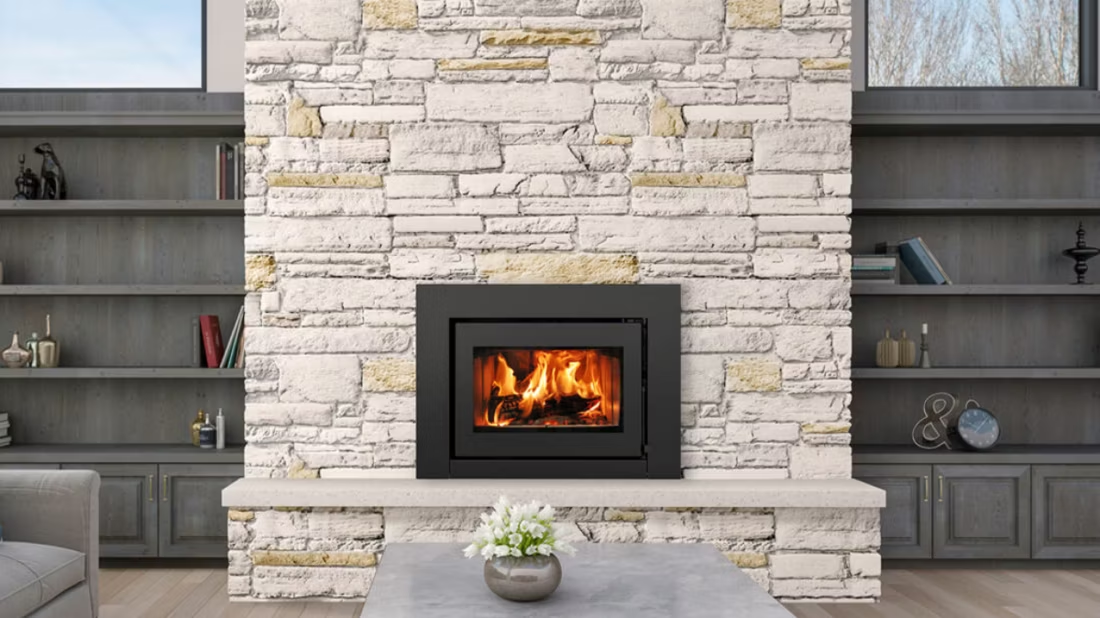
A wood stove is a freestanding unit on its own hearth pad, vented through a chimney, and can go almost anywhere in a room with the right clearances. A wood insert is built to slide into an existing masonry fireplace—common in older Bibb County homes around Centreville and Brierfield—using a stainless liner run up the existing chimney. If you already have a working masonry fireplace, an insert is usually the more cost-effective upgrade since it reuses the chimney you have. If you're building new or don't have an existing fireplace, a freestanding stove is the simpler install.
Do I need a permit to install a wood stove in Bibb County?
Yes—a building permit is required for a new wood stove or insert installation, issued through the Bibb County Commission's building permit office, or the City of Centreville if you're inside city limits. The stove itself needs to meet current EPA 2020 NSPS emissions standards, which is standard on any new unit sold by a certified dealer. On the burning side, Bibb County has no air quality non-attainment status and no winter curtailment periods, so there's no permit or advisory needed just to run your stove on a cold morning—a real difference from parts of the country with winter inversion problems.
What's the best wood stove for Bibb County's climate?
Bibb County's mild winters mean you don't need the extreme cold-climate catalytic stoves built for 20-hour burns at sub-zero temperatures—a solid non-catalytic stove from a mainstream maker will comfortably heat a living area or modest home on the oak, hickory, and pine that's abundant locally. Hickory and oak both burn hot and dense, so a mid-size stove rated in the 1,200 to 1,800 square foot range covers most homes here without oversizing. If wood is your primary heat source rather than a backup for ice storms, size up slightly and ask your local dealer about a model with a longer, steadier burn.
How often should my chimney be inspected and cleaned?
The CSIA recommends an annual inspection for any wood-burning stove or insert, and that holds true in Bibb County even though most stoves here see lighter, supplemental use rather than months of daily burning. Late summer, before the first cold front and before ice storm season, is the practical time to schedule a sweep. Homes that lean on their wood stove more heavily during power outages—not unusual after a winter ice event knocks out lines along the rural county roads—should have the chimney checked again mid-season if they've burned through more than a few cords.
Where can I get firewood in Bibb County?
Oak, hickory, and pine are all common locally, and Bibb County's mix of hardwood bottomland along the Cahaba River and pine acreage near the Oakmulgee Ranger District of Talladega National Forest keeps firewood relatively cheap for anyone with a truck and a chainsaw. Split, seasoned oak or hickory typically runs a premium over pine per cord because it burns longer and hotter—worth the extra cost if you're relying on wood for real heat output rather than just ambiance. Firewood cutting on national forest land requires a permit through the Ranger District office; contact them directly for current season dates and per-cord pricing.
Wood stove vs. pellet stove—which is right for me?
Wood stoves burn cordwood, work without electricity, and are the better choice if you want backup heat during the ice storms that periodically take down power lines across Bibb County—a real consideration given how many rural properties here run on above-ground rural electric lines. Pellet stoves, using compressed pellets from regional suppliers like Lignetics, Hamer Pellet Fuel, or Greenway Renewable Energy, are more convenient to operate and burn cleaner, but they need electricity to run the auger and blower, so they go dark in an outage unless you add a battery backup. For most Bibb County homes weighing the two, the outage question usually decides it—wood wins for true backup heat, pellet wins for daily-use convenience in town.
Why is a fireplace insert so efficient?
An insert does two things: it seals the chimney completely, so you stop losing air you already paid to heat, and it radiates warmth into the room through the firebox and glass. Most add a heat-exchange fan that pulls cool room air underneath, wraps it around the hot firebox, and pushes it back out warm. Your home is more efficient before you've even lit the first fire.
What's the difference between an insert and a zero-clearance fireplace?
An insert is a fireplace that slides into a pre-existing wood-burning fireplace—if you don't have one, there's nothing to insert it into. A zero-clearance fireplace is built into a framed wall, which makes it the answer for remodels and new construction. Simple test: existing masonry fireplace means insert; blank or framed wall means zero-clearance.
Can I install a fireplace myself?
If you're putting a fire in your house on purpose, it's best to work with an expert. Unless you're genuinely experienced in framing, gas line, vent pipe, and the national code on clearances to combustibles, have a professional do it—and ideally the same company that sells you the fireplace, so warranty, service, and liability all live under one roof.
Does a fireplace add value to my home?
On average, a fireplace adds back to the home about the same amount you spent installing it. Add the monthly savings from heating the rooms you actually use instead of the whole house—often hundreds of dollars a year—and the value case is strong before you even count what a fire does for how your family uses the room.
Stove and Fireplace Dealers in Bibb County
Listings include WhyFire partner dealers, dealers we have verified as authorized for the brands we recommend, and established local businesses that carry hearth products. Every listing shows which one it is. The ones marked Preferred run on WhyFire's software, so they can show you real pricing and book your appointment right here. No manufacturer pays for placement. How we verify dealers →
Energy Shop
The Fire Place
Colonial Fireplace Company
South Alabama Gas
Apex Gas & Appliance
Southern Fireplaces
Find your wood stove or insert in Bibb County.
Tell us about your home and we'll match you with a trusted local dealer serving Bibb County, plus a free Project Guide & Parts List—the exact parts, vent kit included, for your wood stove or insert project.
Find Your Fireplace →