
Find the right electric fireplace for your Bibb County home.
Mild winters and short heating seasons make electric a smart, low-hassle choice around Centreville, West Blocton, and Brent. Find the right unit and connect with a trusted local dealer.
Every Project Starts From One of These Five Situations
Simple, safe heat for a mild climate.
Bibb County sits in climate zone 3A with an average winter low around 32 degrees and a short, mild winter heating season—a fraction of what a place like Duluth, Minnesota logs in a single season. That's a short, mild heating window, and it changes the math on what kind of fireplace actually makes sense here. A lot of homeowners in Centreville, West Blocton, Brent, and Woodstock want the look and glow of a fireplace without committing to firewood, a chimney, or a gas line for the handful of genuinely cold nights each winter.
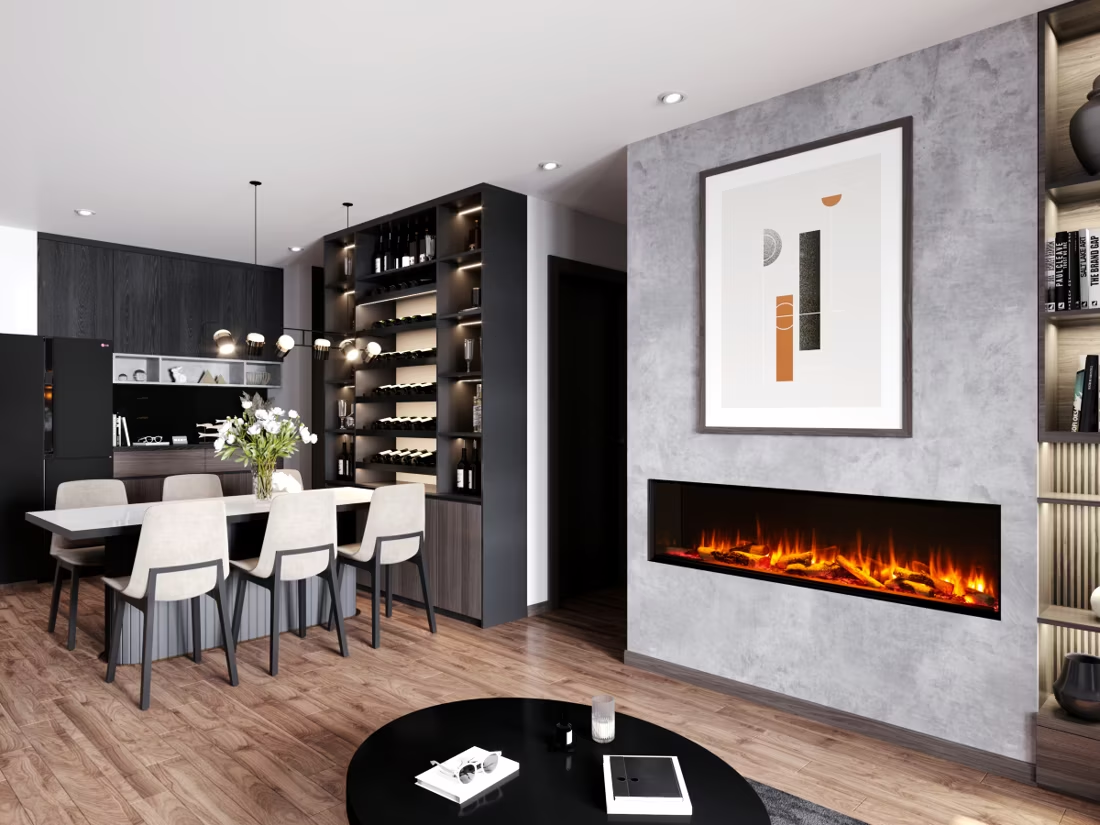
Electric fireplaces and inserts fit that need well. There's no venting to plan for, no combustion byproducts to worry about, and installation is often as simple as framing a surround and running a standard 120V circuit—though larger built-in units may call an electrician for a dedicated line. For Bibb County's older farmhouses and newer builds alike, electric gives you supplemental warmth in a bedroom or den, ambiance in a living room, and none of the upkeep that comes with a wood-burning setup that would mostly sit idle outside of a few cold snaps a year.
Three steps. No salesperson until you're ready.
Tell us about your project
Your zip code, your situation, and the fuel you're leaning toward—or let the answers point you to one.
See what's actually available
The brands dealers within 100 miles genuinely carry—real options, never a catalog mirage.
Get your dealer & Project Guide
A trusted local dealer, plus the free Project Guide & Parts List that names every component of the job.
Frequently Asked Questions
How much does an electric fireplace installation cost in Bibb County?
Most electric fireplace and insert installs in Bibb County run between $400 and $1,200. A plug-in freestanding unit or a simple insert into an existing mantel opening lands on the low end—often just the cost of the unit itself plus placement. Built-in wall units, custom surrounds, or installs that require a dedicated 240V circuit for a larger model push toward the higher end once an electrician is involved. Because there's no chimney, venting, or gas line to plan around, electric is consistently the least expensive fireplace fuel to install in the county.
Do I need a permit to install an electric fireplace in Bibb County?
In most cases, no—a plug-in or existing-circuit electric fireplace doesn't require a building permit since there's no venting, gas line, or structural chimney work involved. If your installation calls for new electrical wiring, such as a dedicated circuit for a larger built-in unit, an electrical permit through the local jurisdiction may be required, and that work should be handled by a licensed electrician regardless of paperwork. Ask your local dealer whether your specific unit and installation location trigger a permit before work begins.
Is an electric fireplace enough heat for a Bibb County winter?
For most homes here, yes, as a primary source of ambiance and supplemental heat rather than whole-home heating. With average winter lows around 32 degrees and only a short, mild winter heating season, Bibb County doesn't see the sustained deep cold that would demand a high-output wood or gas system. A mid-size electric insert or built-in unit (typically 4,000-5,000 BTU) comfortably takes the chill off a living room or den on the occasional cold night, while your central HVAC continues to handle the rest of the house. Electric isn't designed to replace your furnace, and it shouldn't need to in this climate.
What's the difference between an electric insert and a built-in electric fireplace?
An electric insert is sized to slide into an existing fireplace opening—a common option for Bibb County homes with an old wood-burning masonry fireplace that no one uses anymore. It typically plugs into a standard outlet or nearby circuit and instantly modernizes the opening without any demolition. A built-in electric fireplace is designed to be framed into a wall from scratch, which gives you more flexibility on placement (a bedroom, a new addition, a room with no existing chimney) but usually involves a contractor for the framing and possibly an electrician for wiring. Homes with an existing but unused masonry fireplace in Centreville or West Blocton are often better candidates for an insert; new construction or additions lean toward a built-in.
Can an electric fireplace replace my old wood-burning fireplace?
Yes, and it's a common upgrade in Bibb County's older housing stock. Many homes here have an original masonry wood fireplace that's gone unused for years, sometimes because the chimney needs expensive repair or the homeowner simply doesn't want to deal with firewood and ash. An electric insert fits into that same opening, requires no chimney or venting, and gives you flame effect and supplemental heat at the flip of a switch. It won't burn actual wood or produce real combustion heat, but for a mild climate like this one, most homeowners find it's a fair trade for the reduced maintenance.
Will my electric fireplace work during a power outage?
No—electric fireplaces require power to operate, both for the heating element and any flame-effect lighting, so they won't function during an outage. This is the main tradeoff against wood or gas options for homeowners in rural parts of Bibb County where storm-related outages can happen. If backup heat during outages is a real concern for your household, it's worth discussing a wood stove or propane option with a local dealer alongside your electric plans, particularly for a primary residence outside town.
What size electric fireplace do I need for my room?
Sizing for electric fireplaces is less about BTU output and more about matching the unit width to your wall or opening and the room's proportions. A 30-40 inch insert or built-in suits a standard bedroom or den; 50-60+ inch units work better as a focal point in an open living room. Since electric units in Bibb County's climate are mainly supplemental rather than primary heat, most local dealers focus sizing conversations on aesthetics and placement rather than heat load calculations you'd see with a wood stove.
How do local dealers handle electric fireplace installation versus DIY?
Many electric fireplaces are genuinely DIY-friendly—a plug-in insert or freestanding unit needs nothing more than placement and an outlet. Where local dealers in and around Centreville and Brent add real value is on built-in installations: framing the surround correctly, running a dedicated circuit if the unit calls for one, and making sure the finished look integrates with your mantel or wall rather than looking like an afterthought. If you're set on a larger built-in model, it's worth at least consulting a local dealer even if you plan to handle some of the work yourself.
Electric vs. wood—which is right for my Bibb County home?
Wood offers real combustion heat, works without power during outages, and pairs well with the oak, pine, and hickory that's common firewood in this part of Alabama—but it means chimney upkeep, ash cleanup, and a commitment that may outsize the county's short, mild winters. Electric offers instant on-off convenience, zero venting or maintenance, and the lowest install cost of any fuel option, but it won't function in an outage and isn't meant to replace your furnace. For most Bibb County homes where a fireplace is more about ambiance and the occasional cold night than serious heating load, electric is a practical, low-commitment fit. Homes that want real backup heat for storm season often end up considering both.
Can I put a TV above my fireplace?
Yes—with an asterisk. Fireplaces are hot and TVs don't like heat. Either put a mantel between them to deflect rising warmth, or choose a fireplace with heat-management technology that creates a cool zone on the wall above—the wall stays around 125 degrees, barely warm, while the room still gets full heat. If you like clean lines and don't want a mantel, heat management is the answer.
How much does an electric fireplace cost to run?
With the heater on, a typical unit draws about 1,500 watts—at average electric rates that's roughly 20 cents an hour. Run the flame effect alone and it costs pennies; the flames are LED-driven and use about as much power as a light bulb. There's no pilot light, no fuel delivery, and essentially no maintenance.
Can I install a fireplace myself?
If you're putting a fire in your house on purpose, it's best to work with an expert. Unless you're genuinely experienced in framing, gas line, vent pipe, and the national code on clearances to combustibles, have a professional do it—and ideally the same company that sells you the fireplace, so warranty, service, and liability all live under one roof.
Can a fireplace actually lower my heating bill?
Yes—by creating a comfort zone. A furnace heats every square foot of the house just to warm the one room you're in; a gas fireplace on low burns roughly a sixth of the gas a typical furnace does. Set the furnace around 55–60 degrees as a baseline, then heat the rooms your family actually uses. Families who heat this way commonly save $20–$60 a month.
Stove and Fireplace Dealers in Bibb County
Listings include WhyFire partner dealers, dealers we have verified as authorized for the brands we recommend, and established local businesses that carry hearth products. Every listing shows which one it is. The ones marked Preferred run on WhyFire's software, so they can show you real pricing and book your appointment right here. No manufacturer pays for placement. How we verify dealers →
Energy Shop
The Fire Place
Colonial Fireplace Company
South Alabama Gas
Apex Gas & Appliance
Southern Fireplaces
Get your free Project Guide & Parts List for an electric fireplace in Bibb County.
Tell us a bit about your home and we'll match you with a trusted local dealer and send a free Project Guide & Parts List—the exact parts for your project and who to call to get it installed right.
Find Your Fireplace →