
Add fireplace warmth to your Eufaula-area home—without a chimney.
Mild Wiregrass-region winters and a lot of historic homes around Lake Eufaula make electric an easy fit for Barbour County. Find the right unit and connect with a trusted local dealer.
Every Project Starts From One of These Five Situations
Modest heating needs, easy installs, real ambiance.
Barbour County sits in climate zone 3A with an average winter low around 37°F and only a light winter heating season—a fraction of what a Northern climate like Duluth, MN sees in a single hard winter. Homes here, from the antebellum houses lining Eufaula's historic district to newer construction in Clayton, Clio, Louisville, and Bakerhill, rarely need a heating appliance capable of carrying a whole house through a subzero night. That mild demand curve is exactly where electric fireplaces earn their keep—they take the chill off a room on the occasional 30-degree morning without the cost or complexity of a full combustion appliance.
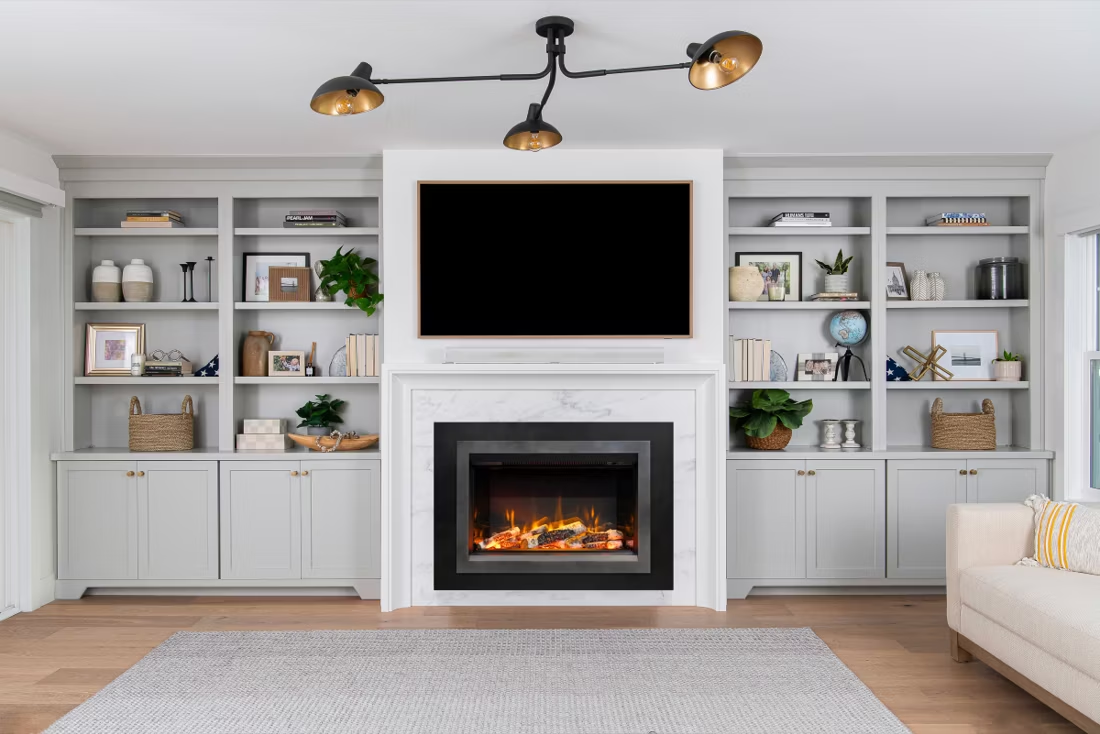
Electric also solves a real problem for Barbour County's older housing stock. Many of Eufaula's Greek Revival and Victorian homes have original masonry fireplaces that are decorative, closed off, or structurally unsuited to venting work—an electric insert drops into that existing opening with no chimney liner, no gas line, and no changes to the historic exterior. Alabama Power serves most of the county's towns, with Pea River Electric Cooperative covering more rural stretches near Clayton and Louisville; either way, an electric fireplace runs on a standard household circuit, which keeps the project simple from a permitting and inspection standpoint compared to wood or gas work.
Three steps. No salesperson until you're ready.
Tell us about your project
Your zip code, your situation, and the fuel you're leaning toward—or let the answers point you to one.
See what's actually available
The brands dealers within 100 miles genuinely carry—real options, never a catalog mirage.
Get your dealer & Project Guide
A trusted local dealer, plus the free Project Guide & Parts List that names every component of the job.
Frequently Asked Questions
How much does an electric fireplace installation cost in Barbour County?
Plug-in electric inserts and freestanding stoves generally run $300 to $800 installed, since they only need a standard 120V outlet and no venting. Built-in wall units or larger insert conversions that require a dedicated circuit, electrician work, or custom framing into an existing masonry opening typically land between $800 and $2,000. Because there's no chimney, flue, or gas line involved, electric is consistently the least expensive fireplace project in Barbour County—a local dealer can give you a firm number once they've looked at your wall or existing opening.
What size electric fireplace do I need for my home?
Most electric fireplaces are sized in wattage rather than BTUs for whole-home heating, since they're built for zone heating rather than carrying a full house through winter. A 1,500-watt unit comfortably supplements a single living room or bedroom in a typical Eufaula or Clayton home. Given Barbour County's mild, light winter heating season, homeowners here rarely need to size up the way a colder-climate buyer would—the goal is usually ambiance plus a bit of extra warmth on cool mornings, not primary heat. A local dealer can help you match wattage and unit size to the specific room.
Do I need a permit to install an electric fireplace in Barbour County?
In most cases, no separate fireplace permit is required for a plug-in or standard 120V electric insert, since there's no venting, gas line, or chimney work involved. If your installation requires a new dedicated circuit or panel work—common with larger built-in units—an electrical permit through your local building official is standard practice, and a licensed electrician will typically pull it as part of the job. For homes in Eufaula's historic district, exterior appearance isn't affected since electric units don't require venting changes, which is one reason they're a popular choice for preserving original mantels and masonry openings.
Electric vs. wood—which makes more sense in Barbour County?
Wood is still standard here, and Barbour County's oak, pine, and hickory make for reliable local firewood—plenty of homeowners burn wood for the authentic fire experience or as backup heat. But with winter lows averaging only 37°F and a heating season that's short compared to most of the country, many households find electric covers their actual needs: ambiance most evenings, a bit of supplemental warmth on the rare cold snap, and none of the wood storage, ash cleanup, or chimney maintenance. Electric also runs entirely off household power, so it's a low-hassle choice for a second living space or a home where the mantel is more decorative than functional. Wood remains the better call if you want a heat source that works without electricity during storm outages, which Barbour County does see from time to time with severe weather.
Should I get an electric insert or a wall-mounted electric fireplace?
If you already have a fireplace opening—common in Eufaula's older homes—an electric insert is usually the simpler, more finished-looking option, since it fits the existing masonry surround and mantel. A wall-mounted unit is the better choice for newer construction or rooms without an existing fireplace opening, and it can be centered on a wall as a focal point without any structural opening at all. Both options plug into standard household power in most cases; a local dealer can walk through your specific room to recommend one over the other.
How much does it cost to run an electric fireplace in Barbour County?
Most electric fireplaces cost roughly 10 to 30 cents an hour to run on the heat setting, depending on wattage and local electricity rates from Alabama Power or Pea River Electric Cooperative. Because Barbour County's mild winters mean the heater setting is used occasionally rather than around the clock, most homeowners find the added cost on their utility bill is modest—a few dollars a month during the cooler stretch from December through February. Running the flame effect alone, without heat, uses only a small fraction of that.
Will my electric fireplace work during a power outage?
No—electric fireplaces require household power to run both the flame effect and the heater, so they won't operate during an outage. Barbour County does see occasional storm-related outages, particularly from spring severe weather and the tail end of hurricane season moving up from the Gulf. If backup heat during an outage matters to you, pair an electric fireplace in your main living space with a wood stove or vented gas appliance elsewhere in the home, or plan for a generator to keep the electric unit running through a shorter outage.
What electric fireplace brands are available through local dealers in Barbour County?
Local hearth dealers serving Barbour County typically carry established electric fireplace lines such as Dimplex, Napoleon, and Amantii, ranging from simple plug-in log inserts to larger built-in linear units. Availability depends on the dealer, so it's worth confirming what's in stock or orderable before you settle on a specific model—a local dealer can also tell you which units are easiest to retrofit into an existing masonry opening versus which need new framing.
Is an electric fireplace a good fit for a historic home in Eufaula?
Often, yes. Many of Eufaula's historic homes have original fireplace openings that are no longer safe or practical to use for wood burning, and converting to gas would mean running a new gas line and venting through a historic exterior wall—something local preservation guidelines can complicate. An electric insert sits in the existing opening, requires no venting or gas work, and can be removed later without any permanent change to the fireplace or mantel. That reversibility is a real advantage for homeowners working within historic district requirements.
Do electric fireplaces actually produce heat?
Yes—most put out around 4,800–5,000 BTUs from a standard outlet, which comfortably warms a bedroom, office, or den as a comfort-zone heater. What they won't do is carry a whole house the way wood, gas, or pellet can. Think of electric as ambiance-first with honest supplemental heat: flames on with no heat in July, flames plus warmth in January.
Can I put a TV above my fireplace?
Yes—with an asterisk. Fireplaces are hot and TVs don't like heat. Either put a mantel between them to deflect rising warmth, or choose a fireplace with heat-management technology that creates a cool zone on the wall above—the wall stays around 125 degrees, barely warm, while the room still gets full heat. If you like clean lines and don't want a mantel, heat management is the answer.
Can a fireplace actually lower my heating bill?
Yes—by creating a comfort zone. A furnace heats every square foot of the house just to warm the one room you're in; a gas fireplace on low burns roughly a sixth of the gas a typical furnace does. Set the furnace around 55–60 degrees as a baseline, then heat the rooms your family actually uses. Families who heat this way commonly save $20–$60 a month.
Does a fireplace add value to my home?
On average, a fireplace adds back to the home about the same amount you spent installing it. Add the monthly savings from heating the rooms you actually use instead of the whole house—often hundreds of dollars a year—and the value case is strong before you even count what a fire does for how your family uses the room.
Stove and Fireplace Dealers in Barbour County
Listings include WhyFire partner dealers, dealers we have verified as authorized for the brands we recommend, and established local businesses that carry hearth products. Every listing shows which one it is. The ones marked Preferred run on WhyFire's software, so they can show you real pricing and book your appointment right here. No manufacturer pays for placement. How we verify dealers →
Find your electric fireplace in Barbour County.
Tell us a bit about your home and we'll match you with the right electric fireplace or insert—and connect you with a trusted local dealer serving Eufaula, Clayton, Clio, Louisville, and Bakerhill.
Find Your Fireplace →