
Instant Heat for Auburn Homes, No Chimney Required.
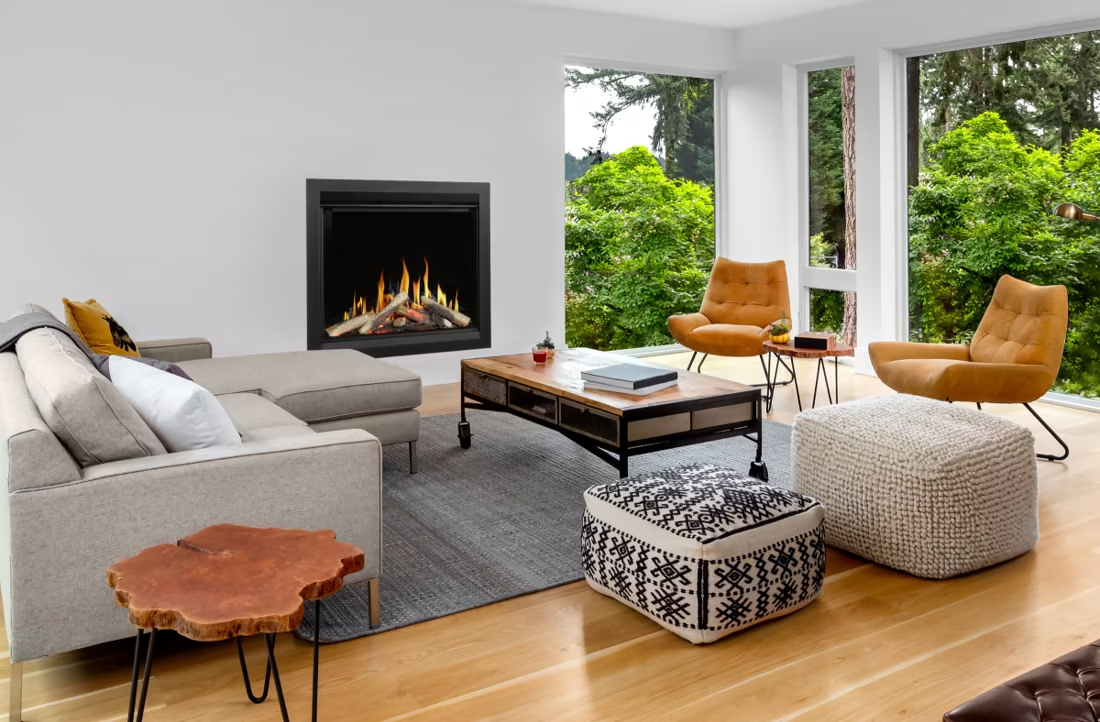
Auburn's mild Piedmont winters rarely call for a wood stove or pellet unit—but a well-placed electric fireplace adds real ambiance and zone warmth on the season's cooler nights. Find the right unit and connect with a trusted local dealer.
Every Project Starts From One of These Five Situations
Mild winters make electric heat an easy fit.
Auburn sits at 707 feet in Alabama's Piedmont, where the average winter low hovers around 35°F and the heating season totals just 2,414 degree days—a fraction of what a place like Fargo, North Dakota logs in a single winter. Central heat pumps handle the bulk of the heating load here, which is exactly why wood stoves and pellet stoves see almost no demand in Lee County: there simply isn't enough cold, sustained weather to justify cutting, storing, or hauling fuel. Electric fireplaces fill a different need—ambiance in a living room, a warm spot in a home office, or a little extra heat in a guest bedroom during the occasional January cold snap.
Much of Auburn's housing stock works in electric's favor: student rentals and condos near campus, HOA-governed subdivisions off South College Street, and historic homes downtown where adding a chimney or running a new gas line isn't practical or allowed. A plug-in or built-in electric unit needs no venting and no combustion air, which makes it the simplest hearth upgrade available to a renter or a homeowner in a deed-restricted neighborhood. Alabama Power serves the area at roughly 16.8 cents per kWh—a bit above the national average—so most owners here use their electric fireplace as targeted supplemental heat in one room rather than as a primary heat source.
Three steps. No salesperson until you're ready.
Tell us about your project
Your zip code, your situation, and the fuel you're leaning toward—or let the answers point you to one.
See what's actually available
The brands dealers within 100 miles genuinely carry—real options, never a catalog mirage.
Get your dealer & Project Guide
A trusted local dealer, plus the free Project Guide & Parts List that names every component of the job.
Frequently Asked Questions
How much does an electric fireplace installation cost in Auburn?
Costs vary a lot with the unit type. A freestanding, plug-in electric fireplace runs $300 to $900 and needs no installation beyond plugging it into a standard outlet. A wall-mounted or recessed unit that requires opening drywall and running a dedicated 20-amp circuit typically lands between $1,500 and $3,500 installed. A full mantel package with a built-in electric insert, surround, and finish carpentry can reach $2,500 to $4,500. Most Auburn dealers will quote the electrical work separately if a licensed electrician needs to add a circuit for a larger unit.
Do I need a permit to install an electric fireplace in Auburn?
A plug-in freestanding unit doesn't require a permit—it's no different than plugging in a space heater. A built-in or wall-recessed electric fireplace that requires new wiring, a dedicated circuit, or a wall opening does typically require an electrical permit through the City of Auburn Building Safety Department, or the Lee County Building Department for homes outside city limits. Your installer or electrician will usually pull this permit as part of the job.
What does it cost to run an electric fireplace with Alabama Power rates?
Alabama Power residential customers in Auburn pay about 16.8 cents per kWh. A typical 1,500-watt electric fireplace running on high for five hours costs roughly $1.25 a day, or about $35–$40 a month if used daily through a cold stretch. That's noticeably cheaper than running a whole-house heat pump harder to warm rooms you're not using, which is the main reason electric fireplaces here get used as zone heat for a den or bedroom rather than as a home's primary heat source.
Can I put an electric fireplace in a rental or condo near Auburn University?
Yes—this is one of the most common electric fireplace installs in the area. Plug-in units require no venting, no gas line, and no permanent alteration, which makes them ideal for the student rentals and condos around campus where landlords won't allow wood or gas appliances. Many HOA communities around Auburn also restrict exterior venting or chimney additions, so an electric insert or wall-mount is often the only hearth option available to owners in those neighborhoods.
What's the difference between an electric insert, a mantel package, and a wall-mount unit?
An electric insert is sized to drop into an existing masonry fireplace opening, giving an old wood-burning fireplace a flame effect and heat without any venting. A mantel package pairs a built-in electric firebox with a surround and mantel shelf, built as a standalone piece of furniture or millwork—popular in newer Auburn subdivisions without existing fireplaces. A wall-mount or recessed unit installs flush into the wall like a piece of art or a TV, which is the choice most homeowners doing a modern remodel or new build pick. All three plug into standard household current unless you're going with a larger recessed model that needs a dedicated circuit.
Auburn winters are pretty mild—do I actually need supplemental heat?
Most Auburn homes get through winter fine on their existing heat pump or central system; the 35°F average winter low here just doesn't put the kind of sustained cold-weather demand on a home that you'd see in a place like Duluth, Minnesota. That's exactly why wood and pellet stoves are essentially nonexistent locally—there's no real need for a dedicated heating appliance. An electric fireplace isn't solving a heating shortfall; it's adding ambiance and comfortable, immediate warmth to a specific room on the handful of nights each winter that dip into the 20s, without the mess or upkeep of a wood-burning unit.
What size electric fireplace do I need for my Auburn home?
Most electric fireplaces put out around 4,600 to 5,200 BTUs, which comfortably heats a single room of 400 to 1,000 square feet depending on ceiling height and insulation. Because Auburn's climate rarely demands whole-home heating from a fireplace, sizing here is more about matching the unit to the room—a 30-inch insert or wall-mount suits a bedroom or den, while a 50-inch-plus linear unit fits a great room or open living space. A local dealer can walk through your room dimensions and recommend a specific model.
Will my electric fireplace work if the power goes out?
No—electric fireplaces need household current to run the heater, blower, and flame effect, so they go dark along with everything else during an outage. If backup heat during power outages is a priority, a gas fireplace or insert is the better choice for that specific need—natural gas and propane options are available through local dealers in Auburn and can be equipped with battery-backup ignition. Many homeowners here choose electric for daily ambiance and add gas or a small propane heater as their outage backup.
Electric vs. gas fireplace—which is right for my Auburn home?
Gas fireplaces put out real, sustained heat, can run during a power outage with the right ignition system, and work well as a secondary heat source if you want backup during a winter storm. Electric fireplaces cost far less to install, need no gas line or venting, and are the only realistic option for rentals, condos, and HOA communities that restrict combustion appliances. For a downtown Auburn rental or a room where you just want flame ambiance and occasional warmth, electric is the simpler and cheaper route. For a primary living space in a permanent home where you want real heat output and outage-ready backup, gas is worth the extra installation cost.
Can I put a TV above my fireplace?
Yes—with an asterisk. Fireplaces are hot and TVs don't like heat. Either put a mantel between them to deflect rising warmth, or choose a fireplace with heat-management technology that creates a cool zone on the wall above—the wall stays around 125 degrees, barely warm, while the room still gets full heat. If you like clean lines and don't want a mantel, heat management is the answer.
Does an electric fireplace need a vent or chimney?
No—that's its superpower. An electric fireplace needs a wall and an outlet, period. No vent pipe, no gas line, no clearances to design around, which is why it works in bedrooms, offices, apartments, and walls where venting a gas or wood unit would be impractical or impossible. Installation is typically the simplest and least expensive of any fireplace type.
Can a fireplace actually lower my heating bill?
Yes—by creating a comfort zone. A furnace heats every square foot of the house just to warm the one room you're in; a gas fireplace on low burns roughly a sixth of the gas a typical furnace does. Set the furnace around 55–60 degrees as a baseline, then heat the rooms your family actually uses. Families who heat this way commonly save $20–$60 a month.
How much should I budget for a fireplace?
For an average home—covering the fireplace, the vent pipe, and basic installation—a budget between $3,900 and $5,500 gives you a lot of options across wood, gas, and pellet. By the time you add finish work, gas line, and electrical, the average complete installation lands between $5,000 and $12,000 all-in. In a remodel or new build, a good rule is to put about 2.5% of the total project cost toward the fireplace.
Nearby Dealers
Hearth shops serving Auburn and the surrounding area. Every listing shows whether it is a WhyFire partner, a dealer we have verified as authorized for the brands we recommend, or a local business carrying hearth products. No manufacturer pays for placement. How we verify dealers →
Blossman Gas And Appliance
Electric Service in Auburn
An electric fireplace's heater draws about 1,500 watts—pennies per hour at local rates.
Alabama Power Co
Find your electric fireplace in Auburn.
Tell us a bit about your home and we'll match you with the right electric fireplace, insert, or mantel package—plus a free Project Guide & Parts List and a trusted local Auburn dealer to install it.
Find Your Fireplace →