
Heating solutions built for Jackson Hole winters.
Wood, gas, pellet, and electric fireplace resources for Jackson, Wilson, Moose, Kelly, and Alta—matched to what actually survives a Teton County winter. Connect with a trusted local hearth retailer who can pull permits and size venting correctly.
Every Project Starts From One of These Five Situations
Climate Zone 7 heating in the shadow of the Tetons.
Teton County sits almost entirely at 6,200 feet or higher, in Climate Zone 7—the same severe-cold classification as Duluth or International Falls. A long, hard winter heating season and an average winter low around 6°F mean the furnace or the woodstove is running most of October through April. Lodgepole pine, aspen, and ponderosa pine from the surrounding Bridger-Teton and Caribou-Targhee National Forests have heated cabins here for generations, and Forest Service firewood permits remain a real source of low-cost fuel for homeowners willing to cut and haul their own.
This hub covers every fuel type serving Teton County—wood, gas, pellet, and electric—and every community from Jackson down to Wilson, Moose, Kelly, and Alta. Pick your fuel below for local dealers, real installation cost ranges, and unit recommendations suited to Jackson Hole's altitude, snow load, and long heating season. Whether you're outfitting a ranch home near Kelly or a ski cabin off Highway 22, this is the starting point for a project that actually works here.
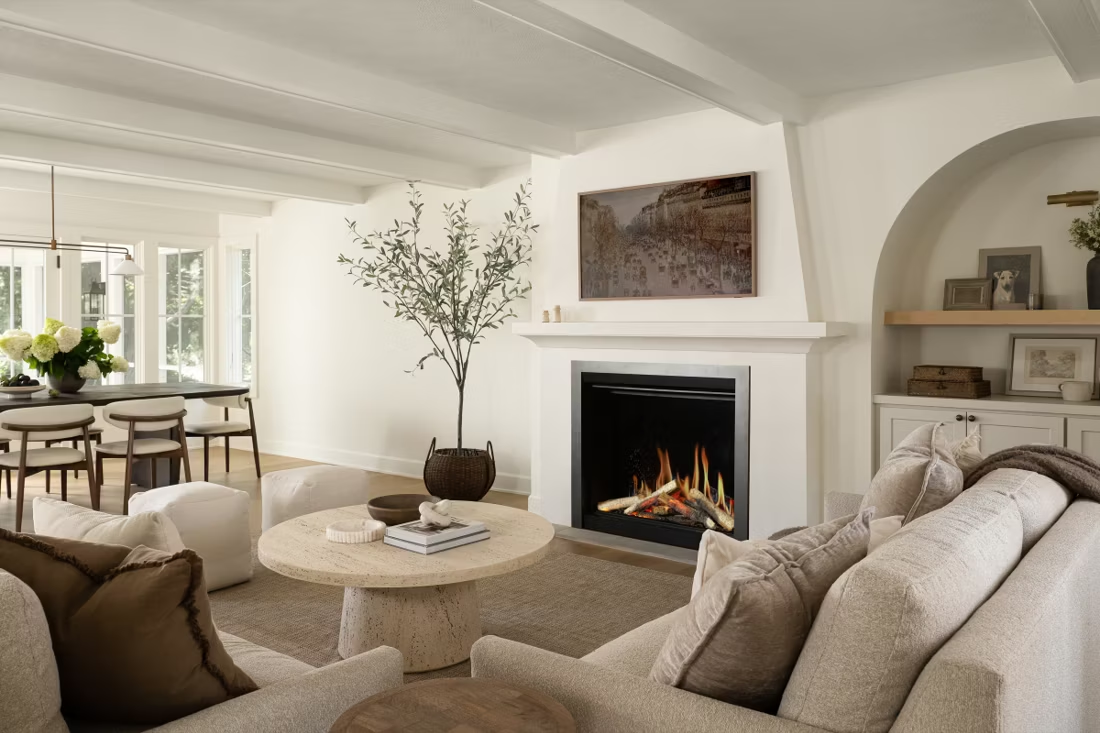
Four fuels. One honest answer for Teton County.
Three steps. No salesperson until you're ready.
Tell us about your project
Your zip code, your situation, and the fuel you're leaning toward—or let the answers point you to one.
See what's actually available
The brands dealers within 100 miles genuinely carry—real options, never a catalog mirage.
Get your dealer & Project Guide
A trusted local dealer, plus the free Project Guide & Parts List that names every component of the job.
Frequently Asked Questions
Which fuel works best in Teton County?
It depends on your home and how you use it. Wood remains a serious primary-heat option in Teton County—catalytic stoves burning lodgepole pine or aspen can hold a fire through a single-digit night, and a Forest Service permit from Bridger-Teton or Caribou-Targhee keeps fuel cost down for homeowners who cut their own. Gas is the practical choice for most in-town Jackson homes and second homes that sit empty for stretches—instant heat with no wood storage or hauling. Propane fills in where natural gas service doesn't reach, which is much of the valley outside town. Pellet stoves are a strong middle option—steady heat without splitting wood, and regional brands like Bear Mountain and Lignetics keep supply reliable. Electric fireplaces work well as supplemental heat in bedrooms or additions, but given how long and cold winters run here, they're not a realistic primary heat source on their own. Many Teton County homes run wood or gas as primary with pellet or electric backup.
Do I need a permit to install a fireplace in Teton County?
Yes, in nearly every case. New wood stoves, wood inserts, gas fireplaces, gas inserts, gas stoves, and pellet stoves all require a building permit through the applicable jurisdiction—the Town of Jackson for in-town addresses, Teton County for everywhere else in the valley. Gas installations also need a separate gas line permit and a licensed gas-fitter for the connection. Wood-burning appliances must meet current EPA emissions standards for new installations. Electric fireplaces generally skip the permit process unless the install involves hardwiring a built-in unit into a new circuit. Most hearth retailers in the valley handle permitting as part of the installation quote, so it's rarely something the homeowner has to chase down separately.
How does wildfire smoke affect wood burning in Teton County?
Summer and early fall wildfire smoke from regional fires can settle in Jackson Hole for days at a time, but it doesn't typically drive winter burning restrictions the way inversion-prone basins elsewhere do. The bigger practical consideration is timing: homeowners cutting their own firewood under a Bridger-Teton or Caribou-Targhee permit generally want green wood split and seasoned for six months to a year before it's dry enough to burn clean, so cutting in late spring for the following winter is common practice. A well-seasoned load of lodgepole or ponderosa burns hot and clean in a modern EPA-certified stove; unseasoned wood is the main source of excess smoke locally, not the appliance itself.
Can one local hearth retailer handle all four fuel types?
Several Jackson-area retailers carry three or four fuel types, since valley homeowners often want to compare options before committing to a wood-burning setup that requires firewood storage versus a gas unit that doesn't. Dealers who stock wood, gas, and pellet side by side let you see working displays and talk through venting requirements for your specific elevation and roofline—snow load and wind exposure matter more here than in lower-elevation counties. Electric fireplace selection tends to be thinner among wood/gas-focused dealers, since electric units are simpler and sometimes sourced through electricians or general contractors instead. If you're not sure which fuel fits your home, a multi-fuel dealer visit is worth the trip before you decide.
How does service work in outlying parts of Teton County like Kelly, Moose, or Alta?
Most chimney sweeps and gas technicians are based in or near Jackson and travel out to Wilson, Moose, Kelly, Alta, and the ranch roads in between. Winter road conditions and highway closures around Teton Pass and the park entrances can affect scheduling, so a travel fee for outlying calls is common, and appointments booked during shoulder season (September–October) are far easier to land than mid-winter emergency calls. Given how long and severe the heating season runs here, it's worth scheduling annual sweep and inspection service before the first real cold snap rather than waiting until a chimney fire risk or a dead pilot light forces the issue in January.
What's the typical cost range for fireplace installation across all fuel types in Teton County?
Costs run on the higher end of national ranges, partly due to Jackson Hole's construction market and partly due to elevation-specific venting requirements. Wood stove or insert installation typically runs $5,000–$10,000, with full chimney work for new construction pushing higher. Gas fireplace, insert, or stove installation runs $5,000–$12,000 depending on whether a new gas or propane line has to be run. Pellet stove or insert installation typically runs $5,000–$8,000. Electric fireplace units range from $200–$3,000 for the unit itself, plus $400–$1,200 in labor for anything beyond a simple plug-in install. See the county + fuel pages above for retailer-specific pricing detail.
What is an in-home preview and do I need one?
It's a visit where a hearth professional measures your space, confirms the model you picked actually works in your home, and walks the specs—framing, gas line, venting, finish work—before anything is ordered. Some details you just can't know until you see the house. Never make a down payment without one; it's the single most-skipped step that burns buyers.
How much should I budget for a fireplace?
For an average home—covering the fireplace, the vent pipe, and basic installation—a budget between $3,900 and $5,500 gives you a lot of options across wood, gas, and pellet. By the time you add finish work, gas line, and electrical, the average complete installation lands between $5,000 and $12,000 all-in. In a remodel or new build, a good rule is to put about 2.5% of the total project cost toward the fireplace.
Can I install a fireplace myself?
If you're putting a fire in your house on purpose, it's best to work with an expert. Unless you're genuinely experienced in framing, gas line, vent pipe, and the national code on clearances to combustibles, have a professional do it—and ideally the same company that sells you the fireplace, so warranty, service, and liability all live under one roof.
Can a fireplace actually lower my heating bill?
Yes—by creating a comfort zone. A furnace heats every square foot of the house just to warm the one room you're in; a gas fireplace on low burns roughly a sixth of the gas a typical furnace does. Set the furnace around 55–60 degrees as a baseline, then heat the rooms your family actually uses. Families who heat this way commonly save $20–$60 a month.
Stove and Fireplace Dealers in Teton County
Listings include WhyFire partner dealers, dealers we have verified as authorized for the brands we recommend, and established local businesses that carry hearth products. Every listing shows which one it is. The ones marked Preferred run on WhyFire's software, so they can show you real pricing and book your appointment right here. No manufacturer pays for placement. How we verify dealers →
Poco, LLC
The Chimney Sweeps Of Jackson Hole
Find your fireplace in Teton County.
Tell us your fuel and address, and we'll match you with a trusted local Jackson Hole dealer and send a free Project Guide & Parts List—the exact parts, vent kit, and recommended dealer for your project.
Find Your Fireplace →