
Heat Built for Wind River Basin Winters.
Wood, gas, pellet, and electric fireplace resources for Riverton, Lander, Dubois, Shoshoni, Pavillion, Hudson, and the Wind River Reservation communities. Find the right unit for a Wind River Basin winter and connect with a trusted local hearth retailer.
Every Project Starts From One of These Five Situations
Cold, windy, and wide open: heating Fremont County, Wyoming.
Fremont County is the largest county in Wyoming by land area—more than 9,000 square miles stretching from the Wind River Basin floor near 5,000 feet up into the Wind River Range above 13,000 feet, with Dubois sitting at nearly 6,900 feet on the mountain side of the county. Winters are long and genuinely cold: average lows hover around 4°F, and the winter heating load here runs higher than a typical winter in Fargo, North Dakota. Wind is as much a factor as cold—the basin funnels sustained gusts that make correctly sized, wind-rated venting a real consideration for any fireplace or stove install. Wood heat has deep roots in the county: lodgepole pine, aspen, and ponderosa pine come off the national forest land ringing the basin, and plenty of households still cut and split their own.
This hub rounds up hearth retailers, service technicians, and fuel suppliers covering every corner of the county—Riverton and Lander in the basin, Dubois up toward the mountains, Shoshoni and Pavillion along Highway 26, Hudson just east of Lander, and the Wind River Reservation communities of Fort Washakie, Ethete, and Arapahoe. Pick a fuel below to see local dealers, typical installation costs, and the specifics that apply to your part of the county—reservation land falls under Eastern Shoshone and Northern Arapaho tribal jurisdiction rather than county building code, which matters for permitting.
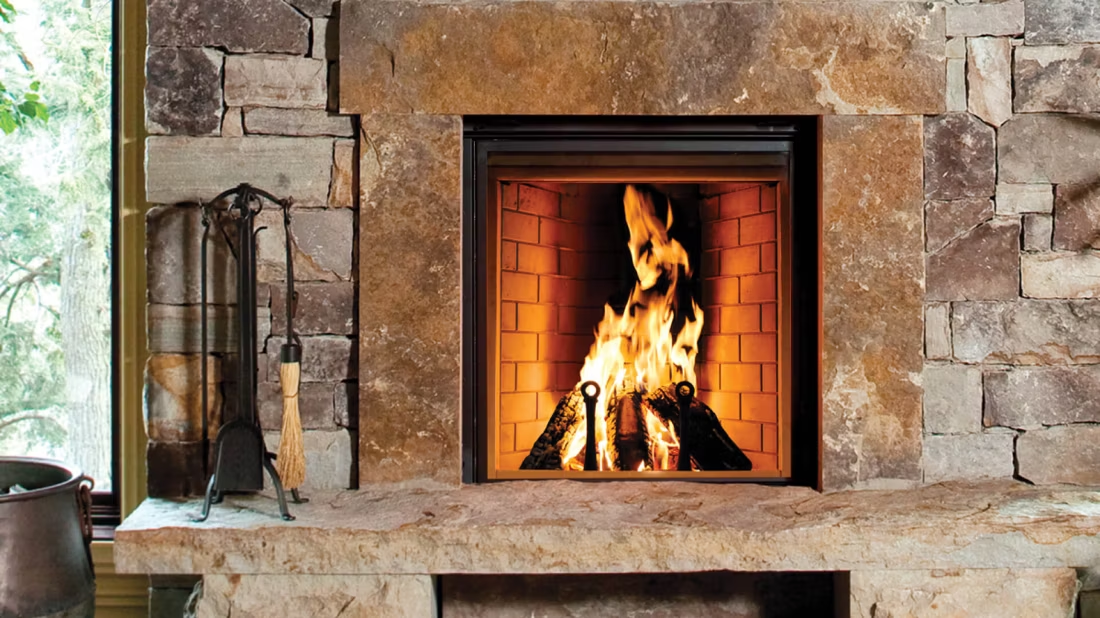
Four fuels. One honest answer for Fremont County.
Three steps. No salesperson until you're ready.
Tell us about your project
Your zip code, your situation, and the fuel you're leaning toward—or let the answers point you to one.
See what's actually available
The brands dealers within 100 miles genuinely carry—real options, never a catalog mirage.
Get your dealer & Project Guide
A trusted local dealer, plus the free Project Guide & Parts List that names every component of the job.
Frequently Asked Questions
Which fuel works best in Fremont County?
It depends on the home and how remote it sits, but wood carries real weight here. Lodgepole pine, aspen, and ponderosa pine come off the mountains ringing the Wind River Basin, and a lot of Fremont County households still burn what they cut themselves under national forest personal-use permits. With average lows around 4°F and a winter heating load that runs higher than a typical winter in Fargo, North Dakota, a catalytic wood stove that holds coals through a long January night is a real asset, especially outside Riverton and Lander where outages from high wind events aren't rare. Gas is the convenience pick in town, particularly for Riverton and Lander homes on existing gas lines or propane tanks—no wood-hauling, no ash. Pellet stoves are the middle ground—Bear Mountain, Lignetics, and Forest Energy pellets are all sold through the region—offering wood-like heat without the splitting and stacking, though bags still have to be trucked in from outside the county. Electric fireplaces work well as supplemental heat in bedrooms or additions, but on their own they won't carry a Fremont County winter, and they go dark in the same wind-driven outages that wood and some gas units can ride out.
Do I need a permit to install a fireplace in Fremont County?
Yes, in nearly every case. New wood stoves, inserts, gas fireplaces, gas inserts, gas stoves, and pellet stoves typically require a building permit, plus a separate gas-line permit and licensed installer for any propane or natural gas work. Where you apply depends on where you live: Riverton and Lander each issue their own building permits inside city limits, unincorporated parts of the county go through Fremont County Planning & Development, and homes on the Wind River Reservation—Fort Washakie, Ethete, Arapahoe, and the surrounding area—fall under Eastern Shoshone and Northern Arapaho tribal building authority rather than county code. Electric fireplaces are usually permit-free unless you're adding a new circuit for a built-in unit. Most local hearth retailers handle the paperwork as part of the installation quote, which is worth confirming up front given how the jurisdictions overlap here.
Are there air quality restrictions on wood burning in Fremont County?
Winter burning itself isn't restricted the way it is in some Western basins—Fremont County doesn't run mandatory or voluntary wood-smoke curtailment days. The air quality issue here is seasonal and reversed: wildfire smoke drifting off the Shoshone National Forest and Wind River Range in July through September can blanket Riverton, Lander, and Dubois for days at a time, sometimes badly enough to affect anyone with respiratory sensitivity. That smoke has nothing to do with home heating, but it's worth factoring in if you're deciding between a wood stove that needs a summer supply of split, seasoned wood stored outdoors and a pellet or gas unit that doesn't require outdoor wood storage during smoke season.
Can one local hearth retailer handle all four fuel types?
Several Fremont County hearth retailers stock more than one fuel type, but coverage isn't uniform across all four. Dealers based in Riverton and Lander are generally your best bet for comparing wood, gas, and pellet units side by side, since those two towns carry most of the county's retail hearth business. Electric fireplace selection tends to be thinner and more catalog-driven outside the bigger stores. If you're in Dubois, Shoshoni, or on the Wind River Reservation, expect to work with a Riverton- or Lander-based dealer who travels out for installation rather than a storefront in your own town—ask up front which fuels they stock in-house versus special-order.
How does service work in rural and reservation areas of Fremont County?
Fremont County is the largest county in Wyoming by land area, and it shows in how service works. A technician based in Riverton might drive 45 minutes to Shoshoni, over an hour to Dubois through Wind River Canyon, or out to Fort Washakie and Ethete on the reservation—all of which usually means a trip fee on top of the service call, often in the $50–$120 range depending on distance. Wind is the other factor: venting has to be sized and capped correctly for the sustained gusts that come through the basin, and a rushed or undersized install shows up fast as downdraft or pilot-light problems. Scheduling annual service in late summer or early fall, before wildfire smoke season and well before the first hard cold snap, gets you ahead of the rush that hits every chimney sweep and gas tech in the county by November.
What's the typical cost range for fireplace installation across all fuel types in Fremont County?
Costs run close to regional norms but factor in Fremont County's distances and wind-rated venting requirements. Wood stove or insert installation: roughly $4,500–$9,500 for a typical retrofit, more if a full masonry chimney or long horizontal run is involved. Gas fireplace, insert, or stove: about $4,500–$11,500, with propane tank setup or new gas-line work pushing toward the top of that range for homes without existing service. Pellet stove or insert: typically $4,500–$8,000 installed. Electric fireplace: $200–$3,000 for the unit itself, plus $400–$1,200 in labor for anything beyond a plug-in wall unit. Rural and reservation addresses should budget for a trip charge on top of these figures—ask your dealer whether travel is bundled into the installation quote.
Can I install a fireplace myself?
If you're putting a fire in your house on purpose, it's best to work with an expert. Unless you're genuinely experienced in framing, gas line, vent pipe, and the national code on clearances to combustibles, have a professional do it—and ideally the same company that sells you the fireplace, so warranty, service, and liability all live under one roof.
What is an in-home preview and do I need one?
It's a visit where a hearth professional measures your space, confirms the model you picked actually works in your home, and walks the specs—framing, gas line, venting, finish work—before anything is ordered. Some details you just can't know until you see the house. Never make a down payment without one; it's the single most-skipped step that burns buyers.
How much should I budget for a fireplace?
For an average home—covering the fireplace, the vent pipe, and basic installation—a budget between $3,900 and $5,500 gives you a lot of options across wood, gas, and pellet. By the time you add finish work, gas line, and electrical, the average complete installation lands between $5,000 and $12,000 all-in. In a remodel or new build, a good rule is to put about 2.5% of the total project cost toward the fireplace.
Wood, gas, pellet, or electric—how do I choose?
Match the fuel to your life, not the other way around. Wood: lowest fuel cost and total power-outage independence, but you're hauling and stacking. Gas: press a button, set a thermostat, no maintenance to speak of. Pellet: wood economics with automatic feeding, in exchange for weekly cleaning and a need for electricity. Electric: plugs in anywhere with honest supplemental heat. Nobody regrets the fuel that fits how they actually live.
Stove and Fireplace Dealers in Fremont County
Listings include WhyFire partner dealers, dealers we have verified as authorized for the brands we recommend, and established local businesses that carry hearth products. Every listing shows which one it is. The ones marked Preferred run on WhyFire's software, so they can show you real pricing and book your appointment right here. No manufacturer pays for placement. How we verify dealers →
Top Line
Wind River Fireplace
Pinedale Lumber
A D Martin Lumber Company Inc
Find your fireplace in Fremont County.
Pick your fuel below and I'll match you with a trusted local dealer plus a free Project Guide & Parts List—the parts, the vent kit, and the recommended pro for your Fremont County home.
Find Your Fireplace →