
Built for a Zone 7 winter in Vilas County.
Wood, gas, pellet, and electric fireplace resources for every town and lake community in Vilas County—from Eagle River to Land O'Lakes. Find the right unit and connect with a trusted local hearth retailer.
Every Project Starts From One of These Five Situations
Nearly 9,500 heating degree days in Wisconsin's Northwoods.
Vilas County sits at the top of Wisconsin's Northwoods, bordering Michigan's Upper Peninsula, with over 1,300 lakes and a year-round population of under 4,000 that swells with seasonal cabin owners. Climate Zone 7 territory with 9,476 heating degree days puts this county in the same cold-climate tier as Duluth or International Falls—average winter lows sit around 1°F, and hard freezes stretch from November into April. Oak, maple, birch, and aspen are the local firewood standards, split and seasoned from the hardwood stands that surround Eagle River and the Eagle Chain of Lakes. Wood heat isn't a novelty here; it's how a lot of year-round residents and cabin owners get through a Northwoods winter without leaning entirely on propane deliveries.
What you'll find on this hub: hearth retailers, service technicians, and fuel suppliers covering the whole county—from Eagle River and Minocqua down through Boulder Junction, St. Germain, Presque Isle, and Land O'Lakes near the Michigan line. Pick your fuel below to see local dealers, typical installation costs, and unit recommendations specific to your project. Whether you're heating a year-round home or opening up a lake cabin for winter weekends, this is the starting point.
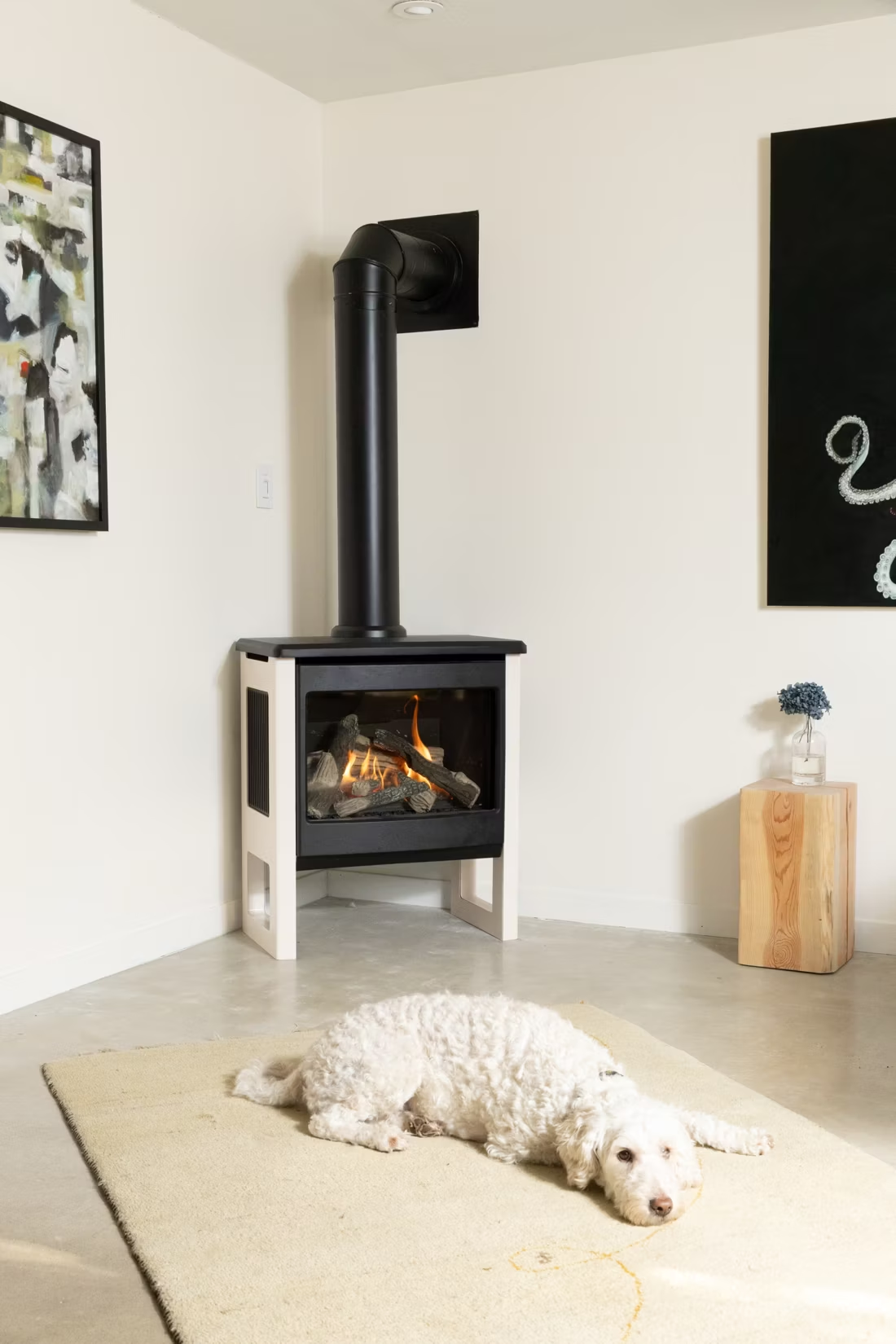
Four fuels. One honest answer for Vilas County.
Three steps. No salesperson until you're ready.
Tell us about your project
Your zip code, your situation, and the fuel you're leaning toward—or let the answers point you to one.
See what's actually available
The brands dealers within 100 miles genuinely carry—real options, never a catalog mirage.
Get your dealer & Project Guide
A trusted local dealer, plus the free Project Guide & Parts List that names every component of the job.
Frequently Asked Questions
Which fuel works best for a Vilas County winter?
At 9,476 heating degree days and average winter lows around 1°F, this is genuine cold-climate territory, comparable to Duluth or International Falls, so the fuel choice matters more here than in milder counties. Wood is the traditional primary heat source for year-round Northwoods homes—oak and maple burn long and hot, and a catalytic stove can hold a fire through a sub-zero overnight. Gas (mostly propane, since natural gas infrastructure is limited this far north) is the go-to for cabin owners who want heat on demand without tending a fire, especially for weekend-only use. Pellet stoves are a strong middle ground—Indeck Energy Services and Lignetics both supply the region, and pellet heat requires far less daily labor than wood while still delivering real BTUs. Electric fireplaces work well as supplemental heat in bedrooms or additions, but on their own they won't keep up with a Vilas County cold snap. Many year-round households run wood or pellet as primary heat with a propane or electric backup for convenience.
Do I need a permit to install a wood stove or fireplace in Vilas County?
Generally yes for any new wood stove, insert, gas appliance, or pellet stove—Vilas County requires a building permit for these installations, and gas work also needs a licensed propane or gas-fitter for the line connection. If you're cutting your own firewood on public land, permits come from the Chequamegon-Nicolet National Forest or, for parcels near the Michigan border, the Ottawa National Forest—both issue personal-use firewood permits with seasonal cutting windows. Electric fireplaces usually skip the permit process unless you're hardwiring a built-in unit into a new circuit. Most local hearth retailers handle the permitting paperwork as part of the installation, so it's rarely something a homeowner has to navigate alone.
Are there air quality restrictions on wood burning in Vilas County?
No—Vilas County has no air quality non-attainment designations or burn-curtailment programs, unlike some western counties dealing with winter inversions or wildfire smoke. That said, a properly sized, EPA-certified stove still matters here, not for regulatory reasons but for efficiency: with nearly 9,500 heating degree days, a poorly matched or older non-certified stove burns through oak and maple firewood far faster than a modern catalytic unit for the same heat output. Local installers can help size a stove correctly for a year-round home versus a smaller cabin.
Can one local hearth retailer in Vilas County handle all four fuel types?
Several dealers based around Eagle River and Minocqua carry wood, gas, and pellet lines, with electric fireplaces as a smaller but standard part of their showroom. Given the county's low year-round population (under 4,000) relative to its geographic spread, most retailers stock multi-fuel to serve the widest range of customers—full-time Northwoods residents, weekend cabin owners, and seasonal renters all have different heating needs. If you're unsure which fuel fits your home, a multi-fuel dealer can walk you through wood-versus-pellet-versus-propane trade-offs specific to whether your place is occupied year-round or just on weekends.
How does service work for lake cabins and seasonal properties in Vilas County?
With over 1,300 lakes and a large seasonal-cabin population, a good share of service calls in Vilas County are for properties that sit empty for weeks at a time. Technicians serving the county typically recommend closing-season inspections in the fall (before the first hard freeze) and opening-season service in spring, especially for pellet stoves and gas units that have sat idle. Wood chimneys on seasonal cabins still need annual sweeping even with lighter use, since creosote buildup from occasional fires can be just as much of a risk as from daily use. If your cabin is off the main plowed roads, ask about winter access before scheduling—some rural driveways aren't serviceable until a road crew or the owner clears them.
What's the typical cost range for fireplace installation across all fuel types in Vilas County?
Wood stove or insert installation: roughly $4,500–$9,500 for a standard install, more if new chimney chase work is required for a cabin without existing masonry. Gas fireplace, insert, or stove: about $4,500–$11,000, with propane tank setup and line work pushing costs toward the higher end for properties without existing service. Pellet stove or insert: typically $4,500–$7,500. Electric fireplace: $200–$3,000 for the unit itself, plus $400–$1,200 in labor for anything beyond a plug-and-play placement. Given the remoteness of some Vilas County properties, travel time can be a factor in labor costs—the county + fuel pages above break down local retailer pricing in more detail.
What is an in-home preview and do I need one?
It's a visit where a hearth professional measures your space, confirms the model you picked actually works in your home, and walks the specs—framing, gas line, venting, finish work—before anything is ordered. Some details you just can't know until you see the house. Never make a down payment without one; it's the single most-skipped step that burns buyers.
Wood, gas, pellet, or electric—how do I choose?
Match the fuel to your life, not the other way around. Wood: lowest fuel cost and total power-outage independence, but you're hauling and stacking. Gas: press a button, set a thermostat, no maintenance to speak of. Pellet: wood economics with automatic feeding, in exchange for weekly cleaning and a need for electricity. Electric: plugs in anywhere with honest supplemental heat. Nobody regrets the fuel that fits how they actually live.
Can I install a fireplace myself?
If you're putting a fire in your house on purpose, it's best to work with an expert. Unless you're genuinely experienced in framing, gas line, vent pipe, and the national code on clearances to combustibles, have a professional do it—and ideally the same company that sells you the fireplace, so warranty, service, and liability all live under one roof.
How much should I budget for a fireplace?
For an average home—covering the fireplace, the vent pipe, and basic installation—a budget between $3,900 and $5,500 gives you a lot of options across wood, gas, and pellet. By the time you add finish work, gas line, and electrical, the average complete installation lands between $5,000 and $12,000 all-in. In a remodel or new build, a good rule is to put about 2.5% of the total project cost toward the fireplace.
Stove and Fireplace Dealers in Vilas County
Listings include WhyFire partner dealers, dealers we have verified as authorized for the brands we recommend, and established local businesses that carry hearth products. Every listing shows which one it is. The ones marked Preferred run on WhyFire's software, so they can show you real pricing and book your appointment right here. No manufacturer pays for placement. How we verify dealers →
Earth Sense Energy Systems - Sayner
Fireside Hearth & Home Minocqua Dnm
Hearth Xpressions
Trappers Fireplace Gallery
Dahlquist Heating & Cooling
Find your fireplace project in Vilas County.
Pick your fuel below and we'll match you with a trusted local dealer and a free Project Guide & Parts List—the exact parts, including the vent kit, for your specific home and fuel type.
Find Your Fireplace →