
Stay warm through every St. Croix County winter.
Wood, gas, pellet, and electric fireplace resources for every city and township in St. Croix County—from Hudson and New Richmond to Somerset, Baldwin, and Star Prairie. Find the right unit and connect with a trusted local hearth retailer.
Every Project Starts From One of These Five Situations
Cold winters on the Wisconsin side of the St. Croix River.
St. Croix County sits directly across the river from the Twin Cities, and its winters feel it—average lows near 9°F, with a winter heating load comparable to what homeowners deal with in Minneapolis itself. The heating season here typically runs from October through April, with sustained stretches of single-digit and sub-zero nights. Wood heat has deep roots in this part of western Wisconsin: oak and maple from the county's woodlots burn long and hot for overnight fires, birch is a favorite for its clean-burning bark and appearance, and aspen serves as reliable kindling and shoulder-season fuel.
What you'll find on this hub: hearth retailers, service technicians, and fuel suppliers covering every community in the county—from Hudson and North Hudson along I-94, west to New Richmond and Somerset, south to Baldwin and River Falls, and out to the smaller townships like Star Prairie, Roberts, Wilson, and Deer Park. Pick your fuel below to get into the specifics: local dealers, installation costs, recommended units, and the resources that fit your project. Whether you're heating a farmhouse outside Baldwin or a lake cabin near the St. Croix, this is the starting point.
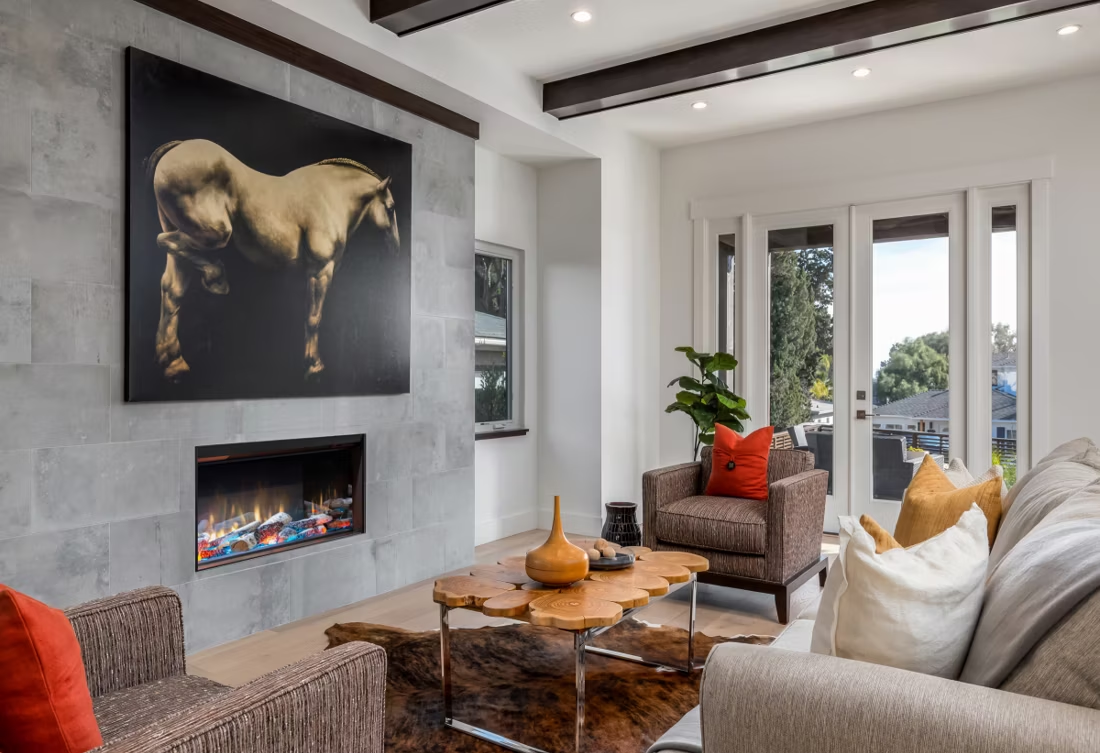
Four fuels. One honest answer for St. Croix County.
Three steps. No salesperson until you're ready.
Tell us about your project
Your zip code, your situation, and the fuel you're leaning toward—or let the answers point you to one.
See what's actually available
The brands dealers within 100 miles genuinely carry—real options, never a catalog mirage.
Get your dealer & Project Guide
A trusted local dealer, plus the free Project Guide & Parts List that names every component of the job.
Frequently Asked Questions
Which fuel works best in St. Croix County?
It depends on the home and the household. Wood remains a strong choice in the county's rural townships—oak and maple split from local woodlots hold a fire through a 9°F overnight low, and a wood stove keeps working when the power doesn't, which matters here given the occasional ice-storm outage. Gas is the convenience option: Hudson and New Richmond have natural gas service, while most outlying farms and lake properties run on propane tanks—either way, gas fireplaces give instant heat with none of the wood-hauling. Pellet sits in between, and it's genuinely well-supported locally—Somerset Pellet Fuel manufactures right here in the county, so supply isn't a concern the way it can be elsewhere. Electric is best treated as supplemental heat for bedrooms, additions, or ambiance rather than a primary source through a Wisconsin winter this cold. Plenty of St. Croix County homes end up running two fuels—wood or pellet for the main living space, gas or electric for the rest of the house.
Do I need a permit to install a fireplace in St. Croix County?
In almost every case, yes. New wood stoves, wood inserts, gas fireplaces, gas inserts, gas stoves, and pellet appliances all require a building permit, and gas installations need a separate permit and licensed gas-fitter for the line work. Any new solid-fuel appliance needs to meet current EPA emissions standards, which rules out installing an old uncertified wood stove even if you already own one. Within Hudson, New Richmond, and the county's other incorporated cities, permits go through that city's building inspector; in the townships, they run through St. Croix County zoning and building permits. Most local hearth retailers handle the permit paperwork as part of the installation, so it's rarely something homeowners have to navigate alone.
Are there air quality restrictions on wood burning in St. Croix County?
No—St. Croix County doesn't have the winter inversion problems or non-attainment status that trigger burn advisories in some parts of the country, and there are no local ordinances restricting wood-burning days. That said, any new wood stove or insert still has to meet federal EPA 2020 NSPS emissions standards regardless of local air quality, and it's worth choosing a certified unit anyway—modern EPA-certified stoves burn oak and maple more completely, which means less creosote buildup and fewer chimney fires over a long heating season.
Can one local hearth retailer handle all four fuel types?
Many can, but not all—coverage varies by dealer. Larger multi-fuel retailers along the Hudson–New Richmond corridor typically stock wood, gas, pellet, and electric units side by side, which is useful if you're still deciding between fuels and want to see working displays. Smaller shops in Baldwin or Somerset may focus more narrowly—often wood and pellet, since that's what most rural customers ask for, with gas and electric as secondary lines. Fuel suppliers like Somerset Pellet Fuel sell pellets and bulk fuel but aren't hearth retailers and won't handle appliance sales or installation. The county + fuel pages above break down which local dealers carry which fuel.
How does service work in the county's rural townships?
Most chimney sweeps and gas technicians are based in Hudson or New Richmond and drive out to the townships—Star Prairie, Deer Park, Woodville, Wilson, and the farmland around Baldwin. Expect a modest trip fee for the more outlying calls, and expect fall booking to fill up fast: with a heating season that starts in earnest by mid-October, most technicians recommend scheduling chimney sweeps and gas inspections in August or September, before the rush. If you're on a rural property, it's worth keeping backup batteries on hand for a gas fireplace's ignition system and having a plan for a wood or pellet backup if the power goes out during a winter storm.
What's the typical cost range for fireplace installation across all fuel types in St. Croix County?
Wood stove or insert installation: roughly $4,000–$8,500 for a typical retrofit, more if new masonry chimney work is involved. Gas fireplace, insert, or stove: about $4,000–$10,000, with cost driven mostly by whether a new gas line has to be run—homes on existing natural gas service in Hudson or New Richmond tend to land on the lower end, while a fresh propane line run to a rural property costs more. Pellet stove or insert: typically $4,000–$7,000. Electric fireplace: $200–$3,000 for the unit itself, plus $300–$1,000 in labor unless it's a simple plug-and-play wall unit. Exact numbers depend on your home and the dealer—see the county + fuel pages above for cost breakdowns tied to specific fuel types.
Can a fireplace actually lower my heating bill?
Yes—by creating a comfort zone. A furnace heats every square foot of the house just to warm the one room you're in; a gas fireplace on low burns roughly a sixth of the gas a typical furnace does. Set the furnace around 55–60 degrees as a baseline, then heat the rooms your family actually uses. Families who heat this way commonly save $20–$60 a month.
How much should I budget for a fireplace?
For an average home—covering the fireplace, the vent pipe, and basic installation—a budget between $3,900 and $5,500 gives you a lot of options across wood, gas, and pellet. By the time you add finish work, gas line, and electrical, the average complete installation lands between $5,000 and $12,000 all-in. In a remodel or new build, a good rule is to put about 2.5% of the total project cost toward the fireplace.
What is an in-home preview and do I need one?
It's a visit where a hearth professional measures your space, confirms the model you picked actually works in your home, and walks the specs—framing, gas line, venting, finish work—before anything is ordered. Some details you just can't know until you see the house. Never make a down payment without one; it's the single most-skipped step that burns buyers.
Can I install a fireplace myself?
If you're putting a fire in your house on purpose, it's best to work with an expert. Unless you're genuinely experienced in framing, gas line, vent pipe, and the national code on clearances to combustibles, have a professional do it—and ideally the same company that sells you the fireplace, so warranty, service, and liability all live under one roof.
Stove and Fireplace Dealers in St. Croix County
Listings include WhyFire partner dealers, dealers we have verified as authorized for the brands we recommend, and established local businesses that carry hearth products. Every listing shows which one it is. The ones marked Preferred run on WhyFire's software, so they can show you real pricing and book your appointment right here. No manufacturer pays for placement. How we verify dealers →
Scotts Heating And Ac
Comfort By Design Inc.
The Chimney Pro’s Mn
Comfort By Design- Osceola
Find your fireplace in St. Croix County.
Pick your fuel below, and we'll match you with a trusted local dealer and put together a free Project Guide & Parts List—the exact parts, vent kit included, and the local pro who can install it.
Find Your Fireplace →