
Steady Heat for Milwaukee's Long, Lake-Effect Winters.
With roughly 6,800 heating degree days and lows that regularly sit in the teens, Milwaukee homes need dependable heat. Find the right gas fireplace or insert and get matched with a trusted local dealer who can actually install it.
Every Project Starts From One of These Five Situations
Instant, reliable heat for a city built on cold winters.
Milwaukee sits in climate zone 6A along Lake Michigan, where lake-effect systems add wind and wet cold on top of an already demanding winter—average lows around 14°F and roughly 6,800 heating degree days per year, putting it in the same cold-climate tier as Minneapolis. Wood-burning and pellet appliances are unusual here: dense city lots, narrow side yards with no room to season or store cordwood, and Milwaukee's older neighborhood ordinances around solid-fuel appliances mean most homeowners never seriously consider them. Gas is the practical, standard choice for real heat in this city.
We Energies (Wisconsin Electric Power Co) provides natural gas service across virtually the entire city, so most Milwaukee homes are already plumbed for it—a real advantage over markets where propane is the fallback. Milwaukee's housing stock also plays in gas's favor: thousands of early-1900s cream city brick bungalows and Polish flats have existing masonry fireplaces that were never efficient to begin with. A direct-vent gas insert turns that decorative firebox into real, thermostat-controlled heat without giving up the mantel you already love.
Three steps. No salesperson until you're ready.
Tell us about your project
Your zip code, your situation, and the fuel you're leaning toward—or let the answers point you to one.
See what's actually available
The brands dealers within 100 miles genuinely carry—real options, never a catalog mirage.
Get your dealer & Project Guide
A trusted local dealer, plus the free Project Guide & Parts List that names every component of the job.
Frequently Asked Questions
How much does a gas fireplace installation cost in Milwaukee?
Most Milwaukee installations run in the neighborhood of $3,500 to $9,500, with the spread driven mainly by venting complexity and whether new gas line work is required. A direct-vent insert into an existing masonry chimney with a gas line already nearby lands on the lower end. Homes without existing gas service, or installs that require running a new line from the meter through a finished basement or older knob-and-tube-era wall cavity, push toward the higher end. Local dealers will confirm your exact number after seeing the home, since Milwaukee's older housing stock varies a lot from block to block.
Can I convert my existing fireplace to gas in a Milwaukee bungalow?
Yes, and it's one of the most common projects in the city given how many Milwaukee homes have an original masonry fireplace from the early 1900s. A gas insert with a stainless liner run up your existing chimney typically costs $4,000 to $8,500 depending on chimney condition and gas line access. Because most of Milwaukee already has We Energies natural gas service to the block, the gas hookup itself is usually the easy part—the bigger cost driver is whether the old flue needs relining or repair before the insert goes in.
Do I need natural gas, or should I plan for propane?
Almost every Milwaukee address, from the East Side to Bay View to the far Northwest Side zip codes, sits inside We Energies' natural gas service territory, so propane is rarely necessary within city limits. That's a genuine convenience compared to more rural parts of Wisconsin where propane tanks are the norm. If you're in one of the small pockets without an existing gas line to the house, a licensed gas-fitter can typically extend service from the street, and your installer will factor that into the estimate up front rather than surprising you later.
Will my gas fireplace still work if the power goes out?
Most modern gas fireplaces will, which matters in a city where lakefront winter storms occasionally knock out power for a day or more. Units with intermittent pilot ignition (IPI) run on a small battery backup that kicks in automatically, so the fireplace lights on demand even with no grid power. Valor fireplaces take a different approach—their pilot assembly generates its own electricity through the thermocouple, so there's no battery to remember at all. Given how expensive Milwaukee's electric rates have gotten (We Energies residential rates run close to $0.19/kWh), a gas fireplace that can run independent of the grid is worth asking about specifically.
What's the difference between a gas fireplace, gas insert, and gas stove?
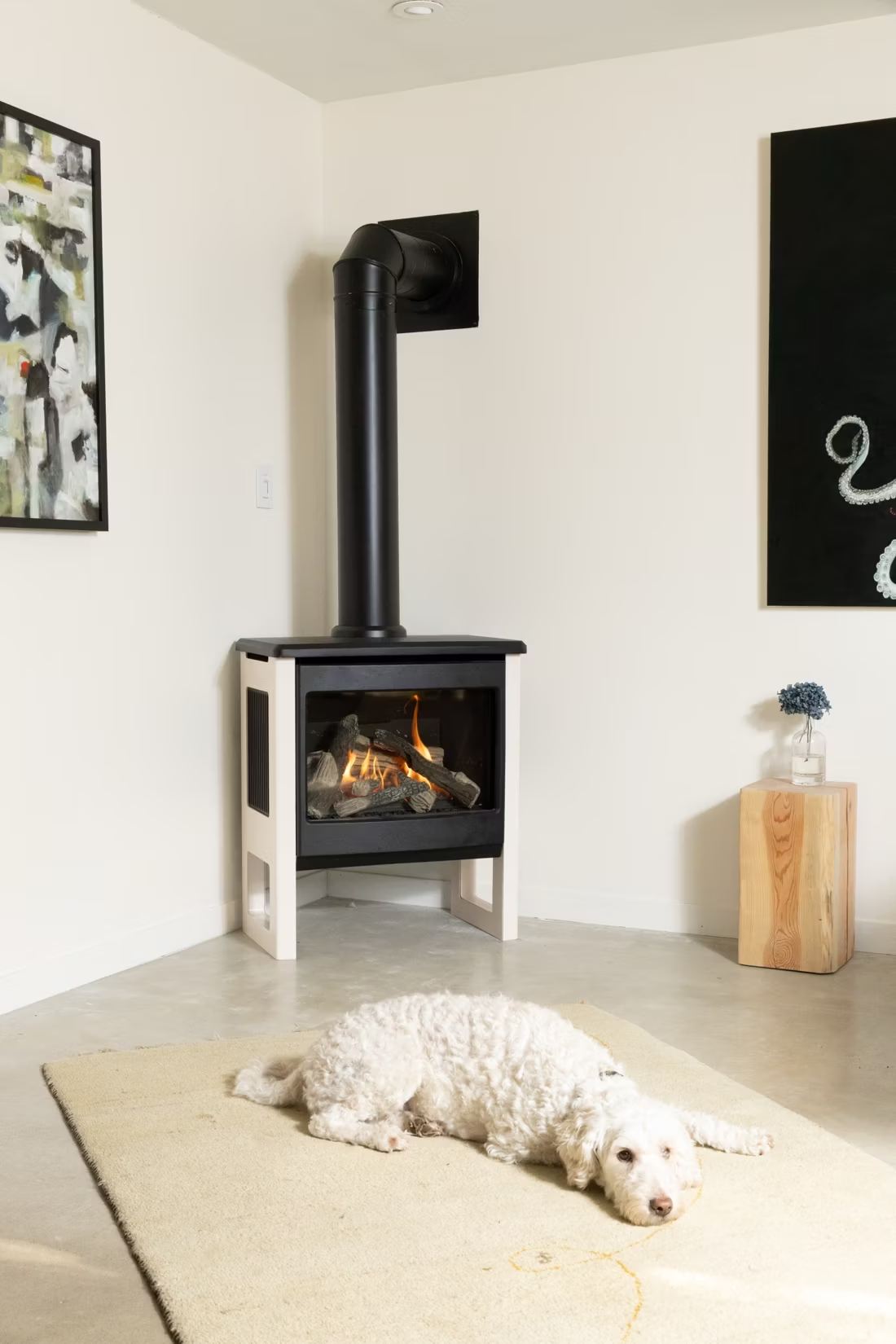
A gas fireplace is a fully built-in unit framed into a wall—the right choice for new construction or a gut remodel. A gas insert drops into an existing masonry firebox, which describes a huge share of Milwaukee's bungalow and Polish-flat housing stock. A gas stove is a freestanding cast-iron or steel unit that vents through a wall or existing chimney without needing a full fireplace opening—a good option for a den or three-season porch that never had a fireplace to begin with. Most Milwaukee homeowners with an original fireplace go the insert route; newer subdivisions further out toward Franklin or Oak Creek lean toward built-in units.
Do I need a permit to install a gas fireplace in Milwaukee?
Yes. The City of Milwaukee Department of Neighborhood Services (DNS) requires a building permit for gas fireplace installation, and any new or modified gas line must be run by a licensed plumber or gas-fitter and separately permitted. In practice, the hearth dealers who handle installs in the city pull both permits as part of the job and schedule the DNS inspection, so you're not coordinating multiple trades or paperwork yourself.
Should I get a vented or vent-free gas fireplace in Milwaukee?
Direct-vent (sealed combustion) units are by far the standard choice here and are what most local dealers install. They pull outside air for combustion and exhaust everything back outdoors, which keeps indoor air quality clean during the many months Milwaukee homes stay sealed up tight against the cold. Vent-free units are legal in Wisconsin but come with strict room-size and ventilation requirements, and they release some combustion byproducts into the living space—a bigger concern in a tightly insulated Milwaukee bungalow than in a drafty older farmhouse. Ask your dealer to walk through both, but expect direct-vent to be the recommendation for most rooms.
How often does a gas fireplace need to be serviced?
Plan on an annual inspection, ideally in early fall before the heating season ramps up. A technician checks the burner, pilot or ignition system, venting, and gas connections, and cleans the glass. This runs $150 to $225 in most cases for Milwaukee service providers—far simpler than chimney sweeping for a wood-burning unit, but still important, especially for units that run daily through a six-month heating season.
Why is gas the standard here instead of wood or pellet?
Wood-burning and pellet stoves are genuinely uncommon in Milwaukee—not because the winters aren't cold enough, but because the city doesn't have the infrastructure for either. There's no nearby public land for cutting permits, most lots are too narrow to season and store cordwood, and bulk pellet delivery isn't set up for residential density the way it is in more rural parts of Wisconsin. Gas solves the same problem wood does elsewhere—real, reliable heat through a long cold season—without asking a Bay View or Riverwest homeowner to find storage for four cords of oak and maple. For the rare property with the space and interest in solid fuel, it's possible, but it's the exception here, not the rule.
Can I put a TV above my fireplace?
Yes—with an asterisk. Fireplaces are hot and TVs don't like heat. Either put a mantel between them to deflect rising warmth, or choose a fireplace with heat-management technology that creates a cool zone on the wall above—the wall stays around 125 degrees, barely warm, while the room still gets full heat. If you like clean lines and don't want a mantel, heat management is the answer.
Why is a fireplace insert so efficient?
An insert does two things: it seals the chimney completely, so you stop losing air you already paid to heat, and it radiates warmth into the room through the firebox and glass. Most add a heat-exchange fan that pulls cool room air underneath, wraps it around the hot firebox, and pushes it back out warm. Your home is more efficient before you've even lit the first fire.
What is an in-home preview and do I need one?
It's a visit where a hearth professional measures your space, confirms the model you picked actually works in your home, and walks the specs—framing, gas line, venting, finish work—before anything is ordered. Some details you just can't know until you see the house. Never make a down payment without one; it's the single most-skipped step that burns buyers.
How much should I budget for a fireplace?
For an average home—covering the fireplace, the vent pipe, and basic installation—a budget between $3,900 and $5,500 gives you a lot of options across wood, gas, and pellet. By the time you add finish work, gas line, and electrical, the average complete installation lands between $5,000 and $12,000 all-in. In a remodel or new build, a good rule is to put about 2.5% of the total project cost toward the fireplace.
Nearby Dealers
Hearth shops serving Milwaukee and the surrounding area. Every listing shows whether it is a WhyFire partner, a dealer we have verified as authorized for the brands we recommend, or a local business carrying hearth products. No manufacturer pays for placement. How we verify dealers →
Stonecraft Studios
Chimney Doctors
David J. Frank Landscape Contracting, Inc.
Bbq Grills Of Wisconsin
The Fire Factory
Find your gas fireplace in Milwaukee.
Tell us about your home and we'll put together a free Project Guide & Parts List—the exact fireplace or insert, vent kit, and a trusted local Milwaukee dealer who can install it right.
Find Your Fireplace →