
Fireplaces Built for Florence County's Coldest Winters.
Wood, gas, pellet, and electric fireplace resources for every township in Florence County—from the county seat of Florence to Fence, Aurora, Tipler, and Long Lake. Get matched with a trusted local hearth dealer and a free Project Guide & Parts List for your project.
Every Project Starts From One of These Five Situations
Deep-Woods Heat for Wisconsin's Northernmost County.
Florence County sits on the Michigan border in Wisconsin's far north, wrapped in the Chequamegon-Nicolet National Forest and dotted with lakes rather than towns—the county seat of Florence itself counts roughly 523 residents. This is IECC Climate Zone 7, the same cold-climate band as Duluth and International Falls, Minnesota: sub-zero nights are routine, snow cover lasts into April, and the heating season stretches from September to May. Firewood culture runs deep here—oak, maple, birch, and aspen from the surrounding hardwood forest are the standard fuel, and a lot of homes still split and stack their own.
This hub rolls up hearth retailers, service technicians, and fuel suppliers for the entire county—Florence, Fence, Aurora, Tipler, Long Lake, Commonwealth, and Homestead. Because the county's population is so small, some of the dealers and technicians who cover Florence County are actually based just across the state line in Iron Mountain, Michigan, or south in Rhinelander and Marinette, Wisconsin—a normal setup for a county this rural. Pick your fuel below for local dealers, installed cost ranges, and unit recommendations suited to a Zone 7 winter.
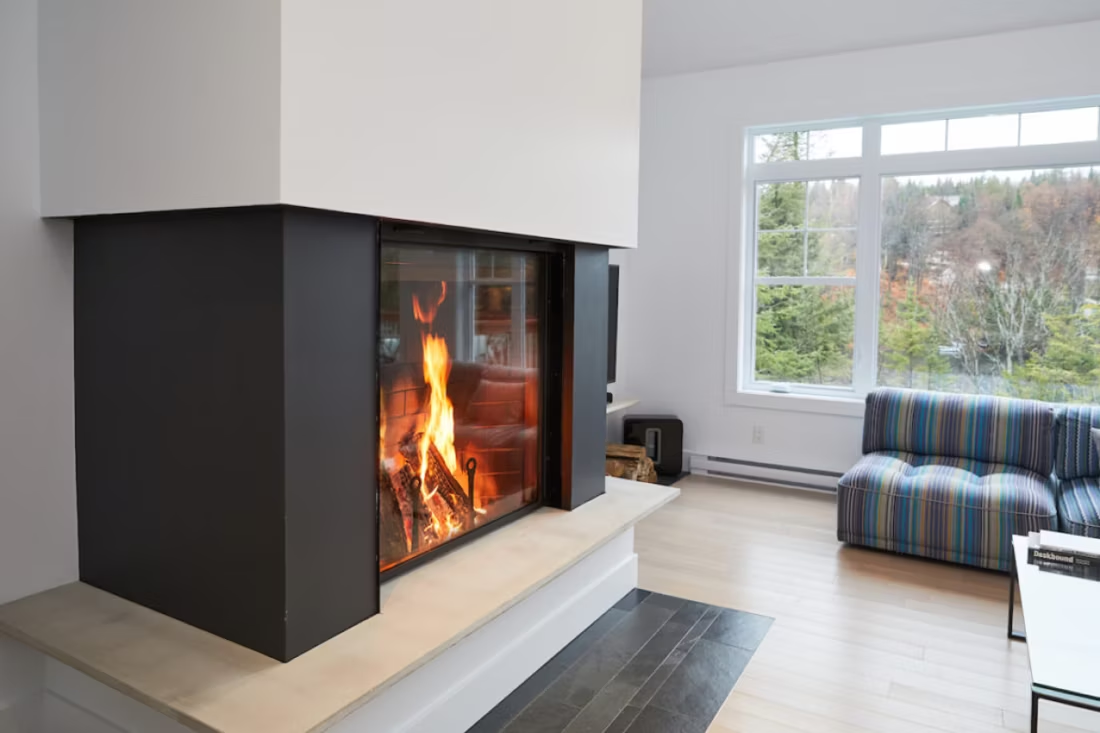
Four fuels. One honest answer for Florence County.
Three steps. No salesperson until you're ready.
Tell us about your project
Your zip code, your situation, and the fuel you're leaning toward—or let the answers point you to one.
See what's actually available
The brands dealers within 100 miles genuinely carry—real options, never a catalog mirage.
Get your dealer & Project Guide
A trusted local dealer, plus the free Project Guide & Parts List that names every component of the job.
Frequently Asked Questions
Which fuel works best in Florence County?
It depends on the home and how remote it is. Wood is the traditional backbone here—the county sits inside the Chequamegon-Nicolet National Forest, and oak, maple, birch, and aspen firewood is cheap or free if you cut your own; a catalytic or non-catalytic EPA stove can carry a Zone 7 winter through the coldest nights and keep working if the power goes out, which matters on rural lines. Gas is mostly propane out here rather than piped natural gas, since municipal gas mains don't reach most of the county's townships—propane fireplaces and inserts give you instant, thermostatic heat without hauling wood. Pellet is a solid middle ground, and regional supply from brands like Indeck Energy Services, Lignetics, and Somerset Pellet Fuel keeps fuel reasonably accessible even this far north. Electric fireplaces are supplemental at best in a climate this cold—fine for ambiance or a bedroom, but not something to rely on as your only heat source through a Duluth-style winter.
Do I need a permit to install a fireplace in Florence County?
In most cases, yes. New wood stoves, wood inserts, gas appliances, and pellet stoves generally require a building permit through the Florence County zoning and building department, and wood-burning appliances need to meet current EPA emissions standards to be installed. Propane installations also need proper tank placement and a licensed gas-fitter for the line connection. Electric fireplaces are usually permit-free unless you're hardwiring a built-in unit into a new circuit. Because Florence County is so sparsely populated, most local retailers and installers are used to handling this paperwork themselves as part of the job—worth confirming when you get a quote.
Are there air quality restrictions on wood burning in Florence County?
No—Florence County has no listed air quality non-attainment issues, winter inversions, or wildfire smoke advisories, unlike some western wood-burning regions. That means there are no local burn-ban days to plan around. The one standing requirement is on the appliance itself: any new wood stove or insert needs to meet current EPA emissions certification to be installed, which is standard nationwide at this point and mostly affects which used or older stoves can legally go into a home.
Can one local hearth retailer handle all four fuel types?
Many can, but given the county's population of roughly 523 in Florence itself, the dealer network is thin, and the retailer who covers your township may specialize in two or three fuels rather than all four. It's common for homeowners here to work with a dealer based in Iron Mountain, Michigan or Rhinelander, Wisconsin who carries wood, gas (propane), and pellet, while electric fireplaces sometimes come through a separate appliance or big-box source. If you want to compare fuels side by side, ask upfront which lines a given retailer actually stocks and installs before you drive out for a showroom visit.
How does service work in rural parts of Florence County?
Nearly all of Florence County is rural, so most chimney sweeps, gas techs, and pellet service pros are traveling in from outside the county—Iron Mountain and Kingsford in Michigan's Upper Peninsula, or Rhinelander and Marinette to the south. Expect a trip charge for outlying townships like Tipler, Commonwealth, or Long Lake, and expect scheduling to tighten up fast once cold weather sets in. Booking your annual chimney sweep or gas inspection in late summer or early fall, before the Zone 7 heating season starts in earnest, is the easiest way to avoid a multi-week wait in December.
What's the typical cost range for fireplace installation across all fuel types in Florence County?
Costs run close to regional Wisconsin/Upper Michigan averages, with a modest premium in outlying townships for travel time. Wood stove or insert installation: roughly $4,000–$8,500 for a typical retrofit, more for new chimney construction. Propane fireplace, insert, or stove: roughly $4,000–$9,500 depending on tank setup and venting. Pellet stove or insert: roughly $4,000–$7,000 installed. Electric fireplace: $200–$3,000 for the unit itself, plus $300–$1,000 in labor for anything beyond a simple plug-in install. For a plan built around your specific address, the free Project Guide & Parts List gives you an itemized parts list and a matched local dealer.
Can I install a fireplace myself?
If you're putting a fire in your house on purpose, it's best to work with an expert. Unless you're genuinely experienced in framing, gas line, vent pipe, and the national code on clearances to combustibles, have a professional do it—and ideally the same company that sells you the fireplace, so warranty, service, and liability all live under one roof.
Does a fireplace add value to my home?
On average, a fireplace adds back to the home about the same amount you spent installing it. Add the monthly savings from heating the rooms you actually use instead of the whole house—often hundreds of dollars a year—and the value case is strong before you even count what a fire does for how your family uses the room.
Can a fireplace actually lower my heating bill?
Yes—by creating a comfort zone. A furnace heats every square foot of the house just to warm the one room you're in; a gas fireplace on low burns roughly a sixth of the gas a typical furnace does. Set the furnace around 55–60 degrees as a baseline, then heat the rooms your family actually uses. Families who heat this way commonly save $20–$60 a month.
How much should I budget for a fireplace?
For an average home—covering the fireplace, the vent pipe, and basic installation—a budget between $3,900 and $5,500 gives you a lot of options across wood, gas, and pellet. By the time you add finish work, gas line, and electrical, the average complete installation lands between $5,000 and $12,000 all-in. In a remodel or new build, a good rule is to put about 2.5% of the total project cost toward the fireplace.
Stove and Fireplace Dealers in Florence County
Listings include WhyFire partner dealers, dealers we have verified as authorized for the brands we recommend, and established local businesses that carry hearth products. Every listing shows which one it is. The ones marked Preferred run on WhyFire's software, so they can show you real pricing and book your appointment right here. No manufacturer pays for placement. How we verify dealers →
Universal Plumbing Heating & Ac
Trappers Fireplace Gallery
A & M Heating Cooling & Fireplace Sales
Dahlquist Heating & Cooling
Earth Sense Energy Systems - Sayner
Get Matched With a Florence County Hearth Dealer.
Tell us about your home and fuel preference, and we'll match you with a trusted local dealer plus a free Project Guide & Parts List—the exact parts, including the vent kit, for your Florence County project.
Find Your Fireplace →