
Heating built for Lake Superior winters.
Wood, gas, pellet, and electric fireplace resources for every community on the Bayfield Peninsula and across the county—from Bayfield to Iron River. Find the right unit and connect with a trusted local hearth retailer.
Every Project Starts From One of These Five Situations
Zone 7 cold at the edge of Lake Superior.
Bayfield County sits in climate zone 7 with a heating load in the same league as Duluth, just across the lake, or Fargo, ND—a long, hard winter season. Winter lows average around 4°F, but lake-effect snow off Superior and long stretches of subzero weather are routine from November through March. The county's oak, maple, birch, and aspen woodlots have supplied firewood here for generations, and with a population under 4,500 spread across the peninsula and inland townships, a lot of homes still count on wood heat as either primary or serious backup for when the power goes out during a lake-effect storm.
What you'll find on this hub: hearth retailers, service technicians, and fuel suppliers covering Bayfield County—from the city of Bayfield and the Red Cliff area out to Washburn, Cornucopia, Iron River, and the inland townships toward the Chequamegon-Nicolet National Forest. Pick your fuel below for local dealers, installation costs, and recommended units. Whether you're heating a lakeside cottage near the Apostle Islands or a year-round home outside Washburn, this is the starting point.
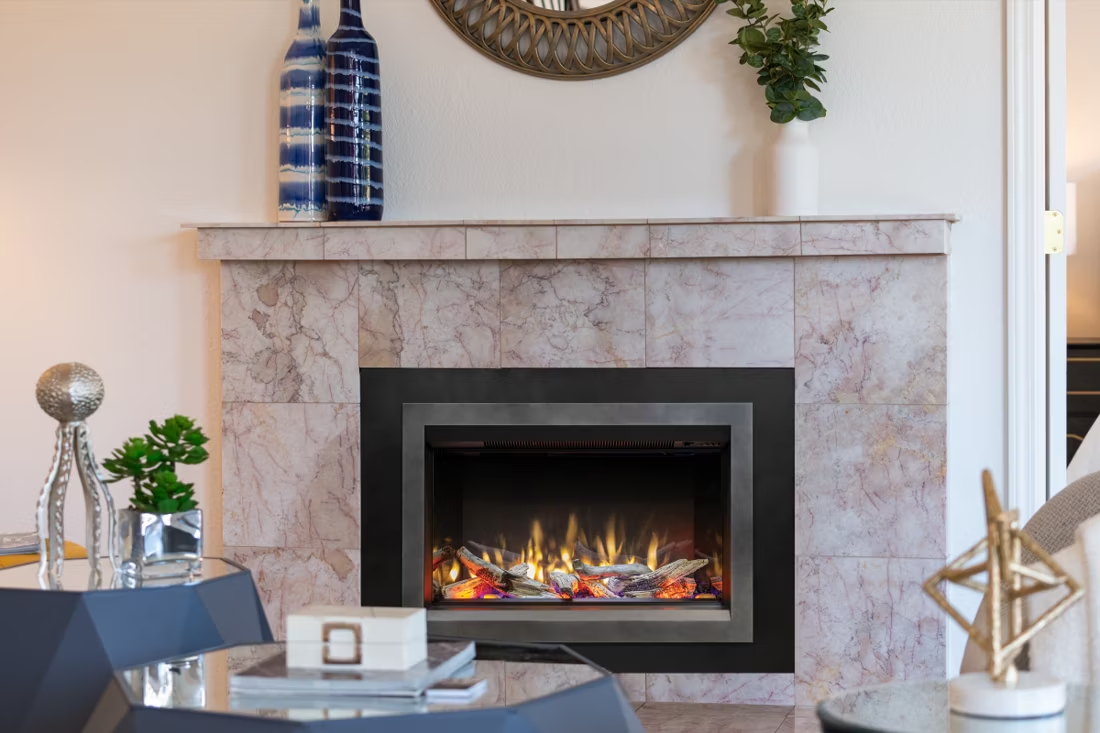
Four fuels. One honest answer for Bayfield County.
Three steps. No salesperson until you're ready.
Tell us about your project
Your zip code, your situation, and the fuel you're leaning toward—or let the answers point you to one.
See what's actually available
The brands dealers within 100 miles genuinely carry—real options, never a catalog mirage.
Get your dealer & Project Guide
A trusted local dealer, plus the free Project Guide & Parts List that names every component of the job.
Frequently Asked Questions
Which fuel works best in Bayfield County?
It depends on the home and how remote it is. Wood is the traditional backbone here—oak and maple burn long and hot, birch and aspen season fast for quick supplemental fires, and a wood stove keeps a house livable during a lake-effect power outage, which matters on a peninsula with a lot of overhead line exposure. Gas is the low-maintenance option where propane service is reliable, particularly in Bayfield and Washburn—instant heat with no wood-splitting labor. Pellet stoves are a strong middle ground for year-round residents who want wood-style heat without the woodpile; regional supply from Lignetics and Somerset Pellet Fuel keeps fuel accessible. Electric fireplaces work well as supplemental heat in bedrooms or seasonal cottages, but given a winter heating load on par with Duluth's and average winter lows near 4°F, they're not a realistic primary heat source here. Most full-time Bayfield County homes lean on wood or pellet as primary, with gas or electric filling in.
Do I need a permit to install a fireplace in Bayfield County?
In most cases, yes. Wood stoves, wood inserts, gas fireplaces, gas inserts, gas stoves, and pellet stoves typically require a building permit through your local municipal or township building office—permitting in Bayfield County is handled at the town or city level rather than through one central county office, so requirements can vary slightly between, say, the city of Bayfield and a rural township near the national forest. Gas installations also need a separate gas-line permit and licensed installer for the connection. Wood-burning appliances should meet current EPA emissions standards for new installs. Electric fireplaces usually skip the permit process unless you're hardwiring a built-in unit into a new circuit. Most local hearth retailers handle the paperwork as part of installation, so you're rarely filing it yourself.
What about firewood permits if I want to cut my own wood near Bayfield County?
Bayfield County borders the Chequamegon-Nicolet National Forest, with the Ottawa and Superior National Forests also within reach for permit holders. Personal-use firewood cutting permits are available through the Forest Service ranger district offices, typically for a modest per-cord fee, and they specify which units are open for cutting and what species and diameters qualify. Given the local mix of oak, maple, birch, and aspen, permit holders usually target standing dead or downed hardwood for the best heat value. Permits are usually seasonal, so it's worth checking current season dates and unit closures before heading out, especially since some forest roads close early with the season's first heavy snow.
Can one local hearth retailer handle all four fuel types?
In a county this size, it's common for a single retailer to cover most or all four fuels rather than specializing narrowly, since the customer base doesn't support multiple single-fuel shops. Expect retailers based around Bayfield and Washburn to carry wood stoves and inserts, gas units, and pellet stoves, with electric fireplaces as a smaller line item alongside. If you're comparing fuels side by side, a multi-fuel dealer can show working displays and talk through trade-offs specific to your property—lakeside cottage versus year-round inland home changes the calculus quite a bit given the venting and structural differences.
How does service work for rural and seasonal properties in Bayfield County?
A lot of Bayfield County's housing stock is seasonal—cabins and cottages near the Apostle Islands shoreline or inland lakes that sit empty for stretches of the year. Technicians serving the county typically travel out from Bayfield or Washburn and will often bundle service calls in outlying areas like Cornucopia or Iron River to keep travel costs down, so scheduling a bit in advance (rather than calling mid-storm) gets better results. For seasonal properties, an end-of-season chimney sweep and inspection before you close up for the year is worth doing routinely, since a nest or debris blockage discovered in December, with the nearest tech an hour away in a snowstorm, is a much bigger problem than one caught in October.
What's the typical cost range for fireplace installation across all fuel types in Bayfield County?
Costs run in line with rural northern-tier markets and vary by fuel. Wood stove or insert installation: roughly $4,500–$9,500 for a typical install, more if a masonry chimney needs rebuilding or a new class-A chimney system is required for new construction. Gas fireplace, insert, or stove: about $4,500–$11,000 depending on propane line work and venting, since natural gas isn't broadly available across the county. Pellet stove or insert: typically $4,500–$7,500. Electric fireplace: $200–$3,000 for the unit itself, plus $400–$1,200 in labor if it's more than a plug-and-play install. See the county + fuel pages above for retailer-specific pricing detail.
What is an in-home preview and do I need one?
It's a visit where a hearth professional measures your space, confirms the model you picked actually works in your home, and walks the specs—framing, gas line, venting, finish work—before anything is ordered. Some details you just can't know until you see the house. Never make a down payment without one; it's the single most-skipped step that burns buyers.
Can I install a fireplace myself?
If you're putting a fire in your house on purpose, it's best to work with an expert. Unless you're genuinely experienced in framing, gas line, vent pipe, and the national code on clearances to combustibles, have a professional do it—and ideally the same company that sells you the fireplace, so warranty, service, and liability all live under one roof.
Can a fireplace actually lower my heating bill?
Yes—by creating a comfort zone. A furnace heats every square foot of the house just to warm the one room you're in; a gas fireplace on low burns roughly a sixth of the gas a typical furnace does. Set the furnace around 55–60 degrees as a baseline, then heat the rooms your family actually uses. Families who heat this way commonly save $20–$60 a month.
How much should I budget for a fireplace?
For an average home—covering the fireplace, the vent pipe, and basic installation—a budget between $3,900 and $5,500 gives you a lot of options across wood, gas, and pellet. By the time you add finish work, gas line, and electrical, the average complete installation lands between $5,000 and $12,000 all-in. In a remodel or new build, a good rule is to put about 2.5% of the total project cost toward the fireplace.
Stove and Fireplace Dealers in Bayfield County
Listings include WhyFire partner dealers, dealers we have verified as authorized for the brands we recommend, and established local businesses that carry hearth products. Every listing shows which one it is. The ones marked Preferred run on WhyFire's software, so they can show you real pricing and book your appointment right here. No manufacturer pays for placement. How we verify dealers →
Stove & Fireplace Works
Find your fireplace in Bayfield County.
Pick your fuel below to see installation costs, recommended units, and get matched with a local hearth retailer—plus a free Project Guide & Parts List for your specific project.
Find Your Fireplace →