
Wood, Gas, Pellet, or Electric—Built for Tyler County Winters.
From the oak and hickory ridges above Middlebourne to the Ohio River bottoms at Sistersville, Tyler County homes have heated with hardwood for generations. Find the right fireplace or stove for your home and get matched with a trusted local dealer.
Every Project Starts From One of These Five Situations
Appalachian hardwood heat for every home in Tyler County, West Virginia.
Tyler County sits in West Virginia's mixed-humid climate zone (4A), where winters are cold and damp rather than brutally cold, but the heating season still runs a solid six months, from October through April. The terrain is classic central Appalachia—steep ridges and hollows cut by Middle Island Creek, with the Ohio River bottoms at Sistersville marking the county's western edge. With a population under 2,500, this is one of West Virginia's smaller, more rural counties, and a lot of homes still sit on wooded acreage. Oak, hickory, maple, and cherry are the woodlot staples here—dense hardwoods that split well and burn long, the same species that have fueled home heating in this county since before propane or electric service ever reached the hollows.
Because Tyler County is small, a lot of the hearth businesses serving local homes are actually based just outside the county—in Parkersburg or New Martinsville—and travel in for consultations and installs. That's normal here, and it doesn't mean you're stuck with a big-box option. Below, you'll find hearth retailers, service technicians, and fuel suppliers covering every town in the county, from Middlebourne and Sistersville to Alma and Friendly. Pick your fuel to see local dealers, typical installation costs, and the units that make sense for a Tyler County home.
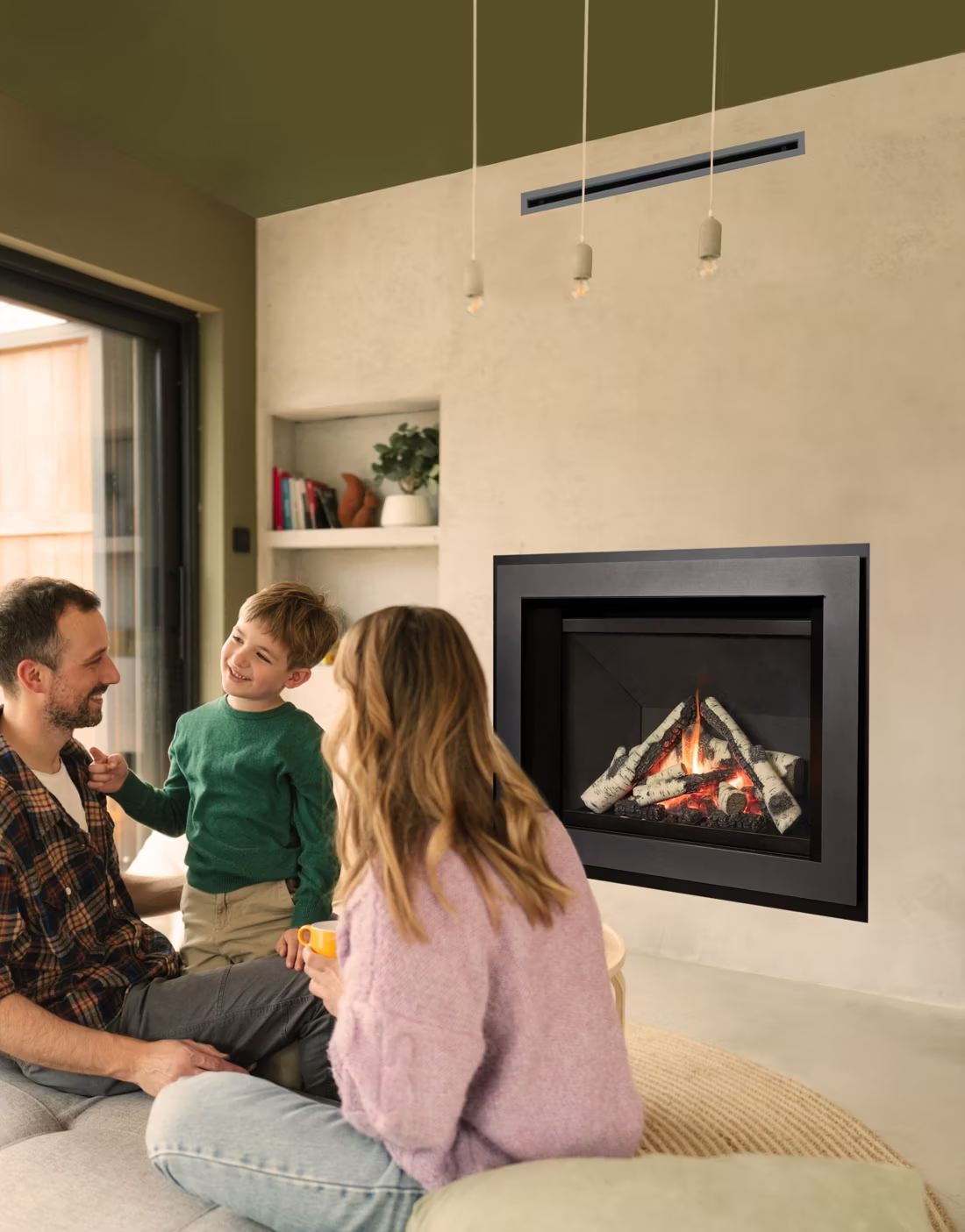
Four fuels. One honest answer for Tyler County.
Three steps. No salesperson until you're ready.
Tell us about your project
Your zip code, your situation, and the fuel you're leaning toward—or let the answers point you to one.
See what's actually available
The brands dealers within 100 miles genuinely carry—real options, never a catalog mirage.
Get your dealer & Project Guide
A trusted local dealer, plus the free Project Guide & Parts List that names every component of the job.
Frequently Asked Questions
Which fuel works best in Tyler County?
It depends on the home and the household's situation. Wood remains the traditional backbone here—most rural properties in Tyler County have some acreage in oak, hickory, maple, or cherry, and a lot of families still cut and split their own firewood, which keeps fuel costs near zero for those willing to do the work. Gas, almost always propane rather than piped natural gas outside the small town limits of Middlebourne and Sistersville, is the convenience choice—instant heat with no wood handling, and propane-fired units with millivolt ignition can run during a power outage, which matters on the county's hillier roads and lines. Pellet is a solid middle ground, especially with Energex, Hamer Pellet Fuel, and Greene Team Pellet Fuel all distributed regionally—wood-style ambiance without a woodpile, though pellet stoves do need electricity to run the auger and blower. Electric fireplaces work well for supplemental heat in bedrooms or additions, but given how common power interruptions can be on rural WV lines during ice storms, most households here don't rely on electric as their only heat source.
Do I need a permit to install a fireplace in Tyler County?
Generally yes, though enforcement in a county this rural tends to be lighter than in a metro building department. New wood stoves, inserts, gas appliances, and pellet stoves typically require a permit through the county courthouse in Middlebourne, and any gas fireplace or insert needs its gas connection run by a licensed installer regardless of whether it's tied to a propane tank or, in town, a piped line. Wood-burning appliances should meet EPA 2020 NSPS emissions certification—this matters for insurance and for resale even if nobody ever checks in the field. Electric fireplaces are usually exempt from permitting unless they're a built-in unit requiring new wiring. Most local and regional retailers who install in Tyler County handle the permit paperwork as part of the job, which is worth asking about up front.
Are there air quality restrictions on wood burning in Tyler County?
No. Tyler County doesn't have the kind of winter temperature inversions or non-attainment status that trigger burn advisories in some western valleys—there's no county-wide wood-smoke advisory system here. That said, homes tucked into narrow hollows can experience localized smoke settling on still, cold nights, so a well-sized, EPA-certified stove with proper venting still makes a real difference in comfort for you and your neighbors, even without a regulatory requirement pushing it.
Can one local dealer handle all four fuel types in Tyler County?
Some of the multi-fuel retailers based in Parkersburg and New Martinsville that regularly service Tyler County do carry wood, gas, pellet, and electric under one roof, which is useful if you want to compare options side by side before committing. Others specialize—a shop might focus on wood and pellet stoves with strong ties to the regional hardwood and pellet supply chain, while a separate propane dealer handles gas fireplace and insert installs. Because there isn't a dense retail cluster inside Tyler County itself, it's worth confirming which fuels a given dealer actually installs and services in your specific town before scheduling a consultation.
How does fireplace service work in a rural county like this?
Most technicians who service Tyler County chimneys, gas fireplaces, and pellet stoves are based out of Parkersburg or New Martinsville and drive in on a set service radius, so expect a modest trip charge for calls out to Alma, Friendly, or other outlying communities, on top of the service itself. Scheduling early matters more here than in a city—book your annual chimney sweep or gas inspection in late summer or early fall, before winter weather makes the county's steeper back roads harder to travel and before every technician's calendar fills up with cold-weather emergency calls.
What's the typical installation cost range across fuel types in Tyler County?
Costs run somewhat lower here than in a metro market, but the ranges are still fuel-dependent. A wood stove or insert install typically runs $4,000–$8,000, including chimney liner work common in the county's older farmhouses. A gas fireplace, insert, or stove—nearly always propane-fed outside the town limits—runs $4,000–$9,000 depending on tank setup and venting. Pellet stove or insert installs generally fall in the $4,000–$6,500 range. Electric fireplaces are the most affordable option, from $200–$2,500 for the unit plus $300–$1,000 in labor for anything beyond a simple plug-in placement. Ask any dealer for a written quote that itemizes venting and hearth-pad materials—that's where estimates most often diverge from the final bill.
Wood, gas, pellet, or electric—how do I choose?
Match the fuel to your life, not the other way around. Wood: lowest fuel cost and total power-outage independence, but you're hauling and stacking. Gas: press a button, set a thermostat, no maintenance to speak of. Pellet: wood economics with automatic feeding, in exchange for weekly cleaning and a need for electricity. Electric: plugs in anywhere with honest supplemental heat. Nobody regrets the fuel that fits how they actually live.
Does a fireplace add value to my home?
On average, a fireplace adds back to the home about the same amount you spent installing it. Add the monthly savings from heating the rooms you actually use instead of the whole house—often hundreds of dollars a year—and the value case is strong before you even count what a fire does for how your family uses the room.
How much should I budget for a fireplace?
For an average home—covering the fireplace, the vent pipe, and basic installation—a budget between $3,900 and $5,500 gives you a lot of options across wood, gas, and pellet. By the time you add finish work, gas line, and electrical, the average complete installation lands between $5,000 and $12,000 all-in. In a remodel or new build, a good rule is to put about 2.5% of the total project cost toward the fireplace.
What are the biggest mistakes people make buying a fireplace?
Five come up constantly: budgeting for the unit but not the full job (vent, gas line, electrical, finish work); drowning in options instead of starting from style and fuel; buying without an in-home preview; handing installation to a handyman instead of a pro; and giving up out of sheer indecision. Every one is avoidable with a clear plan—step one, step two, step three.
Stove and Fireplace Dealers in Tyler County
Listings include WhyFire partner dealers, dealers we have verified as authorized for the brands we recommend, and established local businesses that carry hearth products. Every listing shows which one it is. The ones marked Preferred run on WhyFire's software, so they can show you real pricing and book your appointment right here. No manufacturer pays for placement. How we verify dealers →
Contractor’s Building Center
Mike's Kitchen, Bath, Fireplace
Apex Feed & Supply, Inc.
Bob's Fireplace
The Fore Timber Company Inc.
Hardman's Hardware
Hardman's Hardware
Find your fireplace fit in Tyler County.
Pick your fuel below to see local dealers, typical installation costs, and get a free Project Guide & Parts List built for your Tyler County home.
Find Your Fireplace →