
Find the right heat source for your Pocahontas County home.
Wood, gas, pellet, and electric fireplace resources for every community in Pocahontas County—from Marlinton to Green Bank to the high hollows near the Highland Scenic Highway. Find the right unit and connect with a trusted local hearth retailer.
Every Project Starts From One of These Five Situations
Mountain heating in Pocahontas County, West Virginia.
Pocahontas County sits high in the Allegheny Mountains, with elevations pushing past 4,800 feet at Spruce Knob and much of the county well above 2,500 feet. That elevation means cold settles in early and stays late—frost is common into May in the higher hollows, and winters here run closer to what you'd expect in Burlington, VT than in the rest of West Virginia. With just over 2,100 residents spread across a rural, forested county, wood heat has deep roots—oak, hickory, maple, and cherry are all abundant on private timberland and easy to source locally, and a lot of households split and stack their own.
What you'll find on this hub: hearth retailers, service technicians, and fuel suppliers serving every community in the county—from the county seat in Marlinton to Green Bank, Durbin, Hillsboro, and the smaller settlements scattered along the Greenbrier River. Pick your fuel below to drill into specifics—local dealers, installation costs, recommended units, and the resources that match your project. Whether you're heating a farmhouse outside Marlinton or a cabin near Snowshoe, this is the starting point.
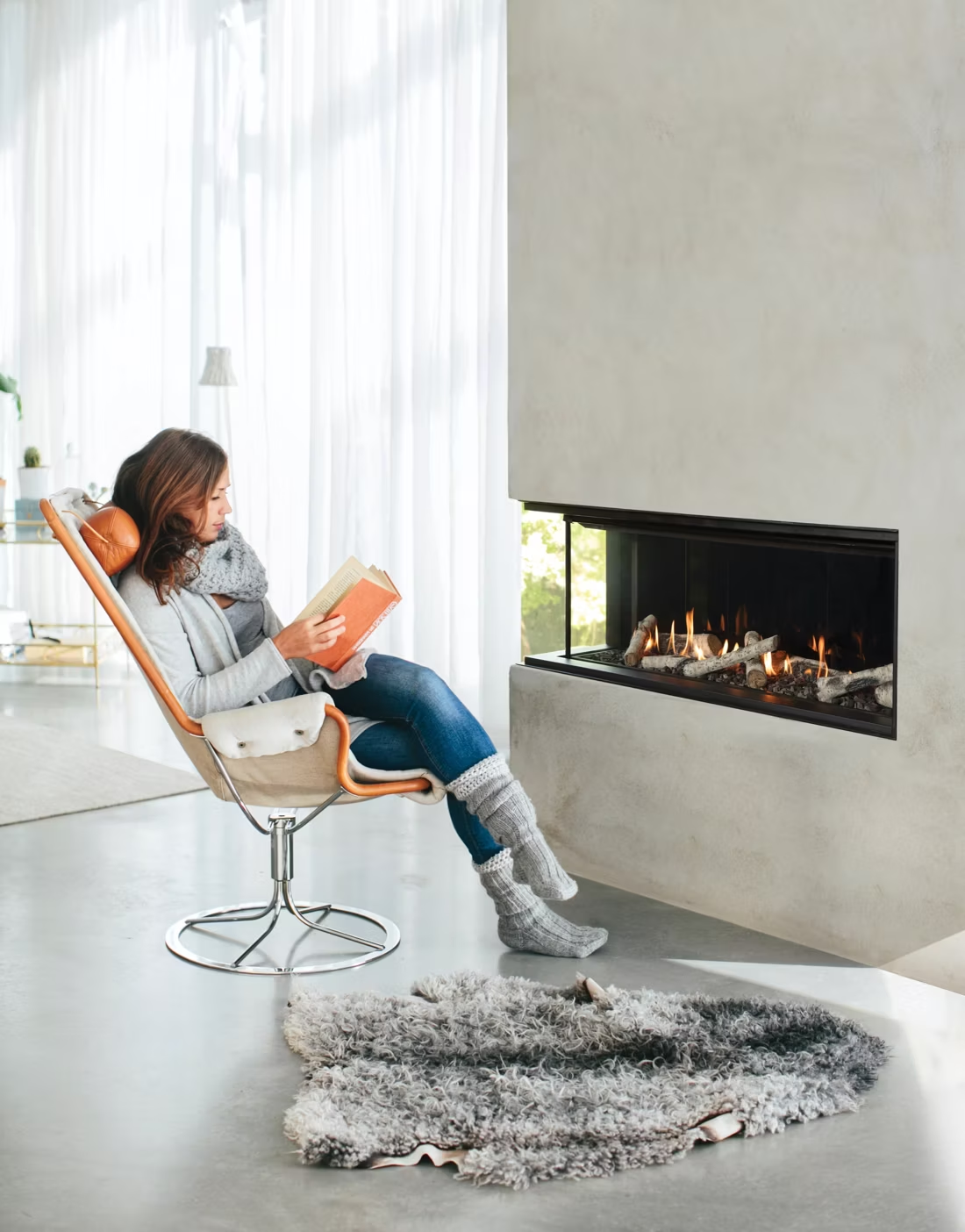
Four fuels. One honest answer for Pocahontas County.
Wood
See what's available near Pocahontas County.
Find your wood stove →Gas
See what's available near Pocahontas County.
Find your gas fireplace →Pellet
See what's available near Pocahontas County.
Find your pellet stove →Electric
See what's available near Pocahontas County.
Find your electric fireplace →Three steps. No salesperson until you're ready.
Tell us about your project
Your zip code, your situation, and the fuel you're leaning toward—or let the answers point you to one.
See what's actually available
The brands dealers within 100 miles genuinely carry—real options, never a catalog mirage.
Get your dealer & Project Guide
A trusted local dealer, plus the free Project Guide & Parts List that names every component of the job.
Frequently Asked Questions
Which fuel works best in Pocahontas County?
It depends on your home and how remote it is. Wood is the traditional choice here, and for good reason—oak, hickory, and cherry are plentiful on private land, many households cut their own, and a good catalytic stove will carry a fire through a cold mountain night without power. Gas is workable where propane delivery reaches, and it's the low-maintenance option for retirees or second homes near Snowshoe who don't want to manage a woodpile. Pellet is a solid middle ground—regional brands like Energex and Hamer Pellet Fuel are available through local feed stores, and pellet stoves burn cleaner with less daily labor than wood. Electric is mostly supplemental here—useful for a spare bedroom or a cabin used only part of the year, but not something you'd rely on through a Pocahontas County winter with the power lines this rural. Most homes in this county lean on wood or pellet as primary heat, with gas or electric filling in secondary rooms.
Do I need a permit to install a fireplace in Pocahontas County?
Most new wood stove, insert, gas, and pellet installations require a building permit, and any gas line work needs a licensed gas-fitter regardless of permit status. Because Pocahontas County is unincorporated in large stretches, permitting for rural properties typically runs through the county building office rather than a town—homeowners in Marlinton or Durbin should check whether their specific address falls inside town limits first. Electric fireplaces usually don't need a permit unless you're hardwiring a built-in unit into a new circuit. Given how spread out the county is, most local hearth retailers here handle the permit paperwork themselves as part of the install, which saves a trip to the county seat.
Are there air quality restrictions on wood burning in Pocahontas County?
No, Pocahontas County doesn't have the winter inversion or non-attainment issues that trigger burn advisories in some western mountain valleys—the population density here is low enough, and the terrain doesn't trap smoke the way a closed basin does. That said, any new wood stove installation should still meet current EPA emissions standards, since that's a federal requirement regardless of local air quality conditions. If you're replacing an older pre-1988 stove, swapping to a certified unit will burn less wood for the same heat output, which matters when you're splitting and hauling it yourself.
Can one local hearth retailer handle all four fuel types?
In a county this small and rural, most hearth retailers that serve Pocahontas County are based in neighboring towns and stock a mix of wood, gas, and pellet units, since those are the three fuels homeowners actually ask for. Electric fireplaces are often available too, but usually as a smaller display line rather than a dedicated focus. If you're cross-shopping fuel types, it's worth calling ahead before making the drive—inventory in a rural service area like this can shift based on what's moving that season, and a dealer may need to order in a specific unit rather than have it on the showroom floor.
How does service work in rural areas of Pocahontas County?
Most technicians who service Pocahontas County are based out of Marlinton or drive in from Greenbrier or Randolph County, and mountain roads mean a service call can take longer than the mileage suggests, especially in winter. Expect a modest travel fee for chimney sweeps or gas inspections in outlying areas like Green Bank or the Highland Scenic Highway corridor. Because winters set in early at this elevation, scheduling annual wood stove or pellet service in September or early October—before the first hard cold hits—is far easier than trying to book a mid-winter emergency visit when everyone else has the same idea.
What's the typical cost range for fireplace installation across all fuel types in Pocahontas County?
Costs here run in line with rural Appalachian averages, though a longer service drive can add to labor. Wood stove or insert installation: roughly $4,000–$8,500 for a typical install, more if new chimney work is needed for an older farmhouse. Gas fireplace, insert, or stove: $4,000–$10,000, with propane tank setup adding to the lower end of that range if there's no existing line. Pellet stove or insert: $4,000–$7,000 for most installs. Electric fireplace: $200–$3,000 for the unit itself, plus $400–$1,000 in labor for anything beyond a simple plug-in placement. For details tied to specific local retailers, see the county + fuel pages above.
What is an in-home preview and do I need one?
It's a visit where a hearth professional measures your space, confirms the model you picked actually works in your home, and walks the specs—framing, gas line, venting, finish work—before anything is ordered. Some details you just can't know until you see the house. Never make a down payment without one; it's the single most-skipped step that burns buyers.
Wood, gas, pellet, or electric—how do I choose?
Match the fuel to your life, not the other way around. Wood: lowest fuel cost and total power-outage independence, but you're hauling and stacking. Gas: press a button, set a thermostat, no maintenance to speak of. Pellet: wood economics with automatic feeding, in exchange for weekly cleaning and a need for electricity. Electric: plugs in anywhere with honest supplemental heat. Nobody regrets the fuel that fits how they actually live.
How much should I budget for a fireplace?
For an average home—covering the fireplace, the vent pipe, and basic installation—a budget between $3,900 and $5,500 gives you a lot of options across wood, gas, and pellet. By the time you add finish work, gas line, and electrical, the average complete installation lands between $5,000 and $12,000 all-in. In a remodel or new build, a good rule is to put about 2.5% of the total project cost toward the fireplace.
Can I install a fireplace myself?
If you're putting a fire in your house on purpose, it's best to work with an expert. Unless you're genuinely experienced in framing, gas line, vent pipe, and the national code on clearances to combustibles, have a professional do it—and ideally the same company that sells you the fireplace, so warranty, service, and liability all live under one roof.
Stove and Fireplace Dealers in Pocahontas County
Listings include WhyFire partner dealers, dealers we have verified as authorized for the brands we recommend, and established local businesses that carry hearth products. Every listing shows which one it is. The ones marked Preferred run on WhyFire's software, so they can show you real pricing and book your appointment right here. No manufacturer pays for placement. How we verify dealers →
Top Hat Stove & Fireplace
Clines Heating And Cooling
Holtzman Propane
Find your fireplace in Pocahontas County.
Pick your fuel below and I'll match you with a trusted local dealer and send you a free Project Guide & Parts List—the exact parts, vent kit included, and the dealer I'd recommend for your project.5
Find Your Fireplace →