
Reliable Heat for McDowell County's Coalfield Communities.
Wood, gas, pellet, and electric fireplace resources for every town and hollow in McDowell County—from Welch and War to Kimball, Northfork, Gary, and Bradshaw. Find the right unit and connect with a trusted local hearth dealer.
Every Project Starts From One of These Five Situations
Heating deep in the Appalachian coalfields of McDowell County, West Virginia.
McDowell County sits in the heart of southern West Virginia's coalfields, a landscape of steep, forested ridges and narrow hollows where homes are often strung out along creek beds rather than clustered in town grids. With about 4,857 heating degree days and average winter lows around 24°F, winters here are cold and long but not extreme—milder than a place like Buffalo NY, though still cold enough that a heating season running from October into April is normal. The surrounding mountains are thick with oak, hickory, maple, and cherry, hardwoods that split and season well and have kept homes warm here for generations. As the county's population has fallen from its coal-boom peak to roughly 8,345 residents today, wood heat has remained a practical, low-cost mainstay in a place where family land often comes with standing timber.
This hub gathers hearth retailers, service technicians, and fuel suppliers serving every community in the county—from the county seat in Welch out to War and Kimball near the Virginia line, north to Northfork and Elkhorn, and west toward Gary and Bradshaw. McDowell County has no formal air quality restrictions on wood burning, which simplifies things for wood-burning households, but sizing, venting, and permitting still matter for a safe, efficient install. Pick your fuel below to see local dealers, typical installation costs, and the resources that fit your home—whether that's a hollow farmhouse heated with a wood stove or a town home in Welch looking at a gas insert.
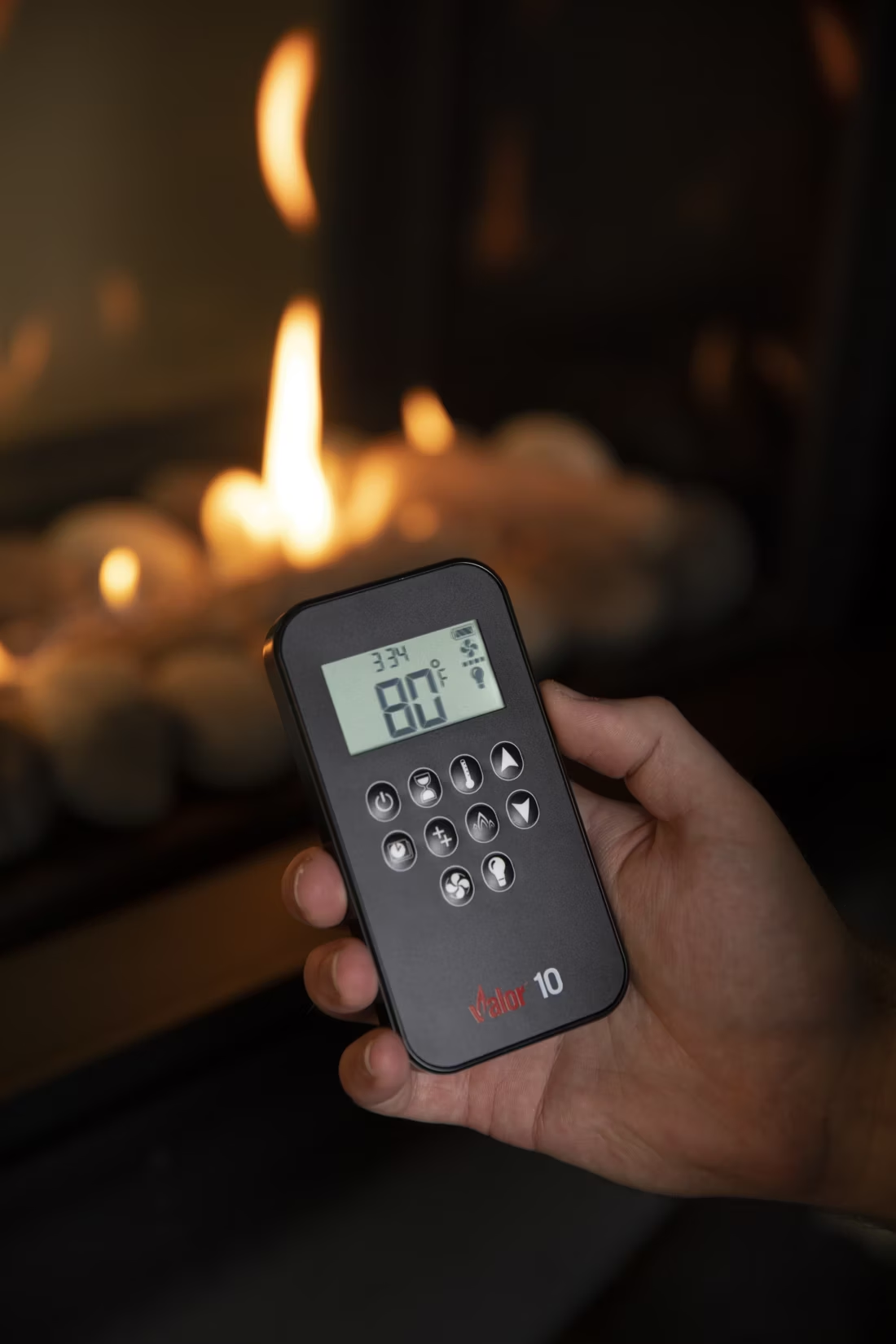
Four fuels. One honest answer for McDowell County.
Three steps. No salesperson until you're ready.
Tell us about your project
Your zip code, your situation, and the fuel you're leaning toward—or let the answers point you to one.
See what's actually available
The brands dealers within 100 miles genuinely carry—real options, never a catalog mirage.
Get your dealer & Project Guide
A trusted local dealer, plus the free Project Guide & Parts List that names every component of the job.
Frequently Asked Questions
Which fuel works best in McDowell County?
Wood remains the workhorse fuel here, and for good reason—the ridges above Welch, War, and Kimball are covered in oak, hickory, maple, and cherry, dense hardwoods that split easily and burn long and hot, which matters when many homes sit at the end of a narrow hollow road that isn't always plowed first after a storm. Gas is the convenience option; in a county where many hollow homes are off any natural gas main, that usually means a propane-fed fireplace or insert with a tank on the property. Pellet stoves are a solid middle ground—cleaner and more automated than wood, with regional supply from brands like Energex, Hamer Pellet Fuel, and Greene Team Pellet Fuel keeping fuel reasonably accessible. Electric fireplaces work well as supplemental heat for a bedroom or sitting room, but with average winter lows around 24°F, they're not typically asked to carry a whole house through the coldest stretch.
Do I need a permit to install a fireplace in McDowell County?
In most cases, yes, though how it's handled depends on where in the county you live. Within incorporated towns like Welch, War, or Kimball, building permits for wood stoves, inserts, gas appliances, and pellet stoves generally go through the town office; in unincorporated parts of the county, you'll typically work with the McDowell County building department. Gas installations also need the gas line itself run or inspected by a licensed technician, especially for propane tank hookups common in the outlying hollows. Electric fireplaces usually skip the permit process unless you're doing a built-in with new wiring. Most local hearth retailers who serve the county will pull the permit as part of the installation, so you're not left tracking down the right office yourself.
Are there any wood-burning restrictions in McDowell County?
No—McDowell County has no air quality non-attainment designation and no winter burn-ban program, so there's no regulatory limit on wood burning tied to smoke or inversions the way there is in some western basins. That said, an EPA-certified wood stove is still worth the investment even without a mandate: it burns oak and hickory more efficiently, produces less creosote, and gets more heat out of the same cord of wood. Given the tight hollows and older housing stock across the county, a properly sized chimney and an annual sweep matter just as much for safety as they do anywhere with stricter rules.
Can one local dealer handle all four fuel types?
It depends on the retailer, and with a county population under 10,000, McDowell County doesn't support a large number of dedicated hearth shops on its own—many households end up working with a dealer based in Bluefield, Princeton, or another nearby regional hub that travels into the county for installs. Some of these dealers carry wood, gas, pellet, and electric under one roof, which is convenient if you're still deciding between a wood stove for the hollow cabin and a propane insert for the town house. Others specialize—a supplier of Energex or Hamer pellets, for instance, may not stock wood stoves at all. Check each dealer's listed fuel coverage before assuming they carry what you need.
How does service work for homes off the main roads in McDowell County?
Most technicians serving the county are based in a larger nearby town and travel the creek-bottom and hollow roads to reach outlying homes around War, Northfork, Gary, and Bradshaw. Winter weather can make some of these roads difficult, so scheduling annual chimney sweeps or gas inspections in September or October—before the first hard freeze—is easier than trying to book an emergency call in January. A small travel charge for the more remote hollow addresses is common. If you're relying on wood heat as your primary source, keeping a second fuel option like a propane heater on hand is a reasonable backup for the days a service call or firewood delivery can't get through.
What does fireplace installation typically cost across fuel types in McDowell County?
Costs run lower here than in many higher-cost markets, but they still scale with the scope of work. Wood stove or insert installation: roughly $3,500–$7,500 for a typical retrofit, more if new chimney or hearth pad work is needed. Gas fireplace, insert, or stove: roughly $3,500–$8,500, with propane tank setup and line work pushing costs toward the higher end for homes without existing gas service. Pellet stove or insert: roughly $3,500–$6,000 for most installs. Electric fireplace: $200–$2,500 for the unit itself, plus $300–$1,000 in labor unless it's a simple plug-and-play unit. For a firmer number, the county + fuel pages above break down costs by fuel with local retailer pricing.
Wood, gas, pellet, or electric—how do I choose?
Match the fuel to your life, not the other way around. Wood: lowest fuel cost and total power-outage independence, but you're hauling and stacking. Gas: press a button, set a thermostat, no maintenance to speak of. Pellet: wood economics with automatic feeding, in exchange for weekly cleaning and a need for electricity. Electric: plugs in anywhere with honest supplemental heat. Nobody regrets the fuel that fits how they actually live.
Can I install a fireplace myself?
If you're putting a fire in your house on purpose, it's best to work with an expert. Unless you're genuinely experienced in framing, gas line, vent pipe, and the national code on clearances to combustibles, have a professional do it—and ideally the same company that sells you the fireplace, so warranty, service, and liability all live under one roof.
What is an in-home preview and do I need one?
It's a visit where a hearth professional measures your space, confirms the model you picked actually works in your home, and walks the specs—framing, gas line, venting, finish work—before anything is ordered. Some details you just can't know until you see the house. Never make a down payment without one; it's the single most-skipped step that burns buyers.
Can a fireplace actually lower my heating bill?
Yes—by creating a comfort zone. A furnace heats every square foot of the house just to warm the one room you're in; a gas fireplace on low burns roughly a sixth of the gas a typical furnace does. Set the furnace around 55–60 degrees as a baseline, then heat the rooms your family actually uses. Families who heat this way commonly save $20–$60 a month.
Stove and Fireplace Dealers in McDowell County
Listings include WhyFire partner dealers, dealers we have verified as authorized for the brands we recommend, and established local businesses that carry hearth products. Every listing shows which one it is. The ones marked Preferred run on WhyFire's software, so they can show you real pricing and book your appointment right here. No manufacturer pays for placement. How we verify dealers →
Cline Lumber Company
Ellis Supply Inc.
Country Power Equipment
Marsh Lp Gas Company
New-Bos, Inc
Newport Trading Company Inc.
Global Stoves & Services
A & D Chimney Cleaning
Global Resources
Match with a Trusted Hearth Dealer in McDowell County.
Tell us about your home and fuel preference, and we'll match you with a trusted local dealer and send a free Project Guide & Parts List—a plan for your McDowell County install with the exact parts, including the vent kit, and the local pro who can put it in.
Find Your Fireplace →