
Find the right fireplace for your Eastern Panhandle home.
Wood, gas, pellet, and electric fireplace resources for every city and rural community in Jefferson County—from Charles Town and Ranson to Shepherdstown and Harpers Ferry. Find the right unit and connect with a trusted local hearth retailer.
Every Project Starts From One of These Five Situations
Hardwood heat in West Virginia's Eastern Panhandle.
Jefferson County sits where the Shenandoah meets the Potomac at Harpers Ferry, its rolling farmland and hardwood ridges a far cry from the deep-freeze winters of Burlington, VT or Madison, WI. At climate zone 4A with a moderate winter heating load and a winter low averaging 24°F, the heating season here runs roughly October through April—real cold, but not the sustained sub-zero stretches that push homeowners toward oversized catalytic setups. What the county has instead is some of the best hearth-quality hardwood in the mid-Atlantic: oak, hickory, maple, and cherry from local farms and woodlots, all dense, high-BTU species that burn clean and hold a coal bed well overnight.
What you'll find on this hub: hearth retailers, service technicians, and fuel suppliers serving every community in the county—from Charles Town and Ranson in the county seat area, out to Shepherdstown and Harpers Ferry along the rivers, and through Bolivar, Summit Point, and Kearneysville. Pick your fuel below to drill into specifics—local dealers, installation costs, recommended units, and the resources that match your project. Whether you're heating a 19th-century stone farmhouse near Harpers Ferry or a newer build outside Ranson, this is the starting point.
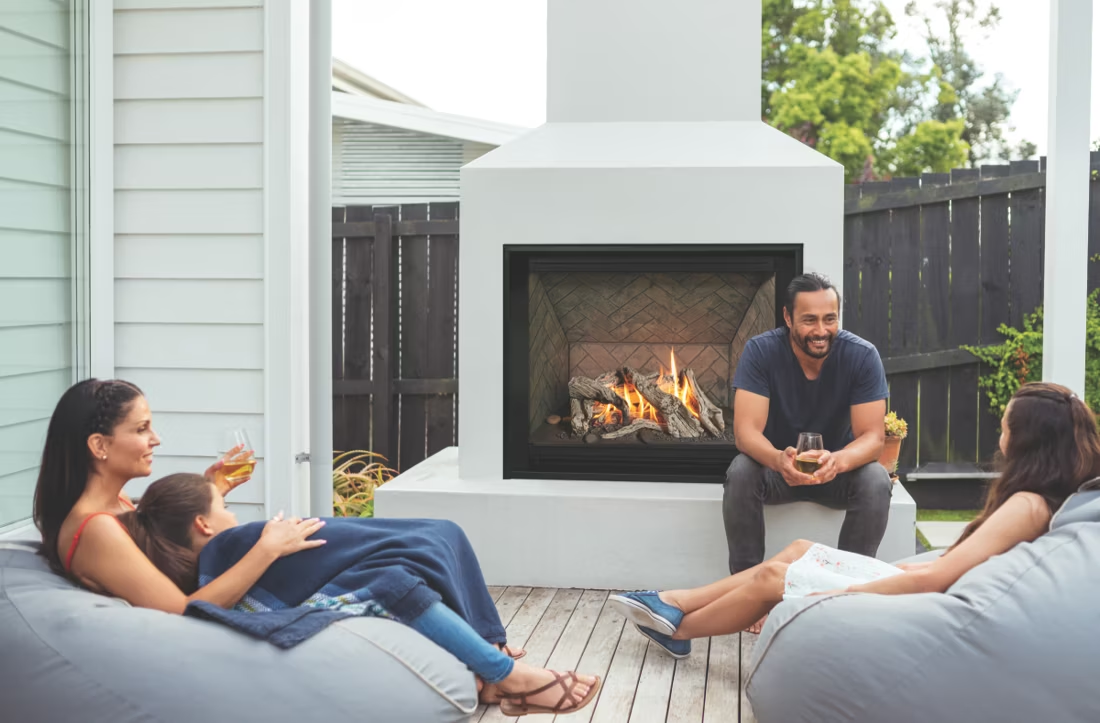
Four fuels. One honest answer for Jefferson County.
Three steps. No salesperson until you're ready.
Tell us about your project
Your zip code, your situation, and the fuel you're leaning toward—or let the answers point you to one.
See what's actually available
The brands dealers within 100 miles genuinely carry—real options, never a catalog mirage.
Get your dealer & Project Guide
A trusted local dealer, plus the free Project Guide & Parts List that names every component of the job.
Frequently Asked Questions
Which fuel works best in Jefferson County?
It depends on the home and the priorities. Wood is a strong fit here—local oak, hickory, maple, and cherry are dense, clean-burning hardwoods, and with a moderate winter heating load the season is real but manageable, nothing like the sustained deep cold of Duluth or Burlington. Gas is the convenience pick for homes in Charles Town and Ranson with piped service, or propane for rural properties farther out toward Summit Point and Kearneysville. Pellet stoves work well as a low-labor middle ground—Energex, Hamer, and Greene Team pellets are all regionally distributed, so supply isn't an issue. Electric is mostly supplemental—a good option for a bedroom or a historic Shepherdstown or Harpers Ferry home where opening a flue for a full wood or gas retrofit isn't practical. Many Jefferson County households end up mixing fuels—wood or pellet as the primary heat source, electric or gas in secondary rooms.
Do I need a permit to install a fireplace in Jefferson County?
In most cases, yes. New wood stoves, wood inserts, gas fireplaces, gas inserts, gas stoves, and pellet stoves generally require a building permit through your local jurisdiction—Charles Town, Ranson, and Shepherdstown each handle permitting within their town limits, while unincorporated areas of the county go through the county building office. Gas installations also need a separate gas line permit and licensed gas-fitter for the connection work. Electric fireplaces usually don't require a permit unless you're doing a built-in installation with new wiring or a dedicated circuit. Most local hearth retailers pull permits as part of the installation, so you typically aren't handling the paperwork yourself.
Are there air quality restrictions on wood burning in Jefferson County?
No—Jefferson County doesn't have the winter inversion or nonattainment issues that trigger mandatory or voluntary burn curtailment in some western basins. That doesn't mean species and appliance choice don't matter: seasoned oak and hickory burn hotter and cleaner than green or softer woods, and a modern EPA-certified stove will put out noticeably less smoke than an older pre-1990s unit. If you're replacing an aging stove, it's worth asking your local retailer about current EPA-certified models—cleaner burning, and often a better fit for the moderate cold here.
Can one local hearth retailer handle all four fuel types?
Many hearth retailers serving Jefferson County carry at least two or three fuel types—often wood, gas, and pellet together, with electric as a smaller display line. That's useful if you're not sure which fuel fits your home yet, especially with the mix of housing stock here—19th-century stone and log construction in Harpers Ferry and Shepherdstown alongside newer construction near Ranson and Charles Town often call for different venting and installation approaches. Ask a retailer directly which fuels they stock and install; multi-fuel dealers can usually show working displays and walk through the trade-offs for your specific house.
How does service work in rural areas of Jefferson County?
Most technicians serving Jefferson County are based near Charles Town or Ranson and travel out to Shepherdstown, Harpers Ferry, Bolivar, Summit Point, and the more rural stretches toward the Loudoun County, VA line. Expect a modest travel fee for calls farther from the county seat. Pre-season appointments (August through October) are easier to book than mid-winter emergency calls, especially once the first cold snap hits. If you're in an outlying area, scheduling your annual chimney sweep or gas inspection early—before the heating season starts—avoids the scramble.
What's the typical cost range for fireplace installation across all fuel types in Jefferson County?
Ranges vary by fuel. Wood stove or insert installation typically runs $4,000–$8,500, higher for new-construction chimney work in older stone or log homes common around Harpers Ferry and Shepherdstown. Gas fireplace, insert, or stove installation runs roughly $4,000–$10,000 depending on gas line work and venting, with conversions on the lower end where gas service already exists. Pellet stove or insert installation generally runs $4,000–$7,000. Electric fireplace costs range from $200–$3,000 for the unit itself, plus $400–$1,200 in labor for anything beyond a simple plug-and-play setup. See the county + fuel pages above for cost detail tied to specific local retailers.
How much should I budget for a fireplace?
For an average home—covering the fireplace, the vent pipe, and basic installation—a budget between $3,900 and $5,500 gives you a lot of options across wood, gas, and pellet. By the time you add finish work, gas line, and electrical, the average complete installation lands between $5,000 and $12,000 all-in. In a remodel or new build, a good rule is to put about 2.5% of the total project cost toward the fireplace.
Can a fireplace actually lower my heating bill?
Yes—by creating a comfort zone. A furnace heats every square foot of the house just to warm the one room you're in; a gas fireplace on low burns roughly a sixth of the gas a typical furnace does. Set the furnace around 55–60 degrees as a baseline, then heat the rooms your family actually uses. Families who heat this way commonly save $20–$60 a month.
I know I want a fireplace—where do I actually start?
Do two things today: snap a photo of the wall or fireplace you want to transform, and take a tape measure to the space—width, height, depth. Those two artifacts answer most of a hearth professional's first questions. Then settle fuel (wood, gas, pellet, or electric) and set a realistic budget: $3,900–$5,500 covers fireplace, vent, and basic install for most homes.
Wood, gas, pellet, or electric—how do I choose?
Match the fuel to your life, not the other way around. Wood: lowest fuel cost and total power-outage independence, but you're hauling and stacking. Gas: press a button, set a thermostat, no maintenance to speak of. Pellet: wood economics with automatic feeding, in exchange for weekly cleaning and a need for electricity. Electric: plugs in anywhere with honest supplemental heat. Nobody regrets the fuel that fits how they actually live.
Stove and Fireplace Dealers in Jefferson County
Listings include WhyFire partner dealers, dealers we have verified as authorized for the brands we recommend, and established local businesses that carry hearth products. Every listing shows which one it is. The ones marked Preferred run on WhyFire's software, so they can show you real pricing and book your appointment right here. No manufacturer pays for placement. How we verify dealers →
Roach Energy
A&a Pools
Blossman Gas And Appliance
Holtzman Propane
Prouty's Chimney Sweep
Bodmer's Stoves And Pottery
Best Htg And Air
Dmv Chimneys & Masonry Repair
Monocacy Chimney Care
Blaine Window Hardware, Inc.
Miller Ace Hardware
Get matched with a hearth dealer in Jefferson County.
Tell us your fuel and your town—Charles Town, Ranson, Shepherdstown, Harpers Ferry, or elsewhere in the county—and we'll match you with a trusted local dealer and send a free Project Guide & Parts List, including the exact vent kit for your install.
Find Your Fireplace →