
Find the right hearth for your Harrison County home.
Wood, gas, pellet, and electric fireplace resources for every city and rural community in Harrison County—from Clarksburg to Salem. Find the right unit and connect with a trusted local hearth retailer.
Every Project Starts From One of These Five Situations
Hill-country heating in north-central West Virginia.
Harrison County sits in the rolling hills of north-central West Virginia, where winters bring an average low around 22°F and a winter heating load comparable in demand to a mild season in Madison, Wisconsin, though the terrain and housing stock here look nothing alike. Hardwood is abundant and cheap to source: oak, hickory, maple, and cherry all grow locally, and a lot of Harrison County homeowners still split their own firewood or buy it from a neighbor down the road. There's no formal air quality non-attainment designation here, which means wood burning isn't restricted the way it is in western basins—but proper venting and EPA-certified equipment still matter for safety and efficiency.
What you'll find on this hub: hearth retailers, service technicians, and fuel suppliers serving every community in the county—from Clarksburg and Bridgeport down to Shinnston, Salem, and the smaller unincorporated crossroads in between. Pick your fuel below to drill into specifics—local dealers, installation costs, recommended units, and the resources that match your project. Whether you're heating a farmhouse outside Lumberport or a brick colonial in downtown Clarksburg, this is the starting point.
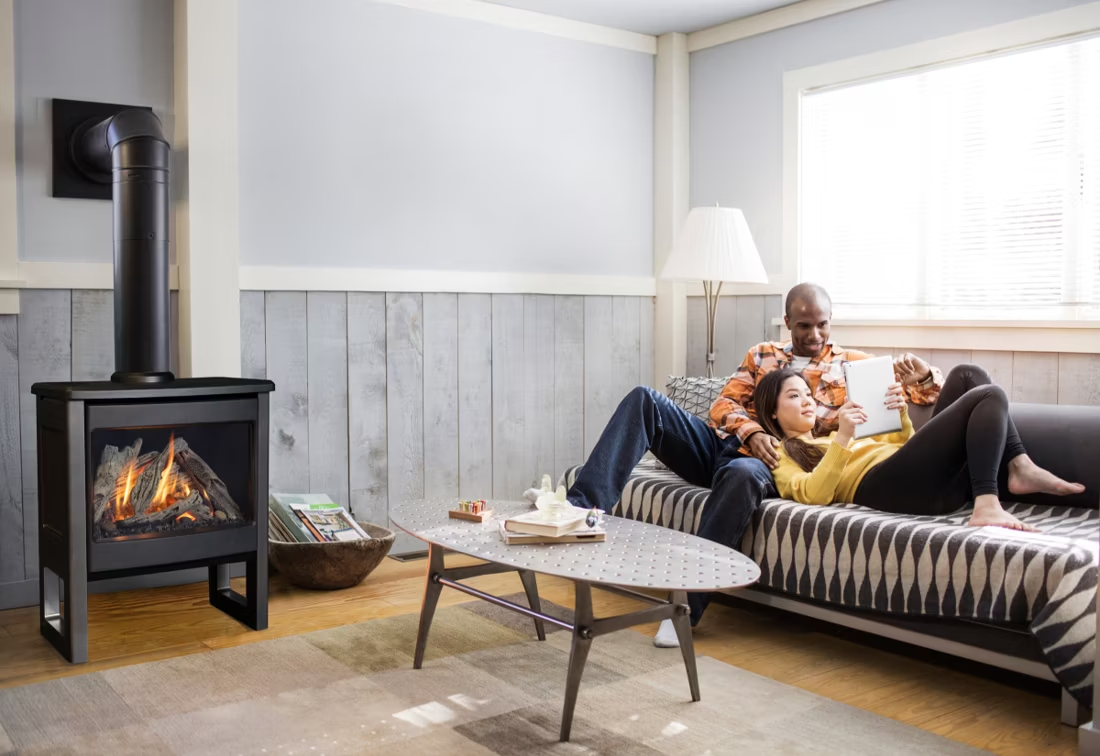
Four fuels. One honest answer for Harrison County.
Three steps. No salesperson until you're ready.
Tell us about your project
Your zip code, your situation, and the fuel you're leaning toward—or let the answers point you to one.
See what's actually available
The brands dealers within 100 miles genuinely carry—real options, never a catalog mirage.
Get your dealer & Project Guide
A trusted local dealer, plus the free Project Guide & Parts List that names every component of the job.
Frequently Asked Questions
Which fuel works best in Harrison County?
It depends on your home and priorities, but there are clear local patterns. Wood remains a strong choice here—oak, hickory, maple, and cherry are all locally abundant, and a lot of county residents already have a firewood source lined up through family land or neighbors, which keeps fuel costs near zero for those willing to do the work. Gas is the convenience play for homes with natural gas service near Clarksburg and Bridgeport—instant on-off heat with no wood handling. Pellet stoves are a solid middle ground, especially for households that want wood-style heat without the splitting and stacking; regional brands like Energex and Hamer Pellet Fuel are within reasonable driving distance for stocking up. Electric works well as a supplemental heater in bedrooms or finished basements, though with a winter heating load comparable in demand to a mild season in Madison, Wisconsin it's rarely the sole heat source in a Harrison County winter. Many homes here run a hybrid setup—wood or pellet as the primary heater, with gas or electric filling in the shoulder seasons.
Do I need a permit to install a fireplace in Harrison County?
In most cases, yes. New wood stoves, wood inserts, gas fireplaces, gas inserts, gas stoves, and pellet stoves typically require a building permit, and gas installations need a separate gas line permit handled by a licensed gas-fitter. Wood-burning appliances should meet current EPA emissions standards for both safety and resale value. Electric fireplaces usually skip the permit process unless the installation involves hardwiring or new circuits for a built-in unit. Permitting authority depends on whether you're inside Clarksburg, Bridgeport, or Shinnston city limits versus unincorporated Harrison County—city building departments handle the former, the county handles the latter. Most local hearth retailers manage this paperwork as part of the installation, so it's rarely something homeowners have to navigate solo.
Are there air quality restrictions on wood burning in Harrison County?
No—Harrison County has no designated air quality non-attainment status and no winter burn curtailment program like you'd find in a basin community out west. That said, this isn't a reason to skip proper venting and equipment. Older uncertified stoves still put out far more particulate matter and creosote buildup than a modern EPA-certified unit, and with hardwoods like oak and hickory burning hot and dense, a well-sized flue and annual chimney sweep matter for both safety and efficiency. There's no regulatory pressure pushing homeowners toward cleaner equipment here, which makes it worth choosing a certified stove or insert on your own initiative.
Can one local hearth retailer handle all four fuel types?
Many hearth retailers serving Harrison County carry at least three of the four fuel types, and several handle all four—wood, gas, pellet, and electric—under one roof, which makes cross-shopping easier if you're not yet sure which fuel fits your home. Some smaller dealers lean more heavily into wood and pellet, reflecting the strong local hardwood culture, with electric treated as an accessory line rather than a core offering. If you're comparing fuels side by side, a multi-fuel dealer with working showroom displays is the fastest way to see the actual differences in flame appearance, heat output, and footprint before committing.
How does service work in rural areas of Harrison County?
Most chimney sweeps and gas/pellet technicians are based near Clarksburg or Bridgeport and travel out to Shinnston, Salem, Lumberport, and the smaller rural roads that make up much of the county's geography. Expect a modest travel charge for calls farther from the county seat. Fall (September–October) is the easiest window to book routine service before the heating season ramps up—waiting until a cold snap in December means longer wait times and, for wood-burning households, a rushed chimney inspection right when you need the stove most. If you're in an outlying area, it's worth scheduling early and keeping a backup heat source on hand for winter storms that can knock out power for a day or two.
What's the typical cost range for fireplace installation across all fuel types in Harrison County?
Costs vary by fuel and scope. Wood stove or insert installation: roughly $4,000–$8,500 for a typical install, higher if new chimney or hearth work is needed. Gas fireplace, insert, or stove: about $4,000–$10,000 depending on gas line routing and venting type, with conversions to existing gas service on the lower end. Pellet stove or insert: generally $4,000–$7,000 for a standard install. Electric fireplace: $200–$3,000 for the unit itself, plus $400–$1,000 in labor for anything beyond a plug-and-play setup, which covers most wall-mount and insert installations. For details tied to specific local retailer pricing, see the county + fuel pages above.
How much should I budget for a fireplace?
For an average home—covering the fireplace, the vent pipe, and basic installation—a budget between $3,900 and $5,500 gives you a lot of options across wood, gas, and pellet. By the time you add finish work, gas line, and electrical, the average complete installation lands between $5,000 and $12,000 all-in. In a remodel or new build, a good rule is to put about 2.5% of the total project cost toward the fireplace.
Wood, gas, pellet, or electric—how do I choose?
Match the fuel to your life, not the other way around. Wood: lowest fuel cost and total power-outage independence, but you're hauling and stacking. Gas: press a button, set a thermostat, no maintenance to speak of. Pellet: wood economics with automatic feeding, in exchange for weekly cleaning and a need for electricity. Electric: plugs in anywhere with honest supplemental heat. Nobody regrets the fuel that fits how they actually live.
What is an in-home preview and do I need one?
It's a visit where a hearth professional measures your space, confirms the model you picked actually works in your home, and walks the specs—framing, gas line, venting, finish work—before anything is ordered. Some details you just can't know until you see the house. Never make a down payment without one; it's the single most-skipped step that burns buyers.
Should the dealer who sells my fireplace also install it?
Ideally, yes. A fireplace project involves vent pipe, gas line, electrical, and often tile or stone. Hire three or four separate trades and you own the liability and the game of telephone between them. One company selling and installing means one accountable party, start to finish—ask about factory training, on-time completion records, and what happens if an inspection fails.
Stove and Fireplace Dealers in Harrison County
Listings include WhyFire partner dealers, dealers we have verified as authorized for the brands we recommend, and established local businesses that carry hearth products. Every listing shows which one it is. The ones marked Preferred run on WhyFire's software, so they can show you real pricing and book your appointment right here. No manufacturer pays for placement. How we verify dealers →
Mike's Kitchen, Bath, Fireplace
Cam-Rock
Spike’s Chimney Sweep LLC
Streets Hardware Store
Find your fireplace in Harrison County.
Pick your fuel below and I'll match you with a trusted local dealer plus a free Project Guide & Parts List—the exact parts, vent kit, and recommended installer for your Harrison County home.
Find Your Fireplace →