
Heat your home through every Gilmer County winter.
Wood, gas, pellet, and electric fireplace resources for Glenville and every hollow and ridge community across Gilmer County. Find the right unit for your home and connect with a trusted local hearth retailer.
Every Project Starts From One of These Five Situations
Hardwood country heating in the hills of Gilmer County, West Virginia.
Gilmer County sits in the hardwood hill country of central West Virginia, in climate zone 4A—mixed-humid winters with real cold but nothing like the extremes of Duluth, MN or International Falls, MN. Nights across the ridges and hollows around Glenville and Sand Fork routinely drop into the teens from December through February, and the heating season generally runs October through April. The county's oak, hickory, maple, and cherry forests have supplied firewood to local households for generations—dense hardwoods that split clean and burn hot, which is part of why wood stoves and inserts remain a practical primary or backup heat source here, especially in the more remote hollows.
This hub covers hearth retailers, service technicians, and fuel suppliers serving Glenville, the county seat and home to Glenville State University, along with Sand Fork, Troy, Normantown, Cedarville, Stumptown, and the rural stretches in between. Pick your fuel below to see local dealers, typical installation costs, and recommended units for your project—whether you're heating a farmhouse outside Troy or a home near the Little Kanawha River in Glenville.
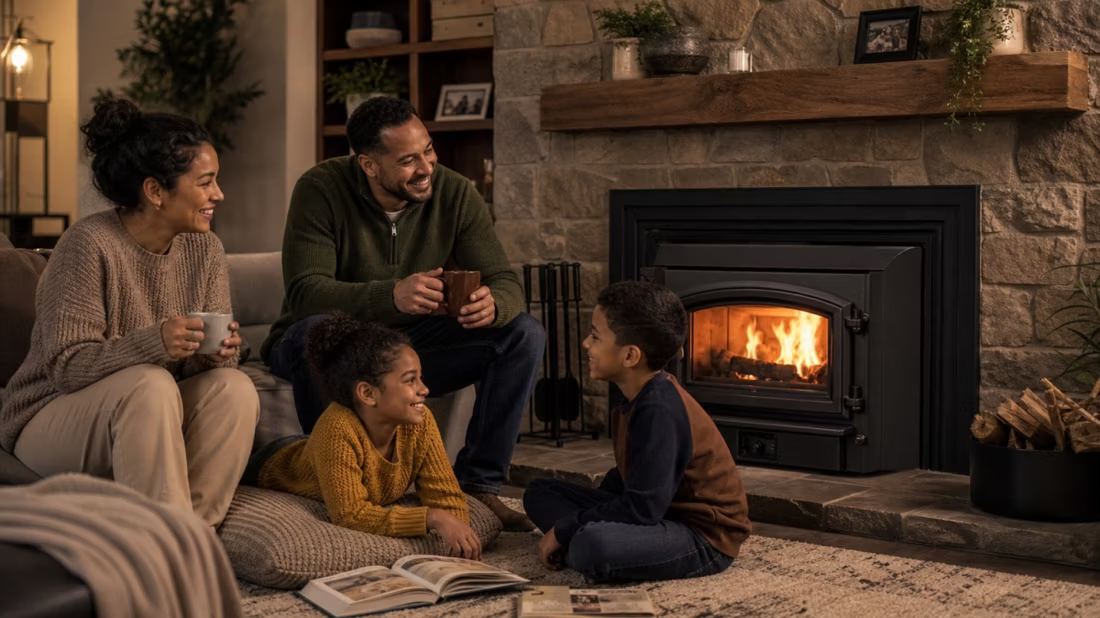
Four fuels. One honest answer for Gilmer County.
Three steps. No salesperson until you're ready.
Tell us about your project
Your zip code, your situation, and the fuel you're leaning toward—or let the answers point you to one.
See what's actually available
The brands dealers within 100 miles genuinely carry—real options, never a catalog mirage.
Get your dealer & Project Guide
A trusted local dealer, plus the free Project Guide & Parts List that names every component of the job.
Frequently Asked Questions
Which fuel works best for a home in Gilmer County?
It depends on where you live and what you're trying to solve. Wood remains a strong choice throughout Gilmer County—local oak, hickory, maple, and cherry are dense, high-BTU hardwoods, and a wood stove or insert keeps working during the power outages that hit outlying hollows harder than town. Gas is the convenience option, but piped natural gas is limited mostly to in-town service around Glenville; most rural households outside town rely on propane for a gas fireplace, insert, or stove. Pellet stoves are a solid middle ground—less daily labor than splitting wood, and regional pellet brands like Energex and Hamer Pellet Fuel are stocked by dealers in the area, so supply isn't a concern. Electric fireplaces work well as supplemental heat in bedrooms or additions but aren't relied on as a primary heat source through Gilmer County's coldest stretches. Many homes here run a wood or pellet stove as the main heater with propane or electric backup in secondary rooms.
Do I need a permit to install a wood stove or fireplace in Gilmer County?
Gilmer County, like much of rural West Virginia, does not enforce a countywide building code for standalone residential wood stove or fireplace installations, so many rural homeowners outside Glenville's town limits won't need a local building permit for a stove swap. That said, any new wood-burning appliance still has to meet federal EPA emissions standards, and gas installations—propane or natural gas—require licensed gas-fitter work regardless of where the county sits on permitting. If you're inside Glenville town limits or doing work tied to new construction, check with the town office or the West Virginia State Fire Marshal's office, which handles code enforcement in areas without a local building department. Most local hearth retailers can tell you upfront whether your specific job needs a permit before they schedule the install.
Is natural gas available in Gilmer County, or is it propane only?
Piped natural gas service in Gilmer County is largely limited to in-town areas around Glenville—despite West Virginia's deep natural gas production history, a lot of that gas moves through pipelines that never connect to rural distribution lines. Homes in Sand Fork, Troy, Normantown, and other outlying communities typically rely on propane for a gas fireplace, insert, or stove, delivered and stored in a tank on the property. Propane appliances perform identically to natural gas ones in terms of heat output and comfort—the main difference is fuel storage and delivery scheduling, which your local propane supplier or hearth retailer can walk you through when sizing a tank for your home.
Does the local wood—oak, hickory, maple, cherry—matter when choosing a stove?
It matters for sizing and burn time more than for stove selection itself. Oak and hickory are dense hardwoods that put out serious heat per cord and burn slow and steady overnight—good matches for a mid-size or larger catalytic or non-catalytic stove that can handle a full firebox. Cherry and maple burn a bit faster and cooler, useful for shoulder-season fires in October or April when you want heat without overloading the room. Because Gilmer County has ready access to all four species through local firewood suppliers and self-cut lots, most households aren't locked into one wood type—a properly sized EPA-certified stove burns any of them cleanly as long as the wood is seasoned to 20% moisture or below, which matters more for creosote buildup than species choice.
How does installation and service work for homes spread across Gilmer County's hollows?
Most hearth retailers and service technicians covering Gilmer County are based in or near Glenville and travel out along the county's rural routes to reach homes in Sand Fork, Troy, Cedarville, Stumptown, and the surrounding hollows. Given the low population density, expect a modest travel charge for service calls further from Glenville, and plan on booking annual chimney sweeps or gas inspections a few weeks ahead—technicians serving this stretch of central West Virginia often cover several counties and fill up fast in the pre-winter months. If you're in a more remote hollow, scheduling your service call in September or early October, before the first cold snap, gets you in ahead of the rush.
What's the typical installation cost range across fuel types in Gilmer County?
Costs run lower here than in higher cost-of-living metro areas, but the ranges still vary by fuel. Wood stove or insert installation: roughly $3,500–$7,500 for a typical job, more if new chimney or hearth work is needed. Gas fireplace, insert, or stove: roughly $4,000–$9,000, with propane tank setup adding to the cost for homes without existing service. Pellet stove or insert: roughly $4,000–$6,000 for most installs. Electric fireplace: $200–$2,500 for the unit itself, plus modest labor unless it's a simple plug-and-play wall unit. For a firmer number tied to your specific home, the county + fuel pages above break down costs by fuel type in more detail.
Does a fireplace add value to my home?
On average, a fireplace adds back to the home about the same amount you spent installing it. Add the monthly savings from heating the rooms you actually use instead of the whole house—often hundreds of dollars a year—and the value case is strong before you even count what a fire does for how your family uses the room.
Wood, gas, pellet, or electric—how do I choose?
Match the fuel to your life, not the other way around. Wood: lowest fuel cost and total power-outage independence, but you're hauling and stacking. Gas: press a button, set a thermostat, no maintenance to speak of. Pellet: wood economics with automatic feeding, in exchange for weekly cleaning and a need for electricity. Electric: plugs in anywhere with honest supplemental heat. Nobody regrets the fuel that fits how they actually live.
Can a fireplace actually lower my heating bill?
Yes—by creating a comfort zone. A furnace heats every square foot of the house just to warm the one room you're in; a gas fireplace on low burns roughly a sixth of the gas a typical furnace does. Set the furnace around 55–60 degrees as a baseline, then heat the rooms your family actually uses. Families who heat this way commonly save $20–$60 a month.
How much should I budget for a fireplace?
For an average home—covering the fireplace, the vent pipe, and basic installation—a budget between $3,900 and $5,500 gives you a lot of options across wood, gas, and pellet. By the time you add finish work, gas line, and electrical, the average complete installation lands between $5,000 and $12,000 all-in. In a remodel or new build, a good rule is to put about 2.5% of the total project cost toward the fireplace.
Stove and Fireplace Dealers in Gilmer County
Listings include WhyFire partner dealers, dealers we have verified as authorized for the brands we recommend, and established local businesses that carry hearth products. Every listing shows which one it is. The ones marked Preferred run on WhyFire's software, so they can show you real pricing and book your appointment right here. No manufacturer pays for placement. How we verify dealers →
Hardman's Hardware
Walton Thriftway
The Fore Timber Company Inc.
Mike's Kitchen, Bath, Fireplace
Hardman's Hardware
Find your fireplace in Gilmer County.
Pick your fuel below and we'll match you with a trusted local dealer and send over a free Project Guide & Parts List—the exact parts, including the vent kit, and the local pro recommended for your Gilmer County home.
Find Your Fireplace →