
Find the Right Hearth for Your Fayette County Home.
Wood, gas, pellet, and electric fireplace resources for every town and hollow in Fayette County—from Fayetteville and Oak Hill down to Gauley Bridge and Meadow Bridge. Find the right unit and connect with a trusted local hearth retailer.
Every Project Starts From One of These Five Situations
Hardwood heat runs deep in Fayette County, West Virginia.
Fayette County sits in the New River Gorge country of southern West Virginia, where the terrain drops from ridgetop farmland down into steep river gorges. Winters aren't as brutal as a Duluth MN cold front, but with a climate zone of 5A, roughly 5,192 heating degree days, and average winter lows around 23°F, the heating season runs a solid October through April. The county's oak, hickory, maple, and cherry forests have supplied cordwood to local households for generations—wood heat remains a practical, low-cost option for the many rural properties scattered across the gorge's hollows and ridges.
What you'll find on this hub: hearth retailers, service technicians, and fuel suppliers serving every community in the county—Fayetteville, Oak Hill, Mount Hope, Ansted, Gauley Bridge, Meadow Bridge, Smithers, and the smaller river towns along the New River and Gauley River. Pick your fuel below to drill into specifics—local dealers, installation costs, recommended units, and the resources that match your project. Whether you're heating a farmhouse above the gorge or a cabin near a whitewater outfitter, this is the starting point.
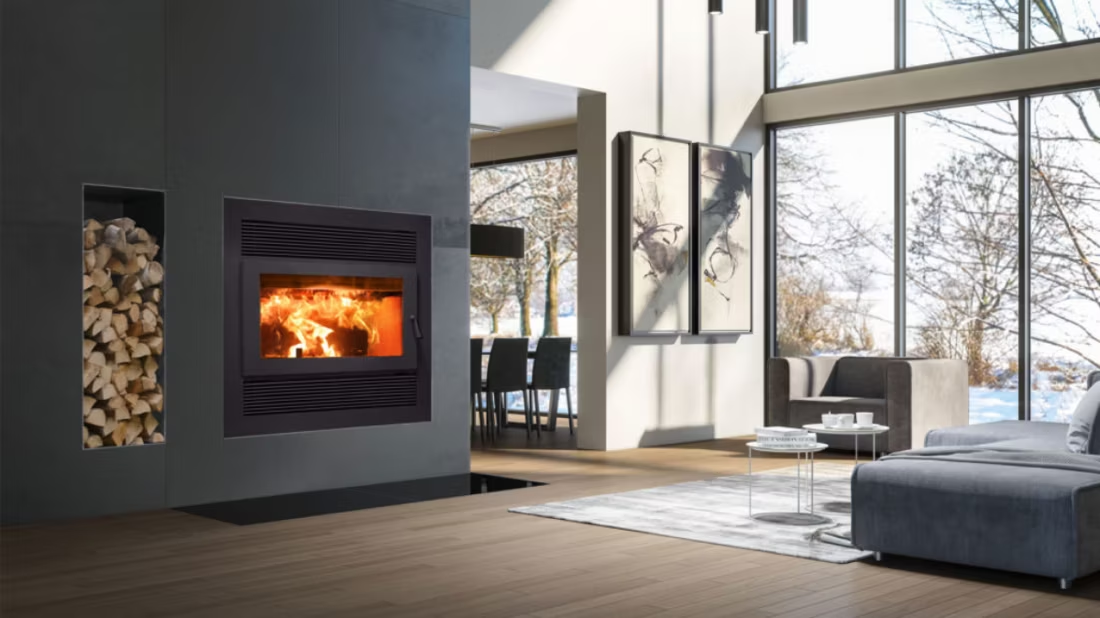
Four fuels. One honest answer for Fayette County.
Three steps. No salesperson until you're ready.
Tell us about your project
Your zip code, your situation, and the fuel you're leaning toward—or let the answers point you to one.
See what's actually available
The brands dealers within 100 miles genuinely carry—real options, never a catalog mirage.
Get your dealer & Project Guide
A trusted local dealer, plus the free Project Guide & Parts List that names every component of the job.
Frequently Asked Questions
Which fuel works best in Fayette County?
It depends on where in the county you live and how you use the space. Wood is the traditional choice on the county's many rural and ridge-top properties—oak, hickory, maple, and cherry are all locally abundant, and a wood stove or insert keeps working during the ice-storm outages that occasionally hit the gorge's steep terrain. Gas is the convenience pick for homes with Mountaineer Gas service in and around Fayetteville and Oak Hill, or propane for homes further out where gas lines don't reach—instant heat with no wood-hauling. Pellet stoves are a solid middle ground, with Energex, Hamer Pellet Fuel, and Greene Team Pellet Fuel all sold regionally, giving you wood-style ambiance without splitting logs. Electric fireplaces work well as supplemental heat for bedrooms, sunrooms, or rental cabins near the New River Gorge, but they're not a primary heat source once temperatures drop into the 20s for weeks at a time. Many Fayette County households run wood or pellet as their main heat and gas or electric as backup.
Do I need a permit to install a fireplace in Fayette County?
In most cases, yes. New wood stoves, wood inserts, gas fireplaces, gas inserts, and pellet stoves generally require a building permit, and gas installations need a licensed gas-fitter and a separate gas line permit. In unincorporated parts of the county, permits typically run through the Fayette County building permit office; within incorporated towns like Fayetteville, Oak Hill, or Mount Hope, the town's own building department may handle it instead. Electric fireplaces usually don't need a permit unless you're hardwiring a built-in unit into a new circuit. Most local hearth retailers pull the permit as part of the installation, so you're not usually navigating this on your own.
Are there air quality restrictions on wood burning in Fayette County?
No—Fayette County has no designated air quality non-attainment status, and there are no mandatory burn curtailment programs like you'd find in a western basin community. The steep gorge topography can occasionally trap smoke on still winter nights in narrow hollows, but this is a local nuisance issue, not a regulated one. That said, choosing an EPA 2020 NSPS-certified wood stove is still worth it for efficiency and lower particulate output, especially if you're burning green or partially seasoned oak and hickory, which produce more smoke than fully cured cordwood.
Can one local hearth retailer handle all four fuel types?
Many hearth retailers that cover Fayette County—whether based in Fayetteville, Oak Hill, or neighboring Beckley in Raleigh County—carry three or four fuel types, since the population base here is small enough that specializing in just one fuel doesn't always support a storefront. That means you can typically compare a wood insert, a gas log set, and a pellet stove side by side at one dealer's showroom. A few smaller shops lean heavily toward wood and pellet given the county's rural, forested character, with gas and electric as secondary lines. If you're cross-shopping fuels, ask the dealer directly which lines they stock and install rather than assuming full coverage.
How does service work in rural areas of Fayette County?
Technicians serving Fayette County often travel considerable distances on winding gorge roads to reach outlying communities like Thurmond, Gauley Bridge, and Meadow Bridge, so scheduling ahead—especially before the first cold snap in October—makes a real difference versus calling during a mid-January emergency. Expect a modest travel fee for service calls well outside Fayetteville or Oak Hill. Given the ice-storm risk that occasionally knocks out power along the ridges, many rural households pair a wood stove with their gas or electric setup specifically so they have working heat if the lines go down.
What's the typical cost range for fireplace installation across all fuel types in Fayette County?
Costs run somewhat below national averages given the local market. Wood stove or insert installation: roughly $4,000–$8,000 for a typical retrofit, more for new chimney construction on an older farmhouse. Gas fireplace, insert, or stove: roughly $4,000–$10,000 depending on whether propane or Mountaineer Gas line work is involved. Pellet stove or insert: roughly $4,000–$7,000 for a standard install. Electric fireplace: $200–$2,500 for the unit itself, plus $300–$1,000 in labor for anything beyond a simple plug-and-play wall unit. See the county + fuel pages above for cost detail tied to specific local retailers.
Does a fireplace add value to my home?
On average, a fireplace adds back to the home about the same amount you spent installing it. Add the monthly savings from heating the rooms you actually use instead of the whole house—often hundreds of dollars a year—and the value case is strong before you even count what a fire does for how your family uses the room.
Can I install a fireplace myself?
If you're putting a fire in your house on purpose, it's best to work with an expert. Unless you're genuinely experienced in framing, gas line, vent pipe, and the national code on clearances to combustibles, have a professional do it—and ideally the same company that sells you the fireplace, so warranty, service, and liability all live under one roof.
What is an in-home preview and do I need one?
It's a visit where a hearth professional measures your space, confirms the model you picked actually works in your home, and walks the specs—framing, gas line, venting, finish work—before anything is ordered. Some details you just can't know until you see the house. Never make a down payment without one; it's the single most-skipped step that burns buyers.
Can a fireplace actually lower my heating bill?
Yes—by creating a comfort zone. A furnace heats every square foot of the house just to warm the one room you're in; a gas fireplace on low burns roughly a sixth of the gas a typical furnace does. Set the furnace around 55–60 degrees as a baseline, then heat the rooms your family actually uses. Families who heat this way commonly save $20–$60 a month.
Stove and Fireplace Dealers in Fayette County
Listings include WhyFire partner dealers, dealers we have verified as authorized for the brands we recommend, and established local businesses that carry hearth products. Every listing shows which one it is. The ones marked Preferred run on WhyFire's software, so they can show you real pricing and book your appointment right here. No manufacturer pays for placement. How we verify dealers →
Global Resources
A & D Chimney Cleaning
Global Stoves & Services
Newport Trading Company Inc.
The Best Hardware
Get matched with a Fayette County hearth dealer.
Pick your fuel below and we'll match you with a trusted local dealer and send over a free Project Guide & Parts List—the exact parts, vent kit included, and the dealer we recommend for your Fayette County home.
Find Your Fireplace →