
Find the right fireplace for Whatcom County's marine winters.
Wood, gas, pellet, and electric fireplace resources for every city and rural community in Whatcom County—from Bellingham to Blaine to the Mt. Baker foothills. Get matched with a local hearth retailer who knows what actually works here.
Every Project Starts From One of These Five Situations
Mild, wet winters shape hearth heating across Whatcom County, Washington.
Whatcom County sits in climate zone 4C, a maritime zone where winter lows average around 35°F and the heating season runs to roughly 4,845 degree-days—a fraction of what places like Duluth, MN or Bozeman, MT see in a typical winter. That doesn't mean heating is optional: the county stretches from sea-level Bellingham and the Nooksack River valley up into the Mt. Baker foothills, where elevation and snowpack change the equation fast. Douglas fir and red alder are the common local firewood species at lower elevations; lodgepole pine shows up more as you climb toward the Cascades. Cutting permits for standing dead and downed wood go through the Mt. Baker-Snoqualmie National Forest office. Summer wildfire smoke, not winter inversion, is the air quality issue locals actually plan around.
What you'll find on this hub: hearth retailers, service technicians, and fuel suppliers covering every community in the county—Bellingham as the population and retail center, Ferndale and Lynden to the north, Blaine and Sumas on the Canadian border, and the smaller communities along the Mt. Baker Highway. Pick your fuel below for local dealers, installation costs, and recommended units. Whether you're heating a Bellingham craftsman or a cabin near Glacier, this is the starting point.
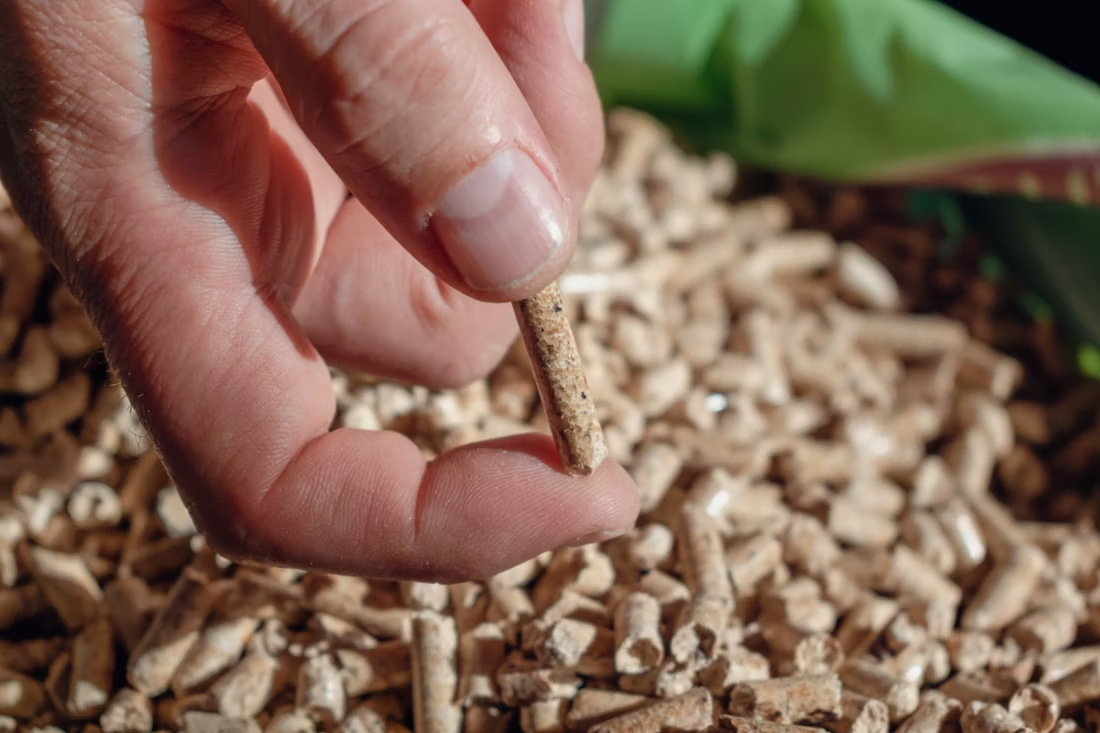
Four fuels. One honest answer for Whatcom County.
Three steps. No salesperson until you're ready.
Tell us about your project
Your zip code, your situation, and the fuel you're leaning toward—or let the answers point you to one.
See what's actually available
The brands dealers within 100 miles genuinely carry—real options, never a catalog mirage.
Get your dealer & Project Guide
A trusted local dealer, plus the free Project Guide & Parts List that names every component of the job.
Frequently Asked Questions
Which fuel works best in Whatcom County?
It depends on the home and the household. Gas is the most convenient choice in Bellingham and the other incorporated cities, where Puget Sound Energy service makes instant on-demand heat straightforward to install. Wood remains popular in rural areas and along the Mt. Baker corridor—Douglas fir and red alder are the common local species, and Mt. Baker-Snoqualmie National Forest permits keep firewood costs low for households willing to cut and split their own. Pellet is a solid middle ground: less labor than wood, and Bear Mountain and Lignetics pellets are both readily available regionally. Electric fireplaces do more real work here than in colder inland climates—with winter lows averaging around 35°F and a winter heating load that's a fraction of what Bozeman, MT sees, a good electric insert can genuinely handle shoulder-season heating in a bedroom or den, not just provide ambiance.
Do I need a permit to install a fireplace in Whatcom County?
In most cases, yes. New wood stoves, wood inserts, gas fireplaces, gas inserts, gas stoves, and pellet stoves all typically require a building permit, plus a separate gas line permit and licensed gas-fitter for any gas connection work. Within Bellingham, permits are issued through the City of Bellingham Permit Center; in unincorporated parts of the county—including the Mt. Baker foothills and rural Nooksack valley—permits go through Whatcom County Planning & Development Services. Smaller cities like Lynden, Ferndale, and Blaine handle their own permitting within city limits. Most local hearth retailers manage this process as part of the installation, so homeowners usually aren't filing paperwork themselves.
Are there air quality restrictions on wood burning in Whatcom County?
Not in the way that high-desert basins deal with winter inversions. Whatcom County's marine climate doesn't trap smoke the same way inland valleys do, so there's no routine winter burn advisory here. The air quality issue locals actually track is summer wildfire smoke drifting in from British Columbia and eastern Washington, which mostly affects outdoor air quality rather than wood-burning appliance rules. New wood stove installations still need to meet current EPA emissions standards, and Washington's Department of Ecology occasionally runs burn-ban periods during unusually stagnant weather, but Whatcom County doesn't see the frequent yellow/red advisory cycles common in places like the Klamath Basin.
Can one local hearth retailer handle all four fuel types?
Several Bellingham-area retailers carry three or four fuel types and can show working displays side by side, which is genuinely useful if you're still deciding between, say, a gas insert and a pellet stove. Smaller dealers closer to the border towns—Lynden, Ferndale, Blaine—tend to specialize, often focusing on wood and pellet given the more rural customer base and lower natural gas penetration outside Bellingham proper. Fuel suppliers (firewood yards, pellet distributors) are a separate category from hearth retailers—they sell the fuel, not the appliance. If you're cross-shopping fuels, ask a multi-fuel Bellingham dealer to walk you through the trade-offs for your specific home.
How does service work in rural areas of Whatcom County?
Most chimney sweeps and gas techs are based in or around Bellingham and travel out to the rest of the county—the Mt. Baker Highway corridor (Kendall, Maple Falls, Glacier), the Nooksack valley towns, and the border communities near Blaine and Sumas. Expect a modest travel fee for the farther calls, and know that pre-season scheduling (late summer through early fall) is far easier to book than a mid-winter emergency visit after the first cold snap. If you're up toward Mt. Baker where snow accumulation is a real factor even though the county overall sees mild winters, book your annual service early and keep a backup heat source on hand for storm-related outages.
What's the typical cost range for fireplace installation across all fuel types in Whatcom County?
Wood stove or insert installation: roughly $4,000–$8,500 for a typical retrofit, more for new construction requiring a full chimney chase. Gas fireplace, insert, or stove: roughly $4,000–$10,000 depending on venting and whether new gas line work is needed—Bellingham homes already on Puget Sound Energy service tend to land on the lower end. Pellet stove or insert: roughly $4,000–$7,000 for most installs. Electric fireplace: $200–$3,000 for the unit itself, plus $400–$1,200 in labor for anything beyond a plug-and-play wall unit. Exact pricing depends on your home's existing venting, chimney condition, and the retailer you work with—see the county + fuel pages above for more detail tied to local pricing.
Wood, gas, pellet, or electric—how do I choose?
Match the fuel to your life, not the other way around. Wood: lowest fuel cost and total power-outage independence, but you're hauling and stacking. Gas: press a button, set a thermostat, no maintenance to speak of. Pellet: wood economics with automatic feeding, in exchange for weekly cleaning and a need for electricity. Electric: plugs in anywhere with honest supplemental heat. Nobody regrets the fuel that fits how they actually live.
Does a fireplace add value to my home?
On average, a fireplace adds back to the home about the same amount you spent installing it. Add the monthly savings from heating the rooms you actually use instead of the whole house—often hundreds of dollars a year—and the value case is strong before you even count what a fire does for how your family uses the room.
What are the biggest mistakes people make buying a fireplace?
Five come up constantly: budgeting for the unit but not the full job (vent, gas line, electrical, finish work); drowning in options instead of starting from style and fuel; buying without an in-home preview; handing installation to a handyman instead of a pro; and giving up out of sheer indecision. Every one is avoidable with a clear plan—step one, step two, step three.
Can a fireplace actually lower my heating bill?
Yes—by creating a comfort zone. A furnace heats every square foot of the house just to warm the one room you're in; a gas fireplace on low burns roughly a sixth of the gas a typical furnace does. Set the furnace around 55–60 degrees as a baseline, then heat the rooms your family actually uses. Families who heat this way commonly save $20–$60 a month.
Stove and Fireplace Dealers in Whatcom County
Listings include WhyFire partner dealers, dealers we have verified as authorized for the brands we recommend, and established local businesses that carry hearth products. Every listing shows which one it is. The ones marked Preferred run on WhyFire's software, so they can show you real pricing and book your appointment right here. No manufacturer pays for placement. How we verify dealers →
Northwest Energy Systems
Method Homes
Berry Garage Door Company
Dagg's Fireplace Shop
Encore Fireplaces
Fdm Manufacturing Ltd
Oray Fireplaces
Gas Guys Outdoor Designs
Find your fireplace project in Whatcom County.
Tell us about your home and we'll match you with a trusted local dealer and send you a free Project Guide & Parts List—the exact parts, vent kit included, and the dealer we recommend for your specific fuel and address.
Find Your Fireplace →