
Find a pellet stove built for West Richland's high-desert winters.
Automated, hopper-fed heat for the Columbia Basin's inversion days and wildfire-smoke seasons. Find the right pellet stove or insert and connect with a trusted local dealer.
Every Project Starts From One of These Five Situations
Clean, thermostat-controlled heat for a valley that watches its air closely.
West Richland sits at about 450 feet along the Yakima River in the Columbia Basin, part of the Tri-Cities' semi-arid, high-desert climate. Winters here are comparatively mild for the Pacific Northwest—average lows around 29°F and a winter heating load well short of what places like Spokane or Bozeman, MT see—but the valley has its own air quality challenges. Winter temperature inversions can trap smoke and particulates over the basin for days at a time, and summer and fall wildfire smoke from regional fires is a regular concern.
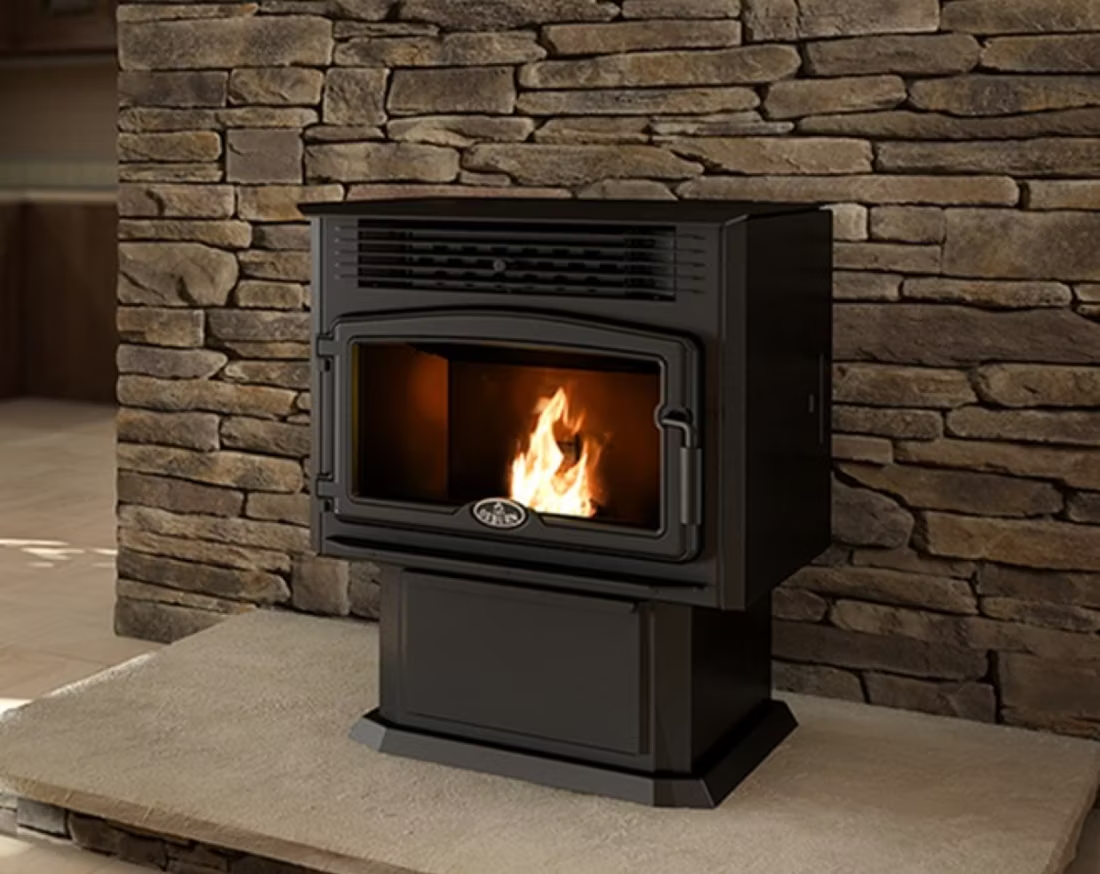
That combination is exactly where pellet stoves earn their keep. EPA-certified pellet appliances burn far cleaner than open wood stoves and are typically classified as exempt from the burn-ban curtailment stages that Benton Clean Air Agency can impose on traditional wood-burning devices during inversion events. Regional pellet producers—Bear Mountain, Lignetics, and Pacific Pellet—supply Tri-Cities dealers directly, so fuel is easy to source locally. Pair that with automated hopper feed and thermostat control, and a pellet stove gives West Richland homeowners consistent, low-maintenance heat without adding to the valley's smoke load.
Three steps. No salesperson until you're ready.
Tell us about your project
Your zip code, your situation, and the fuel you're leaning toward—or let the answers point you to one.
See what's actually available
The brands dealers within 100 miles genuinely carry—real options, never a catalog mirage.
Get your dealer & Project Guide
A trusted local dealer, plus the free Project Guide & Parts List that names every component of the job.
Frequently Asked Questions
How much does a pellet stove installation cost in West Richland?
A freestanding pellet stove installation in the Tri-Cities area typically runs $3,000 to $6,000, depending on the unit and whether new venting is needed. A pellet insert installed into an existing masonry fireplace usually runs $3,500 to $7,000, since it involves fitting the unit and running a smaller-diameter vent liner through your existing chimney. Homes without an existing chimney or hearth will land on the higher end once framing and through-wall venting are factored in. Local dealers will give you a firm number after seeing your space.
What size pellet stove do I need for my West Richland home?
Because winters here are milder than in the Cascades or eastern Washington's higher elevations, most West Richland homes don't need the largest hopper capacity on the market. Small units (rated for 500–1,000 sq ft) suit a single room or supplemental zone heat, mid-size stoves (1,000–1,800 sq ft) cover most main living areas, and larger units handle open floor plans or whole-home heating in better-insulated houses. A local retailer can size your stove properly during an in-home visit—oversizing wastes pellets and undersizing leaves you running the auger constantly on the coldest nights.
Where can I find certified pellet stove installers near West Richland?
Look for installers with NFI (National Fireplace Institute) pellet certification, which covers the specific venting and electrical requirements pellet appliances need that wood stoves don't. Most Tri-Cities hearth retailers who sell pellet stoves also install them, which keeps warranty coverage and code compliance under one roof. Because pellet stoves rely on an electric auger, igniter, and blower, proper electrical hookup matters as much as venting—this isn't a project for a general handyman.
What's the difference between a pellet stove and a pellet insert?
A pellet stove is a freestanding unit that sits on its own hearth pad and vents out through a wall or existing chimney chase—it can go almost anywhere with a nearby outlet and a clear vent path. A pellet insert is built to slide into an existing masonry fireplace opening, converting an old wood-burning fireplace into an automated, thermostat-controlled heat source using the existing chimney as the vent chase. For West Richland homes with an underused open fireplace, an insert is usually the better upgrade. Homes without an existing fireplace typically go with a freestanding stove instead.
Do I need a permit to install a pellet stove in West Richland?
Yes—pellet stove installations require a building permit, typically through the City of West Richland or Benton County building department depending on your address. The unit itself needs to carry EPA certification, which nearly every current pellet stove on the market does. Most local dealers handle the permit application as part of the installation. Unlike traditional wood stoves, pellet units are generally exempt from the burn-ban restrictions Benton Clean Air Agency issues during winter inversion events, which is one reason they've become popular for homes in the valley.
What's the best pellet stove for West Richland's climate?
Because winter lows here rarely fall much below the mid-20s, most homes don't need an oversized hopper for overnight burns the way a mountain-town installation might. Mid-size units from brands like Harman, Lopi, or Quadra-Fire cover the majority of West Richland homes comfortably. What matters more locally is clean, low-emission operation during wildfire smoke season and winter inversions—a well-tuned pellet stove burning softwood pellets from regional suppliers like Bear Mountain or Lignetics runs with minimal visible exhaust, which keeps you in good standing when air quality advisories are in effect.
How often does a pellet stove need cleaning and maintenance?
Pellet stoves need more frequent light maintenance than wood stoves, but less heavy work than a chimney sweep. Plan on emptying the ash pan every few days during regular use, cleaning the burn pot weekly to keep the igniter working properly, and a full professional cleaning and inspection once a year—usually before the first cold snap in late fall. Skipping the annual service is the most common reason pellet stoves lose efficiency or the auger jams mid-season.
Where can I buy pellets in West Richland?
Regional producers supply most Tri-Cities hearth shops and hardware stores directly, including Bear Mountain, Lignetics, and Pacific Pellet—all Pacific Northwest brands milling softwood pellets from ponderosa pine, lodgepole pine, and Douglas fir residues common to the region. Pricing for standard softwood pellets in this market generally runs in the $250 to $350 per ton range (roughly $5–$7 per 40-lb bag), with premium low-ash blends running somewhat higher. Buying by the ton ahead of the winter season is typically cheaper than picking up bags as needed.
Pellet stove vs. wood stove—which makes more sense in West Richland?
Wood stoves burn free or low-cost fuel—Umatilla National Forest issues personal-use cutting permits for around $20 per 4 cords during the May-to-October season—and they keep working during a power outage, since they don't rely on any electronics. Pellet stoves trade that off for real convenience: load the hopper, set a thermostat, and let the auger handle the rest, with far less mess and lower emissions during inversion events. The tradeoff is that pellet stoves need electricity to run the auger and blower, so they shut down in an outage unless paired with a battery backup. For West Richland homes prioritizing hands-off heat and cleaner burns during smoke season, pellet is usually the better fit; for backup heat during storms, wood still wins.
Why is a fireplace insert so efficient?
An insert does two things: it seals the chimney completely, so you stop losing air you already paid to heat, and it radiates warmth into the room through the firebox and glass. Most add a heat-exchange fan that pulls cool room air underneath, wraps it around the hot firebox, and pushes it back out warm. Your home is more efficient before you've even lit the first fire.
Are pellet stoves loud?
They make some noise—there are two fans running plus an auger motor that turns as it feeds pellets. But there's a real range: premium models are engineered quiet, and the best offer a whisper-quiet mode you can comfortably watch TV next to. If noise matters in your room, ask to hear a stove running before you buy—it's a five-minute test that saves years of annoyance.
Does a fireplace add value to my home?
On average, a fireplace adds back to the home about the same amount you spent installing it. Add the monthly savings from heating the rooms you actually use instead of the whole house—often hundreds of dollars a year—and the value case is strong before you even count what a fire does for how your family uses the room.
How much should I budget for a fireplace?
For an average home—covering the fireplace, the vent pipe, and basic installation—a budget between $3,900 and $5,500 gives you a lot of options across wood, gas, and pellet. By the time you add finish work, gas line, and electrical, the average complete installation lands between $5,000 and $12,000 all-in. In a remodel or new build, a good rule is to put about 2.5% of the total project cost toward the fireplace.
Nearby Dealers
Hearth shops serving West Richland and the surrounding area. Every listing shows whether it is a WhyFire partner, a dealer we have verified as authorized for the brands we recommend, or a local business carrying hearth products. No manufacturer pays for placement. How we verify dealers →
Total Energy Mgmnt
Fire & Water
Campbell & Company, Inc.
Apollo Heating & Air Conditioning
Bruce Heating & Ac
Legacy Pool & Spa LLC
Dayco Heating
Pellet Brands Stocked Around West Richland
Manufacturers will point you to the nearest stocking dealer.
Find your pellet stove in West Richland.
Tell us a bit about your home and we'll match you with a trusted local dealer and send over a free Project Guide & Parts List—the exact parts, including the vent kit, for your pellet install in West Richland.
Find Your Fireplace →