
Set It, Forget It, Stay Warm All Winter Long.
Thermostat-controlled pellet heat for Spokane's long Inland Northwest winters. Find the right stove or insert, and connect with a trusted local dealer.
Every Project Starts From One of These Five Situations
Automated heat for the Inland Northwest.
Spokane sits at just under 1,900 feet in the Inland Northwest, where climate zone 5B and roughly 6,019 heating degree days mean a heating season that stretches from October well into April. Winter lows average 26°F, but the region regularly drops into the single digits during cold snaps, putting Spokane's heating demand in the same league as Bozeman, Montana—cold, dry, and long. Pellet stoves have caught on here because they deliver steady, load-and-walk-away heat without the splitting, stacking, and daily tending that wood requires.
Part of the appeal is proximity to supply. Lignetics operates a pellet manufacturing plant in Sagle, Idaho, less than an hour from downtown Spokane, and Bear Mountain and Pacific Pellet both distribute throughout the region, so fuel is rarely hard to find even mid-winter. Pellet appliances also sidestep the restrictions that sometimes apply to open burning during Spokane's summer wildfire smoke events—EPA-certified pellet stoves are sealed-combustion appliances, not open hearths, and keep running normally. The one real tradeoff: pellet stoves need electricity to run the auger, igniter, and blower, so a battery backup is worth discussing with your dealer given the ice storms that have knocked out power across the region in past winters.
Three steps. No salesperson until you're ready.
Tell us about your project
Your zip code, your situation, and the fuel you're leaning toward—or let the answers point you to one.
See what's actually available
The brands dealers within 100 miles genuinely carry—real options, never a catalog mirage.
Get your dealer & Project Guide
A trusted local dealer, plus the free Project Guide & Parts List that names every component of the job.
Frequently Asked Questions
How much does a pellet stove installation cost in Spokane?
Most pellet stove and insert installations in Spokane run $4,000 to $7,500, depending on the unit, whether you're installing into an existing masonry fireplace opening or building a new hearth, and the length of PL vent pipe needed to reach an exterior wall. A pellet insert going into an existing fireplace with a straightforward horizontal vent run through the back wall tends to land on the lower end. New construction, or installs that require roof venting or adding a dedicated 120-volt outlet near the unit, push toward the higher end. Local dealers will size and quote the job during an in-home visit.
What size pellet stove do I need for my Spokane home?
Sizing depends on square footage, ceiling height, and how open your floor plan is. As a rough guide for Spokane's cold-climate demands: stoves rated for 40,000-50,000 BTU handle 1,200-1,800 square feet, and larger units in the 55,000-60,000 BTU range can carry a well-insulated 2,000+ square foot home as a primary heat source. Older homes in South Hill or Comstock with less insulation may need a step up in output compared to newer construction on the West Plains or Five Mile. A local retailer will size the unit correctly during a free in-home consultation—oversizing wastes pellets, and undersizing means the stove runs flat-out without keeping up on the coldest nights.
How do I find a certified pellet stove installer near Spokane?
Look for NFI (National Fireplace Institute) Pellet Specialist certification, which specifically covers pellet appliance venting, clearances, and hopper/auger systems—a different skill set than wood or gas certification. The hearth retailers matched through Find My Fireplace employ certified installers who also pull the required permit and handle the electrical outlet placement the unit needs. Because pellet stoves require both proper venting and a nearby power source, avoid a DIY install or a general handyman—incorrect PL vent slope is one of the most common causes of poor draft and nuisance shutdowns.
What's the difference between a pellet stove and a pellet insert?
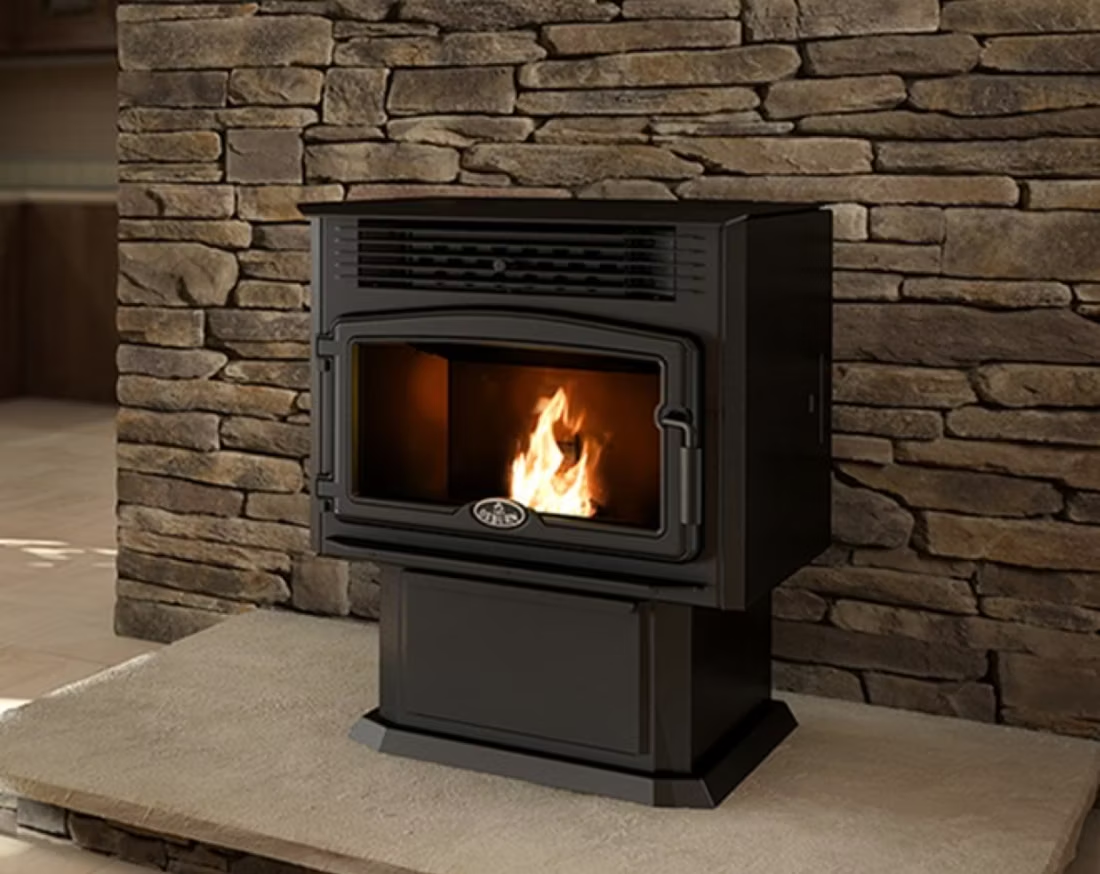
A pellet stove is a freestanding unit that sits on a hearth pad and vents out through a wall or existing chimney chase—it can go almost anywhere with the right clearances. A pellet insert is built to slide into an existing masonry fireplace opening, using a stainless liner run up your existing chimney, or a shorter horizontal run through the back wall, instead of new venting. For Spokane homes with an older masonry fireplace that's mostly decorative, a pellet insert is often the better upgrade—it keeps the existing look while turning a fireplace that loses more heat than it makes into a real heat source. Homes without an existing fireplace typically go with a freestanding stove instead.
Do I need a permit to install a pellet stove in Spokane?
Yes—a mechanical or building permit is required for new pellet stove installations through the City of Spokane's Development Services Center inside city limits, or Spokane County's Building and Planning Department for homes outside city boundaries. Most local dealers include pulling this permit as part of the installation, so it's rarely something you have to handle yourself. Unlike wood stoves, pellet appliances aren't subject to burn-ban restrictions during winter stagnant-air advisories, since they're EPA-certified sealed-combustion units rather than open hearths.
What's the best pellet stove for Spokane's climate?
For a primary-heat setup through a Spokane winter, look at higher-output units from brands like Harman or Quadra-Fire, both common in the Inland Northwest and built to handle daily use across a full heating season. Lopi, manufactured by Travis Industries in Mukilteo, is another Pacific Northwest brand with solid regional distribution. Larger hopper capacity—60 pounds or more—matters more here than in milder climates, since it means fewer refills during a stretch of single-digit nights. Talk to a local dealer about your square footage and whether the stove needs to carry the whole home or just supplement an existing furnace.
How often does a pellet stove need to be cleaned and serviced?
Pellet stoves need more frequent attention than wood stoves, just less dramatic attention. Plan on emptying the ash pot every few days to weekly depending on use, and a full burn pot and heat exchanger cleaning every one to two weeks during heavy winter use. An annual professional service—checking the auger motor, exhaust blower, gaskets, and PL vent for blockage—is recommended before each heating season starts. Because the venting is smaller-diameter PL pipe rather than a full masonry chimney, it's a quicker job than a wood chimney sweep, but skipping it is still the leading cause of error codes and shutdowns mid-winter.
Where can I buy pellets in Spokane?
Pellets are widely available at hearth retailers, hardware stores, and farm supply stores throughout Spokane, typically running $230 to $300 per ton depending on brand and whether you buy by the pallet (49-50 bags) or individual bags. Lignetics, which mills pellets in Sagle, Idaho less than an hour east, and Bear Mountain, trucked in from Cascade Locks, Oregon, are two of the most common brands on local shelves; Pacific Pellet also distributes through the region. Buying a season's supply—typically 2-3 tons for a primary-heat home—in late summer or early fall, before winter demand drives prices up, is standard practice among longtime Spokane pellet burners.
Pellet vs. wood stove—which makes more sense for my Spokane home?
Wood stoves burn free or low-cost fuel if you're willing to cut your own—BLM Spokane District permits run about $10 per cord for standing dead ponderosa pine, lodgepole pine, and Douglas fir, with cutting season open April through October—and they keep working during a power outage, which matters given the ice storms that periodically take down power across the region. Pellet stoves trade that off-grid resilience for convenience: load the hopper, set the thermostat, and the auger and igniter do the rest, with far less ash and no chimney creosote to manage. For Spokane households without the time or interest in processing firewood, or who want cleaner, more consistent heat on a thermostat, pellet is usually the better fit. For those who want backup heat that works when the grid doesn't, wood—or a pellet stove paired with a battery backup—is worth the extra thought.
How often does a pellet stove need cleaning?
A clean pellet stove is a happy pellet stove. Plan on cleaning the burn pot about once a week when you're burning regularly—ash and clinkers gum up the air holes just like a pellet barbecue. Most pellet stove problems trace back to skipped cleaning that nobody explained up front. Some designs make it easy with a trapdoor burn pot: pull a lever and the gunk drops into the ash pan.
What do I measure to size a fireplace insert?
Four numbers tell you what fits: the front width, the front height, the back width, and the overall depth of your existing fireplace opening. Grab a tape measure, jot those down, and snap a photo of the wall—those two things do more to move your project forward than anything else you can do today.
What is an in-home preview and do I need one?
It's a visit where a hearth professional measures your space, confirms the model you picked actually works in your home, and walks the specs—framing, gas line, venting, finish work—before anything is ordered. Some details you just can't know until you see the house. Never make a down payment without one; it's the single most-skipped step that burns buyers.
Can a fireplace actually lower my heating bill?
Yes—by creating a comfort zone. A furnace heats every square foot of the house just to warm the one room you're in; a gas fireplace on low burns roughly a sixth of the gas a typical furnace does. Set the furnace around 55–60 degrees as a baseline, then heat the rooms your family actually uses. Families who heat this way commonly save $20–$60 a month.
Nearby Dealers
Hearth shops serving Spokane and the surrounding area. Every listing shows whether it is a WhyFire partner, a dealer we have verified as authorized for the brands we recommend, or a local business carrying hearth products. No manufacturer pays for placement. How we verify dealers →
Accent Stove & Spa
Tri State Distributors
Wing Stoves & More
Copper Creek Landscaping, Inc
Rock Creek
Lake Creek Comfort Systems
Pellet Brands Stocked Around Spokane
Manufacturers will point you to the nearest stocking dealer.
Find your pellet stove in Spokane.
Tell us about your home and heating goals, and we'll match you with a trusted local Spokane dealer plus a free Project Guide & Parts List—the exact parts, vent kit, and next steps for your pellet project.
Find Your Fireplace →