
Zone heat that costs pennies to run in Prosser.
With some of the cheapest residential power in the country from Benton PUD, an electric fireplace is an easy way to add warmth to a room without a gas line or a chimney. Find the right unit and connect with a trusted local dealer.
Every Project Starts From One of These Five Situations
Cheap hydropower changes the math on electric heat.
Prosser sits at 665 feet in the Yakima Valley, low and dry compared to the Cascade foothills to the west, with average winter lows around 27°F and a winter heating load noticeably lighter than places like Fargo, ND or Bismarck, ND, but still cold enough that most homes run supplemental heat from November through February. Winter inversions and wildfire smoke are both recognized air quality concerns in the valley, which pushes some households toward heating options that don't add particulate smoke to the airshed on top of what's already trapped by the inversion layer.
That's where electric fireplaces earn their keep here. Benton County PUD serves Prosser with residential electricity at roughly 8.81 cents per kWh—among the lowest rates in the nation, a byproduct of the region's hydropower supply—which makes running a 1,500-watt electric insert or built-in unit noticeably cheaper here than in most U.S. cities. Natural gas infrastructure is limited across this stretch of rural Benton County, so for homeowners who don't already have a gas line to the house, electric skips that cost entirely: no gas permit, no venting, no chimney. It won't replace a furnace or heat pump for whole-house heat, but as a zone-heat solution for a living room, bonus room, or converted fireplace opening, it's a low-cost, low-hassle option in the Yakima Valley climate.
Three steps. No salesperson until you're ready.
Tell us about your project
Your zip code, your situation, and the fuel you're leaning toward—or let the answers point you to one.
See what's actually available
The brands dealers within 100 miles genuinely carry—real options, never a catalog mirage.
Get your dealer & Project Guide
A trusted local dealer, plus the free Project Guide & Parts List that names every component of the job.
Frequently Asked Questions
How much does an electric fireplace installation cost in Prosser?
A plug-in electric insert or freestanding unit typically runs $400 to $900 installed, since it just needs a standard household outlet and no permit in most cases. A built-in electric fireplace set into a wall or existing fireplace opening, wired to a dedicated circuit, runs closer to $1,200 to $2,500 once you factor in an electrician, any framing or mantel work, and finish trim. Benton County homes converting an old masonry fireplace opening to electric tend to land in the middle of that range, since the opening already exists and no chimney work is needed.
How much does it actually cost to run an electric fireplace on Benton PUD rates?
This is where Prosser has a real advantage. At Benton County PUD's residential rate of about 8.81 cents per kWh, a typical 1,500-watt electric fireplace running on high for 8 hours costs roughly $1.06 a day, or about $32 a month of daily evening use. That's meaningfully cheaper than running the same unit in most other parts of the country, where residential rates often run double or triple that. It won't undercut a well-tuned heat pump for whole-house heating, but as a supplemental heat source for one room, the operating cost is close to negligible.
Will my electric fireplace still work if the power goes out?
No—this is worth being direct about. Electric fireplaces require grid power to run the heater, blower, and flame effect, so during a Benton PUD outage (which does happen during ice storms and high wind events in the Yakima Valley), an electric unit goes dark along with everything else in the house. If backup heat during outages matters to you, a wood stove or a battery-backed gas insert with a standing pilot is a better fit as your primary or secondary heat source, with electric reserved for everyday ambiance and zone heat.
Why choose electric over gas or propane in Prosser?
Natural gas infrastructure doesn't reach every part of rural Benton County, and running a new gas line or setting a propane tank adds real cost to a project. Electric skips both—there's no fuel line, no combustion, and no venting requirement, which keeps installation simple and inexpensive. It's also the cleaner option during winter inversion events, when the valley's air quality can suffer from trapped particulates; an electric unit adds zero emissions to that mix. The tradeoff is heat output and outage resilience, which is why many Prosser homeowners use electric for a secondary room and gas, propane, or wood for their primary heat source.
What's the difference between an electric insert, a built-in unit, and a freestanding electric stove?
An electric insert is sized to slide into an existing fireplace opening—a common upgrade for older Prosser homes with a masonry firebox that's no longer used for wood. A built-in electric fireplace is designed to be framed into a wall during a remodel or new build, giving a flush, linear look with no visible fireplace opening. A freestanding electric stove sits on the floor like a wood stove but plugs into a standard outlet, which makes it the easiest option for renters or anyone who doesn't want to modify a wall. All three use the same basic heating element; the choice mostly comes down to the room and whether you're working with an existing opening.
Do I need a permit or an electrician for an electric fireplace in Prosser?
A plug-in unit that runs off a standard 120-volt outlet generally doesn't require a permit or an electrician—it's treated like any other appliance. A built-in electric fireplace wired to a dedicated 20-amp circuit typically does require an electrician, and larger units (especially 240-volt models) should be sized and installed by someone licensed to work in Benton County. Framing or wall modifications for a built-in unit may also require a permit through the City of Prosser Building Department, which most local hearth or electrical contractors will pull as part of the job.
Can an electric fireplace heat my whole house?
Not realistically. A typical 1,500-watt electric fireplace puts out around 5,000 BTU, enough to noticeably warm a single room of 300–400 square feet, but not enough to carry a whole house through a Yakima Valley winter with a long, steady heating season. Most Prosser homeowners use electric fireplaces as zone heat—warming the room they're actually using—while a heat pump, forced-air furnace, or wood stove handles the rest of the house. That combination lets you turn down the thermostat elsewhere and heat only the occupied space, which is often where electric fireplaces save the most money given the area's low kWh rate.
Is an electric fireplace a good choice given the winter air quality concerns here?
Yes—this is one of electric's clearest advantages in Prosser. The Yakima Valley experiences winter temperature inversions that trap smoke and particulates close to the ground, and wildfire smoke is a recurring summer and fall concern regionally. Electric fireplaces produce zero combustion byproducts, so they don't add to particulate levels during an inversion event the way a wood stove or even a gas unit's exhaust can. For households with respiratory sensitivities, or anyone who wants supplemental heat without worrying about outdoor air quality advisories, electric is the cleanest option on the table.
Electric vs. wood—which makes more sense for a Prosser home?
Wood offers real backup heat during power outages and pairs with cheap fuel—Umatilla National Forest issues cutting permits for around $20 per 4 cords during the May-to-October season, and ponderosa pine, lodgepole pine, and Douglas fir are all common locally. But it means chimney maintenance, ash cleanup, and burning during winter inversion periods that can trigger air quality concerns. Electric offers instant on-off convenience, no permits, no smoke, and—thanks to Benton PUD's roughly 8.81-cent rate—genuinely low operating cost for supplemental use. Many Prosser homes end up with both: a wood stove or insert for reliable primary heat and outage backup, and an electric fireplace in a secondary room where convenience and clean air matter more than raw heat output.
Can I put a TV above my fireplace?
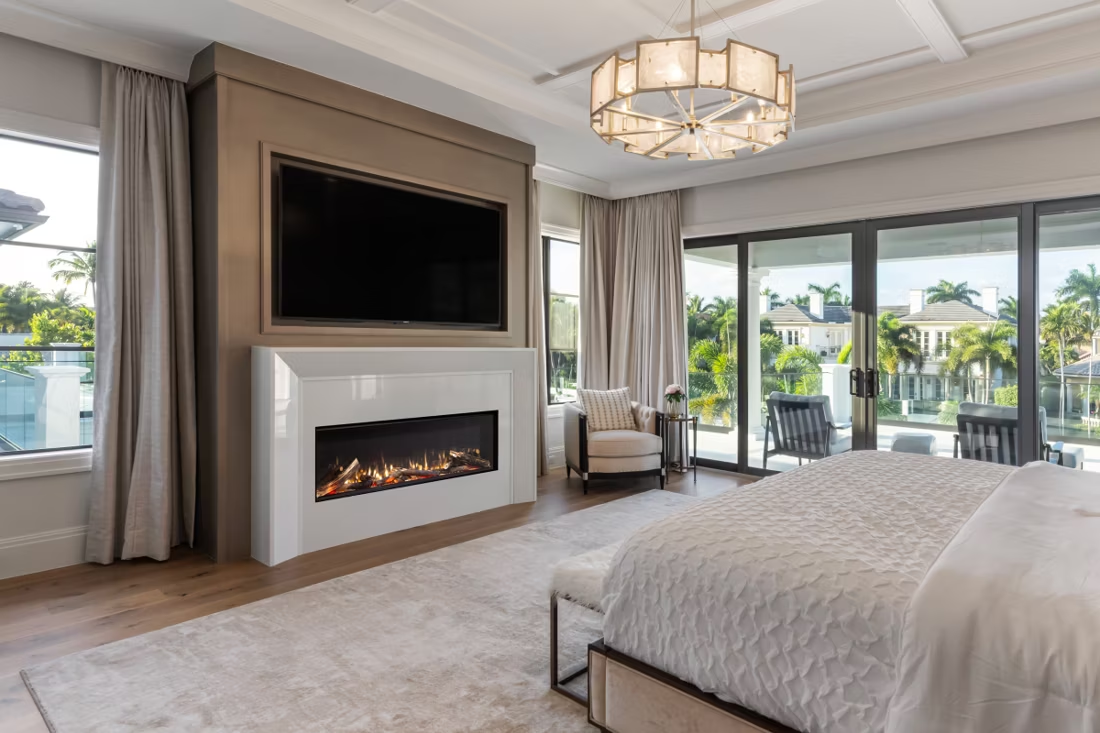
Yes—with an asterisk. Fireplaces are hot and TVs don't like heat. Either put a mantel between them to deflect rising warmth, or choose a fireplace with heat-management technology that creates a cool zone on the wall above—the wall stays around 125 degrees, barely warm, while the room still gets full heat. If you like clean lines and don't want a mantel, heat management is the answer.
Do electric fireplaces actually produce heat?
Yes—most put out around 4,800–5,000 BTUs from a standard outlet, which comfortably warms a bedroom, office, or den as a comfort-zone heater. What they won't do is carry a whole house the way wood, gas, or pellet can. Think of electric as ambiance-first with honest supplemental heat: flames on with no heat in July, flames plus warmth in January.
Can a fireplace actually lower my heating bill?
Yes—by creating a comfort zone. A furnace heats every square foot of the house just to warm the one room you're in; a gas fireplace on low burns roughly a sixth of the gas a typical furnace does. Set the furnace around 55–60 degrees as a baseline, then heat the rooms your family actually uses. Families who heat this way commonly save $20–$60 a month.
Does a fireplace add value to my home?
On average, a fireplace adds back to the home about the same amount you spent installing it. Add the monthly savings from heating the rooms you actually use instead of the whole house—often hundreds of dollars a year—and the value case is strong before you even count what a fire does for how your family uses the room.
Nearby Dealers
Hearth shops serving Prosser and the surrounding area. Every listing shows whether it is a WhyFire partner, a dealer we have verified as authorized for the brands we recommend, or a local business carrying hearth products. No manufacturer pays for placement. How we verify dealers →
Fire & Water
Total Energy Mgmnt
Bruce Heating & Ac
Apollo Heating & Air Conditioning
Campbell & Company, Inc.
Legacy Pool & Spa LLC
Dayco Heating
Bruce Heating & Air
Electric Service in Prosser
An electric fireplace's heater draws about 1,500 watts—pennies per hour at local rates.
Pud No 1 Of Benton County
Find your electric fireplace in Prosser.
Tell us a bit about your home and we'll match you with the right electric fireplace or insert, then send over a free Project Guide & Parts List with the exact parts and a recommended local Prosser-area dealer.
Find Your Fireplace →