
Heating a sparsely populated, forested corner of northeast Washington.
Wood, gas, pellet, and electric fireplace resources for every town and rural community in Pend Oreille County—from Newport to Metaline Falls. Find the right unit and connect with a trusted local hearth retailer.
Every Project Starts From One of These Five Situations
Deep-woods heating in Washington's least populated county.
Pend Oreille County sits in the far northeast corner of Washington, tucked against the Selkirk Mountains and the Idaho and British Columbia borders. At roughly 7,078 heating degree days with average winter lows near 24°F, the climate here runs closer to International Falls, Minnesota than to the mild Puget Sound side of the state. With only about 3,000 residents spread across nearly 1,400 square miles, homes here tend to be rural, often heated by wood cut under Idaho Panhandle National Forests or BLM Coeur d'Alene and Spokane District permits, and burned as ponderosa pine, lodgepole pine, or douglas fir. Summer wildfire smoke is the main air quality concern locals watch for, more than winter inversions.
What you'll find on this hub: hearth retailers, service technicians, and fuel suppliers covering the whole county—from the county seat in Newport down along the Pend Oreille River to Cusick and Usk, and north to Ione and Metaline Falls near the Canadian border. Pick your fuel below to see local dealers, installed cost ranges, and recommended units for this climate. Whether you're heating a river-bottom farmhouse or a cabin tucked into the Selkirks, this is the starting point.
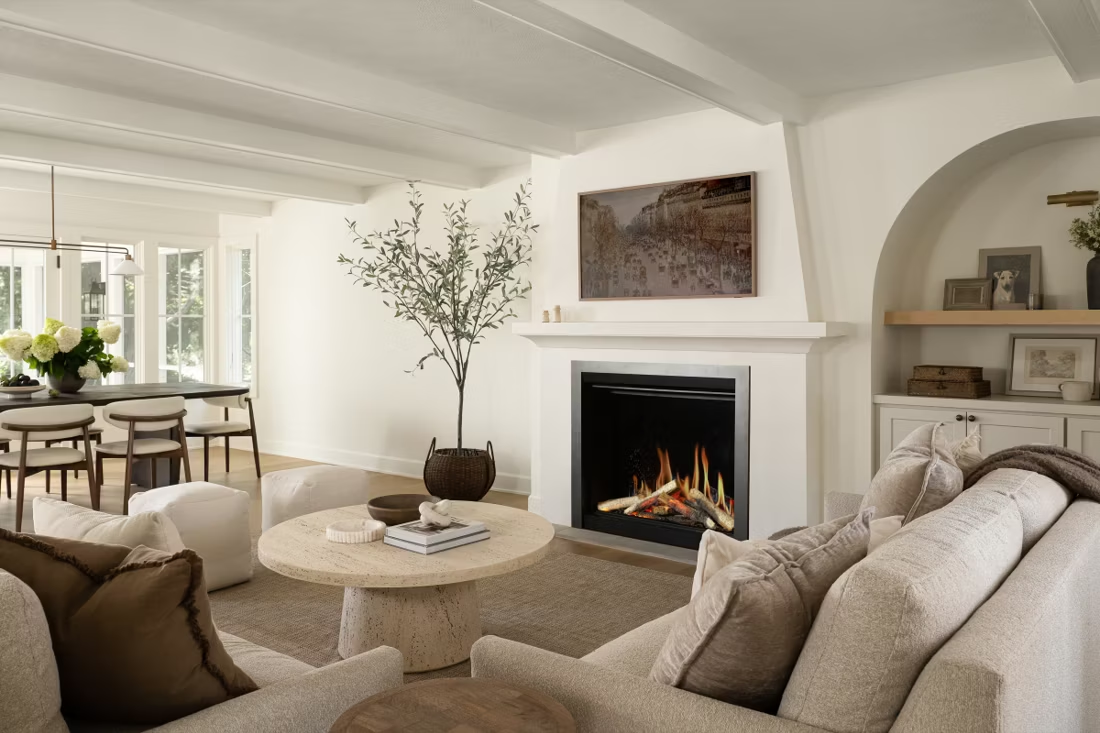
Four fuels. One honest answer for Pend Oreille County.
Wood
69 models available near Pend Oreille County.
Find your wood stove →Gas
111 models available near Pend Oreille County.
Find your gas fireplace →Pellet
See what's available near Pend Oreille County.
Find your pellet stove →Electric
See what's available near Pend Oreille County.
Find your electric fireplace →Three steps. No salesperson until you're ready.
Tell us about your project
Your zip code, your situation, and the fuel you're leaning toward—or let the answers point you to one.
See what's actually available
The brands dealers within 100 miles genuinely carry—real options, never a catalog mirage.
Get your dealer & Project Guide
A trusted local dealer, plus the free Project Guide & Parts List that names every component of the job.
Frequently Asked Questions
Which fireplace fuel makes the most sense in Pend Oreille County?
It depends on the home and how remote it is. Wood remains a mainstay here—many residents already hold cutting permits through the Idaho Panhandle National Forests or BLM Coeur d'Alene and Spokane Districts, and a catalytic or non-catalytic wood stove burning ponderosa pine, lodgepole pine, or douglas fir handles the long cold season and keeps working through winter power outages, which matter in a rural county like this. Gas is a strong option where propane delivery reaches the property—no wood-splitting labor and instant heat, though natural gas main lines are limited outside Newport. Pellet stoves are a solid middle ground, with Bear Mountain, Lignetics, and Pacific Pellet all sold regionally, but they do depend on electricity to run the auger and blower, which matters during outages. Electric fireplaces work fine for supplemental heat in a bedroom or den but shouldn't be counted on as a primary heat source given how cold and long the winters run here.
Do I need a permit to install a wood stove or fireplace in Pend Oreille County?
Yes, in almost every case. Pend Oreille County requires building permits for new wood stoves, wood inserts, gas fireplaces, gas inserts, and pellet stoves, and any wood-burning appliance sold or installed new must meet EPA 2020 NSPS emissions standards. Gas installations typically need a separate gas-line permit handled by a licensed installer. Electric fireplaces usually skip the permit process unless you're hardwiring a built-in unit into a new circuit. Given how rural much of the county is, most homeowners route permits through the county building department rather than a city office—and most local retailers handle that paperwork as part of the installation, so it's rarely something you have to manage yourself.
Does wildfire smoke affect wood burning here the way winter smog does elsewhere?
Somewhat differently. Pend Oreille County doesn't deal with the winter temperature-inversion smog that traps smoke in basin cities—the concern here is summer and early-fall wildfire smoke, which can blanket the county for days at a time given the surrounding national forest land. That's a separate issue from residential wood heat, which mostly runs in winter when wildfire risk is low. Still, if you're installing a new wood stove, choosing an EPA-certified unit burns cleaner and produces less particulate matter, which helps local air quality during the heating season regardless of the wildfire situation later in the year.
Can I find a retailer that carries more than one fuel type out here?
It's less common than in a larger county, simply because the population doesn't support many storefronts. Some dealers based in Newport or making regular trips from the Spokane area carry two or three fuel types—often wood and gas, or wood and pellet—while a few specialize in a single category, particularly wood stoves given how central wood heat is to this area. If you want to compare fuel types side by side, it may mean driving toward Spokane County, where multi-fuel showrooms are more common. The retailer listings above note exactly which fuels each dealer carries so you're not guessing before you make the trip.
How does service work if I live out past Ione or up in the Selkirks?
Most technicians serving Pend Oreille County are based in Newport or travel in from Spokane County, and they do cover the outlying areas—Ione, Metaline Falls, Cusick, Usk, and the rural stretches back into the mountains. Expect a modest travel fee for the farthest calls, often in the $50–$100 range depending on distance and road conditions in winter. Booking your annual chimney sweep or gas inspection in late summer or early fall, before the first cold snap, gets you scheduled well ahead of the rush that hits once temperatures drop. If you're heating a remote cabin, it's also worth keeping basic spare parts (igniters, batteries for IPI gas units) on hand given how far the nearest service call might be in a January storm.
What does fireplace installation cost across fuel types in Pend Oreille County?
Costs run in line with similar cold-climate rural counties in the Inland Northwest. Wood stove or insert installation typically runs $4,500–$9,500, more if a full chimney system needs to be built from scratch for new construction. Gas fireplace, insert, or stove installation runs $4,500–$10,500, with propane tank setup adding to the cost if the property doesn't already have service. Pellet stove or insert installation generally falls in the $4,500–$7,500 range. Electric fireplace units run $200–$3,000 for the unit itself, plus $400–$1,200 in labor for anything beyond a simple plug-and-play install. For the specifics tied to your fuel choice, see the county + fuel pages linked above.
Can a fireplace actually lower my heating bill?
Yes—by creating a comfort zone. A furnace heats every square foot of the house just to warm the one room you're in; a gas fireplace on low burns roughly a sixth of the gas a typical furnace does. Set the furnace around 55–60 degrees as a baseline, then heat the rooms your family actually uses. Families who heat this way commonly save $20–$60 a month.
Can I install a fireplace myself?
If you're putting a fire in your house on purpose, it's best to work with an expert. Unless you're genuinely experienced in framing, gas line, vent pipe, and the national code on clearances to combustibles, have a professional do it—and ideally the same company that sells you the fireplace, so warranty, service, and liability all live under one roof.
What are the biggest mistakes people make buying a fireplace?
Five come up constantly: budgeting for the unit but not the full job (vent, gas line, electrical, finish work); drowning in options instead of starting from style and fuel; buying without an in-home preview; handing installation to a handyman instead of a pro; and giving up out of sheer indecision. Every one is avoidable with a clear plan—step one, step two, step three.
How much should I budget for a fireplace?
For an average home—covering the fireplace, the vent pipe, and basic installation—a budget between $3,900 and $5,500 gives you a lot of options across wood, gas, and pellet. By the time you add finish work, gas line, and electrical, the average complete installation lands between $5,000 and $12,000 all-in. In a remodel or new build, a good rule is to put about 2.5% of the total project cost toward the fireplace.
Stove and Fireplace Dealers in Pend Oreille County
Listings include WhyFire partner dealers, dealers we have verified as authorized for the brands we recommend, and established local businesses that carry hearth products. Every listing shows which one it is. The ones marked Preferred run on WhyFire's software, so they can show you real pricing and book your appointment right here. No manufacturer pays for placement. How we verify dealers →
Selkirk Ace Hardware
Priest River Ace Hardware
All About Chimneys
Get matched with a local dealer in Pend Oreille County.
Pick your fuel below and we'll send you a free Project Guide & Parts List—the exact parts for your project, including the vent kit, plus our recommended local dealer to install it.
Find Your Fireplace →