
Wheat country winters call for a fireplace that won't quit.
Wood, gas, pellet, and electric fireplace resources for Davenport, Sprague, Odessa, Reardan, Harrington, and the farms and ranches between them. Find the right unit for your home and get matched with a local hearth retailer who actually installs in Lincoln County.
Every Project Starts From One of These Five Situations
Open wheatland, hard winters, in Lincoln County, Washington.
Lincoln County is rolling Palouse wheat country in eastern Washington—wide open, exposed to wind, and colder than its modest elevation would suggest. With average winter lows near 19°F, the heating season here runs comparable to Fargo, ND—long, and driven by wind chill as much as raw temperature. Homes here tend to be older farmhouses and ranch houses spread far apart, which means heating capacity and backup power matter more than they might in a denser suburb. Ponderosa pine, lodgepole pine, and Douglas fir are the common local firewood species, much of it self-cut from BLM Spokane District, Colville National Forest, or Idaho Panhandle National Forests permit lands.
This hub rolls up what's available across the whole county: hearth retailers, chimney sweeps and service techs, fuel suppliers, and a directory of every town from Davenport down to Odessa and Sprague. Pick a fuel below to get specific—local dealers who carry it, what installation actually costs here, and units that hold up to wind-driven cold and the occasional summer wildfire-smoke stretch. Whether you're heating a century-old farmhouse outside Harrington or a newer build near Davenport, this is the starting point.
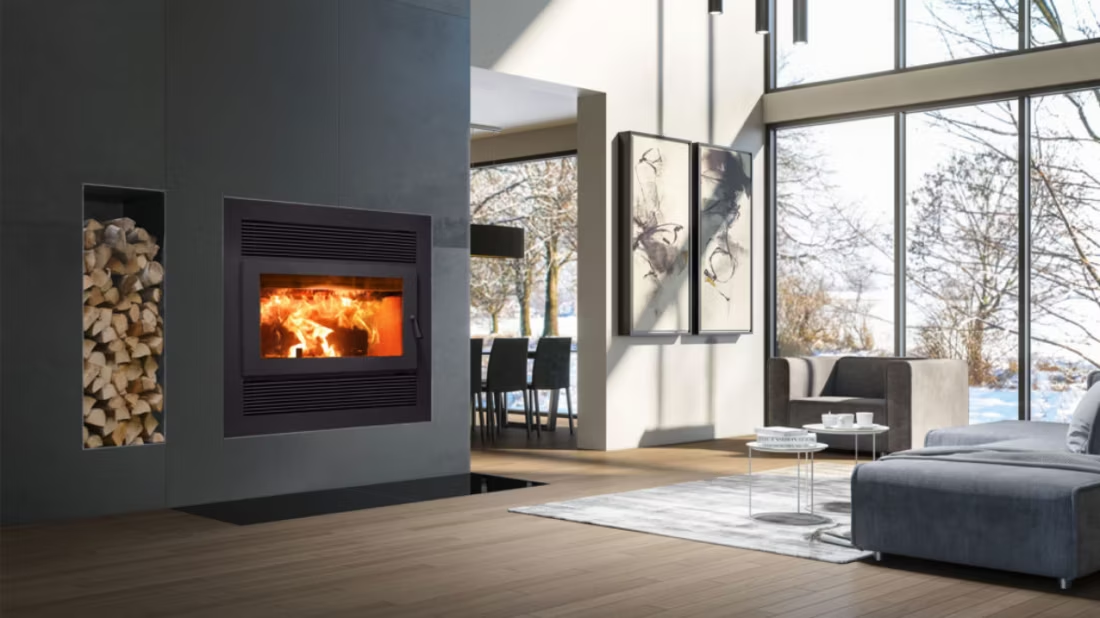
Four fuels. One honest answer for Lincoln County.
Three steps. No salesperson until you're ready.
Tell us about your project
Your zip code, your situation, and the fuel you're leaning toward—or let the answers point you to one.
See what's actually available
The brands dealers within 100 miles genuinely carry—real options, never a catalog mirage.
Get your dealer & Project Guide
A trusted local dealer, plus the free Project Guide & Parts List that names every component of the job.
Frequently Asked Questions
Which fuel makes the most sense for a home in Lincoln County?
It comes down to your property and how much you want to manage the fuel yourself. Wood remains a strong choice here—BLM Spokane District and Colville National Forest cutting permits keep firewood costs low for families with a truck and time, and a catalytic stove can carry a farmhouse through a wind-chilled overnight without power. Gas is the low-maintenance option where propane service reaches—no wood handling, reliable heat on demand, though most of the county is propane rather than piped natural gas, so tank refills factor into cost. Pellet splits the difference: less labor than cutting your own wood, and Bear Mountain and Lignetics pellets are readily available in Davenport and Sprague, but pellet stoves need electricity to run their auger and blower, which matters during winter outages common in this open, wind-exposed terrain. Electric fireplaces are best treated as supplemental heat for a bedroom or den rather than a primary source—with a heating season as long and demanding as Fargo's, electric resistance heat alone gets expensive fast. Many Lincoln County households pair wood or pellet as primary heat with a backup propane or electric unit for shoulder seasons.
Do I need a permit to install a wood stove or gas fireplace in Lincoln County?
Generally yes. New wood stoves, wood inserts, gas fireplaces, gas inserts, and pellet stoves installed in unincorporated Lincoln County or within town limits typically require a building permit, and wood-burning appliances need to meet current EPA emissions standards to be installed new. Gas installations also require a licensed gas-fitter for the line work and a separate gas permit in most jurisdictions. Electric fireplace installs usually skip the permit process unless you're hardwiring a built-in unit into a new circuit. Because Lincoln County is largely unincorporated, most permitting runs through the county rather than an individual town office—a local hearth retailer handling your installation will typically pull the permit as part of the job, so you're not navigating it solo.
Are there wood-burning restrictions in Lincoln County?
Unlike the inversion-prone valleys of central Washington, Lincoln County's open, windy terrain doesn't produce the same kind of trapped winter wood-smoke buildup. The bigger air quality concern here is summer wildfire smoke drifting in from regional fires, which affects outdoor air quality for weeks at a time but has no bearing on wood stove operation. There's no local curtailment program tied to winter wood burning in the county, though new wood stove installations still need to meet EPA 2020 NSPS standards. If you're burning during a heavy wildfire-smoke stretch, it's more a matter of personal comfort—some residents choose to switch to gas or pellet on the worst smoke days rather than adding more particulate to already poor air.
Can I find a dealer who carries more than one fuel type in Lincoln County?
Given the county's small population, most hearth dealers serving Lincoln County are based in or near Spokane and drive routes out to Davenport, Sprague, and the smaller towns rather than running a storefront in each community. Multi-fuel dealers—carrying wood, gas, and pellet, and often electric as well—are the more common setup here simply because a single-fuel showroom wouldn't have enough local volume to sustain a Lincoln County route. That's an advantage if you're not sure which fuel fits your farmhouse: a multi-fuel dealer can walk you through wood versus pellet versus propane trade-offs for your specific property and heating load in one visit.
How does service work for homes way out on rural Lincoln County roads?
Most chimney sweeps and gas/pellet technicians serving Lincoln County are based near Spokane or Davenport and run circuits out through Reardan, Harrington, Odessa, and Sprague rather than being on standby locally. Expect a modest trip fee for rural calls—commonly in the $50–$100 range depending on distance from the tech's base. Scheduling ahead matters more here than in denser counties: book your annual chimney sweep or pellet stove cleaning in late summer or early fall, before the first wind-driven cold front, rather than waiting for a mid-January breakdown when routes get backed up. If you're relying on a pellet stove as primary heat, keeping a backup heat source on hand for outages is worth the redundancy given how spread out repair techs are.
What does fireplace installation typically cost across fuel types in Lincoln County?
Costs run in line with rural eastern Washington pricing, sometimes with a modest travel surcharge added since most installers are driving out from the Spokane area. Wood stove or insert installation: roughly $4,500–$9,000 for a typical farmhouse install, more if new chimney work or masonry is required. Gas fireplace, insert, or stove: roughly $4,500–$10,500, with propane tank setup or line work affecting the higher end since piped natural gas isn't the norm here. Pellet stove or insert: roughly $4,500–$7,500 for a standard install. Electric fireplace: the unit itself runs $200–$3,000, with $400–$1,200 in labor for anything beyond a plug-and-play wall unit. The county + fuel pages above break these down further with dealer-specific pricing.
Does a fireplace add value to my home?
On average, a fireplace adds back to the home about the same amount you spent installing it. Add the monthly savings from heating the rooms you actually use instead of the whole house—often hundreds of dollars a year—and the value case is strong before you even count what a fire does for how your family uses the room.
Can I install a fireplace myself?
If you're putting a fire in your house on purpose, it's best to work with an expert. Unless you're genuinely experienced in framing, gas line, vent pipe, and the national code on clearances to combustibles, have a professional do it—and ideally the same company that sells you the fireplace, so warranty, service, and liability all live under one roof.
How much should I budget for a fireplace?
For an average home—covering the fireplace, the vent pipe, and basic installation—a budget between $3,900 and $5,500 gives you a lot of options across wood, gas, and pellet. By the time you add finish work, gas line, and electrical, the average complete installation lands between $5,000 and $12,000 all-in. In a remodel or new build, a good rule is to put about 2.5% of the total project cost toward the fireplace.
Wood, gas, pellet, or electric—how do I choose?
Match the fuel to your life, not the other way around. Wood: lowest fuel cost and total power-outage independence, but you're hauling and stacking. Gas: press a button, set a thermostat, no maintenance to speak of. Pellet: wood economics with automatic feeding, in exchange for weekly cleaning and a need for electricity. Electric: plugs in anywhere with honest supplemental heat. Nobody regrets the fuel that fits how they actually live.
Stove and Fireplace Dealers in Lincoln County
Listings include WhyFire partner dealers, dealers we have verified as authorized for the brands we recommend, and established local businesses that carry hearth products. Every listing shows which one it is. The ones marked Preferred run on WhyFire's software, so they can show you real pricing and book your appointment right here. No manufacturer pays for placement. How we verify dealers →
Accent Stove & Spa
Tri State Distributors
Copper Creek Landscaping, Inc
Wing Stoves & More
Find your fireplace in Lincoln County.
Tell us your fuel and your town, and we'll match you with a trusted local dealer and send over a free Project Guide & Parts List—the exact parts, including the vent kit, and the installer we recommend for your home.
Find Your Fireplace →