
Instant Warmth on Some of the Nation's Cheapest Power.
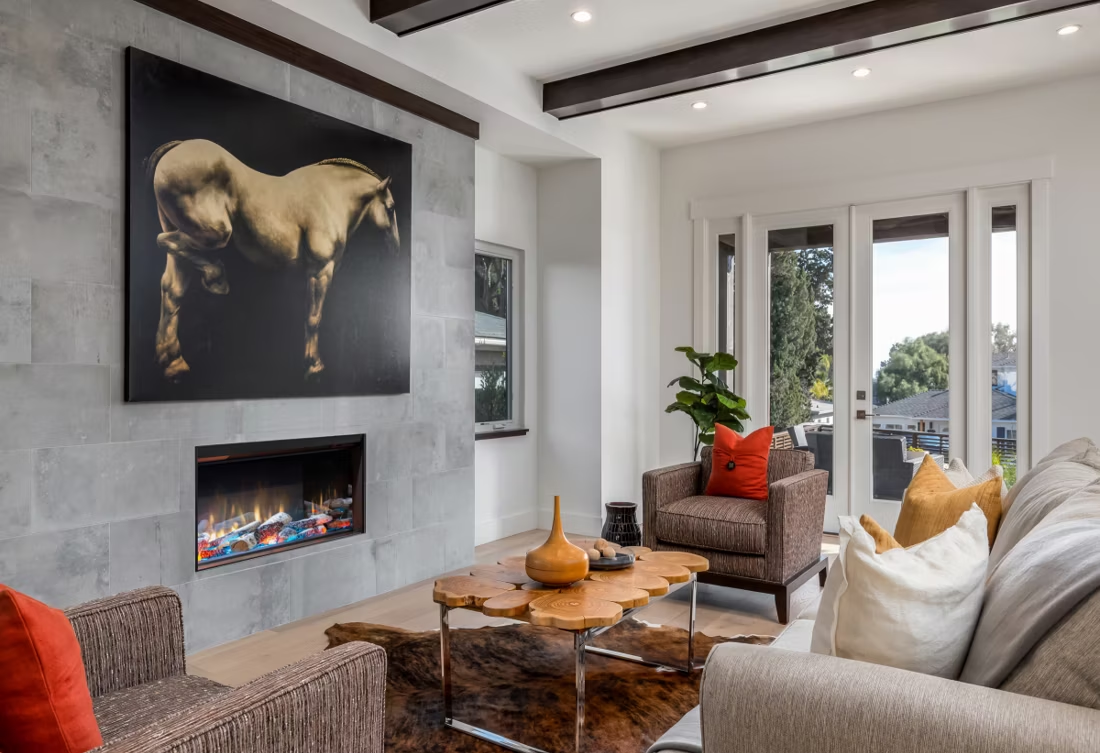
Kennewick's PUD electric rates are among the lowest in the country, and its Columbia Basin winters are milder than much of the inland Northwest—a combination that makes electric fireplaces an easy, smoke-free way to add heat and ambiance.
Every Project Starts From One of These Five Situations
Cheap hydropower changes the math on electric heat.
Kennewick sits at just 556 feet elevation in the Columbia Basin, part of the Tri-Cities where the Columbia and Snake Rivers meet. Winters here are comparatively mild for the region—average lows around 29°F and a winter heating load that's less than two-thirds that of a genuinely cold climate like Fargo, ND. That milder profile means most Kennewick homeowners aren't choosing a heat source to survive sub-zero nights; they're choosing one for supplemental warmth, ambiance, and zone heating in a specific room.
What makes electric fireplaces a particularly strong fit here is the local utility. PUD No. 1 of Benton County sells residential power at roughly $0.088 per kWh—thanks to inexpensive hydropower from the Columbia and Snake River dam system—well below the national average and among the lowest residential rates in the country. Running a 1,500-watt electric insert or wall unit for an evening costs pennies. Add in Kennewick's winter inversion days and the wildfire smoke that settles into the Tri-Cities most summers, and it's easy to see the appeal of a heat source that produces zero emissions, needs no chimney or venting, and adds nothing to an already smoke-heavy air quality picture.
Three steps. No salesperson until you're ready.
Tell us about your project
Your zip code, your situation, and the fuel you're leaning toward—or let the answers point you to one.
See what's actually available
The brands dealers within 100 miles genuinely carry—real options, never a catalog mirage.
Get your dealer & Project Guide
A trusted local dealer, plus the free Project Guide & Parts List that names every component of the job.
Frequently Asked Questions
How much does an electric fireplace installation cost in Kennewick?
A plug-in electric insert or wall-mounted unit set into an existing opening typically runs $300 to $1,000 installed in Kennewick. A built-in electric fireplace that requires new framing, a dedicated 120V or 240V circuit, and finish carpentry usually runs $1,500 to $3,000 or more, depending on the unit and how much electrical work is involved. Because Benton County PUD's rates are so low, the ongoing electric bill is rarely the deciding factor—the unit itself and the labor to frame and wire it are the bigger cost drivers, and a local dealer can quote both together.
What size electric fireplace do I need for my Kennewick home?
Most electric fireplaces are sized for zone heating rather than whole-home output—a realistic expectation given Kennewick's relatively mild winter heating load. A 1,500-watt insert or wall unit will comfortably supplement a living room, bedroom, or bonus room of 300 to 400 square feet. Larger great rooms or open-concept layouts sometimes call for a wider unit or two smaller units placed strategically. Since electric heat doesn't need to carry the whole house through a hard winter here the way it might in a colder climate, sizing is more about room comfort and visual scale than raw BTU output—a local dealer can help match unit width to your fireplace opening or wall space.
Who installs electric fireplaces in Kennewick?
Plug-in inserts require no licensed trade at all—anyone can set one into an existing fireplace opening. Built-in units that need a new dedicated circuit require a licensed electrician, and most local hearth dealers either employ one or coordinate directly with one as part of the installation. Working with a dealer who handles both the unit and the electrical hookup means you're not left coordinating separate trades or troubleshooting a mismatched circuit after the fact.
What's the difference between an electric fireplace and a space heater?
A space heater is a portable appliance built purely for heat output, with an exposed heating element and no design intent beyond warmth. An electric fireplace is built to look like a real fire—most use LED or holographic flame technology behind glass, are UL-listed for permanent or semi-permanent installation, and are designed as a room's visual focal point with heat as a secondary feature. Many electric fireplaces let you run the flame effect with the heater off, which matters in Kennewick's shoulder seasons when you want ambiance without added warmth.
Do I need a permit to install an electric fireplace in Kennewick?
A simple plug-in insert generally doesn't require a permit since it just plugs into an existing outlet. If your installation involves adding a new dedicated circuit or running new wiring—common with built-in electric fireplaces—that electrical work typically requires a permit through the City of Kennewick or Benton County, pulled by the licensed electrician doing the work. Most hearth dealers handle this coordination as part of the installation quote, so it's rarely something the homeowner has to manage directly.
What's the best type of electric fireplace for Kennewick's climate?
Given Kennewick's relatively mild winters, most homeowners here do well with a wall-mounted or insert-style electric fireplace used for zone heating in a living room, bedroom, or den rather than as a whole-house heat source. Because the goal is usually supplemental warmth and ambiance rather than surviving deep cold, mid-size 1,400 to 1,500-watt units cover most rooms comfortably. For homes without an existing fireplace opening, a linear wall-mount unit is a popular choice for new construction and remodels around the Tri-Cities.
What does it actually cost to run an electric fireplace in Kennewick?
At Benton County PUD's residential rate of roughly $0.088 per kWh, a typical 1,500-watt electric fireplace costs about 13 cents an hour to run on high heat—under $1 for a full evening of use. Even running it several hours a day through a Kennewick winter adds up to a modest amount on your bill, especially compared to utilities in higher-rate parts of the country. That low operating cost is one of the main reasons electric fireplaces have become popular here for supplemental heat in bedrooms and living areas.
Electric vs. gas fireplace—which is right for my Kennewick home?
Gas fireplaces deliver more real heat output and work during a power outage with the right ignition system, but they require a gas line, venting, and a higher upfront installation cost. Electric fireplaces install faster, need no venting or gas line, and cost very little to run on Benton County PUD's low rates—but they won't function without power, and their heat output is modest compared to gas. For a Kennewick home that already has central heat and just wants ambiance plus light supplemental warmth in one or two rooms, electric is often the simpler and cheaper answer. For homes wanting a fireplace to double as meaningful backup heat, gas is worth a closer look.
Electric vs. wood or pellet—which makes more sense in Kennewick?
Wood and pellet stoves put out real, standalone heat and can serve as primary heat during an outage, but they mean sourcing fuel—cutting permits through the Umatilla National Forest run about $20 per four cords in the May-to-October season, and both wood and pellet burning add smoke to a Tri-Cities airshed that already deals with winter inversions and summer wildfire haze. Electric fireplaces sidestep all of that: no fuel to buy or store, no chimney to maintain, no emissions added to already smoky air. For homeowners in Kennewick who want the look and feel of a fire without the smoke or fuel logistics, electric is usually the easier fit; for those who want serious heat output or off-grid reliability, wood or pellet still has a place.
Can I put a TV above my fireplace?
Yes—with an asterisk. Fireplaces are hot and TVs don't like heat. Either put a mantel between them to deflect rising warmth, or choose a fireplace with heat-management technology that creates a cool zone on the wall above—the wall stays around 125 degrees, barely warm, while the room still gets full heat. If you like clean lines and don't want a mantel, heat management is the answer.
Does an electric fireplace need a vent or chimney?
No—that's its superpower. An electric fireplace needs a wall and an outlet, period. No vent pipe, no gas line, no clearances to design around, which is why it works in bedrooms, offices, apartments, and walls where venting a gas or wood unit would be impractical or impossible. Installation is typically the simplest and least expensive of any fireplace type.
What is an in-home preview and do I need one?
It's a visit where a hearth professional measures your space, confirms the model you picked actually works in your home, and walks the specs—framing, gas line, venting, finish work—before anything is ordered. Some details you just can't know until you see the house. Never make a down payment without one; it's the single most-skipped step that burns buyers.
Can I install a fireplace myself?
If you're putting a fire in your house on purpose, it's best to work with an expert. Unless you're genuinely experienced in framing, gas line, vent pipe, and the national code on clearances to combustibles, have a professional do it—and ideally the same company that sells you the fireplace, so warranty, service, and liability all live under one roof.
Nearby Dealers
Hearth shops serving Kennewick and the surrounding area. Every listing shows whether it is a WhyFire partner, a dealer we have verified as authorized for the brands we recommend, or a local business carrying hearth products. No manufacturer pays for placement. How we verify dealers →
Bruce Heating & Ac
Apollo Heating & Air Conditioning
Legacy Pool & Spa LLC
Dayco Heating
Campbell & Company, Inc.
Fire & Water
Total Energy Mgmnt
Electric Service in Kennewick
An electric fireplace's heater draws about 1,500 watts—pennies per hour at local rates.
Pud No 1 Of Benton County
Find your electric fireplace in Kennewick.
Tell us a bit about your home and we'll match you with a trusted local dealer and send over a free Project Guide & Parts List—sized for your space, with the exact parts and a plan built around Kennewick's low electric rates.
Find Your Fireplace →