
Find the right fireplace for every home in Winchester County.
Wood, gas, pellet, and electric fireplace resources for Winchester and the surrounding Shenandoah Valley communities—from Stephens City to Berryville. Find the right unit and connect with a trusted local hearth retailer near you.
Every Project Starts From One of These Five Situations
Real hardwood heat in the Shenandoah Valley.
Winchester sits in the northern Shenandoah Valley, ringed by orchard country and the low ridges of the Blue Ridge and Alleghenies. Winters here are real but not extreme—average lows hover around 24°F and the county's overall winter heating load lands closer to Louisville or Richmond than to the deep-cold winters of Burlington, VT or Buffalo, NY. Firewood in this region runs almost entirely on oak, hickory, and maple—dense hardwoods that split clean, season well over a summer, and burn long and hot once cured. Unlike parts of the West, there's no winter inversion or wildfire-smoke non-attainment status here—no curtailment days, no mandatory burn bans—just standard seasonal wood heat the way it's been done in the valley for generations.
This hub rolls up every hearth resource across Winchester and the surrounding communities—Stephens City, Middletown, Berryville, Gore, White Post, and the rural stretches toward Round Hill and Star Tannery. Pick your fuel below to drill into local dealer listings, installed costs, and recommended units for your specific project. Whether you're heating a farmhouse outside the orchards or a rowhouse in Old Town Winchester, this is the starting point.
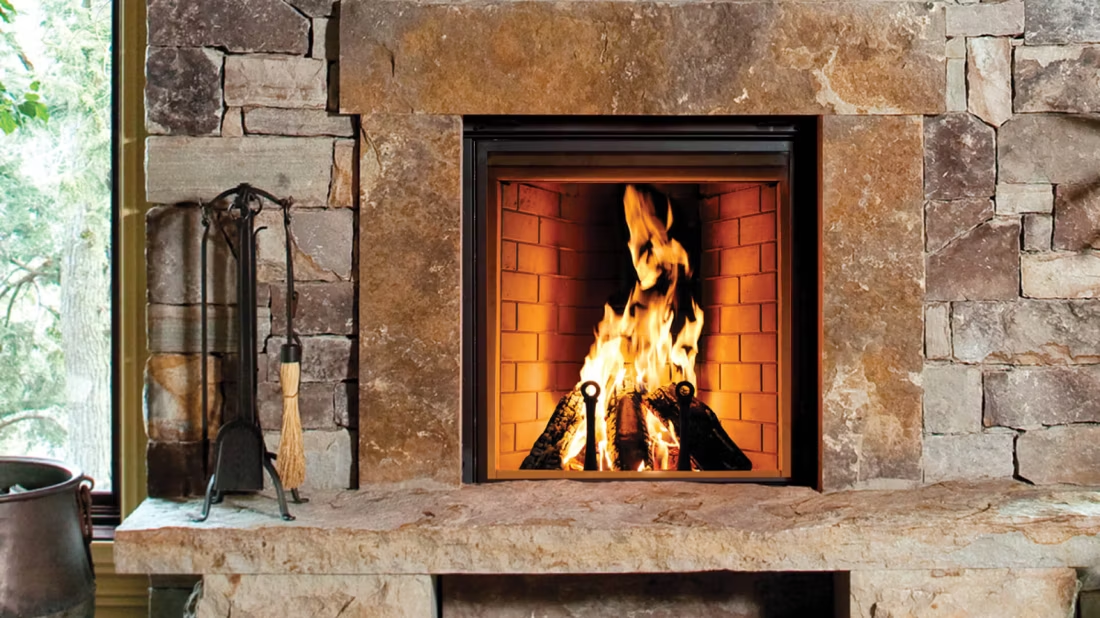
Four fuels. One honest answer for Winchester County.
Three steps. No salesperson until you're ready.
Tell us about your project
Your zip code, your situation, and the fuel you're leaning toward—or let the answers point you to one.
See what's actually available
The brands dealers within 100 miles genuinely carry—real options, never a catalog mirage.
Get your dealer & Project Guide
A trusted local dealer, plus the free Project Guide & Parts List that names every component of the job.
Frequently Asked Questions
Which fuel works best for a home in Winchester County?
It depends on the home and how you want to live with it. Wood remains a strong fit here—oak, hickory, and maple are the dominant local hardwoods, split and seasoned throughout the valley, and they burn long and hot once cured six to twelve months. Gas is the convenience pick for homes with local gas service in and around Winchester's town limits—instant heat with no wood handling. Pellet is a solid middle ground, and regional supply is good—Energex, Hamer Pellet Fuel, and Greene Team Pellet Fuel are all distributed in this part of Virginia. Electric works well as supplemental heat for bedrooms, apartments, or ambiance, but with a winter heating load on par with Louisville or Richmond, it's rarely the sole heat source in an older valley farmhouse. Many homes here run a primary wood or gas unit with an electric insert somewhere secondary.
Do I need a permit to install a fireplace in Winchester County?
In most cases, yes. New wood stoves, wood inserts, gas fireplaces, gas inserts, gas stoves, and pellet stoves typically require a building permit through the local building department—the City of Winchester or Frederick County, depending on where the home sits. Gas installations usually need a separate gas line permit and a licensed gas-fitter for the connection work. Electric fireplaces generally don't require a permit unless it's a built-in unit that involves new wiring or a dedicated circuit. New wood-burning appliances also need to meet current EPA 2020 NSPS emissions standards regardless of local air quality status. Most hearth retailers in the area handle the permitting as part of the installation, so it's rarely something homeowners have to navigate alone.
Are there any wood-burning restrictions in Winchester County?
No—Winchester and the surrounding valley are not a non-attainment area, and there's no winter inversion pattern or wildfire-smoke advisory system like you'd find in parts of the West. There are no mandatory burn bans or curtailment days tied to air quality here. That said, new wood stoves and inserts still need to meet EPA 2020 NSPS emissions standards, and properly seasoned hardwood—oak, hickory, and maple typically need six months to a year of drying time—burns cleaner and more efficiently than green wood regardless of local regulation. It's good practice, not a compliance requirement.
Can one local retailer handle wood, gas, pellet, and electric?
Some can. Multi-fuel dealers like Shenandoah Hearth & Home and Old Town Fireplace Co typically carry wood, gas, and pellet units with working showroom displays, plus a selection of electric inserts—good options if you're still comparing fuel types. Smaller shops, like Apple Valley Stove Shop out toward the orchard country, tend to specialize more narrowly, often focusing on wood and pellet with less depth on gas or electric. If a supplier only sells firewood or bagged pellets, they're a fuel source, not a hearth retailer for installation. Check each dealer's fuel coverage before you call—it saves a wasted trip if you already know which fuel you're leaning toward.
How does hearth service work in the rural parts of the county?
Most chimney sweeps, gas techs, and pellet service techs serving this area are based in or near Winchester and travel out to the surrounding rural communities—Gore, Star Tannery, White Post, and the stretch toward Round Hill. Expect a modest travel fee for calls outside the immediate Winchester area, often in the $40-$75 range depending on distance. Scheduling annual service in late summer or early fall (August through October), before the first cold snap, is easier than trying to book an emergency mid-winter appointment. If you're on a rural property, it's worth keeping basic backup supplies on hand—spare igniter batteries for gas units, dry kindling for wood—in case a service visit takes a few days to arrange during peak season.
What's the typical installed cost range across fuel types in Winchester County?
Costs vary by fuel and by how much existing infrastructure a home already has. Wood stove or insert installation generally runs $4,000-$8,500, with full masonry chimney work on new construction pushing toward $12,000. Gas fireplace, insert, or stove installation typically runs $4,000-$10,000, with the wide range driven mostly by whether a gas line already reaches the install location. Pellet stove or insert installation usually falls in the $4,000-$7,000 range. Electric fireplace costs are much lower—$200-$3,000 for the unit itself, plus $400-$1,200 in labor for anything beyond a simple plug-and-play placement. The county + fuel pages above break these numbers down further with local retailer pricing specifics.
Does a fireplace add value to my home?
On average, a fireplace adds back to the home about the same amount you spent installing it. Add the monthly savings from heating the rooms you actually use instead of the whole house—often hundreds of dollars a year—and the value case is strong before you even count what a fire does for how your family uses the room.
What is an in-home preview and do I need one?
It's a visit where a hearth professional measures your space, confirms the model you picked actually works in your home, and walks the specs—framing, gas line, venting, finish work—before anything is ordered. Some details you just can't know until you see the house. Never make a down payment without one; it's the single most-skipped step that burns buyers.
Can a fireplace actually lower my heating bill?
Yes—by creating a comfort zone. A furnace heats every square foot of the house just to warm the one room you're in; a gas fireplace on low burns roughly a sixth of the gas a typical furnace does. Set the furnace around 55–60 degrees as a baseline, then heat the rooms your family actually uses. Families who heat this way commonly save $20–$60 a month.
Can I install a fireplace myself?
If you're putting a fire in your house on purpose, it's best to work with an expert. Unless you're genuinely experienced in framing, gas line, vent pipe, and the national code on clearances to combustibles, have a professional do it—and ideally the same company that sells you the fireplace, so warranty, service, and liability all live under one roof.
Stove and Fireplace Dealers in Winchester County
Listings include WhyFire partner dealers, dealers we have verified as authorized for the brands we recommend, and established local businesses that carry hearth products. Every listing shows which one it is. The ones marked Preferred run on WhyFire's software, so they can show you real pricing and book your appointment right here. No manufacturer pays for placement. How we verify dealers →
Prouty's Chimney Sweep
Dmv Chimneys & Masonry Repair
Miller Ace Hardware
Blossman Gas And Appliance
Holtzman Propane
Amazing Flame
Roach Energy
A&a Pools
Find your fireplace in Winchester County.
Tell us about your project and we'll match you with a trusted local hearth retailer and send over a free Project Guide & Parts List—the exact parts, vent kit included, and the dealer we'd recommend for your home.
Find Your Fireplace →