
Find your fireplace or stove in Suffolk, Virginia.
Wood, gas, pellet, and electric fireplace resources for every neighborhood in Suffolk—from the waterfront near downtown to the farmland around Whaleyville and Holland. Find the right unit for a Tidewater winter and connect with a trusted local hearth retailer.
Every Project Starts From One of These Five Situations
Mild Tidewater winters, real heating needs in Suffolk, Virginia.
Suffolk is the largest city by land area in Virginia—over 430 square miles stretching from the Nansemond River waterfront to the edge of the Great Dismal Swamp. Winters here are mild by national standards: average lows sit around 31°F and the city has less than half the winter heating load of Burlington, Vermont in a typical winter. The heating season here runs a modest November-through-March stretch rather than the six-month grind you'd find further north. That said, the hardwood forests around the Dismal Swamp Refuge and Suffolk's rural boroughs still supply plenty of oak, hickory, and maple for the wood stoves and fireplace inserts that remain popular in Chuckatuck, Holland, and the surrounding farmland.
What you'll find on this hub: hearth retailers, service technicians, and fuel suppliers serving every part of Suffolk—from the downtown historic district to Driver, Sleepy Hole, and Nansemond. Pick your fuel below to drill into specifics—local dealers, installation costs, recommended units, and the resources that match your project. Whether you're outfitting a new build near Harbour View or adding a wood insert to a farmhouse off Kenyon Road, this is the starting point.
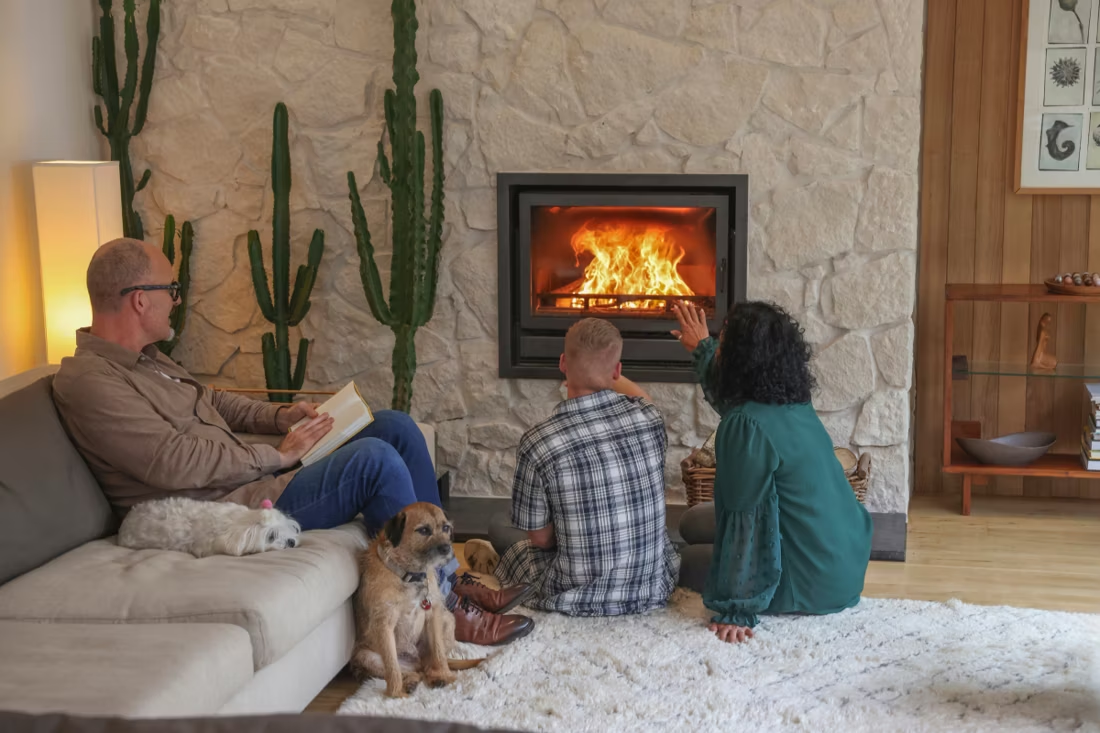
Four fuels. One honest answer for Suffolk County.
Three steps. No salesperson until you're ready.
Tell us about your project
Your zip code, your situation, and the fuel you're leaning toward—or let the answers point you to one.
See what's actually available
The brands dealers within 100 miles genuinely carry—real options, never a catalog mirage.
Get your dealer & Project Guide
A trusted local dealer, plus the free Project Guide & Parts List that names every component of the job.
Frequently Asked Questions
Which fuel works best for a Suffolk, Virginia home?
Suffolk's mild Tidewater climate—with winter lows averaging 31°F and a heating load less than half that of places like Burlington, Vermont—means you don't need the heavy-duty, all-night catalytic setups that homes in places like Bismarck or International Falls rely on. Gas fireplaces and inserts are a popular choice here because they deliver instant, low-maintenance heat on the handful of genuinely cold nights each winter, and many Suffolk neighborhoods have natural gas service through Virginia Natural Gas. Electric fireplaces do real work in this climate too—supplemental heat and ambiance without any venting, which suits condos and newer construction around Harbour View. Wood stoves and inserts remain common in the rural boroughs—Chuckatuck, Holland, Whaleyville—where oak and hickory are cut locally and a wood stove doubles as backup heat during storm-related power outages. Pellet stoves split the difference, with regional supply from Energex and Hamer Pellet Fuel keeping fuel easy to source. Most homeowners here pick based on convenience and backup-power needs rather than survival heat.
Do I need a permit to install a fireplace in Suffolk?
Yes, in most cases. New wood stoves, wood inserts, gas fireplaces, gas inserts, gas stoves, and pellet stoves all require a building permit through the City of Suffolk's Permits and Inspections division, and any wood-burning appliance sold or newly installed needs to meet EPA 2020 NSPS emissions standards. Gas installations also require a separate gas line permit, typically pulled by a licensed gas fitter as part of the job. Electric fireplaces are usually exempt unless the installation involves new wiring or a dedicated circuit for a built-in unit—that triggers an electrical permit. Most local hearth retailers handle the permitting paperwork as part of the installation, so you generally don't have to file it yourself.
Are there air quality restrictions on wood burning in Suffolk?
No—Suffolk doesn't have the winter inversion or non-attainment issues you'll find in bowl-shaped basins out west, so there are no burn curtailment days or advisory alerts tied to wood smoke here. That said, as Suffolk's population near 95,000 continues to grow and suburban neighborhoods like Harbour View fill in next to older rural lots, an EPA-certified stove is still worth the investment—it burns oak and hickory more cleanly and cuts down on the smoke drift that can become a neighbor issue as lots get closer together. Virginia's open-burning rules govern yard debris and outdoor fires, not indoor wood stoves, so there's no separate state restriction to worry about for an indoor installation.
Can one local hearth retailer handle all four fuel types?
Many Hampton Roads-area retailers that serve Suffolk carry three or four fuel types under one roof. A shop like Tidewater Hearth & Patio or Suffolk Fireplace & Stove will typically show working displays of wood, gas, and electric units side by side, with pellet stoves available by special order given the more modest year-round demand for pellet heat in this climate. Smaller specialty shops sometimes focus on just one or two fuels—a chimney-and-wood specialist versus a gas-fireplace showroom—so it's worth checking the fuel coverage listed on each retailer's profile before you drive out. If you're still deciding between fuels, a multi-fuel dealer is the easiest way to compare wood, gas, pellet, and electric side by side.
How does service and installation work across a city as spread out as Suffolk?
Suffolk's 430 square miles means a lot of variation in how far a technician has to travel—a downtown condo near the Nansemond River waterfront is a very different service call than a farmhouse out past Whaleyville. Most service technicians and installers are based in Suffolk, Chesapeake, or Norfolk and cover the whole city, but rural properties near Holland or Corapeake can carry a modest travel fee, usually $40–$75. Because the heating season here is shorter than in colder states, scheduling is generally more flexible—early fall (September–October) is still the easiest window to book before the first cold snap fills up service calendars.
What's the typical cost range for fireplace installation across all fuel types in Suffolk?
Costs run a bit lower here than in colder-climate markets since Suffolk installs typically don't require oversized flue systems or extreme cold-rated components. Wood stove or insert installation: roughly $3,800–$8,000 for a typical retrofit into an existing masonry chimney, more for new full chimney construction. Gas fireplace, insert, or stove: about $4,000–$9,500, with the lower end applying when an existing gas line from Virginia Natural Gas is already in place. Pellet stove or insert: around $4,000–$6,500 for a standard install. Electric fireplace: $200–$2,500 for the unit itself, plus $300–$1,000 in labor for anything beyond a plug-in wall unit, such as a built-in with new wiring. For details tied to your specific fuel, see the fuel pages linked above.
Can I install a fireplace myself?
If you're putting a fire in your house on purpose, it's best to work with an expert. Unless you're genuinely experienced in framing, gas line, vent pipe, and the national code on clearances to combustibles, have a professional do it—and ideally the same company that sells you the fireplace, so warranty, service, and liability all live under one roof.
What is an in-home preview and do I need one?
It's a visit where a hearth professional measures your space, confirms the model you picked actually works in your home, and walks the specs—framing, gas line, venting, finish work—before anything is ordered. Some details you just can't know until you see the house. Never make a down payment without one; it's the single most-skipped step that burns buyers.
How much should I budget for a fireplace?
For an average home—covering the fireplace, the vent pipe, and basic installation—a budget between $3,900 and $5,500 gives you a lot of options across wood, gas, and pellet. By the time you add finish work, gas line, and electrical, the average complete installation lands between $5,000 and $12,000 all-in. In a remodel or new build, a good rule is to put about 2.5% of the total project cost toward the fireplace.
Can a fireplace actually lower my heating bill?
Yes—by creating a comfort zone. A furnace heats every square foot of the house just to warm the one room you're in; a gas fireplace on low burns roughly a sixth of the gas a typical furnace does. Set the furnace around 55–60 degrees as a baseline, then heat the rooms your family actually uses. Families who heat this way commonly save $20–$60 a month.
Stove and Fireplace Dealers in Suffolk County
Listings include WhyFire partner dealers, dealers we have verified as authorized for the brands we recommend, and established local businesses that carry hearth products. Every listing shows which one it is. The ones marked Preferred run on WhyFire's software, so they can show you real pricing and book your appointment right here. No manufacturer pays for placement. How we verify dealers →
Taylor's Do It Center
Ray Johnson's Fireplace Shop
Fireside Hearth & Home - Newport News
Albemarle Chimney Sweep & Duct Cleaning
Coastal Chimney & Contracting, Corp.
Jernigan Oil & Gas- Ahoskie
Taylor's Fire Works
Solid Structures
Find your fireplace in Suffolk, Virginia.
Tell us about your project and we'll match you with a trusted local dealer and send over a free Project Guide & Parts List—the exact components, including the vent kit, and the local pro who can install it right.
Find Your Fireplace →