
Find the Right Fireplace for Your Spotsylvania County Home.
Wood, gas, pellet, and electric fireplace resources for every corner of Spotsylvania County—from the Courthouse area to Massaponax, Thornburg, and Lake Anna. Find the right unit and connect with a trusted local hearth retailer.
Every Project Starts From One of These Five Situations
Moderate Piedmont winters, four solid fuel options in Spotsylvania County.
Spotsylvania County sits in Virginia's mixed-humid Piedmont, Climate Zone 4A, with average winter lows around 25°F and a fairly short, mild heating season—a fraction of the winter heating load a place like Burlington, VT racks up most years. That's mild enough that no single fuel dominates by necessity; it's genuinely a choice. Oak, hickory, and maple grow throughout the county's woodlots and are the backbone of local wood-heat culture—dense hardwoods that burn hot and hold coals overnight in an insert or freestanding stove. There's no non-attainment designation or winter inversion pattern here, so wood burning isn't subject to the seasonal advisories or curtailment periods you'd find in a smoke-trapped basin—EPA 2020 NSPS certification still applies to new stove installs, but day-to-day burning is a matter of courtesy to neighbors, not regulation.
This hub rolls up hearth retailers, service technicians, and fuel suppliers across the whole county—from the Courthouse village and Massaponax's growing commercial corridor down to Thornburg, Partlow, and the Lake Anna waterfront communities. Pick a fuel below to get into specifics: local dealers, realistic installation costs, and recommended units for your home's situation. Whether you're heating a rural woodlot property with a cast-iron stove or adding a gas insert to a subdivision fireplace near Massaponax, this is the starting point.
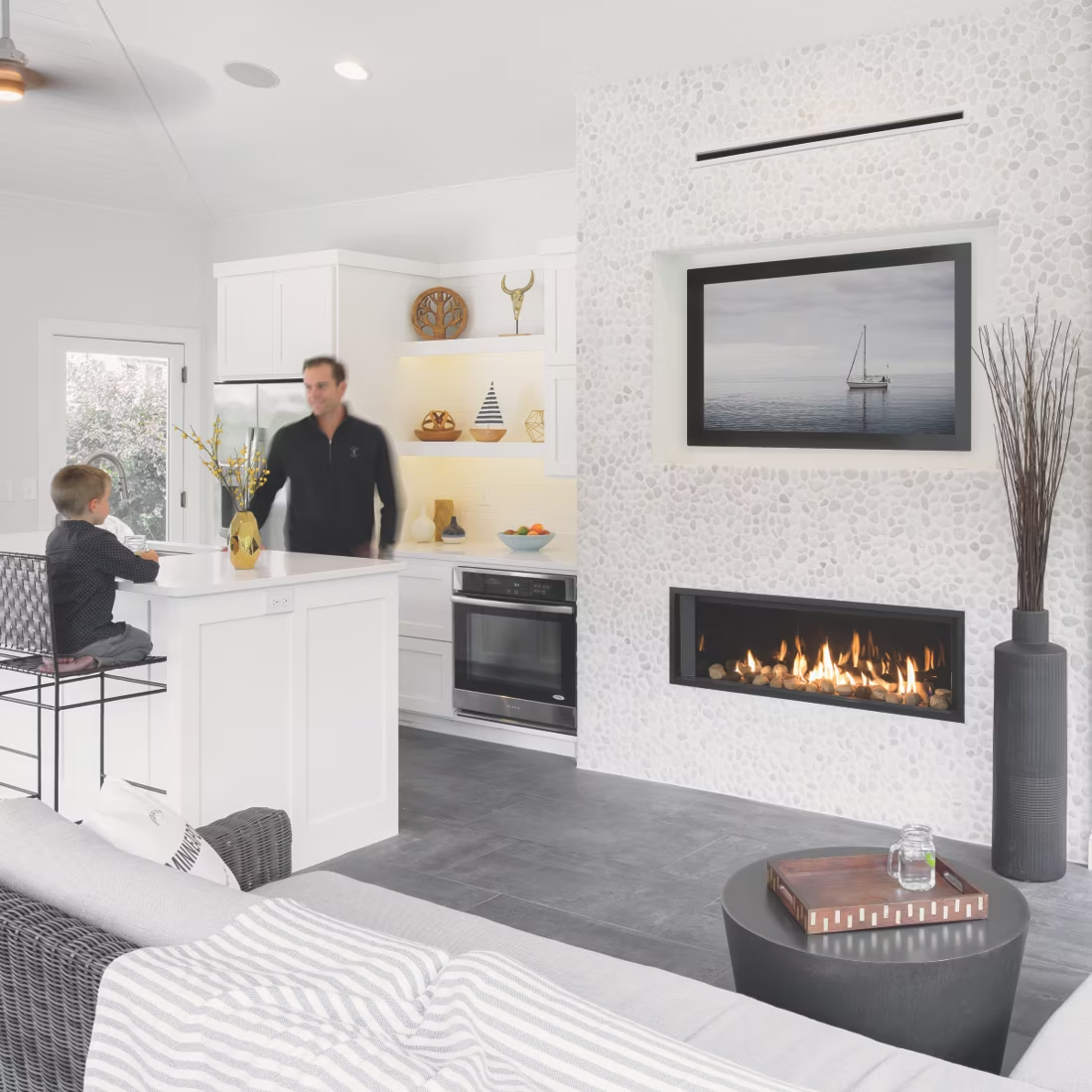
Four fuels. One honest answer for Spotsylvania County.
Wood
81 models available near Spotsylvania County.
Find your wood stove →Gas
365 models available near Spotsylvania County.
Find your gas fireplace →Pellet
See what's available near Spotsylvania County.
Find your pellet stove →Electric
11 models available near Spotsylvania County.
Find your electric fireplace →Three steps. No salesperson until you're ready.
Tell us about your project
Your zip code, your situation, and the fuel you're leaning toward—or let the answers point you to one.
See what's actually available
The brands dealers within 100 miles genuinely carry—real options, never a catalog mirage.
Get your dealer & Project Guide
A trusted local dealer, plus the free Project Guide & Parts List that names every component of the job.
Frequently Asked Questions
Which fuel works best in Spotsylvania County?
It depends on your home and priorities, but the mild Piedmont climate here (a fairly short, mild heating season, winter lows averaging 25°F) means every fuel is genuinely on the table—this isn't a place where one fuel wins by default the way it might in a colder region like Burlington, VT. Wood is well-supported by the county's own oak, hickory, and maple woodlots—dense hardwoods that burn hot and hold overnight coals, and wood keeps working when I-95-corridor ice storms knock out power. Gas is the convenience pick, especially propane for homes outside natural gas service areas—instant heat, no wood handling. Pellet is a strong middle ground here, with regional brands like Energex, Hamer Pellet Fuel, and Greene Team Pellet Fuel reasonably accessible through Mid-Atlantic distribution. Electric works well as supplemental heat for bedrooms, sunrooms, or ambiance, and the mild winters mean it can carry more of the load here than it could in a harsher climate. Many Spotsylvania homes end up running two fuels—a wood or pellet stove as the primary heater in the main living space, gas or electric for secondary rooms.
Do I need a permit to install a fireplace in Spotsylvania County?
In most cases, yes. New wood stoves, wood inserts, gas fireplaces, gas inserts, gas stoves, and pellet stoves generally require a building permit through Spotsylvania County's building and codes office, and gas installations typically need a separate gas-line permit pulled by a licensed gas fitter. Wood-burning appliances need to meet current EPA 2020 NSPS emissions standards to pass inspection. Electric fireplaces usually skip the permit process unless you're doing a built-in installation that involves new wiring or a dedicated circuit—then an electrical permit applies. Most local hearth retailers who install in the county handle this paperwork as part of the job, so homeowners rarely have to navigate it solo.
Are there air quality restrictions on wood burning in Spotsylvania County?
No. Spotsylvania County doesn't sit in a non-attainment area and doesn't experience the winter temperature inversions that trigger burn advisories in basin or valley locations elsewhere in the country. There's no seasonal curtailment schedule to check before lighting a fire. The one requirement that still applies is federal: new wood stove installations need to meet EPA 2020 NSPS certification, which is mostly a matter of buying a modern, EPA-listed stove rather than an old uncertified unit. Beyond that, wood burning in the county is largely a matter of good chimney maintenance and being considerate of close neighbors, not regulatory compliance.
Can one local hearth retailer handle all four fuel types?
Some dealers serving Spotsylvania County carry wood, gas, pellet, and electric all under one roof, which is convenient if you're still comparing fuels and want to see working displays side by side. Others specialize—some focus mainly on wood and pellet stoves given the county's strong hardwood supply, while others lean toward gas fireplaces and inserts for newer subdivisions. The fuel-specific pages on this hub note which local retailers carry each fuel type, so if you already know you want, say, a pellet insert, you can go straight to dealers who stock and service that equipment rather than starting from scratch.
How does service work in the county's more rural areas?
Most service technicians working in Spotsylvania County are based near the Fredericksburg corridor and travel out to Thornburg, Partlow, Chancellorsville, and the Lake Anna waterfront communities for appointments. Expect a modest trip fee for calls further from the main corridor, and know that pre-season scheduling (late summer through early fall) is easier to book than an emergency call once cold weather and ice storms hit and technicians get backed up. If you're on a rural property with a wood stove as your main heat source, an annual chimney sweep before the season starts is the single best way to avoid a mid-winter service call.
What's the typical cost range for fireplace installation across all fuel types in Spotsylvania County?
Costs vary by fuel and by how much venting or gas-line work is involved. Wood stove or insert installation: roughly $3,800–$8,000 for a typical retrofit into an existing masonry chimney, more if new construction requires a full chimney build. Gas fireplace, insert, or stove: roughly $4,000–$10,000, with propane conversions often landing lower than jobs requiring new gas-line runs. Pellet stove or insert: roughly $4,000–$7,000 for a standard install. Electric fireplace: $200–$3,000 for the unit itself, plus $300–$1,000 in labor for anything beyond a plug-and-play unit, such as a built-in with new wiring. For details tied to specific local retailer pricing, see the county + fuel pages above.
Does a fireplace add value to my home?
On average, a fireplace adds back to the home about the same amount you spent installing it. Add the monthly savings from heating the rooms you actually use instead of the whole house—often hundreds of dollars a year—and the value case is strong before you even count what a fire does for how your family uses the room.
Can a fireplace actually lower my heating bill?
Yes—by creating a comfort zone. A furnace heats every square foot of the house just to warm the one room you're in; a gas fireplace on low burns roughly a sixth of the gas a typical furnace does. Set the furnace around 55–60 degrees as a baseline, then heat the rooms your family actually uses. Families who heat this way commonly save $20–$60 a month.
Wood, gas, pellet, or electric—how do I choose?
Match the fuel to your life, not the other way around. Wood: lowest fuel cost and total power-outage independence, but you're hauling and stacking. Gas: press a button, set a thermostat, no maintenance to speak of. Pellet: wood economics with automatic feeding, in exchange for weekly cleaning and a need for electricity. Electric: plugs in anywhere with honest supplemental heat. Nobody regrets the fuel that fits how they actually live.
Should the dealer who sells my fireplace also install it?
Ideally, yes. A fireplace project involves vent pipe, gas line, electrical, and often tile or stone. Hire three or four separate trades and you own the liability and the game of telephone between them. One company selling and installing means one accountable party, start to finish—ask about factory training, on-time completion records, and what happens if an inspection fails.
Stove and Fireplace Dealers in Spotsylvania County
Listings include WhyFire partner dealers, dealers we have verified as authorized for the brands we recommend, and established local businesses that carry hearth products. Every listing shows which one it is. The ones marked Preferred run on WhyFire's software, so they can show you real pricing and book your appointment right here. No manufacturer pays for placement. How we verify dealers →
Glover Enterprises
Southern States Cooperative
Gas Fireplace Service Of Stafford
Get Matched With a Local Dealer in Spotsylvania County.
Tell us about your fuel and your home, and we'll match you with a trusted local dealer and send you a free Project Guide & Parts List—the exact parts, including the vent kit, and a recommended installer for your Spotsylvania County project.
Find Your Fireplace →