
Warm, Efficient Heat for Every Corner of Southampton County.
Wood, gas, pellet, and electric fireplace resources for every town in Southampton County—from Courtland and Franklin to Boykins, Branchville, Capron, Ivor, and Newsoms. Find the right unit and get matched with a trusted local hearth dealer.
Every Project Starts From One of These Five Situations
Peanut country warmth: heating homes across Southampton County, Virginia.
Southampton County sits in Virginia's southeastern coastal plain, a landscape of peanut and cotton farmland threaded by the Blackwater River. Winters here are mild by national standards—climate zone 4A, an average winter low near 29°F, and roughly 3,536 heating degree days a season, a fraction of what a place like Fargo, ND or Duluth, MN sees. The heating season generally runs from November into March, and it rarely demands the round-the-clock, single-digit-night performance that catalytic stoves are built for further north. Even so, wood heat has deep roots in this county's farmhouses and hunting camps—oak, hickory, and maple from local hardwood stands are the traditional firewood species, prized for a hot, long-burning coal bed once seasoned.
What you'll find on this hub: hearth retailers, service technicians, and fuel suppliers serving every community in the county—from the county seat at Courtland out to Boykins and Branchville near the North Carolina line, north to Ivor and Sedley, and east toward Newsoms and Capron. Pick your fuel below to drill into local dealers, typical installation costs, and the units that actually fit a rural Southampton County home, whether that's a farmhouse on well water and propane or a newer build near Franklin with natural gas service.
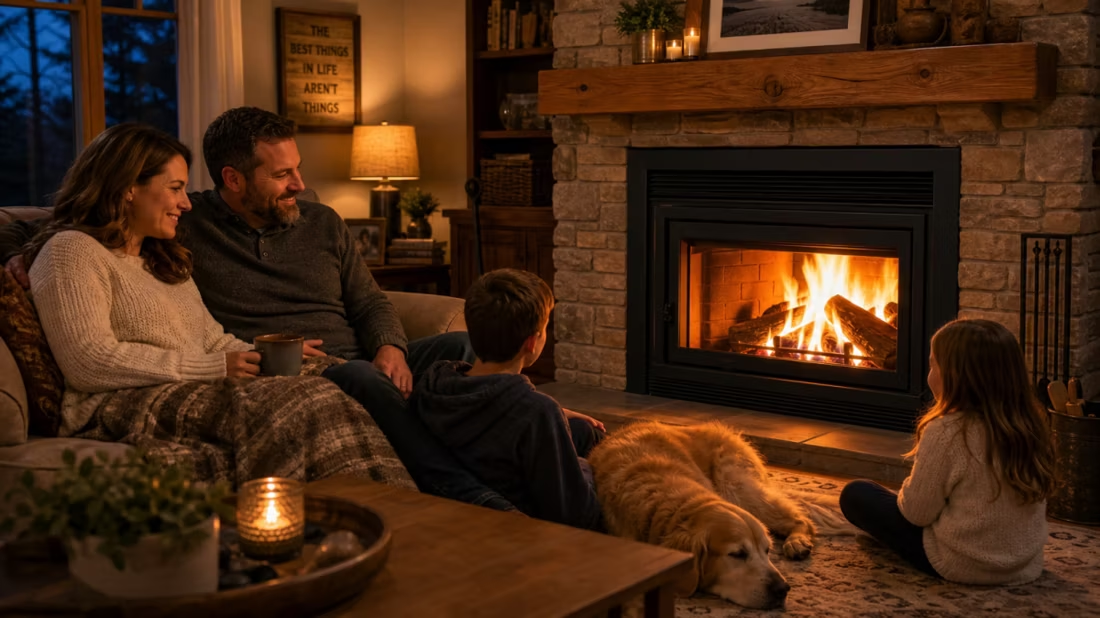
Four fuels. One honest answer for Southampton County.
Wood
62 models available near Southampton County.
Find your wood stove →Gas
358 models available near Southampton County.
Find your gas fireplace →Pellet
See what's available near Southampton County.
Find your pellet stove →Electric
11 models available near Southampton County.
Find your electric fireplace →Three steps. No salesperson until you're ready.
Tell us about your project
Your zip code, your situation, and the fuel you're leaning toward—or let the answers point you to one.
See what's actually available
The brands dealers within 100 miles genuinely carry—real options, never a catalog mirage.
Get your dealer & Project Guide
A trusted local dealer, plus the free Project Guide & Parts List that names every component of the job.
Frequently Asked Questions
Which fuel works best for a Southampton County home?
It depends on your setup and what you're already working with. Wood remains a strong option in Southampton County—oak and hickory from local farm woodlots season well and burn hot, and a modern EPA-certified insert or freestanding stove can anchor a farmhouse's heating on cold snaps without a big utility bill. Gas is the convenience play, but supply matters: homes near Franklin or Courtland may have natural gas access, while most of the county's rural properties run on propane tanks instead—either way, a gas insert or stove gives instant heat with no wood handling. Pellet is a solid middle ground, and stove-grade fuel from regional producers like Energex, Hamer Pellet Fuel, and Greene Team is readily available in the area. Electric works well as supplemental heat in a den or bedroom, though with only about 3,536 heating degree days a season here, it's less of a stretch as a primary source than it would be in a colder climate. Many Southampton County homes end up mixing fuels—wood or pellet for the main living space, electric or gas for secondary rooms.
Do I need a permit to install a wood or gas fireplace in Southampton County?
In most cases, yes. New wood stoves, wood inserts, gas fireplaces, gas inserts, and gas stoves typically require a building permit through Southampton County's building inspections office, and any new gas line work needs a separate permit pulled by a licensed gas fitter. Wood-burning appliances installed today need to meet current EPA 2020 NSPS emissions standards, which most stoves sold by local dealers already satisfy. Electric fireplaces generally skip the permit process unless you're doing a built-in installation that involves new wiring or a dedicated circuit. Most hearth retailers serving the county handle the permit paperwork as part of the installation quote, so you're rarely filing it yourself.
Are there any wood-burning restrictions in Southampton County?
No—Southampton County has no designated air-quality non-attainment status and no winter burn-ban program, unlike some western basin communities that deal with inversion smoke buildup. That means there's no mandatory curtailment schedule to check before lighting a fire. That said, an EPA-certified stove is still worth the investment: it burns oak and hickory more completely, produces less visible smoke drifting toward a neighbor's farmhouse, and uses roughly a third less wood per BTU than an older uncertified unit. It's simply the better-performing choice, restrictions or not.
What's the typical cost range for fireplace installation in Southampton County?
Costs run in line with the broader rural mid-Atlantic market. A wood stove or insert install typically lands between $3,800 and $8,500, with the higher end covering a full masonry chimney liner replacement on an older farmhouse. Gas fireplace, insert, or stove installs run roughly $4,000 to $9,500—homes converting from a propane tank to a direct-vent gas insert usually land on the lower half, while new gas line runs on properties without existing service push costs higher. Pellet stove or insert installs generally fall between $4,000 and $6,800. Electric fireplaces are the most affordable entry point—often $200 to $2,800 for the unit itself, plus $300 to $1,000 in labor for anything beyond a plug-and-play wall unit. Exact numbers depend on your home's existing venting and electrical setup, which is why an in-home consultation from a local dealer matters more than an online estimate.
How does installation and service work if I live outside Courtland or Franklin?
Most hearth retailers and service technicians covering Southampton County are based near Franklin or Courtland and drive out to the rest of the county—Boykins and Branchville to the south, Newsoms and Capron to the east, Ivor and Sedley to the north. Expect a modest travel fee on service calls to the far ends of the county, and plan ahead: scheduling annual chimney sweeps or gas inspections in late summer or early fall gets you ahead of the November–March heating season, when technicians' schedules fill up fast with cold-weather calls.
Is firewood easy to source locally in Southampton County?
Yes—this is farm and timber country, and oak, hickory, and maple are the three species you'll most often find sold by local firewood suppliers, all of which season well and burn hot once properly dried. Because winter lows here average around 29°F rather than the deep-freeze conditions of a place like Bismarck, ND, a well-seasoned cord of oak or hickory can comfortably carry a wood stove through most of the heating season without the extreme volume a colder climate would demand. The main thing to watch is seasoning time—freshly split hardwood needs six months to a year of covered, open-air drying before it burns clean, so buying or splitting a season ahead pays off in a easier-to-manage stove and less creosote buildup in the chimney.
Does a fireplace add value to my home?
On average, a fireplace adds back to the home about the same amount you spent installing it. Add the monthly savings from heating the rooms you actually use instead of the whole house—often hundreds of dollars a year—and the value case is strong before you even count what a fire does for how your family uses the room.
Can I install a fireplace myself?
If you're putting a fire in your house on purpose, it's best to work with an expert. Unless you're genuinely experienced in framing, gas line, vent pipe, and the national code on clearances to combustibles, have a professional do it—and ideally the same company that sells you the fireplace, so warranty, service, and liability all live under one roof.
Can a fireplace actually lower my heating bill?
Yes—by creating a comfort zone. A furnace heats every square foot of the house just to warm the one room you're in; a gas fireplace on low burns roughly a sixth of the gas a typical furnace does. Set the furnace around 55–60 degrees as a baseline, then heat the rooms your family actually uses. Families who heat this way commonly save $20–$60 a month.
Wood, gas, pellet, or electric—how do I choose?
Match the fuel to your life, not the other way around. Wood: lowest fuel cost and total power-outage independence, but you're hauling and stacking. Gas: press a button, set a thermostat, no maintenance to speak of. Pellet: wood economics with automatic feeding, in exchange for weekly cleaning and a need for electricity. Electric: plugs in anywhere with honest supplemental heat. Nobody regrets the fuel that fits how they actually live.
Stove and Fireplace Dealers in Southampton County
Listings include WhyFire partner dealers, dealers we have verified as authorized for the brands we recommend, and established local businesses that carry hearth products. Every listing shows which one it is. The ones marked Preferred run on WhyFire's software, so they can show you real pricing and book your appointment right here. No manufacturer pays for placement. How we verify dealers →
Parker Oil Company
Jernigan Oil & Gas- Ahoskie
Fireside Hearth & Home - Newport News
Taylor's Do It Center
Daughtridge Gas & Oil Company
Albemarle Chimney Sweep & Duct Cleaning
Fireplace Innovations - Chester Location
Phillips Energy,Inc - Providence Forge
Ray Johnson's Fireplace Shop
Coastal Chimney & Contracting, Corp.
Tarheel Fireplace & Grill Shop
Area – Bracey, Va
Taylor's Fire Works
Jernigan Oil & Gas- Williamston
Find your fireplace in Southampton County.
Pick your fuel below, and I'll match you with a trusted local dealer and send over a free Project Guide & Parts List—a plan for your Southampton County project with the exact parts, including the vent kit, and the dealer best suited to install it.
Find Your Fireplace →