
Warm up the Blue Ridge foothills the right way.
Wood, gas, pellet, and electric fireplace resources for Stuart, Meadows of Dan, Woolwine, Critz, Ararat, and every community tucked into the Patrick County hills. Find the right unit and connect with a trusted local hearth retailer.
Every Project Starts From One of These Five Situations
Mountain heating for Patrick County, Virginia.
Patrick County sits in the foothills of the Blue Ridge, with elevations climbing from around 1,000 feet near the Dan River up past 3,900 feet at Buffalo Mountain. With winter lows averaging 25°F and a moderate heating season, the climate here is a good deal milder than places like Burlington, VT, where heating seasons run longer and colder—but a real wood or pellet stove still earns its keep from October through March. Oak, hickory, and maple are the backbone of the local forest, and firewood cutting permits through the George Washington & Jefferson National Forest keep a lot of households in low-cost fuel every fall.
This hub covers hearth retailers, service technicians, and fuel suppliers reaching every corner of the county—from the county seat at Stuart out to Meadows of Dan along the Blue Ridge Parkway, south toward Critz and Ararat near the North Carolina line, and west into Woolwine and Vesta. With a population under 4,000, Patrick County doesn't support a hearth shop on every corner—many homeowners here work with dealers based in Stuart or just across the state line in Mount Airy or Martinsville. Pick your fuel below to see local dealers, installation costs, and recommended units for your project.
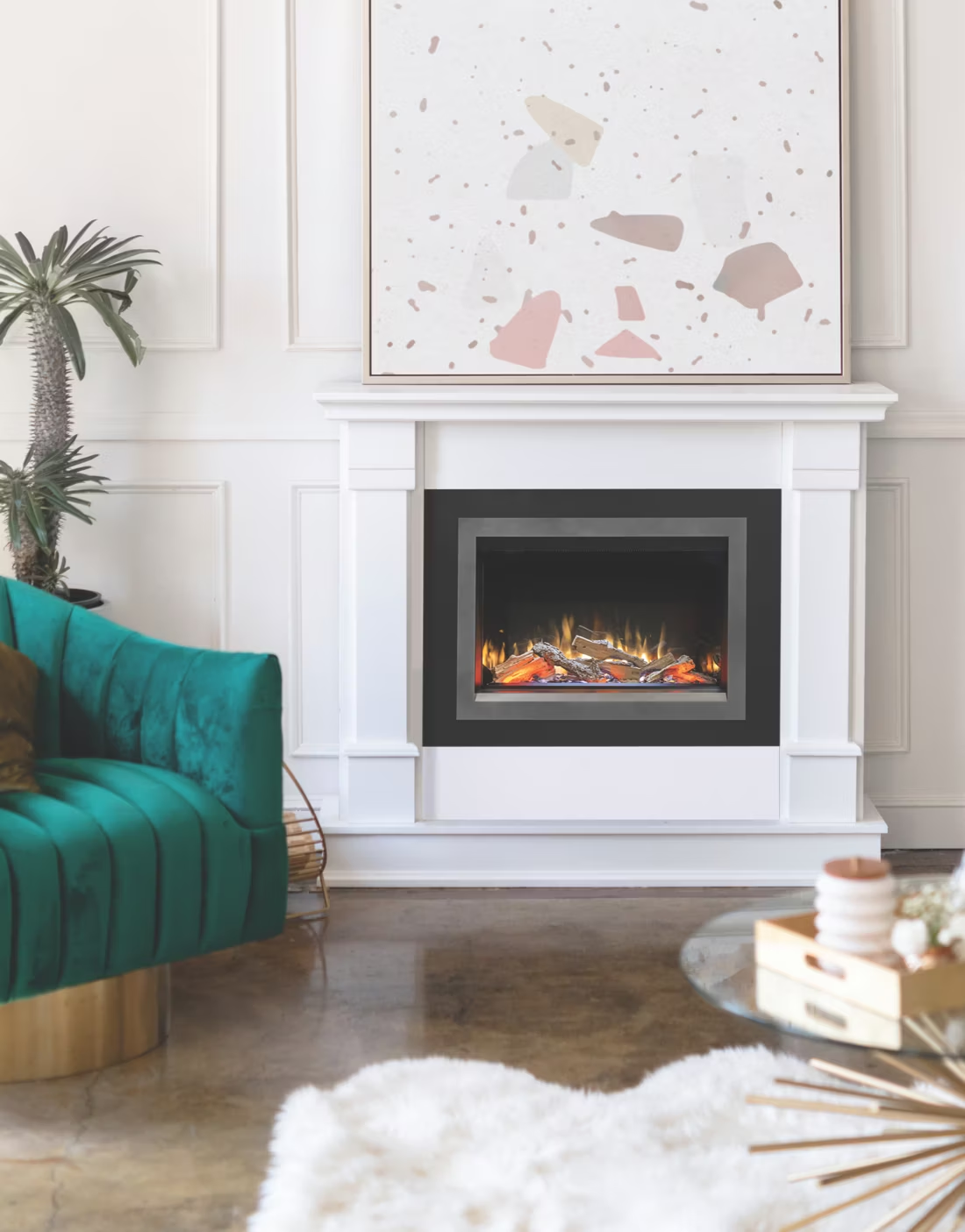
Four fuels. One honest answer for Patrick County.
Three steps. No salesperson until you're ready.
Tell us about your project
Your zip code, your situation, and the fuel you're leaning toward—or let the answers point you to one.
See what's actually available
The brands dealers within 100 miles genuinely carry—real options, never a catalog mirage.
Get your dealer & Project Guide
A trusted local dealer, plus the free Project Guide & Parts List that names every component of the job.
Frequently Asked Questions
Which fuel works best in Patrick County?
It depends on the home and how remote it sits. Wood is a natural fit given the oak, hickory, and maple that cover most of the county, plus low-cost firewood cutting permits through the George Washington & Jefferson National Forest—a catalytic or non-cat EPA stove can carry a farmhouse through a 25°F night without much trouble. Gas here generally means propane, since natural gas mains don't reach most of rural Patrick County; a propane fireplace or insert gives instant heat without hauling wood. Pellet is a solid middle-ground option—Energex, Hamer, and Greene Team pellets are all sold within reasonable driving distance in the region, and a pellet stove skips the splitting and stacking. Electric works well for a bedroom, sunroom, or as backup ambiance, but it's not the primary heat source most Patrick County homeowners rely on through a full winter.
Do I need a permit to install a fireplace in Patrick County?
Generally yes, for anything beyond a plug-in electric unit. New wood stoves and inserts need to meet current EPA New Source Performance Standards emissions requirements and typically require a building permit through the Patrick County Building Inspections Department. Propane fireplace and insert installations usually need both a building permit and a gas line permit, with the propane connection handled by a licensed installer or your propane supplier. Electric fireplaces don't usually need a permit unless you're doing a hardwired built-in that involves a new circuit. Most local retailers pull the permit as part of the installation, so it's rarely something homeowners have to manage themselves.
Are there air quality restrictions on wood burning in Patrick County?
No—Patrick County has no air quality nonattainment designation and no winter burn advisories to work around, unlike some western basin counties that deal with inversion smoke. That said, an EPA-certified stove still makes sense here: it burns roughly a third less wood for the same heat output compared to an old pre-1988 stove, and it cuts down on chimney creosote buildup, which matters given how much of the county relies on wood as a real heating source rather than occasional ambiance.
Can one local hearth retailer handle all four fuel types?
Some can, but with a county this small, expect more specialization than you'd see in a bigger market. A dealer based in Stuart or nearby Martinsville may carry wood and pellet units well but keep only a limited gas or electric lineup, while a larger regional retailer in Mount Airy, NC is more likely to stock all four fuel types with working showroom displays. If you're not sure which fuel fits your home, a multi-fuel retailer is worth the extra drive to compare wood, propane, pellet, and electric side by side before you decide.
How does service work in rural parts of Patrick County?
Most technicians serving Patrick County are based out of Stuart, Martinsville, or Mount Airy and drive out to remote addresses along the Blue Ridge Parkway corridor, Route 8, and the back roads around Woolwine and Ararat. Expect to pay a modest travel fee for calls well outside town, and expect scheduling to tighten up fast once cold weather hits—booking a chimney sweep or propane inspection in September or early October, before the Blue Ridge Parkway sees its first winter closures, is much easier than trying to get someone out in January.
What's the typical cost range for fireplace installation across all fuel types in Patrick County?
Wood stove or insert installation: roughly $4,000–$8,500 for a typical install, more if new chimney or liner work is needed. Propane fireplace, insert, or stove: roughly $4,000–$10,000 depending on whether a new propane line or tank setup is required. Pellet stove or insert: roughly $4,000–$7,000 for most installs. Electric fireplace: $200–$3,000 for the unit itself, plus $400–$1,200 in labor for anything beyond a simple plug-in wall unit. See the county + fuel pages above for cost detail tied to specific local retailers.
What is an in-home preview and do I need one?
It's a visit where a hearth professional measures your space, confirms the model you picked actually works in your home, and walks the specs—framing, gas line, venting, finish work—before anything is ordered. Some details you just can't know until you see the house. Never make a down payment without one; it's the single most-skipped step that burns buyers.
How much should I budget for a fireplace?
For an average home—covering the fireplace, the vent pipe, and basic installation—a budget between $3,900 and $5,500 gives you a lot of options across wood, gas, and pellet. By the time you add finish work, gas line, and electrical, the average complete installation lands between $5,000 and $12,000 all-in. In a remodel or new build, a good rule is to put about 2.5% of the total project cost toward the fireplace.
Can I install a fireplace myself?
If you're putting a fire in your house on purpose, it's best to work with an expert. Unless you're genuinely experienced in framing, gas line, vent pipe, and the national code on clearances to combustibles, have a professional do it—and ideally the same company that sells you the fireplace, so warranty, service, and liability all live under one roof.
Can a fireplace actually lower my heating bill?
Yes—by creating a comfort zone. A furnace heats every square foot of the house just to warm the one room you're in; a gas fireplace on low burns roughly a sixth of the gas a typical furnace does. Set the furnace around 55–60 degrees as a baseline, then heat the rooms your family actually uses. Families who heat this way commonly save $20–$60 a month.
Stove and Fireplace Dealers in Patrick County
Listings include WhyFire partner dealers, dealers we have verified as authorized for the brands we recommend, and established local businesses that carry hearth products. Every listing shows which one it is. The ones marked Preferred run on WhyFire's software, so they can show you real pricing and book your appointment right here. No manufacturer pays for placement. How we verify dealers →
McKinney Heating & Air Conditioning
Clark Gas & Oil Company
Buck Stove Sales & Service
Clark Gas & Oil Company
Mount Airy Oil & Gas Company
Davenport Energy Martinsville
Pilot Air & Appliances
Brannock & Hiatt Furniture
Find your fireplace in Patrick County.
Pick your fuel below and I'll match you with a trusted local dealer and a free Project Guide & Parts List—the exact parts, including the vent kit, and the dealer I'd recommend for your home.
Find Your Fireplace →