
Find your fireplace in Norton, Virginia.
Wood, gas, pellet, and electric fireplace resources for Norton and the surrounding Wise County communities—Big Stone Gap, Appalachia, Coeburn, Wise, and Pound. Find the right unit for a Appalachian Plateau winter and connect with a trusted local hearth retailer.
Every Project Starts From One of These Five Situations
Coalfield heating on the Appalachian Plateau in Norton, Virginia.
Norton sits in a narrow valley of the Appalachian coalfields in far southwest Virginia, ringed by ridges like High Knob and Flag Rock and surrounded by dense stands of oak, hickory, and maple. Winters here are moderate by national standards—average lows around 25°F and a moderate overall heating season, well short of a true cold-climate market like Duluth, Minnesota, where the heating season runs much longer and colder. But the region's coal-mining heritage and abundant local hardwood have kept wood heat a practical, everyday choice for generations, and homes tucked into hollows outside the city center often burn wood or propane where municipal gas lines don't reach every street.
What you'll find on this hub: hearth retailers, service technicians, and fuel suppliers serving Norton and the small towns around it—Big Stone Gap and Appalachia to the west, Coeburn and Wise to the north, Pound toward the Kentucky line. Pick your fuel below to drill into local dealers, installation costs, recommended units, and the resources that fit a Wise County home, whether it's a Norton townhouse or a farmhouse tucked against the ridge.
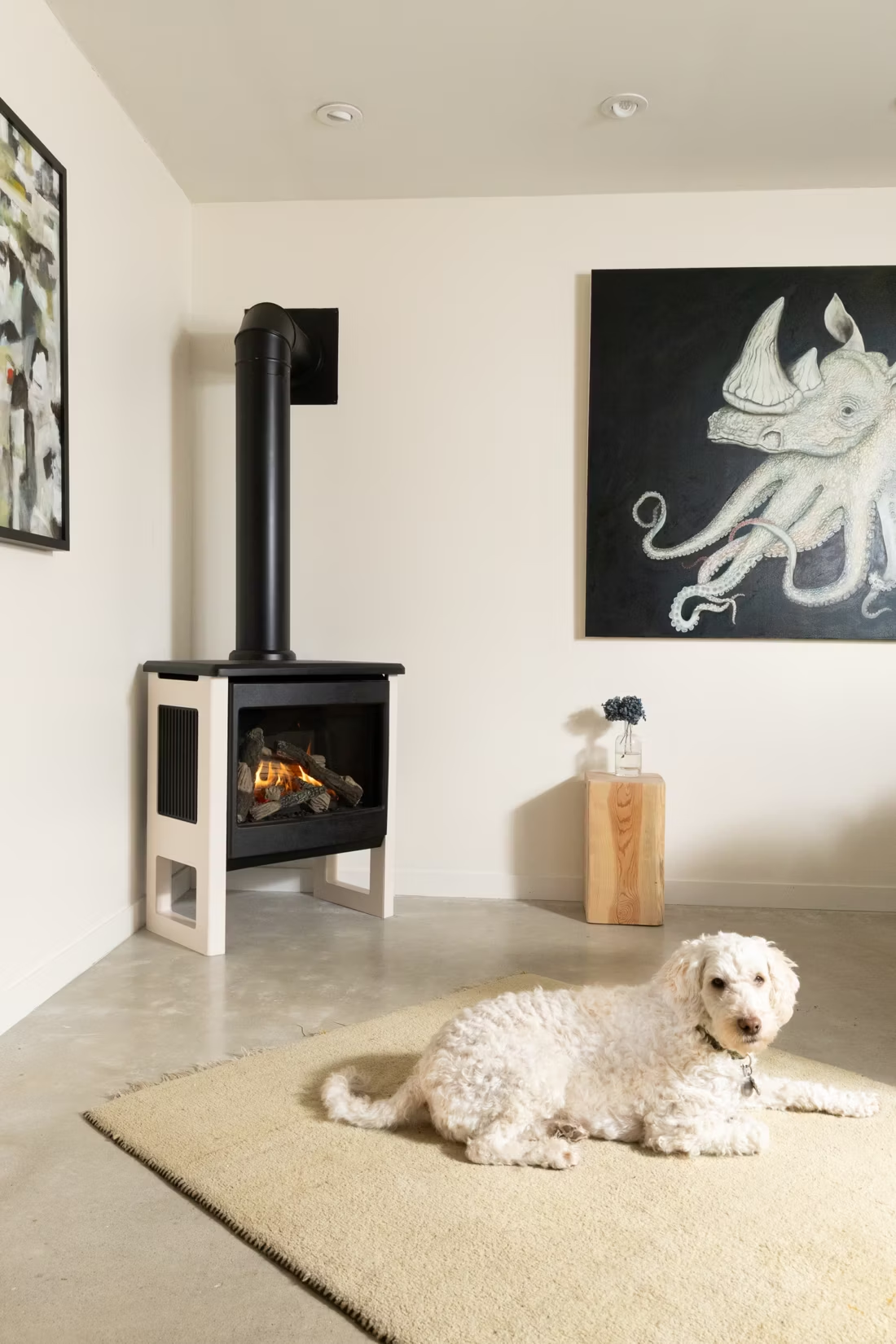
Four fuels. One honest answer for Norton County.
Three steps. No salesperson until you're ready.
Tell us about your project
Your zip code, your situation, and the fuel you're leaning toward—or let the answers point you to one.
See what's actually available
The brands dealers within 100 miles genuinely carry—real options, never a catalog mirage.
Get your dealer & Project Guide
A trusted local dealer, plus the free Project Guide & Parts List that names every component of the job.
Frequently Asked Questions
Which fuel works best in Norton, Virginia?
It depends on the home and the household. Wood remains a strong, practical choice around Norton—oak, hickory, and maple are abundant in the surrounding hills, fuel cost is often low or free if you or a neighbor cuts your own, and a good stove holds heat through the moderate 25°F winter lows typical here. Propane is the common convenience fuel in the hollows and outlying areas where municipal natural gas doesn't reach every street, while homes closer to the city center with gas service often go with a gas insert or stove for push-button heat. Pellet stoves are well supported thanks to regional mid-Atlantic brands like Energex, Hamer Pellet Fuel, and Greene Team Pellet Fuel—a good middle ground if you want wood-style heat without splitting and stacking. Electric fireplaces work well as supplemental heat in a bonus room or bedroom, since Norton's moderate overall heating season is milder than a true cold-climate market and doesn't demand electric as a primary heat source.
Do I need a permit to install a fireplace in Norton?
In most cases, yes. New wood stoves, wood inserts, gas fireplaces, gas inserts, gas stoves, and pellet stoves installed within the City of Norton typically require a building permit through the city building department, and gas installations also need a licensed gas-fitter for the connection itself. New wood-burning appliances must meet current EPA 2020 NSPS emissions standards regardless of jurisdiction. Electric fireplaces usually don't require a permit unless it's a built-in unit involving new wiring or a dedicated circuit. If you're just outside city limits in unincorporated Wise County, the permitting authority shifts to the county—your local hearth retailer can usually confirm which office applies and often handles the paperwork as part of the installation.
Are there air quality restrictions on wood burning in Norton?
No—Norton isn't in an EPA nonattainment area and doesn't have the winter inversion problems that trigger burn advisories in basin cities out west. There are no local curtailment days or voluntary no-burn notices tied to wood smoke here. The one requirement that still applies is national: any new wood stove or insert sold and installed must meet EPA 2020 NSPS emissions standards, which is a manufacturing and sales requirement rather than a local air-quality restriction. Practically speaking, that means Norton homeowners can burn wood on cold nights without checking an advisory page first—just make sure whatever you install is a certified, modern unit.
Can one local hearth retailer handle all four fuel types near Norton?
It's less common in a market this size. With a population under 4,000, Norton itself doesn't support a large hearth-retail footprint, so most homeowners end up working with a dealer based in Big Stone Gap, Wise, or occasionally across the Tennessee line, and coverage varies by fuel. Some of those dealers carry wood, gas, and pellet together; fewer stock a broad electric fireplace lineup, since electric is more of a secondary-room purchase here than a primary heat decision. If you want to compare fuels side by side, plan on visiting a showroom outside Norton proper—the county + fuel pages above note which dealers carry which fuel types.
How does service work for homes in the hollows and rural parts of the Norton area?
Most chimney sweeps and gas or pellet technicians serving Norton are based in Big Stone Gap or Wise and travel out to the surrounding hollows, ridgeline homes, and towns like Appalachia, Coeburn, and Pound. Narrow mountain roads and longer driveways can mean a modest travel fee for calls outside the city center, and scheduling ahead of the heating season—August through October—is easier than trying to book a mid-winter emergency visit. If your home sits well up a hollow, it's worth asking your technician about access before the appointment, and keeping a backup heat source (a wood stove alongside a pellet unit, for instance) is common practice here given how spread out service coverage can be.
What's the typical cost range for fireplace installation across all fuel types near Norton?
Ranges vary by fuel and by how much venting or gas line work is involved. Wood stove or insert installation: roughly $4,000–$8,500 for a typical setup, more if new chimney work is required. Gas fireplace, insert, or stove: roughly $4,000–$10,000, with propane conversions often landing on the lower end when a tank and line are already in place. Pellet stove or insert: roughly $4,000–$7,000 for most installs, supported locally by pellet availability from brands like Energex and Hamer. Electric fireplace: $200–$3,000 for the unit itself, plus $400–$1,200 in labor for anything beyond a plug-and-play install. For specifics tied to Norton and the surrounding Wise County towns, see the county + fuel pages above.
Does a fireplace add value to my home?
On average, a fireplace adds back to the home about the same amount you spent installing it. Add the monthly savings from heating the rooms you actually use instead of the whole house—often hundreds of dollars a year—and the value case is strong before you even count what a fire does for how your family uses the room.
How much should I budget for a fireplace?
For an average home—covering the fireplace, the vent pipe, and basic installation—a budget between $3,900 and $5,500 gives you a lot of options across wood, gas, and pellet. By the time you add finish work, gas line, and electrical, the average complete installation lands between $5,000 and $12,000 all-in. In a remodel or new build, a good rule is to put about 2.5% of the total project cost toward the fireplace.
Can a fireplace actually lower my heating bill?
Yes—by creating a comfort zone. A furnace heats every square foot of the house just to warm the one room you're in; a gas fireplace on low burns roughly a sixth of the gas a typical furnace does. Set the furnace around 55–60 degrees as a baseline, then heat the rooms your family actually uses. Families who heat this way commonly save $20–$60 a month.
What is an in-home preview and do I need one?
It's a visit where a hearth professional measures your space, confirms the model you picked actually works in your home, and walks the specs—framing, gas line, venting, finish work—before anything is ordered. Some details you just can't know until you see the house. Never make a down payment without one; it's the single most-skipped step that burns buyers.
Stove and Fireplace Dealers in Norton County
Listings include WhyFire partner dealers, dealers we have verified as authorized for the brands we recommend, and established local businesses that carry hearth products. Every listing shows which one it is. The ones marked Preferred run on WhyFire's software, so they can show you real pricing and book your appointment right here. No manufacturer pays for placement. How we verify dealers →
Hce Systems Inc.
Suburban Propane
Clintwood Lumber & Supply
Modern Hardware
Quality Parts Inc.
Lee Propane
Southwest Heating & Air
Find your fireplace in Norton, Virginia.
Pick your fuel below and we'll match you with a trusted local dealer serving the Norton area, plus a free Project Guide & Parts List—the exact parts, including the vent kit, and the dealer we recommend for your home.
Find Your Fireplace →