
Find the Right Fireplace for Your Middlesex County Home.
Wood, gas, pellet, and electric fireplace resources for every town and rural stretch of Middlesex County—from Saluda to Deltaville and Urbanna along the Rappahannock. Find the right unit and get matched with a trusted local hearth dealer.
Every Project Starts From One of These Five Situations
Tidewater heating on Virginia's Middle Peninsula.
Middlesex County sits on Virginia's Middle Peninsula, bounded by the Rappahannock River and the Chesapeake Bay, in climate zone 4A—mixed-humid, with mild-to-moderate winters that rarely approach the sustained cold of places like Burlington, Vermont. Freezing rain and damp cold snaps are more common here than deep snow. That humidity matters for wood burners: oak, hickory, and maple—the region's dominant hardwoods—need a full season or more of covered, well-ventilated seasoning before they're dry enough to burn clean, longer than the same species would need in a drier inland climate. With just under 1,900 year-round residents spread across the county, this is one of Virginia's smaller, more rural counties, and there's no federal timberland here—firewood comes from private land clearing, local tree services, and county residents, not Forest Service permits.
What you'll find on this hub: hearth retailers, service technicians, and fuel suppliers serving every community in the county—Saluda (the county seat), Urbanna, Deltaville, Hartfield, Water View, and Wake. Because Middlesex is small and rural, most hearth retailers and technicians are based just outside the county line, in places like Gloucester, Kilmarnock, or Tappahannock, and travel in for consultations and installs. Pick your fuel below to see local dealers, installation costs, and recommended units for a Middle Peninsula home.
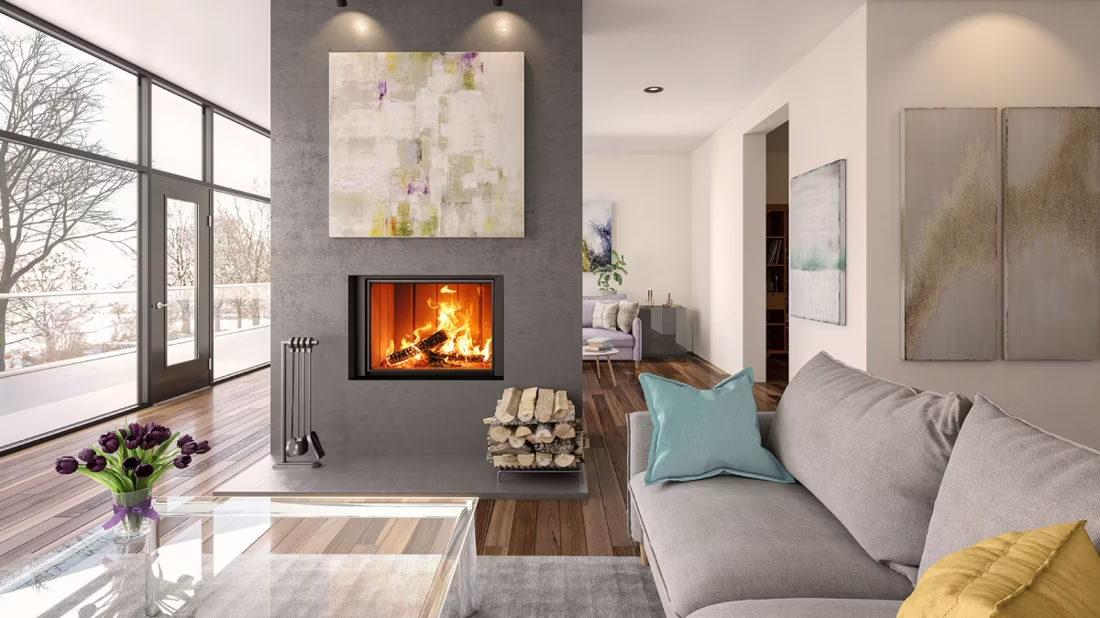
Four fuels. One honest answer for Middlesex County.
Three steps. No salesperson until you're ready.
Tell us about your project
Your zip code, your situation, and the fuel you're leaning toward—or let the answers point you to one.
See what's actually available
The brands dealers within 100 miles genuinely carry—real options, never a catalog mirage.
Get your dealer & Project Guide
A trusted local dealer, plus the free Project Guide & Parts List that names every component of the job.
Frequently Asked Questions
Which fuel works best for a home in Middlesex County?
It depends on the home and how you use it. Wood is a strong fit here—oak, hickory, and maple are the region's dominant hardwoods, and a well-sized wood stove or insert handles the county's mild-to-moderate zone 4A winters comfortably, with the bonus of working during the power outages that come with Chesapeake Bay storms and nor'easters. Gas is the convenience choice, though natural gas lines are limited in rural Middlesex, so most gas fireplaces here run on propane rather than piped gas—still instant heat with none of the wood-hauling. Pellet is a solid middle ground, and Energex, Hamer Pellet Fuel, and Greene Team Pellet Fuel are all regionally available. Electric, served by Dominion Energy Virginia, works well as a supplemental heater in bedrooms, sunrooms, or waterfront cottages where running a chimney isn't practical. Many Middlesex homes pair wood or gas as primary heat with electric in secondary rooms.
Do I need a permit to install a fireplace in Middlesex County?
In most cases, yes. Virginia enforces fireplace and stove installations under the Virginia Uniform Statewide Building Code, and in Middlesex County that means pulling a permit through the county building department for new wood stoves, wood inserts, gas fireplaces, gas inserts, gas stoves, and pellet stoves. Propane installations—the common gas fuel here given limited natural gas access—also require a separate gas line permit and licensed gas-fitter for the connection work. Electric fireplaces generally skip the permit unless the install involves hardwiring a built-in unit into a new circuit. Most local hearth retailers who serve Middlesex handle the permitting as part of the installation, so it's rarely something homeowners have to manage on their own.
Are there air quality restrictions on wood burning in Middlesex County?
No—Middlesex County has no air quality nonattainment designation and no local wood-burning curtailment program, which sets it apart from more urban or geographically enclosed regions where winter inversions trap smoke. There's no mandatory or voluntary burn-ban system here. That said, an EPA-certified wood stove or insert still burns oak and hickory more efficiently and with less visible smoke than an older uncertified unit, which matters for neighbors in the county's tighter-knit waterfront communities like Deltaville and Urbanna.
Can one local hearth retailer handle all four fuel types in Middlesex County?
Given the county's small population—under 2,000 residents—there typically isn't a hearth showroom physically inside Middlesex. Homeowners here are usually served by retailers based in nearby Gloucester, Kilmarnock, or Tappahannock, and the larger of those dealers tend to carry all four fuel types: wood, propane-fueled gas, pellet, and electric. Smaller specialty shops may focus on just one or two fuels, so if you want to compare options side by side, it's worth confirming a dealer's full fuel lineup before scheduling a consultation.
Where does firewood come from if there's no public forest land in Middlesex County?
Unlike Western counties with national forest cutting permits, Middlesex is almost entirely private land, so firewood here comes from land-clearing projects, local tree services, and residents processing their own oak, hickory, and maple. Because the Middle Peninsula's climate is humid year-round, freshly cut hardwood needs longer to season than it would in a drier inland climate—plan on 12 months or more of covered, stacked drying before burning, rather than the 6-9 months that might suffice in a lower-humidity region. Buying wood already seasoned a full year from a local supplier is often the more reliable option if you're not set up to store and dry your own.
What's the typical cost range for fireplace installation across all fuel types in Middlesex County?
Costs run close to typical national ranges, with venting simplified somewhat by the region's mild zone 4A climate. Wood stove or insert installation: roughly $4,000–$8,500 for most homes, more if new masonry chimney work is needed. Propane fireplace, insert, or stove: roughly $4,000–$9,500, with cost driven mainly by the length of gas line run and any venting changes. Pellet stove or insert: roughly $4,000–$7,000 for a typical install. Electric fireplace: $200–$3,000 for the unit itself, plus $400–$1,000 in labor for anything beyond a plug-and-play wall unit. For details tied to specific dealers, see the county + fuel pages above.
Can I install a fireplace myself?
If you're putting a fire in your house on purpose, it's best to work with an expert. Unless you're genuinely experienced in framing, gas line, vent pipe, and the national code on clearances to combustibles, have a professional do it—and ideally the same company that sells you the fireplace, so warranty, service, and liability all live under one roof.
Does a fireplace add value to my home?
On average, a fireplace adds back to the home about the same amount you spent installing it. Add the monthly savings from heating the rooms you actually use instead of the whole house—often hundreds of dollars a year—and the value case is strong before you even count what a fire does for how your family uses the room.
How much should I budget for a fireplace?
For an average home—covering the fireplace, the vent pipe, and basic installation—a budget between $3,900 and $5,500 gives you a lot of options across wood, gas, and pellet. By the time you add finish work, gas line, and electrical, the average complete installation lands between $5,000 and $12,000 all-in. In a remodel or new build, a good rule is to put about 2.5% of the total project cost toward the fireplace.
Wood, gas, pellet, or electric—how do I choose?
Match the fuel to your life, not the other way around. Wood: lowest fuel cost and total power-outage independence, but you're hauling and stacking. Gas: press a button, set a thermostat, no maintenance to speak of. Pellet: wood economics with automatic feeding, in exchange for weekly cleaning and a need for electricity. Electric: plugs in anywhere with honest supplemental heat. Nobody regrets the fuel that fits how they actually live.
Stove and Fireplace Dealers in Middlesex County
Listings include WhyFire partner dealers, dealers we have verified as authorized for the brands we recommend, and established local businesses that carry hearth products. Every listing shows which one it is. The ones marked Preferred run on WhyFire's software, so they can show you real pricing and book your appointment right here. No manufacturer pays for placement. How we verify dealers →
Old Town Stove & Hearth
Nwp Energy
Start your Middlesex County fireplace project today.
Pick your fuel below and I'll match you with a trusted local dealer serving the Middle Peninsula, plus a free Project Guide & Parts List with the exact parts—including the vent kit—for your Middlesex County home.
Find Your Fireplace →