
Built for Highland County's mountain winters.
Wood, gas, pellet, and electric fireplace resources for Monterey, Blue Grass, McDowell, and every community tucked into Highland County's ridges and valleys. Find the right unit and connect with a trusted local hearth retailer.
Every Project Starts From One of These Five Situations
Mountain heating in Virginia's least populous county.
Highland County sits at elevation in Virginia's Allegheny Mountains, with Monterey—the county seat and only incorporated town—perched around 3,000 feet. Locals sometimes call it "Virginia's Icebox," and on a hard cold snap the county can post the lowest temperature in the state, with conditions that wouldn't feel out of place in the Appalachian foothills near Burlington, Vermont. Oak, hickory, and maple stands cover the ridgelines, and the county's maple sugaring tradition (the annual Maple Festival draws visitors from across the region) runs alongside a long history of cutting hardwood for the woodstove—sugar maple goes to the syrup house, but plenty of other hardwood on a property ends up split and stacked for winter heat. With no air-quality non-attainment concerns here, wood burning isn't restricted the way it is in western basin counties.
With just over 200 residents, Highland County doesn't support a large hearth retail base of its own—many homeowners here work with dealers based in Staunton and Augusta County, or occasionally Pendleton County, West Virginia, just across the state line. There's also no natural gas pipeline serving the county, so propane fills the role natural gas plays elsewhere, delivered and installed by the same regional companies that handle heating oil and propane tanks. This hub rolls up retailers, technicians, and fuel suppliers who serve Highland County, plus the regional pellet brands—Energex, Hamer Pellet Fuel, Greene Team—available through nearby suppliers. Pick your fuel below to see local dealers, costs, and what actually fits a mountain property here.
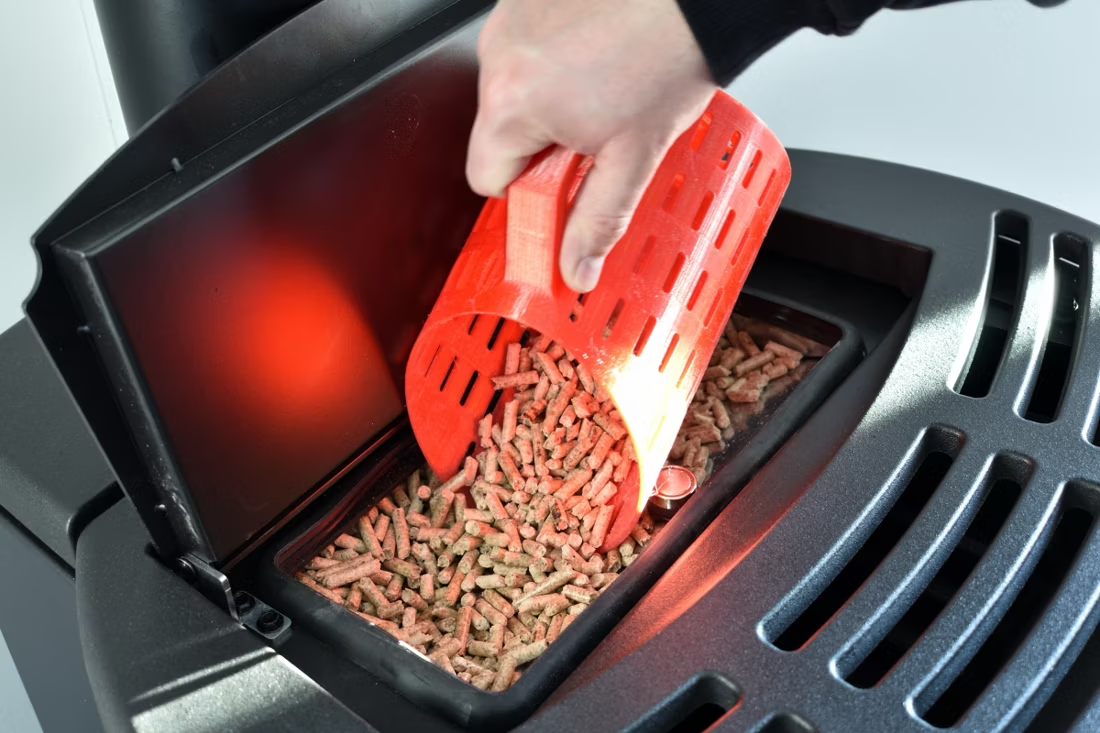
Four fuels. One honest answer for Highland County.
Three steps. No salesperson until you're ready.
Tell us about your project
Your zip code, your situation, and the fuel you're leaning toward—or let the answers point you to one.
See what's actually available
The brands dealers within 100 miles genuinely carry—real options, never a catalog mirage.
Get your dealer & Project Guide
A trusted local dealer, plus the free Project Guide & Parts List that names every component of the job.
Frequently Asked Questions
Which fuel works best in Highland County?
It depends on the property, but the local basics are consistent. Wood is the deep-rooted choice—oak, hickory, and maple grow throughout the county, and plenty of homeowners heat primarily with wood they cut themselves, especially on larger rural parcels. Propane is the practical stand-in for natural gas, since there's no gas pipeline serving Highland County at all; propane fireplaces and inserts give you instant heat without a woodpile. Pellet stoves work well too, though pellet supply—brands like Energex, Hamer Pellet Fuel, and Greene Team—usually comes from a distributor rather than a shop down the road, so planning ahead for delivery matters more here than in a denser county. Electric fireplaces are mostly supplemental—good for a cabin, a bonus room, or a vacation property, but not something to rely on as your only heat source once temperatures drop into the single digits on the ridgetops.
Do I need a permit to install a fireplace in Highland County?
It's less straightforward than in most counties. Highland County is one of the few jurisdictions in Virginia that isn't required to enforce the Virginia Uniform Statewide Building Code on detached single-family homes, given its very small population—so a county-issued building permit may not be mandatory the way it would be in Augusta or Bath County next door. That said, propane line work still requires a licensed gas fitter or propane technician, and most homeowners insurance carriers will still ask for a certificate showing the installation meets manufacturer and NFPA clearance standards regardless of whether a county permit was pulled. If you're unsure whether your specific project triggers a permit requirement, a local retailer who's installed in the county before can usually tell you quickly.
Are there air quality restrictions on wood burning in Highland County?
No—Highland County isn't a non-attainment area and doesn't have the winter inversion problems that trigger burn advisories in some western mountain valleys. With roughly 200 residents spread across the county, wood smoke simply doesn't accumulate the way it can in denser basin towns. That said, an EPA-certified stove still burns cleaner and uses less wood for the same heat, which matters when your firewood is coming off your own property rather than a delivery truck.
Can one local retailer handle all four fuel types in Highland County?
Given the county's size, it's more common to work with a propane company for a gas or propane insert and a separate hearth shop—usually based in Staunton or Augusta County—for wood, pellet, or electric units. A few regional dealers serving this part of the Alleghenies do carry three or four fuel types and can show you options side by side, but expect to be working with a retailer whose showroom is outside the county rather than in Monterey itself.
How does fireplace service work in a county this rural?
Most chimney sweeps and propane technicians covering Highland County are based out of Staunton, Verona, or Elkins, West Virginia, and travel in for appointments—so expect a modest travel fee and a bit more lead time than in a larger county. Route 250 over Shenandoah Mountain and other mountain roads can close or slow down during winter storms, which makes pre-season scheduling (September or October, before the cold sets in) more valuable here than almost anywhere. If you're heating primarily with wood, keeping a spare box of matches, a maintained chainsaw, and a backup propane heater on hand isn't overkill—it's how a lot of Highland County households already operate.
What's the typical cost range for fireplace installation across all fuel types in Highland County?
Costs run close to statewide rural Virginia ranges, with a bit added for travel from outside dealers. Wood stove or insert: roughly $4,000-$8,500 installed, depending on chimney condition and hearth work. Propane fireplace, insert, or stove: roughly $4,500-$10,000, which can include a new propane tank setup if the property doesn't already have one. Pellet stove or insert: roughly $4,000-$7,000, plus factoring in delivery costs for pellets since there's no local pellet retailer in the county. Electric fireplace: $200-$3,000 for the unit itself, with $400-$1,000 in labor for anything beyond a plug-and-play install. Exact numbers depend on which dealer you work with and how far they're traveling.
Does a fireplace add value to my home?
On average, a fireplace adds back to the home about the same amount you spent installing it. Add the monthly savings from heating the rooms you actually use instead of the whole house—often hundreds of dollars a year—and the value case is strong before you even count what a fire does for how your family uses the room.
Can I install a fireplace myself?
If you're putting a fire in your house on purpose, it's best to work with an expert. Unless you're genuinely experienced in framing, gas line, vent pipe, and the national code on clearances to combustibles, have a professional do it—and ideally the same company that sells you the fireplace, so warranty, service, and liability all live under one roof.
Wood, gas, pellet, or electric—how do I choose?
Match the fuel to your life, not the other way around. Wood: lowest fuel cost and total power-outage independence, but you're hauling and stacking. Gas: press a button, set a thermostat, no maintenance to speak of. Pellet: wood economics with automatic feeding, in exchange for weekly cleaning and a need for electricity. Electric: plugs in anywhere with honest supplemental heat. Nobody regrets the fuel that fits how they actually live.
What are the biggest mistakes people make buying a fireplace?
Five come up constantly: budgeting for the unit but not the full job (vent, gas line, electrical, finish work); drowning in options instead of starting from style and fuel; buying without an in-home preview; handing installation to a handyman instead of a pro; and giving up out of sheer indecision. Every one is avoidable with a clear plan—step one, step two, step three.
Stove and Fireplace Dealers in Highland County
Listings include WhyFire partner dealers, dealers we have verified as authorized for the brands we recommend, and established local businesses that carry hearth products. Every listing shows which one it is. The ones marked Preferred run on WhyFire's software, so they can show you real pricing and book your appointment right here. No manufacturer pays for placement. How we verify dealers →
Clines Heating And Cooling
Holtzman Propane
Blossman Gas And Appliance
Blue Ridge Chimney
Acme Stove Co.
Find your fireplace in Highland County.
Tell us about your home in Monterey, Blue Grass, or wherever you are in the county, and we'll match you with a trusted local dealer and send over a free Project Guide & Parts List—the exact parts, including the vent kit, and who to call to get it installed right.
Find Your Fireplace →